
Review · SAMARKAND TOURS
Pilaf making in Samarkand
Food opens doors in Uzbekistan. This Samarkand experience takes you from the city market to a village kitchen, where you shop for ingredients, cook pilaf, bake bread in a tandoor, and eat with a local family. I especially like the market visit and the hands-on cooking, since you are not just watching a demonstration. You help choose the rice, meat, and spices, then take part in the full meal.
I also like the chance to see ordinary village life in Terakzor, outside Samarkand. The main consideration is that this is a food-centered day, so it may not suit anyone with food allergies or anyone looking for a broad sightseeing tour. The included wine or vodka may also be worth noting before you book.
In This Review
- Key points to know before booking
- From Samarkand market to a village kitchen
- Why the trip to Terakzor matters
- Making authentic Uzbek pilaf
- Bread from the tandoor
- Lunch, gilmindi, and Uzbek hospitality
- What $85 gets you
- Who will enjoy this cooking day
- A few practical tips for the day
- Should you book the Samarkand pilaf experience?
- FAQ
- Where does the pilaf-making experience take place?
- How long does the experience last?
- What food will I prepare?
- What is included in the price?
- Will I visit a market?
- What dessert or local food will I taste?
- Is the experience conducted in English?
- Is the activity wheelchair accessible?
- Can I cancel or pay later?
Key points to know before booking
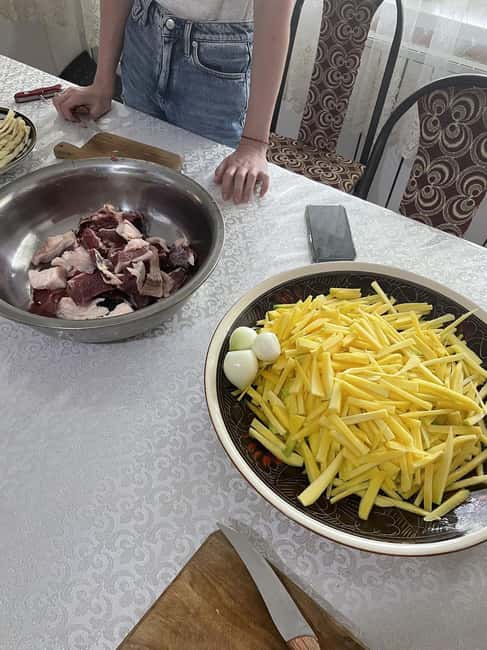
- Market shopping comes first: You help buy the meat, rice, spices, and other ingredients before cooking.
- Pilaf is made from start to finish: The house owner guides you through the dish in a cast iron pot.
- Bread goes into a tandoor oven: You can see how Uzbek bread is baked, rather than simply being served a finished loaf.
- The setting is a village home: Terakzor gives you a look at daily life beyond Samarkand’s monuments.
- The meal includes a local sweet: Alongside the pilaf, you taste homemade gilmindi, also identified as Bulgundi in the experience details.
- The price includes the practical pieces: For $85 per person, you get a guide, transport, lunch, and one included drink.
From Samarkand market to a village kitchen
The day begins in Samarkand with a visit to a local market. This is a smart starting point because pilaf depends on its ingredients, and the market gives you a chance to see how those ingredients are chosen before they reach the cooking pot.
With the guide, you shop for meat, rice, and spices. The guide explains what to look for and can also help you choose food souvenirs. That turns a basic shopping stop into a useful lesson. If you have been buying packaged spices or dried goods on your own, this is a chance to ask questions and make better choices.
The market portion also gives the day a natural rhythm. You do not simply arrive at a house and wait for lunch. You begin by gathering what you need, then travel with a clearer sense of how the meal will come together.
The exact market route and amount of time spent there are not specified, so you should not expect a formal food tour with a long list of tastings. Think of it as ingredient shopping with cultural context. That is still valuable, especially if you care about food and want a more ordinary view of Samarkand.
A few more options to weigh up in Samarkand
- Samarkand: Historical Monuments Guided Walking Tour
★ 4.8 · 446 reviews - Private Samarkand City Tour With Transportation
★ 5.0 · 149 reviews - A City Tour Of Samarkand: The Pearl Of The East
★ 5.0 · 133 reviews
Why the trip to Terakzor matters
After the market, you go to Terakzor, described as a kishlak, or dacha village, in the Samarkand area. The cooking takes place at a local family home rather than in a restaurant or a purpose-built cooking school.
That change of setting is one of the best parts of the experience. Samarkand has remarkable architecture and major historic sights, but a city visit can leave you seeing only the public face of Uzbekistan. A village home lets you notice how food, family, garden space, and hospitality fit together in daily life.
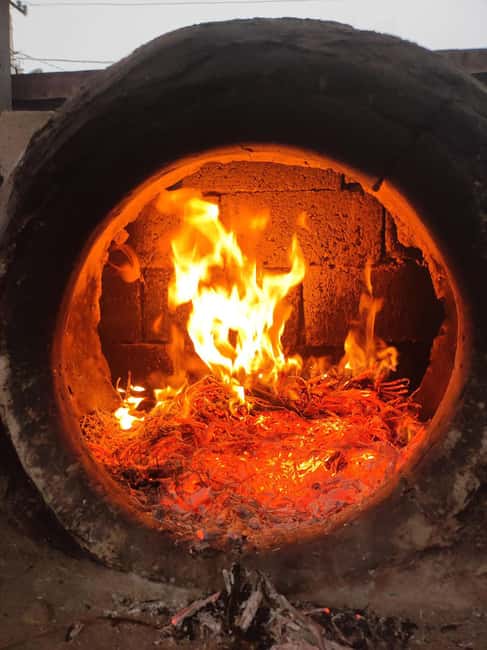
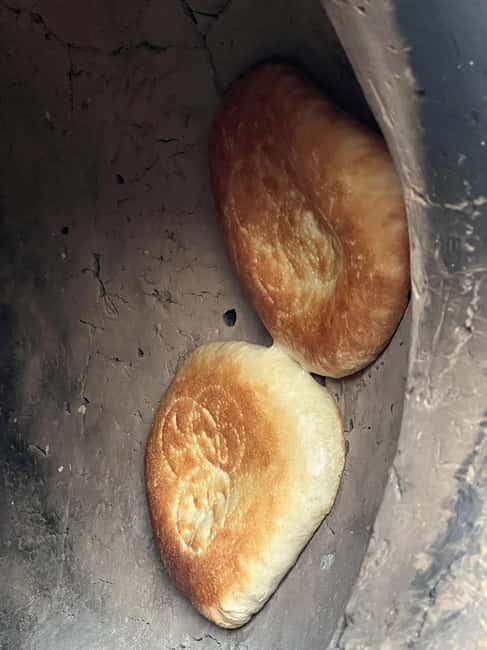
You are told that the family will show you the structure of the house and the way bread is baked in a tandoor. Those details matter because they connect the food to the place. The tandoor is not just a cooking tool for a demonstration. It is part of the household setting and helps explain why bread has such an important place at the table.
I would keep your expectations practical. This is not advertised as a full village walking tour, and there is no detailed schedule of household visits or rural sightseeing. The value comes from time spent in one home, cooking and eating with the family, rather than from checking off several attractions.
Making authentic Uzbek pilaf
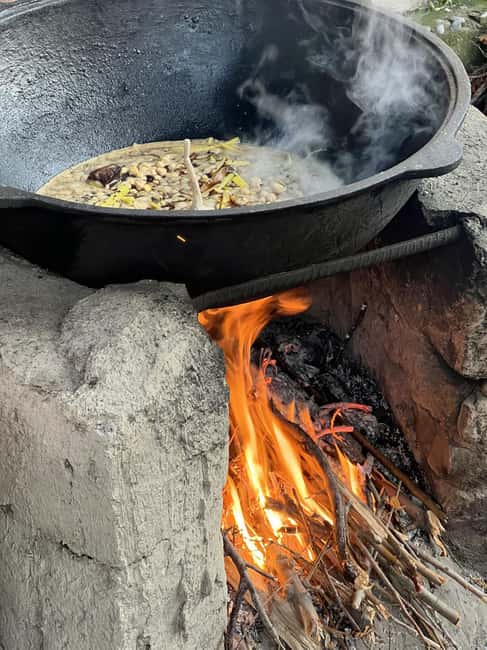
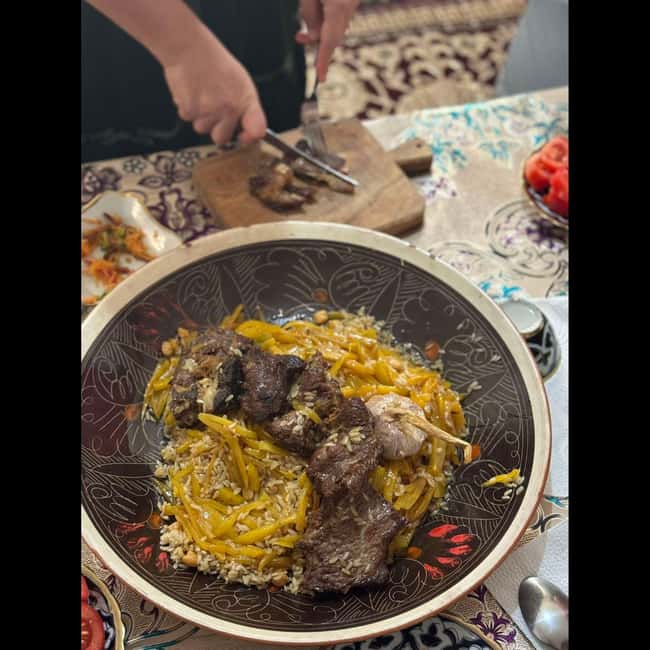
Pilaf, or plov, is the center of the day. Under the owner’s guidance, you participate in the stages of preparing the dish in a cast iron pot. The experience details do not give a precise recipe or cooking time, but they do make clear that you are involved rather than standing at a distance.
That hands-on element makes this different from simply ordering plov in a Samarkand restaurant. You see the ingredients before they are combined, learn how the cook selects them, and follow the process under local instruction. The guide can explain the small decisions that are hard to pick up from a cookbook, such as how the ingredients are handled and how the dish is built in the pot.
One recent participant, Sjoerd from the Netherlands, singled out the fun of making both the plov and the bread. He also planned to try the recipes at home, which says something useful about the format. You are likely to leave with a clearer idea of how the food is made, not just a pleasant memory of eating it.
Still, do not book this expecting a polished cooking school lesson with printed recipes, individual workstations, or a formal graduation meal. The appeal is the home setting and the owner’s guidance. Some parts may feel informal, and that is part of the point.
Bread from the tandoor
The bread portion adds another layer to the cooking lesson. You help prepare bread and see it baked in a tandoor oven, a traditional clay oven used for high-heat baking.
The experience details call the bread aromatic, and the meal includes homemade bread as part of the family table. You should bring your camera if you want to record the process, though drones are not allowed. Since the cooking takes place at a private home, it is sensible to follow the family’s directions around the oven and kitchen area.
This is also one of the strongest cultural parts of the day. Bread baking shows you a household practice in action. It is more revealing than hearing a guide give a short explanation beside a monument because you can see the equipment, the work, and the place where the food is served.
The bread and pilaf are prepared as part of the same meal, so the experience has a satisfying result. You work first, then sit down and eat what you helped make. That simple connection gives the day its shape.
A completely different kind of day:
- Full Day Private Tour in Seven Lakes from Samarkand
★ 5.0 · 94 reviews - Samarkand One Day Tour: one day walking & group tour
★ 4.4 · 87 reviews - Samarkand: Shahrisabz Day Trip with Optional Local Guide
★ 4.9 · 81 reviews - Guide / excursion service in Samarkand
★ 5.0 · 57 reviews
Lunch, gilmindi, and Uzbek hospitality
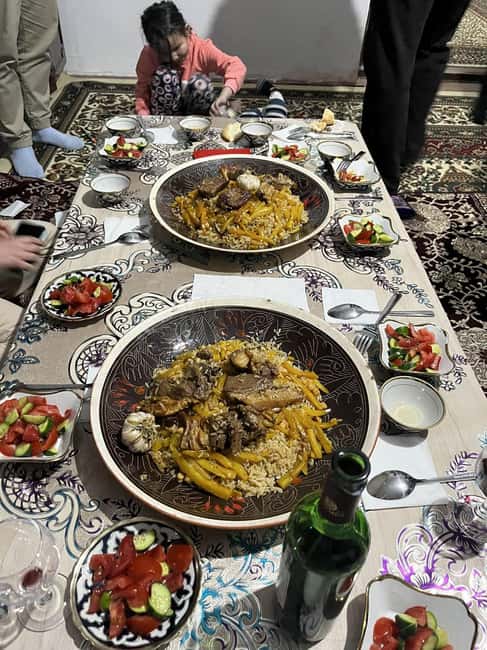
After the cooking, you sit down for lunch with the family. The main dish is the pilaf you prepared, served with homemade bread and a traditional sweet described as gilmindi. The highlights also call this dish Bulgundi, so you may hear either name used in the booking material.
The dessert is made from lavash and cream. That gives you something beyond the main rice dish and adds another local taste to the meal. The menu is not presented as a long tasting course, so you should expect a focused Uzbek meal rather than a broad survey of national food.
Conversation is a key part of lunch. The guide and family talk with you about local life, food traditions, tea, and hospitality. The meal is meant to feel social, not rushed. You learn about the Uzbek tea ceremony and the life of one large, hospitable family while eating in the garden.
The drink inclusion is one serving of wine or vodka. If you do not drink alcohol, check the arrangements with the provider before departure, since the listed inclusion does not name a nonalcoholic alternative. Lunch and a drink are included in the $85 price, along with transport and the English-speaking guide.
What $85 gets you
At $85 per person, this is not the cheapest way to eat pilaf in Samarkand. You could order a plate of plov for far less. The price makes more sense when you count the full day’s pieces: market shopping, transport to the village, an English-speaking guide, ingredient instruction, cooking, bread baking, lunch, and conversation in a family home.
You are paying for access and participation, not only food. The chance to enter a local household and cook with the owner is the part that gives the experience its value. It also saves you from arranging transport to the village and trying to explain your way through a market on your own.
The value will be strongest for you if food is one of the main ways you like to understand a place. It will be weaker if you only want a quick meal or if you have limited time and prefer to stay near Samarkand’s central sights.
The duration is listed as one day, but no starting time or detailed hour-by-hour schedule is provided. Check the available date and start time before booking. The tour is available with an English-speaking live guide, and wheelchair accessibility is listed, though you may still want to confirm the village-home setup and transport details for your specific needs.
Who will enjoy this cooking day
I would recommend this experience to several types of visitors:
- Food-focused visitors who want to learn how plov and bread are made.
- First-time visitors to Uzbekistan who want contact with local daily life beyond major monuments.
- Couples, families, and small groups who enjoy a social meal and informal conversation.
- Photographers who want market, cooking, garden, and tandoor scenes. Bring a camera, but leave the drone at home.
- People staying in Samarkand who can spare a full day for a village outing.
It may be less suitable for someone who wants a tightly timed cultural tour with many sights. It is also not suitable for people with food allergies, according to the activity information. The meal centers on shared local food, and the kitchen is not presented as an allergy-controlled cooking environment.
A few practical tips for the day
Wear clothes and shoes that are comfortable for a full day of travel and cooking. The information does not specify a dress code, but you should be ready for a village home, market shopping, and time near a hot tandoor oven.
Bring your camera for the market, bread baking, and meal. Drones are not allowed, so aerial photography is not part of the experience.
Keep your schedule flexible. The activity lasts one day, but the exact start time is given only after checking availability. If you have a fixed afternoon booking or train connection, allow plenty of space around the tour.
The experience offers free cancellation up to 24 hours before the start for a full refund. You can also reserve now and pay later, which helps if you are still arranging your Samarkand plans.
Should you book the Samarkand pilaf experience?
Book it if you want to cook, eat, and talk your way into a more personal view of Uzbekistan. The market visit, tandoor bread, cast iron pot, and family lunch create a complete food story rather than a single restaurant stop. The strongest praise goes to the hands-on cooking and the friendly guide, Sunnat, who helped make the day enjoyable and easy to follow.
Skip it if you have serious food allergies, dislike informal home settings, or want a sightseeing-heavy day. For everyone else, $85 is a fair price for a full-day experience that combines transport, instruction, lunch, and a rare look at village hospitality near Samarkand.
FAQ
Where does the pilaf-making experience take place?
The day begins in Samarkand, then continues to Terakzor, a village in the Samarkand area, where the cooking and family meal take place.
How long does the experience last?
It is listed as a one-day activity. The exact starting time depends on availability.
What food will I prepare?
You will help prepare Uzbek pilaf and bread under the guidance of the owner of the house.
What is included in the price?
The $85 price includes an English-speaking guide, transport, lunch, and one drink, listed as wine or vodka.
Will I visit a market?
Yes. The day begins with a visit to a typical Samarkand market, where you help buy meat, rice, spices, and other ingredients.
What dessert or local food will I taste?
The meal includes homemade gilmindi, described as a national delicacy made from lavash and cream. The highlights also refer to this food as Bulgundi.
Is the experience conducted in English?
Yes. An English-speaking live guide is provided.
Is the activity wheelchair accessible?
Wheelchair accessibility is listed for the activity. You may wish to confirm the details of the transport and village home before booking.
Can I cancel or pay later?
You can cancel up to 24 hours before the activity for a full refund. Reserve now and pay later is also available.
Just added in Samarkand
- Wine tour in Samarkand (Baguizagan) English★ 5.0 · 2 reviews
- Uzbek wedding ceremony★ 5.0 · 2 reviews
- The Golden City of Samarkand: A Self-Guided Audio Tour★ 4.0 · 4 reviews
- Samarkand Capital of Amir Timur Private Tour with Transport★ 5.0 · 3 reviews
- Seven Lakes Panjakent: One-Day Adventure from Samarkand★ 5.0 · 3 reviews
- Shakhrisabz Private Day Tour from Samarkand★ 5.0 · 4 reviews
- Tadjikistan 7 Lakes Day Trip from Samarkand with Lunch★ 5.0 · 5 reviews
- “Hidden Paradise: Seven Lakes & Voru Village in 2 Days”★ 5.0 · 2 reviews
Samarkand Tours, compared.
Private Samarkand City Tour With Transportation
Read our review →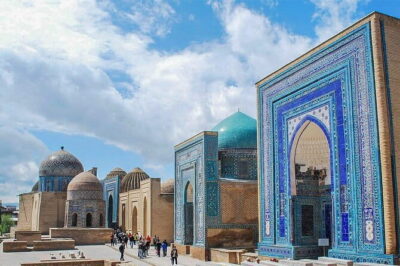
A City Tour Of Samarkand: The Pearl Of The East
Read our review →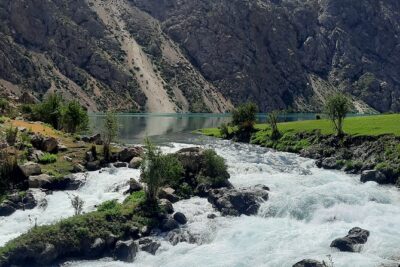
Full Day Private Tour in Seven Lakes from Samarkand
Read our review →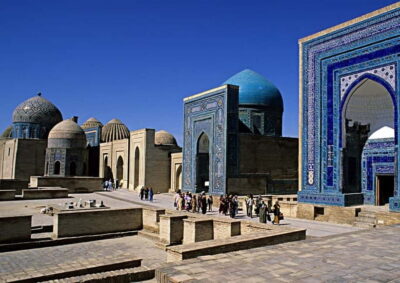
Samarkand One Day Tour: one day walking & group tour
Read our review →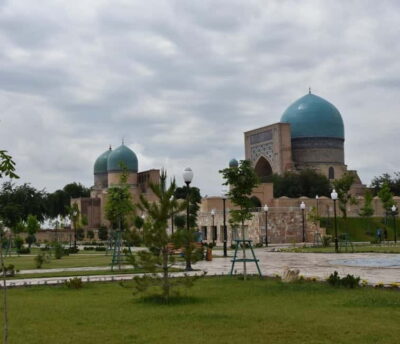
Browse the lists this tour appears in