
Review · WALKING TOURS IN SAMARKAND
Samarkand: Walking Tour around Old City
History comes alive on foot here. This Samarkand tour brings together the city’s essential monuments in a compact half-day route, with Faridun’s lively storytelling adding context about Amir Temur, Timurid rulers, Islamic learning, and local traditions. I like the efficient sequence from the Amir Temur statue to Gur-e-Amir, Registan, Bibi-Khanum, Hazrat Khizr, and Shah-i-Zinda. I also like the small-group format, limited to 10 people, which should make questions and photo stops easier.
The main consideration is the walking. You cover major sights over about 3.5 hours, and several sites involve standing, steps, or uneven surfaces. The advertised price is $26 per person, a fair deal for a guided introduction, but meals and transport to the meeting point are not included. Entry costs are not clearly specified, so check what your booking covers before you set out.
In This Review
- Key points to know before booking
- Why this route works for a first day in Samarkand
- Meeting Amir Temur beside University Boulevard
- Gur-e-Amir and the Timurid tomb
- Registan Square, Samarkand’s grand stage
- Bibi-Khanum Mosque and Temur’s ambition
- Hazrat Khizr Mosque and the view over Samarkand
- Shah-i-Zinda, the strongest finish
- What $26 gets you
- Who should book this Samarkand walk?
- Should you book it?
- FAQ
- Where does the Samarkand walking tour begin?
- How long does the tour last?
- What language is the tour offered in?
- How large is the group?
- Which major sights are included?
- Is transportation included?
- Are meals included?
- What should I wear?
- Is photography allowed?
- Can I cancel the booking?
Key points to know before booking
- Amir Temur begins the story: Start beside the equestrian statue and get a quick introduction to the ruler who made Samarkand the Timurid capital.
- Five major sights fit into one route: Gur-e-Amir, Registan, Bibi-Khanum, Hazrat Khizr, and Shah-i-Zinda give you a strong first look at old Samarkand.
- Faridun is the main strength: He is praised for clear historical explanations, patience, humor, and useful advice for onward travel.
- The walk ends at Shah-i-Zinda: The final stop is a blue-tiled necropolis with more than 20 mausoleums and a quieter mood than Registan.
- Small groups matter: With no more than 10 participants, you should have a better chance to hear the guide and ask questions.
- Dress and shoes are practical concerns: Wear comfortable shoes and respectful clothing for the mosques. Carry cash and a card.
Why this route works for a first day in Samarkand
Samarkand can feel like a collection of grand monuments scattered across a large modern city. This walk gives those monuments a useful order. You begin with Amir Temur, the ruler most closely linked to the city’s Timurid glory, then move through his mausoleum, the great public square, a huge mosque, an old hilltop mosque, and a royal necropolis.
That order also shifts the mood as you go. The Amir Temur statue offers a civic introduction. Gur-e-Amir brings you into a tomb with a more personal and spiritual feel. Registan is broad and theatrical. Bibi-Khanum shows ambition on a massive scale. Hazrat Khizr gives you a high view across Samarkand, and Shah-i-Zinda finishes the walk in a narrow, tile-lined passage of tombs.
I think this route is especially useful if you have limited time in Samarkand or want a guide before exploring on your own. You will see the major sights without having to work out the historical links yourself. It is not a quiet, off-the-beaten-path stroll, though. These are the city’s headline monuments, and the experience is built around seeing a lot in one outing.
The group size is a real advantage. A maximum of 10 people is small enough for a personal feel, while still keeping the price down to $26. Faridun is repeatedly praised for answering questions patiently and explaining difficult historical subjects in an engaging way. That matters in Samarkand, where a quick look at blue tiles tells you very little without a story to connect them.
More City Tours in Samarkand
- Private Samarkand City Tour With Transportation
★ 5.0 · 149 reviews - A City Tour Of Samarkand: The Pearl Of The East
★ 5.0 · 133 reviews - Private Guided Tour Samarkand city history and culture
★ 5.0 · 22 reviews
Meeting Amir Temur beside University Boulevard
The meeting point is the Amir Temur monument on University Boulevard Street. Once you reach the street, look for the equestrian statue and cross the pedestrian crossing carefully. The instructions are simple, but the warning about traffic is worth taking seriously.
The statue is a practical place to begin because it gives you an immediate sense of how modern Uzbekistan presents its past. Amir Temur is remembered as the founder of the Timurid Empire and a national hero. Your guide introduces his early life, military campaigns, and the transformation of Samarkand into a capital of architecture, science, and public life.
The surrounding park also helps you get your bearings. You receive a quick explanation of the Timurid dynasty and the symbolism of the statue, then have time for photographs among the greenery. This first stop is listed as roughly 10 minutes, so expect an introduction rather than a long lecture.
I like this opening because it gives you a framework before the monuments begin. Without it, Gur-e-Amir and Registan can blur into a parade of domes and tilework. With it, you can watch for the names, rulers, and ambitions that shaped each place.
Gur-e-Amir and the Timurid tomb
From the statue, the walk continues to Gur-e-Amir, the mausoleum of Amir Temur. Allow about an hour here, including the guided explanation and time to look closely at the building.
The first thing you notice is the blue ribbed dome. The exterior combines strong geometry with intricate mosaics, while the interior has a solemn atmosphere that feels different from the open space of Registan. This is not simply a monument to a conqueror. It is also the burial place of members of the Timurid family.
Faridun explains the circumstances of Temur’s death and burial in 1405, along with the famous curse connected to the tomb. You also hear about the Soviet opening of the burial site in 1941. That story adds a modern layer to the monument and helps explain why Gur-e-Amir continues to attract so much attention.
Inside, you can see the burial places of Ulugh Beg, Temur’s sons, and grandsons. The connection between the family tomb and the later monuments is important. Ulugh Beg appears again at Registan, not only as a ruler but also as an astronomer and supporter of learning.
The main drawback here is the density of the information. There are several names and family links to absorb in a short time. I recommend listening for the broad pattern first: Temur created the empire, his descendants developed Samarkand, and the city’s architecture became a public display of Timurid power.
Registan Square, Samarkand’s grand stage
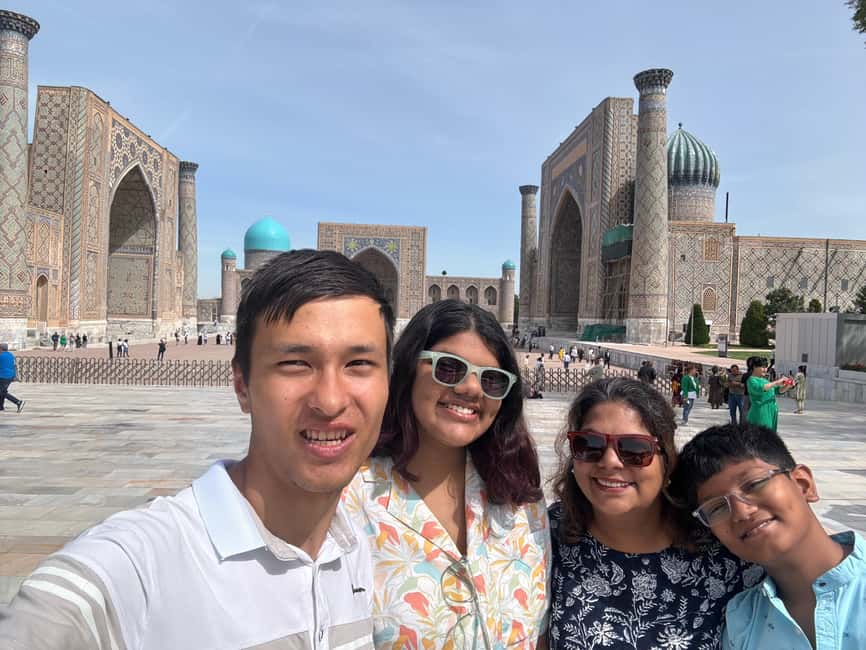
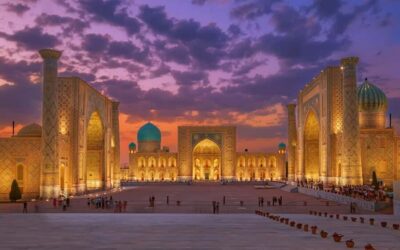
Registan receives about an hour, and that is sensible. You need time to stand in the square, study the façades, take photographs, and enter the madrasahs if access is available.
Three monumental schools frame the square: Ulugh Beg Madrasah, Sher-Dor Madrasah, and Tilla-Kari Madrasah. Their scale can make the space feel almost unreal. Yet your guide brings it back to everyday use by explaining that Registan was once a center of Islamic education and public life.
Ulugh Beg is a particularly useful stop because he was both ruler and astronomer. His presence shows that Timurid Samarkand was not focused only on military success or royal display. Science and education mattered here too, and the square reflects that wider ambition.
Sher-Dor has some of the most memorable decoration. Look for the lion-like figures on its façade, a detail that raises questions about symbolism and Islamic artistic traditions. Tilla-Kari is known for its golden interior dome, which gives the building a warmer, more enclosed character than the open square suggests.
The tilework rewards a slow look. You can study the repeated patterns, symmetry, inscriptions, and color changes rather than treating the square as one large photograph. The astronomical connection is another detail that gives the place more meaning. Ulugh Beg’s interest in the stars was not separate from his role as ruler. It formed part of the intellectual life he encouraged.
You also have time for souvenirs and independent exploration. That flexibility matters because guided explanations and personal looking require different speeds. The square is the busiest and most visually demanding stop, so do not spend every minute holding a camera. Put it down for a moment and look up.
More Walking Tours in Samarkand
- Samarkand: Historical Monuments Guided Walking Tour
★ 4.8 · 446 reviews - Samarkand One Day Tour: one day walking & group tour
★ 4.4 · 87 reviews - Samarkand: Historical Monuments Group Walking Tour
★ 5.0 · 29 reviews - Samarkand Historical City Highlights Guided Walking Tour
★ 5.0 · 22 reviews
Bibi-Khanum Mosque and Temur’s ambition
The next major stop is Bibi-Khanum Mosque, with about 30 minutes for the visit, guided talk, and photographs. The mosque was built by Temur for his beloved wife and was once among the largest in the Islamic world.
Its size tells you something about Temur’s rule. Bibi-Khanum was not designed to be modest. It was a public statement of wealth, power, and devotion, with massive architectural forms that still dominate the surrounding area.
The romantic story connected to the mosque includes a jealous architect. It is the sort of human detail that can make a large ruin easier to remember, though you should treat the tale as part of the monument’s storytelling tradition rather than the only way to understand it.
Inside and around the mosque, look for the huge marble Qur’an stands. They offer a small-scale contrast to the enormous building. The stands are physical reminders that the mosque was intended for religious use, not only royal display.
You also hear about the mosque’s decline and modern restoration. That history is important because the building you see today reflects both Timurid construction and later efforts to preserve it. Restoration can make a monument look complete, but it can also hide how much time, damage, and repair shaped the site.
The 30-minute visit is enough for an introduction and photographs. If you are an architecture enthusiast, you may want more time afterward to return at your own pace. On the guided walk, Bibi-Khanum works best as a focused stop between Registan and the final religious sites.
Hazrat Khizr Mosque and the view over Samarkand
The route then moves to Hazrat Khizr Mosque, one of Samarkand’s oldest functioning mosques. The visit is listed at roughly 20 minutes, and the mood changes again.
Hazrat Khizr is dedicated to the immortal saint Khizr, who is associated with protection for travelers. That connection feels especially fitting on a walking tour through one of Central Asia’s historic crossroads. The mosque also gives you panoramic views over Shah-i-Zinda and old Samarkand.
This is the place to pause and connect the separate monuments. From a higher position, you can see how the city’s famous religious and royal buildings relate to one another. The view also provides a break from close-up tilework and enclosed courtyards.
The tomb of Islam Karimov, Uzbekistan’s first president, is nearby. Your guide can place this modern national site beside the much older religious monuments, giving you a wider view of how Samarkand’s past and present are presented together.
Because Hazrat Khizr is an active mosque, respectful clothing is important. Photography is allowed at most sites on the tour, but religious spaces deserve extra care. Follow your guide’s direction and avoid treating the mosque like a decorative photo backdrop.
Shah-i-Zinda, the strongest finish
The final major stop is Shah-i-Zinda, known as the Living King. The visit includes about 40 minutes of guided sightseeing and free time. For many people, this is the most atmospheric part of the walk.
The necropolis developed between the 11th and 15th centuries and contains more than 20 richly decorated mausoleums. Its narrow passage is lined with blue tiles, patterned façades, star-shaped domes, and detailed surfaces that invite close inspection.
The complex includes the tomb of Qusam ibn Abbas, described as a cousin of Prophet Muhammad. You also hear about Timurid princesses and the artisans buried here. Those stories help you see Shah-i-Zinda not as one monument, but as a long record of faith, family, status, and craft.
The quiet here is part of the experience. After Registan’s open grandeur and Bibi-Khanum’s huge scale, Shah-i-Zinda asks you to move slowly and look carefully. Tile colors change with the angle of the light, and small decorative details can be more rewarding than the overall view.
There are practical points to remember. You will be walking through a historic necropolis, so comfortable shoes are essential. The route may feel tiring if you have limited mobility, and the tour is not designed for people over 70, people with diabetes, or young children. The restrictions are unusually broad, including children under 11, so check the current suitability details before booking for a family group.
What $26 gets you
At $26 per person, this is good value if you want guided access to Samarkand’s main monuments without arranging several separate visits. The tour covers five major historic sites, includes a guide in English or Russian, and keeps the group to no more than 10 people.
The value comes mainly from the explanation. A self-guided visit still gets you the domes, courtyards, and tilework, but it may not give you the stories about Temur’s burial, Ulugh Beg’s astronomy, the symbolism at Sher-Dor, or the restoration of Bibi-Khanum. Faridun’s strength is turning those details into a connected account.
Meals are not included, and you need to arrange your own transportation to the Amir Temur monument. The tour itself is on foot, so you should budget for water and any snacks you want before or after the walk. Carry both cash and a credit card, since the practical information recommends both.
The planned duration is 3.5 hours. Faridun has also been described as spending much longer with some groups, from 9 in the morning until 3 in the afternoon. Do not assume that every booking includes a six-hour outing, but this does suggest that the guide may adapt the pace and answer questions rather than rushing people through each stop.
Who should book this Samarkand walk?
I would choose this tour if you are visiting Samarkand for the first time and want a strong historical foundation. It suits adults, older children who can manage several hours of walking, architecture fans, and anyone who prefers a guide who welcomes questions.
It is also a good match if you are continuing elsewhere in Uzbekistan. Faridun has offered onward travel tips, and several comments describe him as friendly, patient, prepared, and passionate about his work. That personal attention can be useful when you are trying to understand transport, routes, or what to see next.
I would hesitate if you want a slow photographic tour, a food-focused experience, or a route with little walking. The schedule is packed with major monuments, and 3.5 hours leaves limited time for lingering. You should also look elsewhere if you need transport from your hotel, since getting to the meeting point is your responsibility.
Free cancellation up to 24 hours before the start and the option to reserve now and pay later make the booking less rigid. Starting times vary, so check availability before planning the rest of your day.
Should you book it?
Book this tour if you want the essential Samarkand sights explained in one well-planned walk. The $26 price is reasonable, the group is small, and Faridun receives strong praise for detailed history, patience, and practical advice.
Skip it if you cannot comfortably walk for several hours or if your priority is unhurried photography. For most first-time visitors, though, the route gives you exactly what you need: a clear introduction to Amir Temur, the Timurid age, Samarkand’s great religious buildings, and the quiet beauty of Shah-i-Zinda.
FAQ
Where does the Samarkand walking tour begin?
The meeting point is the Amir Temur monument on University Boulevard Street. Look for the equestrian statue and cross the pedestrian crossing carefully.
How long does the tour last?
The planned duration is 3.5 hours. Starting times depend on availability.
What language is the tour offered in?
The live guide speaks English or Russian.
How large is the group?
The tour is limited to 10 participants, making it a small-group experience.
Which major sights are included?
The route includes the Amir Temur monument, Gur-e-Amir Mausoleum, Registan Square, Bibi-Khanum Mosque, Hazrat Khizr Mosque, and Shah-i-Zinda.
Is transportation included?
Transportation to and from the meeting point is not included. The experience itself is a walking tour.
Are meals included?
No. Meals are not included in the $26 price.
What should I wear?
Wear comfortable clothes and shoes for several hours of walking. Respectful clothing is recommended when visiting the mosques.
Is photography allowed?
Photography is allowed at most of the sites. Use extra care and follow instructions at functioning religious spaces.
Can I cancel the booking?
You can cancel up to 24 hours in advance for a full refund. You can also reserve now and pay later.
Just added in Samarkand
- Wine tour in Samarkand (Baguizagan) English★ 5.0 · 2 reviews
- Uzbek wedding ceremony★ 5.0 · 2 reviews
- The Golden City of Samarkand: A Self-Guided Audio Tour★ 4.0 · 4 reviews
- Samarkand Capital of Amir Timur Private Tour with Transport★ 5.0 · 3 reviews
- Shakhrisabz Private Day Tour from Samarkand★ 5.0 · 4 reviews
- Tadjikistan 7 Lakes Day Trip from Samarkand with Lunch★ 5.0 · 5 reviews
- Seven Lakes Panjakent: One-Day Adventure from Samarkand★ 5.0 · 3 reviews
- “Hidden Paradise: Seven Lakes & Voru Village in 2 Days”★ 5.0 · 2 reviews
Walking Tours in Samarkand, compared.
Samarkand One Day Tour: one day walking & group tour
Read our review →
Samarkand Historical City Highlights Guided Walking Tour
Read our review →

Samarkand Walking Tour History Culture and Hidden Gems
Read our review →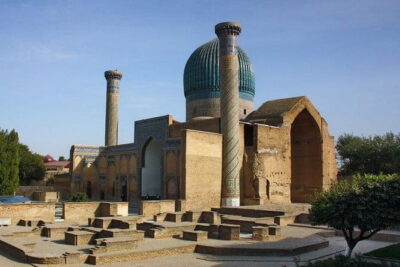
Browse the lists this tour appears in