
Review · 1-DAY TOURS
Panjakent day trip from Samarkand
Two countries, one long day. This private trip from Samarkand gives you a compact introduction to Tajikistan, combining the ancient Sogdian city of Panjakent, the 5,500-year-old site of Sarazm, a local bazaar, and a handsome village mausoleum. I especially like the chance to visit places that feel very different from Samarkand, and I value having air-conditioned transport, lunch, entrance fees, and a private guide included. The main drawback is simple: Panjakent’s sights are archaeological and modest, so the day may disappoint you if you expect another Samarkand filled with grand tiled monuments.
The tour takes about six to seven hours and costs $150 per person. That price makes better sense for a private group than for one person traveling alone, since transport, guiding, lunch, taxes, and admissions are covered. The border crossing has gone smoothly on at least one outing, and guide Umar received high praise for his English and clear explanations. Still, you should allow for the possibility that the crossing and the five scheduled stops may make the day feel tightly packed.
In This Review
- The five details that shape the day
- Crossing from Samarkand into Tajikistan
- Mukhammad Bashoro Mausoleum in Mazari Sharif
- Ancient Panjakent and the Sogdian past
- Panjakent Bazaar in a 30-minute burst
- Rudaki Museum and the father of Persian poetry
- Sarazm, a settlement from 3500 BC
- What the $150 price really buys you
- Who will enjoy this Panjakent outing
- Final call: book it for history, skip it for grand sights
- FAQ
- How long does the Panjakent day trip take?
- What is included in the price?
- Is this a private tour?
- Which places are visited?
- How much does the experience cost?
- Can I cancel for a full refund?
The five details that shape the day
- Sarazm dates back roughly 5,500 years, making it far older than Ancient Panjakent and the first World Heritage Site in Tajikistan.
- Ancient Panjakent was the easternmost city of Sogdiana, flourishing from the fifth to eighth centuries AD.
- Mukhammad Bashoro Mausoleum sits in Mazari Sharif, a village east of Panjakent, away from the main road.
- A private format keeps the schedule flexible, with only your group taking part.
- Lunch, admission fees, and an air-conditioned vehicle are included, which removes several small costs on a border-crossing day.
- The experience is better for archaeology and local life than for grand architecture, a crucial point when deciding between Panjakent and the Seven Lakes.
Crossing from Samarkand into Tajikistan
The appeal begins before the monuments. You leave Samarkand in Uzbekistan and cross into Tajikistan, turning a standard day trip into a short two-country journey. That change of setting is part of the experience, not just a practical step between sights.
The available information does not give a fixed border schedule or specific document requirements, so you should confirm those details before booking. The trip includes pickup, and the vehicle is air-conditioned, a useful comfort when several stops and a border crossing are packed into one day.
The private setup matters here. You do not share the activity with a large group, and the guide can keep the conversation moving at your pace. One especially strong account praised Umar’s English and the smooth handling of the crossing. That is useful because a guide who can explain both the process and the places ahead makes the day feel less like a transfer and more like a proper introduction to Tajikistan.
I would not choose this trip if you want a slow morning with long stops. Six to seven hours is efficient, but it leaves little room for delays or extended wandering. I would choose it if you have a limited stay in Samarkand and want to add Tajik history without arranging a separate overnight trip.
A few more options to weigh up in Samarkand
- Samarkand: Historical Monuments Guided Walking Tour
★ 4.8 · 446 reviews - Private Samarkand City Tour With Transportation
★ 5.0 · 149 reviews - A City Tour Of Samarkand: The Pearl Of The East
★ 5.0 · 133 reviews
Mukhammad Bashoro Mausoleum in Mazari Sharif
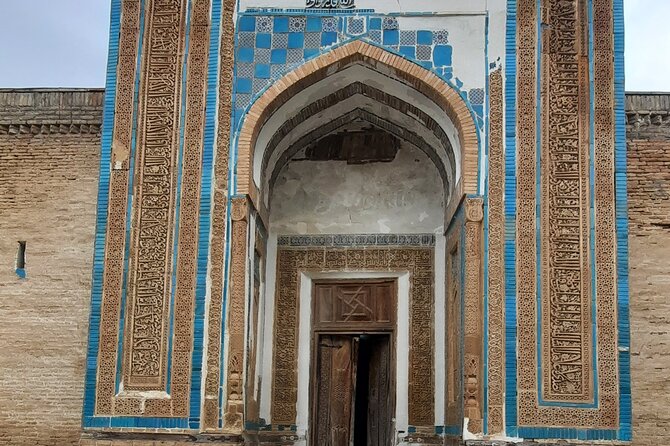
The first major stop is the Mausoleum of Mukhammad Bashoro, located east of Panjakent on a side road in the small village of Mazari Sharif. Its position gives the visit a quieter, more local feel than a central city monument.
The building dates from the 11th or 12th century. Later work in 1342 and 1343 added a large, deep arched shrine, small corner rooms, and a group of corridors. Those additions help you read the monument as a place that developed over time rather than as a single finished structure.
I like this stop because it gives the day a medieval Islamic monument before the itinerary turns to much older ruins. The architecture is also a useful counterpoint to Samarkand’s famous Timurid buildings. You are not simply seeing more blue tile and grand city squares. You are visiting a religious site with a different scale and a more rural setting.
The two-hour allocation is generous compared with the one hour at Ancient Panjakent or the 30 minutes at the bazaar. That may suit you if you enjoy architectural detail and want time for the guide’s explanation. If your interest is mainly in large, dramatic ruins, the mausoleum could feel like too much time at one building.
Admission is included, so you do not need to budget a separate entry fee here. The itinerary does not specify interior access or any special dress requirements, so ask the guide for practical instructions on arrival.
Ancient Panjakent and the Sogdian past
Ancient Panjakent is the historical heart of the excursion. The settlement began as early as the fifth century BC, but its major growth came in the fifth century AD. From the fifth through the eighth centuries, it became the easternmost city of Sogdiana.
That name matters. The Sogdians were the people who helped connect Central Asia through long-distance trade and city life. Ancient Panjakent lets you see their world through excavated streets, buildings, and fragments rather than through a polished modern reconstruction.
The one-hour visit is enough for an introduction, but it is not a full archaeological study. You will see the remains of a once important town, then rely on the guide to explain what the foundations and ruins meant. I would pay close attention to the layout of the settlement and ask how the city functioned, since bare walls can be difficult to interpret without context.
This is also the stop most likely to divide opinion. After the decorated madrasas, mosques, and mausoleums of Samarkand, Ancient Panjakent can look restrained. Much of its appeal lies in age, setting, and historical importance. If you need intact buildings and polished presentation, you may find the remains underwhelming.
If you enjoy early Central Asian history, the site is far more rewarding. It shows that Samarkand was not the only important center in the region, and it places Tajikistan within the same broad Silk Road story from a different angle. The admission fee is included, and the private guide is particularly valuable here because the ruins require explanation.
Panjakent Bazaar in a 30-minute burst
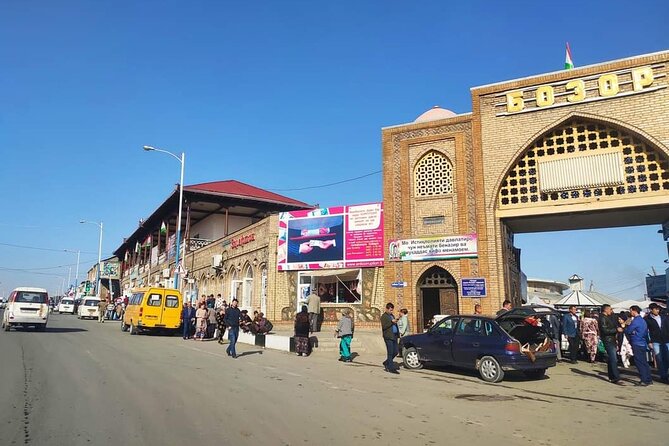
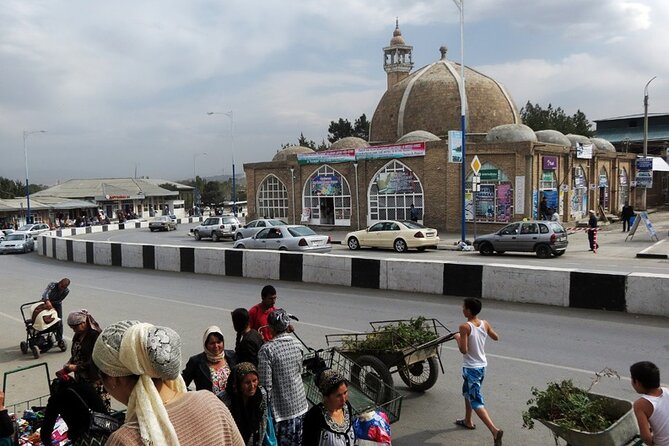
The Panjakent Bazaar offers a change of pace. After two historic sites, you spend about 30 minutes among daily trade and local movement. The market is reached through an ornate gate, and the morning rush brings a strong sense of ordinary city life.
Half an hour is short, but that is probably the right length for this itinerary. You can get your bearings, look at the goods, and observe the rhythm of the market without losing the rest of the day to shopping. I would treat it as a quick cultural stop rather than a place for a long buying session.
The market may be one of the most useful parts of the trip if you want to see present-day Panjakent, not only its ancient remains. Floral clothing and headscarves are part of the visual scene described for the morning market, and the ornate entrance gives the stop a clear sense of place.
The downside is timing. If the day runs late, 30 minutes can pass quickly. The tour includes lunch, but the details of where and when that meal takes place are not specified. I would use the bazaar for observation and save serious shopping for another outing unless your guide confirms you have extra time.
A completely different kind of day:
- Full Day Private Tour in Seven Lakes from Samarkand
★ 5.0 · 94 reviews - Samarkand One Day Tour: one day walking & group tour
★ 4.4 · 87 reviews - Samarkand: Shahrisabz Day Trip with Optional Local Guide
★ 4.9 · 81 reviews - Guide / excursion service in Samarkand
★ 5.0 · 57 reviews
Rudaki Museum and the father of Persian poetry
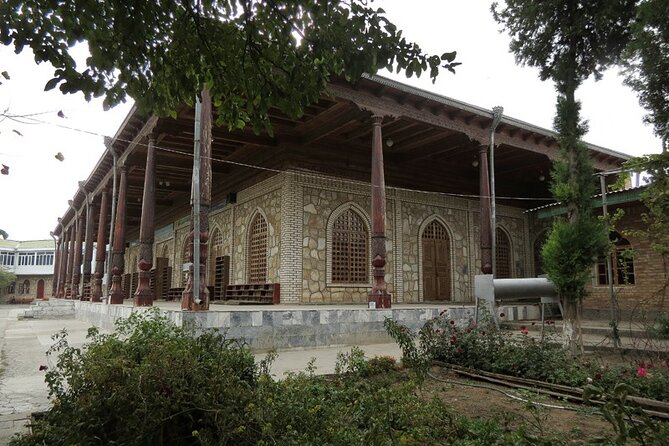
The Republican Museum of History and Local Lore of Rudaki fills roughly one hour. It is housed in a single-storey building with white Doric columns and a floral display, a look that contrasts with the rougher archaeological sites.
A room is devoted to Abu Abdullah Rudaki, who lived from 858 to 941 and is known as the father of Persian poetry. That connection gives the museum a cultural focus beyond archaeology. You are not only looking at objects from the area. You are also meeting one of the major literary figures linked to the Persian-speaking world.
The museum is a sensible stop for anyone who wants help connecting Panjakent’s ancient past with its later cultural identity. I would listen carefully to the guide here, since local museums often make more sense when someone explains the people and traditions behind the displays.
The one-hour visit may be ideal for a history-minded visitor, though less appealing if museums are not your thing. The building’s elegant exterior can make it feel more formal than the bazaar, while the collection itself may require patience and explanation. Admission is included.
Sarazm, a settlement from 3500 BC
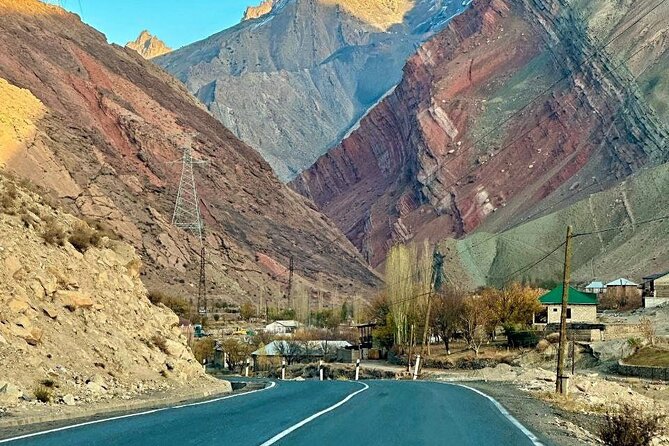
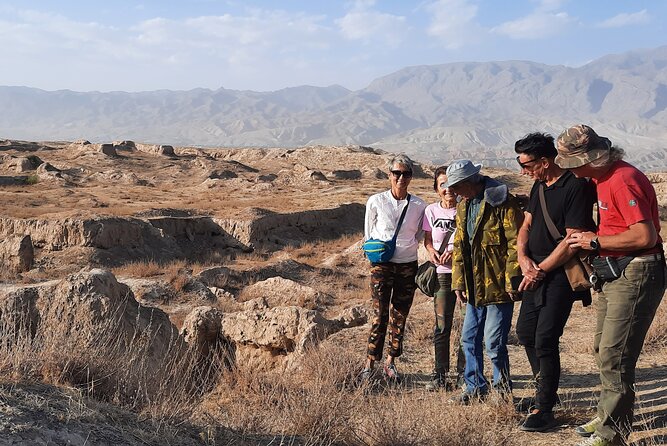
Sarazm is the oldest site on the route and, for many people, the most important. The settlement was founded around 3500 BC and has a history of about five and a half thousand years. It is recognized as Tajikistan’s first World Heritage Site.
That age changes the scale of the day. Ancient Panjakent introduces you to the Sogdian period, but Sarazm takes you back thousands of years earlier, to a proto-urban settlement before the Sogdian city existed. The site includes well-preserved palace and religious buildings, along with public and residential structures.
You have about 90 minutes here, the longest archaeological stop. That gives you time to grasp the size and purpose of the settlement, though the remains still depend on interpretation. I would ask the guide to explain how Sarazm differed from Ancient Panjakent and what makes it a proto-urban site rather than simply an old village.
Sarazm is a strong reason to choose this excursion over a quick city tour. It offers a rare chance to see the very early roots of settled life in the region. At the same time, the site will not provide the visual drama of a restored palace or a complete ancient street. You are looking at exposed remains, and your enjoyment will depend on your interest in archaeology.
The visit also works well as the final historical stop because it gives the whole day a clear timeline: Sarazm’s prehistoric settlement, the later Sogdian city, medieval religious architecture, and modern Panjakent life at the bazaar and museum.
What the $150 price really buys you
At $150 per person, this is not a bargain day trip for a solo visitor. The value improves when two or more people share the private activity, since the vehicle and guide serve the whole group.
You receive an air-conditioned vehicle, pickup, lunch, all taxes, and admission fees. Those inclusions matter because a border-crossing trip has several moving parts. You are paying for transport between separated sites, a guide who can explain the history, and a prepared route rather than piecing together the day yourself.
I see the price as reasonable for a small private group that wants efficiency and a cross-border introduction. It is less convincing if your main goal is simply to walk around Panjakent or see one archaeological site. In that case, the full itinerary may offer more than you need.
Alcoholic drinks are not included. That is a minor point, but lunch itself is included, so you should not confuse the two.
The tour is often reserved well ahead of time, with an average booking lead time of about 45 days. That suggests you should not leave it until the last moment if the date matters to you. Confirmation is provided at booking, and free cancellation is available until 24 hours before the start time. Poor weather can also lead to a new date or a full refund.
Who will enjoy this Panjakent outing
I would recommend the trip to you if you:
- Want to add Tajikistan to a Samarkand stay without spending a night away.
- Care about Sogdian, prehistoric, and medieval Central Asian history.
- Prefer a private vehicle and guide to arranging several sites yourself.
- Enjoy seeing markets and local museums alongside ancient ruins.
- Are comfortable with a full schedule and a short border-crossing day.
I would hesitate to recommend it if your ideal Tajikistan day means mountains, lakes, and long scenic stops. One direct comparison favors the Seven Lakes for a day trip from Samarkand, especially if you are looking for dramatic scenery rather than archaeology.
Your expectations matter more than the rating. Panjakent is not a smaller copy of Samarkand. Its appeal is quieter and more specialized. You come for layers of time, from Sarazm’s 3500 BC settlement to the Sogdian city and the medieval mausoleum. You also get a glimpse of modern life in the bazaar and a literary link through Rudaki.
Final call: book it for history, skip it for grand sights
I would book this day trip if you want a well-organized, private introduction to Tajikistan and you are genuinely interested in ancient sites. Sarazm and Ancient Panjakent give the day a strong historical purpose, while the mausoleum, market, and museum keep it from becoming five hours of ruins.
I would skip it in favor of the Seven Lakes if your priority is scenery, open space, or a slower day. I would also think twice if Samarkand’s monumental beauty has left you expecting every stop to deliver tiled grandeur.
For the right person, this is a valuable side trip: efficient, culturally focused, and unusually broad in time. Go with realistic expectations, listen closely to the guide, and judge Panjakent on its own terms rather than against Samarkand.
FAQ
How long does the Panjakent day trip take?
The experience lasts approximately six to seven hours.
What is included in the price?
The price includes pickup, an air-conditioned vehicle, lunch, all fees and taxes, and admission to the included sites.
Is this a private tour?
Yes. Only your group takes part in the activity.
Which places are visited?
The route includes the Mausoleum of Mukhammad Bashoro, Ancient Panjakent, Panjakent Bazaar, the Republican Museum of History and Local Lore of Rudaki, and the proto-urban site of Sarazm.
How much does the experience cost?
The listed price is $150 per person.
Can I cancel for a full refund?
Yes. You can cancel at least 24 hours before the scheduled start time for a full refund. If poor weather causes the experience to be canceled, you will be offered another date or a full refund.
Just added in Samarkand
- Wine tour in Samarkand (Baguizagan) English★ 5.0 · 2 reviews
- Uzbek wedding ceremony★ 5.0 · 2 reviews
- Samarkand Capital of Amir Timur Private Tour with Transport★ 5.0 · 3 reviews
- The Golden City of Samarkand: A Self-Guided Audio Tour★ 4.0 · 4 reviews
- Seven Lakes Panjakent: One-Day Adventure from Samarkand★ 5.0 · 3 reviews
- Shakhrisabz Private Day Tour from Samarkand★ 5.0 · 4 reviews
- Tadjikistan 7 Lakes Day Trip from Samarkand with Lunch★ 5.0 · 5 reviews
- “Hidden Paradise: Seven Lakes & Voru Village in 2 Days”★ 5.0 · 2 reviews
1-Day Tours, compared.
Samarkand One Day Tour – Departure From Tashkent
Read our review →
Samarkand One Day Tour: one day walking & group tour
Read our review →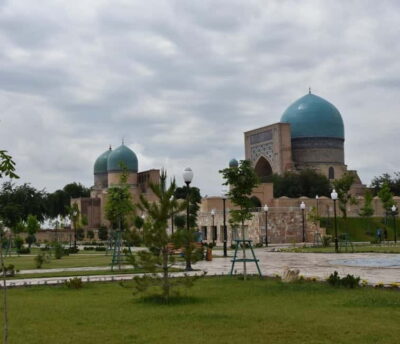
Browse the lists this tour appears in