
Review · HISTORICAL TOURS
10 Days Private Historical Tour of Uzbekistan
Uzbekistan rewards the curious visitor. This private 10-day tour links the country’s great Silk Road cities with mausoleums, mosques, bazaars, museums, and a night in a yurt camp. I especially like the door-to-door transport, which takes the strain out of long distances, and the chance to see both grand monuments and everyday places such as Chorsu Bazaar and Siyob Bozori. The main drawback is the pace: you cover a lot of ground, and several days include long transfers or many historic sites in succession.
The itinerary is a strong fit if you want one organized trip rather than a collection of separate city stays. Guide Amin has been praised for his patience, historical knowledge, and ability to work with families and younger groups. Still, you should be ready for early starts, repeated walking on historic paving, and a schedule that leaves little room for an unplanned afternoon.
In This Review
- Key points to know before booking
- What $2,240 covers across ten days
- Tashkent: a useful first look at modern Uzbekistan
- Khiva: a concentrated day inside Ichan Kala
- Bukhara: trading domes and the Kalyan complex
- Aidarkul Lake and a night in a yurt
- Samarkand: Timurid grandeur in two stages
- Shahrisabz: Timur’s birthplace and a mountain dish
- Pace, guide service, and practical comfort
- Should you book this Uzbekistan tour?
- FAQ
- Is this a private tour?
- How long does the tour last?
- What cities and areas are included?
- Is the domestic flight included?
- Are train journeys included?
- Are meals included?
- Is accommodation included?
- Can I cancel for a full refund?
Key points to know before booking
- Five major destinations in one trip: Tashkent, Khiva, Bukhara, Samarkand, and Shahrisabz are all included.
- Transport is mostly handled for you: The package includes modern air-conditioned vehicles, trains, and the domestic Tashkent to Urgench flight.
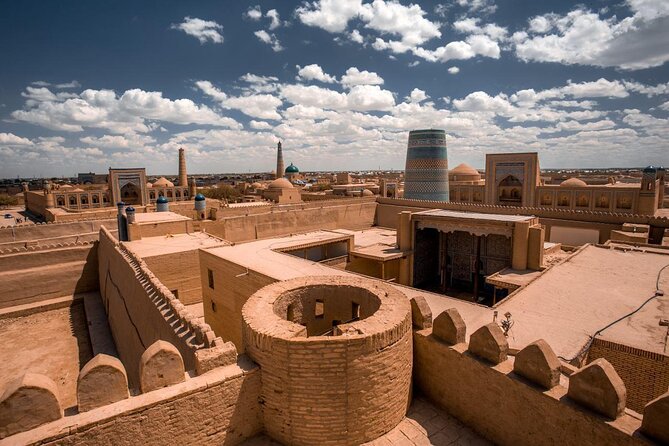
- Khiva’s Ichan Kala gets a full day: You visit the old citadel, palaces, mosques, madrasahs, and mausoleums within the walled city.
- A yurt camp and Aidarkul Lake break up the monuments: You can experience a nomadic setting and camel riding between Bukhara and Samarkand.
- Meals and entry fees are built in: Breakfast, lunch, dinner, monument tickets, taxes, and listed fees are included.
- This is genuinely private: Only your own group participates, useful for families or friends who want control over the pace.
What $2,240 covers across ten days
At $2,240 per person, this is not a budget independent trip, but the price covers many costs that quickly add up in Uzbekistan. You receive eight nights in single or shared double accommodation, one night in a yurt camp, the domestic flight, all train journeys in economy class, private transfers, a guide from start to finish, entrance tickets, taxes, WiFi on board, and nine breakfasts, nine lunches, and nine dinners.
That bundle makes the price easier to judge. You are not simply paying for sightseeing. You are also paying to avoid arranging separate hotels, train tickets, airport transfers, monument admissions, and intercity transport. The value is strongest for someone who wants one point of contact and does not want to manage the practical details of moving across the country.
International flights are not included. Tips and gratuities are also extra, so allow room for those costs. Group discounts are available, which may make the tour more appealing for friends or family traveling together.
The private format matters here. A large coach group can make a historic city feel like a timetable exercise. With only your own party, you can ask more questions, request food suitable for vegetarian, vegan, or gluten-free diets, and discuss adjustments with the guide. The published information says most people can participate, and service animals are allowed.
More history tours in Tashkent:
- Samarkand: Historical Monuments Guided Walking Tour
★ 4.8 · 446 reviews - Khiva: Historical City Highlights Guided Walking Tour
★ 4.8 · 156 reviews - Khiva Historical City Highlights Guided Walking Tour
★ 5.0 · 30 reviews
Tashkent: a useful first look at modern Uzbekistan
Your arrival transfer takes you from Tashkent airport to the hotel, even if your flight arrives late at night, around midnight, or early the next morning. That is a small but important comfort after an international journey.
The second day begins with Amir Temur Square, a central gathering place founded in 1882. Two hours here gives your guide time to explain how the capital has changed and why Amir Temur remains such a major figure in Uzbek identity.
The nearby Amir Timur Museum adds more context. Allow an hour for its displays on the ruler and the Timurid period. I like this pairing because the square gives you the city’s public face, while the museum gives you a more focused historical frame before you reach the older cities.
The Alisher Navoiy Theater provides a different side of Tashkent. This state academic opera and ballet theater has been a national cultural institution for more than eight decades. The visit is scheduled for an hour, so expect an architectural and cultural stop rather than a performance.
At the Courage Earthquake Memorial, your guide can explain the 1966 earthquake that badly damaged Tashkent. The memorial adds modern history to a day otherwise centered on rulers and monuments. It also helps you see the capital as a city rebuilt, not simply a gateway to older places.
The Hazrati Imam complex is one of the day’s most important religious sites. Located in the old Sibzar district, it occupies an area linked with medieval Tashkent, once known as Shash. Give yourself time to take in the religious buildings and ask about the complex’s place in the city today.
Then comes Chorsu Bazaar, one of the best stops for ordinary life. Its huge domes, glazed ceramic decoration, and food stalls make it more than a shopping trip. You can see how people buy produce, bread, and other daily goods. Two hours is generous enough to browse without treating the market like a quick photo stop.
The Tashkent Metro finishes the day. It is the first and currently only metro system in Central Asia, and the tour includes a ride or visit for about an hour. This is a good reminder that Uzbekistan is not only about medieval architecture. The main caution is energy: this is a full sightseeing day after a potentially late arrival.
Khiva: a concentrated day inside Ichan Kala
The itinerary moves west to Khiva, with the domestic Tashkent to Urgench flight included in the package. The supplied schedule does not give the exact flight time or the transfer details after landing, so confirm those points before departure.
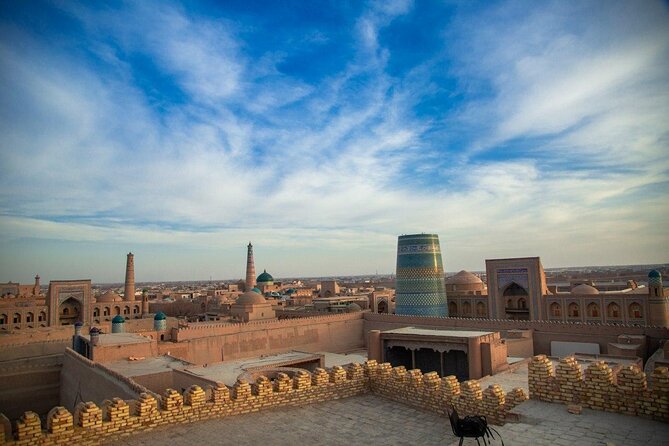
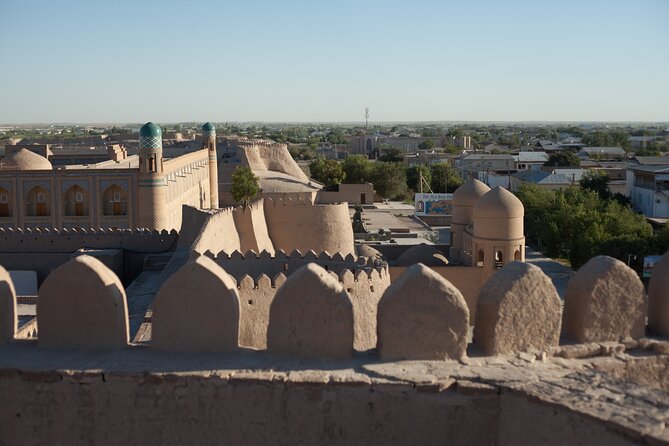
Khiva’s Ichan Kala is the kind of place where the setting does much of the work. Enter through the Ota Darwaza, or West Gate, and you are inside the ancient walled city. The tour then spends the day moving between major buildings, most of them with admission included.
Kunya-Ark, the old castle, was built in the late seventeenth century. Its grounds once held reception rooms and the khan’s offices. An hour here gives you a sense of how government operated inside the city walls.
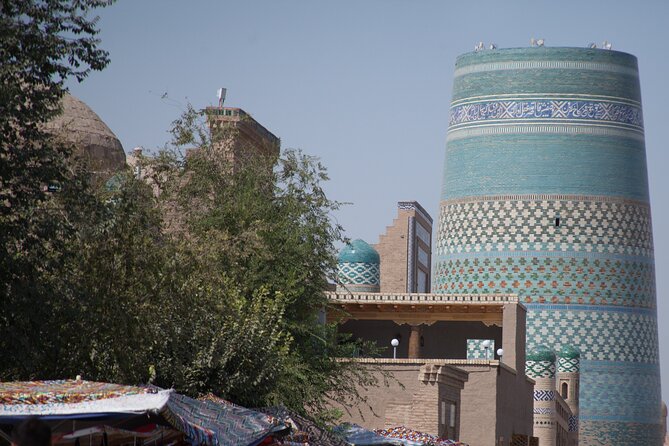
The Mohammed Rakhim Khan Madrassah follows, with another hour to examine its architecture and hear about the khan who commissioned it. Nearby, Kalta Minor Minaret is one of Khiva’s most recognizable sights. It was intended to be much taller but was left unfinished, which explains its unusual, broad appearance.
Toshhovli Palace is one of the strongest stops for understanding royal domestic life. Its courtyards and rooms show a different side of the city from the religious schools and defensive structures.
The Pahlavan Mahmoud Mausoleum brings poetry, philosophy, healing, and local devotion into the day. Pahlavan Mahmoud was known as a poet and philosopher, as well as for heroic strength and healing ability. The site deserves a quieter pace than a quick checklist visit.
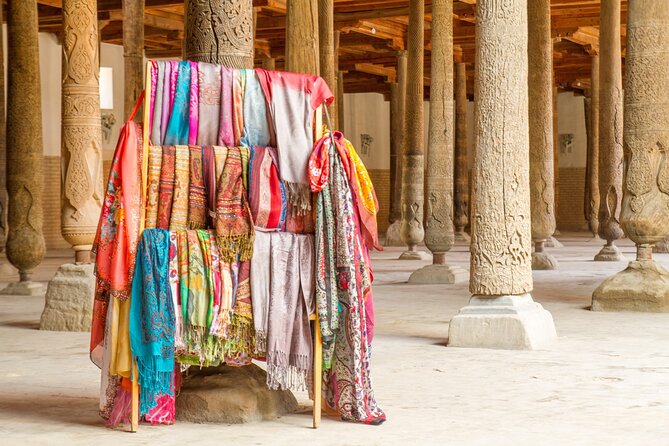
You also see the Mohammed Amin Khan Madrassah and Juma Mosque. Juma Mosque is known for its interior forest of wooden columns, though the supplied description does not promise a particular viewing arrangement, so let your guide set expectations on the day.
Khiva packs a great deal into one day. That is efficient, but it can also feel dense. Wear comfortable shoes, and do not expect every stop to receive equal attention. The benefit of a private guide is that you can say which buildings matter most to you.
Bukhara: trading domes and the Kalyan complex
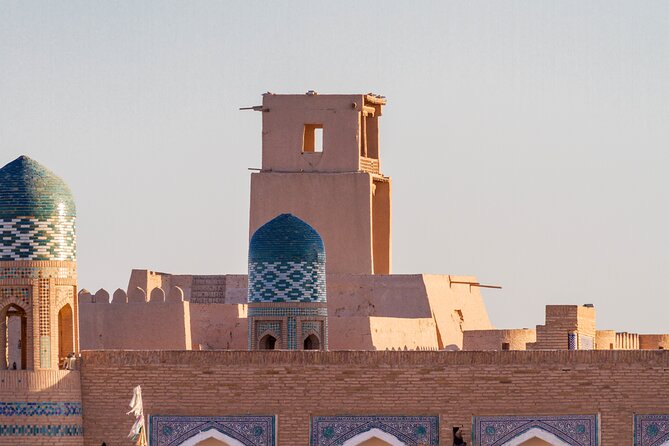
After breakfast, you take the train to Bukhara from 8:23 to 13:35. The journey itself gives you a break from road travel and moves you into one of Central Asia’s best-preserved historic centers.
Bukhara deserves more than a passing stop, and this tour gives you most of the next day for a serious walk through the old city. Lyabi Khause Square is the natural starting point. Its name refers to the shore of a reservoir, and the ensemble grew around an artificial pool dug in 1620 between a khanaka and madrassah.
The Maghak-i Attari Mosque is close by. Its name means deep mosque, a reference to its partly sunken position. The building reflects several periods between the twelfth and sixteenth centuries, and its location beside an old bazaar helps explain Bukhara’s long commercial life.
The trading domes are a pleasure to explore because they are part monument, part working marketplace. Toki Sarrofon, Toqi Telpakfurushon, and Toqi Zargaron each served different trades, including money changing, hat selling, and jewelry. You may find souvenirs here, but the real value is seeing how commerce was built into the city’s architecture.
Poi-Kalyan is Bukhara’s grand visual centerpiece. The complex includes the Kalyan Minaret, the Mir-i-Arab Madrassah, and the Kalyan Mosque, built across the twelfth to sixteenth centuries. Set aside time simply to look across the square. It is one of those places where the scale becomes clearer when you stop moving.
The Ark of Bukhara is the oldest monument on the route through the city. Archaeological work places its origins in the fourth or third century BC, and its 3.9-hectare fortress once held the city’s ruling center. Two hours allows a more substantial visit, though the citadel involves uneven surfaces and some walking.
Bukhara is a highlight for architecture, but the schedule is still active. If you care most about religious buildings or the trading domes, tell Amin early so he can give those interests proper weight.
A few more options to weigh up in Tashkent
- Best of Tashkent Mountains: Amirsoy, Chimgan & Charvak Trip
★ 4.8 · 567 reviews - Samarkand One Day Tour – Departure From Tashkent
★ 5.0 · 313 reviews - Tashkent City Tour
★ 5.0 · 121 reviews - Amirsoy, Chimgan & Charvak Full-Day Adventure
★ 4.9 · 82 reviews
Aidarkul Lake and a night in a yurt
The journey from Bukhara to Nurata and Aidarkul Lake changes the mood completely. Instead of courtyards and tiled façades, you spend about seven hours traveling toward a yurt camp and one of Uzbekistan’s largest lakes.
The yurt night is valuable because it adds a rural and nomadic element to a trip otherwise centered on cities. Camel riding is included in the planned experience, and you have a chance to see how the tour connects Uzbekistan’s historic trade routes with life outside the major urban centers.
This is also the tour’s clearest compromise. A seven-hour transfer is a long day, and the yurt camp is not a substitute for a conventional hotel. If your main aim is architecture, this day may feel like a detour. If you want variety and a pause from tiled monuments, it is one of the most memorable parts of the route.
The itinerary does not specify the exact yurt facilities, room arrangements, or how much time you spend beside the lake. Ask about those details if comfort is a priority.
Samarkand: Timurid grandeur in two stages
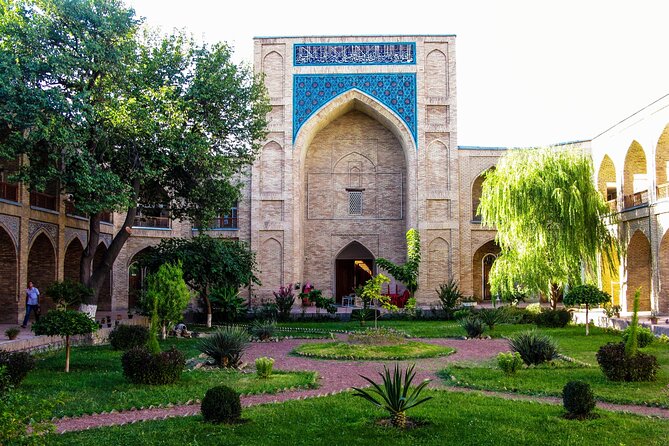
After breakfast at the camp, you continue to Samarkand, reaching the city around midday. The first afternoon covers Gur Emir Mausoleum, Registan Square, Bibi-Khanym Mosque, and Siyob Bazaar.
Gur Emir, the Tomb of the Emir, is closely tied to Amir Temur and the Timurid era. Built in 1404, it is a compact building with a powerful interior and a useful introduction to the dynasty that shaped Samarkand.
Registan receives two hours, which is sensible. The square is formed by three grand madrasahs: Ulugbek, Tilla-Kari, and Sher-Dor. You need time to compare their façades, tiled patterns, and courtyards rather than simply take one photograph and leave.
Bibi-Khanym Mosque was built between 1399 and 1404 and is linked by tradition to Timur’s beloved wife. Its scale is impressive, though the site also illustrates the difficulty of building on such a huge scale in the medieval period.
Siyob Bozori, between Bibi-Khanym and the Shokhi Zinda area, brings you back to daily life. I like having a market after the grand square because it lets you see Samarkand as a living city, not just an outdoor museum.
The next day begins at Shah-i-Zinda, the Necropolis of the Living King. Its line of mausoleums is among Samarkand’s most striking architectural groups, but the visit includes stairs and walking. Plan your footwear accordingly.
Ulugbek Observatory shows the scientific side of the Timurid age. Built in 1428 and 1429, it was a major medieval observatory. The surviving structure and displays help balance the usual focus on palaces, conquerors, and religious buildings.
The silk carpet factory offers a look at traditional craft and production. Two hours is enough to understand the work involved, though shopping expectations should be clear before you go. The Konigil tourist village and paper factory provide another hands-on cultural stop, with mulberry trees connected to the paper-making process.
Shahrisabz: Timur’s birthplace and a mountain dish
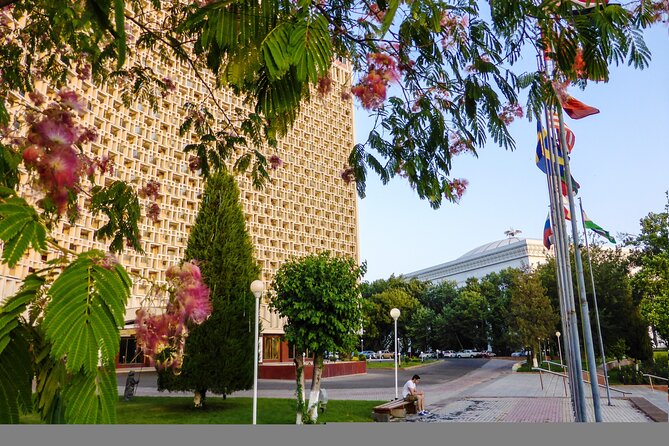
The excursion to Shahrisabz adds a southern chapter to the Timurid story. The city is known as Amir Temur’s birthplace, and the tour gives you time to see its central monuments and try tandoor, a regional mountain dish cooked in a clay oven.
Ak-Saray Palace is the dramatic centerpiece. Amir Temur commissioned it in the late fourteenth century as a grand royal project. Only large sections of the entrance survive, but those remains communicate the scale of his ambition better than a fully intact but smaller building might.
Dorut Tilovat is a religious and memorial complex in the historic center. You also visit Ko’k Gumbaz Mosque, another major Timurid-era monument. Together, these sites make Shahrisabz more than a quick photo stop.
The excursion lasts around two hours for the city portion, but the full transport details are not provided. Confirm how the return to Samarkand or onward airport transfer is arranged, since the final day is reserved for hotel checkout and departure.
Pace, guide service, and practical comfort
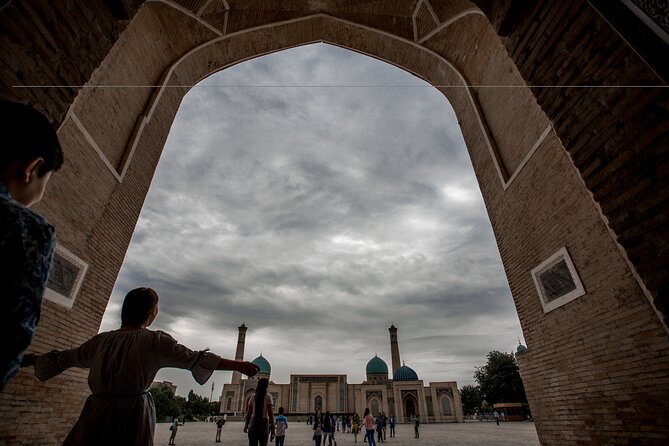
The tour’s strongest practical feature is continuity. One escort guide stays with you from beginning to end, and the same organized structure covers flights, trains, road transfers, accommodation, meals, and admission tickets.
Amin is specifically praised for patience with children and for guiding a group of five American men in their mid-20s. That suggests a flexible style suited to different ages and group types, though your own experience will depend on availability and guide assignment.
Modern air-conditioned vehicles and WiFi on board are useful on the longer road days. The train from Tashkent or the listed Bukhara journey reduces time in a car, while the domestic flight keeps the western part of the country within reach.
The cost of convenience is a fixed rhythm. You will not be choosing every restaurant or deciding each morning whether to sleep late. For most people, that trade is sensible on a first visit, especially in a country where the cities are spread far apart.
Free cancellation is available up to 24 hours before the start time for a full refund. Changes or cancellations inside that period are not accepted for a refund, and the cut-off follows local time.
Should you book this Uzbekistan tour?
I would recommend this tour if you want to see Uzbekistan’s major historic cities in one well-supported trip, especially if you value a private guide, included meals, and transport already arranged. Families may appreciate the patience attributed to Amin, while friends traveling together can make good use of group discounts and the private format.
I would hesitate only if you prefer slow travel. Khiva, Bukhara, and Samarkand each deserve several days, yet this route gives you a broad national picture instead of long stays in one place. Ask about exact hotel names, yurt facilities, flight times, and the daily driving arrangements before paying.
For a first visit, the mix is persuasive: Timurid monuments, Silk Road marketplaces, a working metro, a lake, a camel ride, traditional crafts, and a yurt camp. You will return with more than photographs of blue tile. You will have seen several very different parts of Uzbekistan.
FAQ
Is this a private tour?
Yes. Only your own group participates in the activity.
How long does the tour last?
The tour lasts approximately 10 days.
What cities and areas are included?
The route includes Tashkent, Khiva, Bukhara, Aidarkul Lake and Nurata, Samarkand, and Shahrisabz.
Is the domestic flight included?
Yes. The package includes an economy-class domestic flight from Tashkent to Urgench, with a flight time of about one and a half hours.
Are train journeys included?
Yes. All train journeys listed for the tour are included in economy class. The Bukhara journey is scheduled from 8:23 to 13:35.
Are meals included?
Yes. The package lists nine breakfasts, nine lunches, and nine dinners.
Is accommodation included?
Yes. Eight nights of accommodation in a single or shared double room and one night at a yurt camp are included.
Can I cancel for a full refund?
You can cancel at least 24 hours before the experience starts for a full refund. Cancellations or changes made less than 24 hours before the start time are not accepted for a refund.
Just added in Tashkent
- Uzbekistan and Tajikistan 9-Day Tour★ 5.0 · 1 review
- Tashkent International Airport (TAS) to Tashkent – Arrival Private Transfer★ 5.0 · 2 reviews
- Uzbek Brews & Views: Tashkent Craft Beer Discovery Tour★ 5.0 · 2 reviews
- 8-Day Private Tour in Uzbekistan with Pick Up★ 5.0 · 2 reviews
- Uzbekistan Tour – 6 Days 5 Nights★ 5.0 · 4 reviews
- Uzbekistan Private Tour 6 Days★ 5.0 · 1 review
- Uzbekistan 4 Days Private Tour Tashkent-Bukhara-Samarkand-Tashkent bullet train★ 5.0 · 1 review
- Tashkent to Tashkent International Airport (TAS) – Departure Private Transfer★ 5.0 · 1 review
Historical Tours, compared.
Khiva Historical City Highlights Guided Walking Tour
Read our review →
Samarkand Historical City Highlights Guided Walking Tour
Read our review →
Private Guided Tour Samarkand city history and culture
Read our review →
Bukhara Historical City Highlights Guided Walking Tour
Read our review →
Samarkand Walking Tour History Culture and Hidden Gems
Read our review →Browse the lists this tour appears in