
Review · PRIVATE
8-Day Private Tour in Uzbekistan with Pick Up
Uzbekistan rewards curious, organized explorers. This private eight-day route links Tashkent, Samarkand, Bukhara, Khiva, the Kyzylkum Desert, and Nukus, giving you a broad look at the country’s architecture, food, crafts, music, and Silk Road past. I especially like the included airport pickup and private transport, plus the chance to see both famous monuments and less familiar places such as Ayaz-Kala and the Savitsky Museum.
I also like the balance between grand city sights and everyday cultural stops, including Chorsu Market and the Applied Arts Museum. The main drawback is the pace: six hours by road to Khiva, long sightseeing days, and an early transfer to Nukus make this better for active visitors than for anyone wanting a slow holiday.
In This Review
- Key points to know before booking
- Why this route works for a first visit
- Tashkent begins with old neighborhoods and Uzbek craft
- Samarkand delivers the tour’s grandest monuments
- Bukhara mixes sacred buildings with courtly life
- Bukhara’s palace adds an unexpected European note
- The Kyzylkum road is the price of reaching Khiva
- Khiva is the most complete old-city experience
- Ancient fortresses and Nukus change the tone
- What the $1,090 price really covers
- Who should book this Uzbekistan tour?
- FAQ
- How long is the tour?
- Is this a private tour?
- What meals are included?
- Are airport pickups available?
- Are entrance tickets included?
- What level of fitness do I need?
- Should you book it?
Key points to know before booking
- Private transport keeps a complex route manageable: You move between several cities with a private driver, and airport, train-station, and hotel transfers can be arranged.
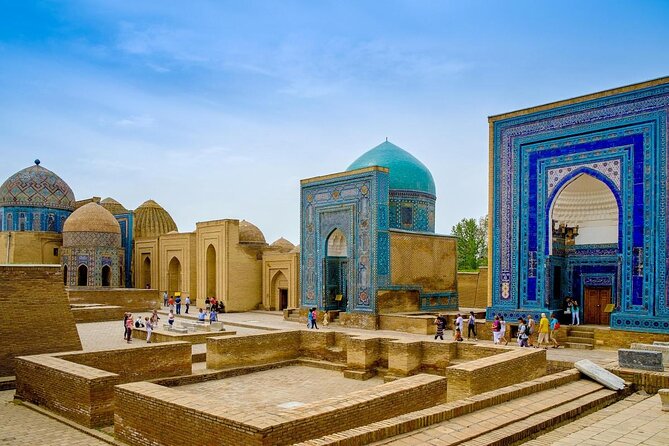
- Samarkand gets a full day of major sights: Registan, Gur Emir, Bibi-Khanym, Shah-i-Zinda, and Ulugbek’s observatory form a strong introduction to Timurid Uzbekistan.
- Bukhara offers two different moods: You see the old city’s mosques, madrasahs, and Ark, then visit the European-style summer palace of the last emir.
- Khiva is reached by a long desert road: The six-hour journey is demanding, but it leads to one of Central Asia’s most intact walled cities.
- Nukus adds a rare art experience: The Savitsky Museum gives this route a cultural finish beyond monuments and religious architecture.
- The price includes eight breakfasts, not full meals: At $1,090 per person, the value rests mainly in the private transport, guiding, admissions, and tight multi-city planning.
Why this route works for a first visit
Uzbekistan is not a compact country of one or two easy bases. The most important places are spread across a large stretch of Central Asia, and reaching them takes time. This tour handles that challenge by building a continuous route from Tashkent to western Uzbekistan, then returning you to Tashkent for your flight home.
That structure is useful if you have only eight days and want more than one city. You get the polished blue tile of Samarkand, the lanes and trading atmosphere of Bukhara, the mud-brick walls of Khiva, desert archaeology, and an unusual modern art collection in Nukus.
The private format is another real advantage. You are not tied to a large coach or a fixed group timetable. The available details indicate private drivers and professional guides in each town, with pickup support between airports, train stations, and hotels. That matters on a route where missed connections or unclear transfers could waste a large part of your day.
Still, this is an ambitious trip. You will spend a lot of time in vehicles, and several days combine multiple historic stops. I would choose it for a first overview of Uzbekistan, not for a restful break based in one city.
A few more options to weigh up in Tashkent
- Best of Tashkent Mountains: Amirsoy, Chimgan & Charvak Trip
★ 4.8 · 567 reviews - Samarkand One Day Tour – Departure From Tashkent
★ 5.0 · 313 reviews - Tashkent City Tour
★ 5.0 · 121 reviews
Tashkent begins with old neighborhoods and Uzbek craft
Your first sightseeing day starts in old Tashkent, where the Barak-Khan Madrasah complex introduces the tile work that appears again and again across Uzbekistan. The nearby Mui-Muborak Library is associated with a seventh-century handwritten Koran on vellum, a striking object for anyone interested in early Islamic culture and manuscripts.
The schedule then turns to the Uzbekistan State Museum of Applied Art. Its setting is part of the appeal. The museum occupies the former mansion of Alexander Polovtsev, an Imperial Russian diplomat who commissioned the decorated home for his collection of Uzbek handicrafts and textiles.
I would allow time to look closely at the fabric work, carved details, and regional designs here. This stop helps you understand Uzbek art as something used in homes and daily life, not only as decoration on monumental buildings. Since the tour focuses on Uzbek traditions, this museum gives the first day a welcome human scale.
After lunch, the route continues through the old part of Tashkent to Chorsu Market and Kukeldash Madrasah. Chorsu is a useful place to see the city as a working commercial center, while Kukeldash adds another sixteenth-century landmark.
The day lasts about eight hours. That is a full opening day, especially if you have just arrived, but the stops are varied enough to keep it from feeling like a string of similar buildings.
Samarkand delivers the tour’s grandest monuments
Day two is the strongest single day for monumental architecture. Registan is the headline sight, with three madrasahs dating from the fifteenth, sixteenth, and eighteenth centuries. Give yourself time to take in the scale of the square before focusing on tile patterns and carved decoration.
Registan can feel almost too polished and monumental at first. A guide is useful here because the three buildings belong to different periods, and the details are easier to appreciate when you know what changed over time.
Gur Emir Mausoleum follows. This is the burial place of Amir Temur, along with his teacher and grandchildren. The site connects architecture with the Timurid rulers who shaped much of the region, so it pairs well with Registan rather than feeling like another unrelated monument.
The Bibi-Khanym Mosque is a shorter visit, listed at about 45 minutes. Built in the fourteenth century and named for a favorite wife of Amir Temur, it gives you another view of the ambition and scale of Timurid building projects.
Shah-i-Zinda is likely to be one of the most memorable stops. This necropolis includes the grave of Kusam Ibn Abbas and the tombs of relatives, officials, architects, and generals connected with Temur’s era. The passage of blue-tiled mausoleums makes the visit more intimate than the vast open space at Registan.
Ulugbek’s observatory completes the day. Ulugbek was Amir Temur’s grandson, a ruler and a noted astronomer and mathematician. This stop adds science to a schedule otherwise dominated by power, faith, and royal display.
The five listed sights take about five hours in total, before time for driving, meals, and breaks. Wear practical shoes and expect substantial walking. Photography fees are not included, so ask your guide about current charges before taking pictures inside sites or museums.
Bukhara mixes sacred buildings with courtly life
After Samarkand, you continue to Bukhara for a walking tour through the old town. Lyab-i-Hauz is the main opening stop, with the Nadir Devan Begi Madrasah, Canada, and Kukeldash Madrasah around the complex.
The water basin at Lyab-i-Hauz gives this part of Bukhara a different feel from the monumental squares of Samarkand. It is a good place to slow down, look at the surrounding buildings, and get a sense of how public life once gathered around water and shade.
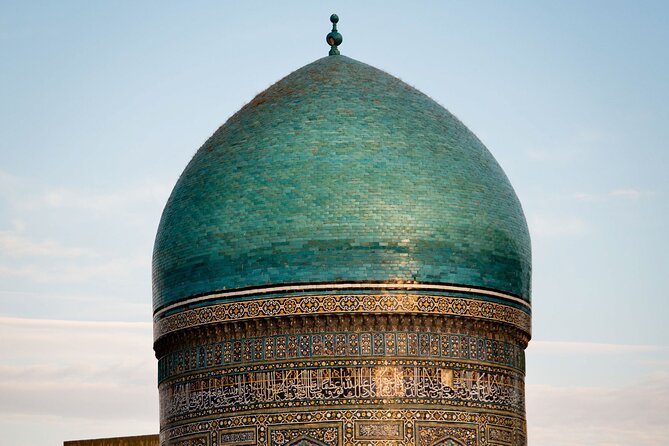
Poi Kalyan Mosque and its minaret are next. Built in the thirteenth century before the Mongol invasion, the mosque was once the largest in Central Asia and remains one of Bukhara’s key symbols. The listed visit is only 30 minutes, so you may want to ask whether there is time to linger for photographs and exterior details.
The Ark of Bukhara shifts the focus from religious buildings to political power. This citadel served the emirs of Bukhara and dates back to the first or second century AD in its earliest history. Its walls, museums, and central position help explain how the city was governed and defended.
The Ismail Samani Mausoleum is smaller but architecturally important. Dating from the ninth or tenth century, it uses brick in intricate patterns rather than relying on colorful tile. That change in material gives you a useful comparison with Samarkand’s blue facades.
Day three includes about four and a half hours of listed sightseeing, but the arrival into Bukhara and walking between places add to the day. Comfortable footwear is essential. The old city is best appreciated at walking pace, but the schedule does not leave unlimited time for wandering.
A completely different kind of day:
- Amirsoy, Chimgan & Charvak Full-Day Adventure
★ 4.9 · 82 reviews - Shymkent Day Tour from Tashkent
★ 4.6 · 71 reviews - Highlights of Tashkent (old and new part)
★ 5.0 · 60 reviews - 2 Days Tour to Bukhara and Samarkand from Tashkent by train
★ 5.0 · 53 reviews
Bukhara’s palace adds an unexpected European note
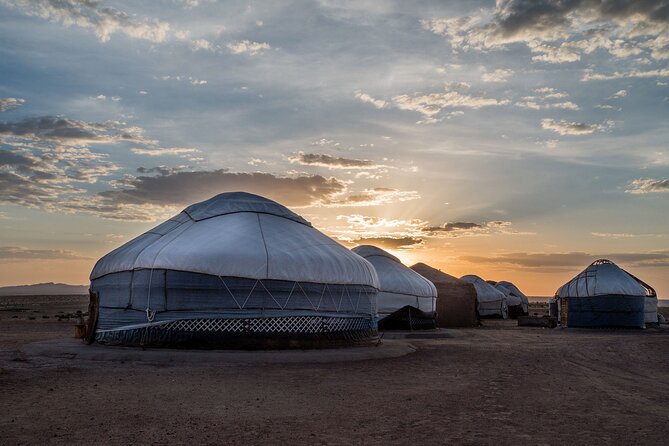
Day four is lighter, with a visit to Chashma Ayub Mausoleum and the Ismail Somoni Mausoleum. Chashma Ayub dates to the ninth century and is linked with the period of Arab expansion in Central Asia. The nearby Ismail Somoni site connects the day with the first Islamic ruler of Central Asia named in the schedule.
The main surprise is the Palace of Moon-like Stars, or Sitorai-Mokhi-Khosa. Built as the summer residence of the last emir of Bukhara, it was designed by a Russian architect in a European style.
That palace keeps Bukhara from becoming a sequence of similar madrasahs and mausoleums. It shows a later period, when local rulers drew on Russian and European design while maintaining their own court traditions.
The two stops take about two hours. I like this pause in the itinerary because it gives you time to absorb Bukhara without another packed day of five major monuments. It also makes clear that the city’s story did not end with medieval trade routes.
The Kyzylkum road is the price of reaching Khiva
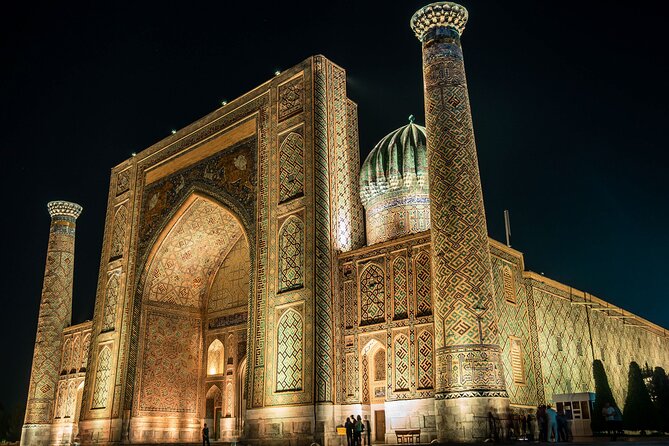
The journey to Khiva takes about six hours through the Kyzylkum Desert. You cross the Amu Darya, the ancient Oxus River, before reaching Khiva late in the afternoon.
This is the least sightseeing-heavy day, but it is not an unnecessary detour. Khiva’s position is part of its character, and the long road helps explain why the city can feel more isolated from the main centers of Uzbekistan.
You should prepare for a substantial stretch of sitting in the vehicle. Lunch and dinner are not included, so ask in advance how meal stops will work on this transfer. The tour price covers breakfast, but you need your own budget for other meals throughout the trip.
A private vehicle helps here because you can discuss comfort stops and timing with the driver. It also avoids the uncertainty of trying to connect several public transport legs across the desert.
Khiva is the most complete old-city experience
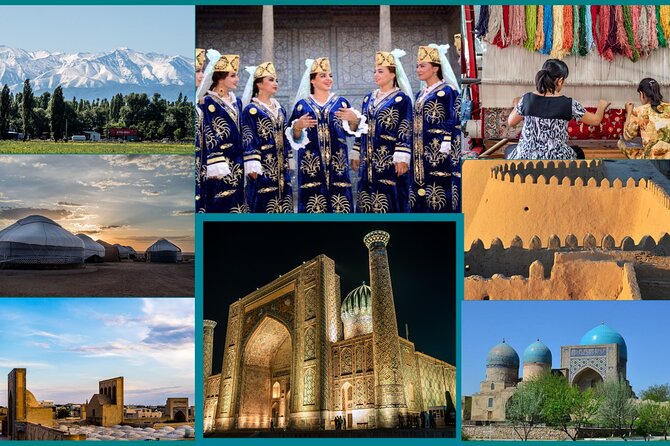
Itchan Kala, Khiva’s walled inner city, receives a full day. The city was once known for slave trading and harsh emirs. Later, residents were removed during the Soviet period while the old town was restored as an open-air museum. Since independence, old families have returned, and daily life has resumed inside the mud-brick walls.
That mixture of preserved architecture and lived-in streets is what makes Khiva so rewarding. You are not only looking at a set of restored monuments. You can also see how homes, shops, mosques, and madrasahs fit together inside the walls.
The day includes Juma Mosque, Kukhana Ark Shir, Gaza Khan Madrasa, and additional mosques and madrasahs. Juma Mosque is especially different from the large open courtyards in Samarkand and Bukhara, with its forest of wooden columns.
There is also a carpet shop selling silk carpets and suzani inspired by Khiva’s tile and door designs. This is a useful place to learn how old patterns continue in contemporary craft, but you should feel no pressure to buy. If you are considering a carpet, ask about size, material, price, and shipping before making a decision.
Eight hours inside Itchan Kala is a full day, yet Khiva deserves it. You can expect plenty of walking on uneven surfaces and repeated entry into historic buildings. The reward is a stronger sense of place than you get from a quick photo stop.
Ancient fortresses and Nukus change the tone

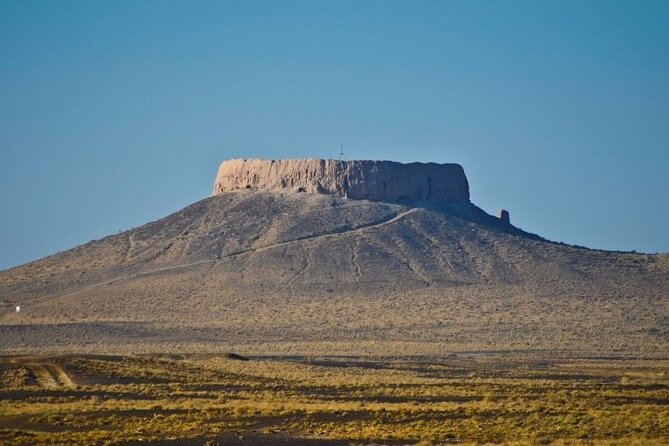
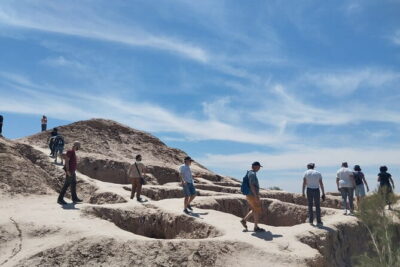
Day seven heads north toward Nukus, with stops at Ayaz-Kala, Topraq-Kala, and Chilpik. The first two are ancient fortress or settlement sites dating to the first or second centuries AD, while Chilpik adds another archaeological point of interest.
These places provide a useful counterpoint to the decorated urban monuments. Instead of tiled facades and royal mausoleums, you see the remains of older desert settlements and defensive sites. The listed visit is about two hours, so expect an overview rather than a long archaeological study.
The State Museum of Art named after I.V. Savitsky is the day’s major cultural stop. It is described as the second-largest museum of Avant-Garde art and also displays Karakalpakstan folklore art and paintings.
This museum gives the trip a new subject at exactly the right moment. After days of medieval architecture, you get twentieth-century art and regional folk traditions in one place. If you care about painting, Soviet-era art, or Central Asian culture beyond famous monuments, this is one of the route’s most distinctive stops.
The museum visit takes about two hours. Since the day also includes the fortresses and the journey toward Nukus, expect another demanding schedule.
What the $1,090 price really covers
At $1,090 per person, the tour is not a budget backpacking trip, but the price can make sense for a private eight-day route across Uzbekistan. You are paying for planning, private transport, local drivers and guides, admission tickets at most listed sights, airport support, and eight breakfasts.
The strongest value comes from the logistics. Moving through Tashkent, Samarkand, Bukhara, Khiva, and Nukus on your own would require careful coordination. The private arrangement also gives your group more control than a large scheduled tour.
The cost does not include international flights, lunch, dinner, or photography fees at sites and museums. If you arrive separately from the group, an additional $15 per transfer may apply. Set aside money for meals and confirm transfer details before departure so the advertised price does not catch you by surprise.
The tour has a five-star rating based on two published ratings, and one detailed account praised the private transport, airport and train-station pickups, hotel transfers, private drivers, and professional guides. The provider, Steppe Journeys, responds under the name Odil. That feedback points to the service element as the tour’s most highly praised feature, not simply the monuments.
Who should book this Uzbekistan tour?
I would recommend it to you if you want a private introduction to Uzbekistan and prefer having transport, admissions, and sightseeing arranged in advance. It suits people who enjoy architecture, archaeology, art, local crafts, and a clear daily plan.
It is also a good choice if you want to see more than the usual Samarkand and Bukhara pairing. Khiva, Ayaz-Kala, Chilpik, and the Savitsky Museum make the route more unusual.
I would hesitate if you dislike long road journeys, need generous free time, or want every meal included. The six-hour transfer to Khiva and the long Nukus day require patience and a moderate level of physical fitness.
Pickup is offered, with the stated meeting point at Vostochny Airport in Tashkent. Confirmation normally arrives at booking, though reservations made within two days of departure may take up to 48 hours and remain subject to availability. Free cancellation is available until 24 hours before the start time, which gives you some useful protection when plans are still changing.
FAQ
How long is the tour?
The tour lasts approximately eight days, ending with a transfer to Tashkent airport for your return flight.
Is this a private tour?
Yes. Only your group participates in the private tour or activity.
What meals are included?
Eight breakfasts are included. Lunch and dinner are not included.
Are airport pickups available?
Yes. Pickup is offered, and transport can also be arranged between airports, train stations, and hotels. If you arrive separately from the group, an extra $15 per transfer may apply.
Are entrance tickets included?
Admission tickets are included for the listed paid stops. The journey to Khiva and the final Tashkent airport transfer are listed without an admission fee. Photography fees at sites and museums are not included.
What level of fitness do I need?
A moderate level of physical fitness is recommended. The route includes walking through old cities and historic sites, along with long vehicle journeys.
Should you book it?
Book this tour if you want maximum coverage in limited time and value the ease of a private vehicle and local guides. Its best features are the carefully linked cities, the excellent mix of famous and unusual sights, and the transport support that keeps a difficult route practical.
Skip it if you want a relaxed pace or dislike long drives. For an active first visit to Uzbekistan, though, $1,090 is a reasonable price for the amount of ground covered, especially with admissions and breakfasts included.
Just added in Tashkent
- Uzbekistan and Tajikistan 9-Day Tour★ 5.0 · 1 review
- Tashkent International Airport (TAS) to Tashkent – Arrival Private Transfer★ 5.0 · 2 reviews
- Uzbek Brews & Views: Tashkent Craft Beer Discovery Tour★ 5.0 · 2 reviews
- Uzbekistan Tour – 6 Days 5 Nights★ 5.0 · 4 reviews
- Uzbekistan Private Tour 6 Days★ 5.0 · 1 review
- Tashkent to Tashkent International Airport (TAS) – Departure Private Transfer★ 5.0 · 1 review
- Full Day Private Tour to Fergana Valley from Tashkent★ 5.0 · 1 review
- Uzbekistan 4 Days Private Tour Tashkent-Bukhara-Samarkand-Tashkent bullet train★ 5.0 · 1 review
Private, compared.
Private Samarkand City Tour With Transportation
Read our review →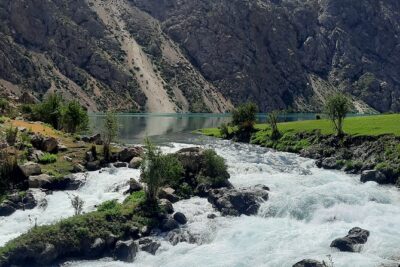
Full Day Private Tour in Seven Lakes from Samarkand
Read our review →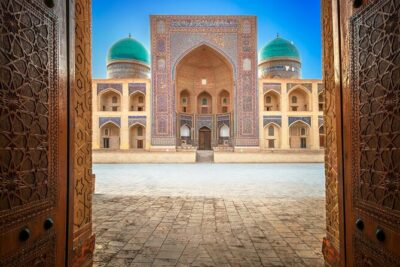
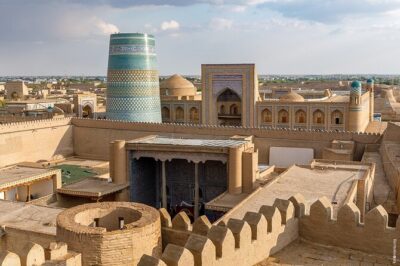
Uzbekistan 6 days private tour Tas-Khiva-Buk-Sam-Tas
Read our review →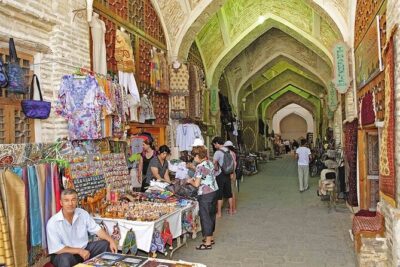
Uzbekistan 8 Days Private Tour Tashkent-Urgench-Bukhara-Samarkand-Tashkent
Read our review →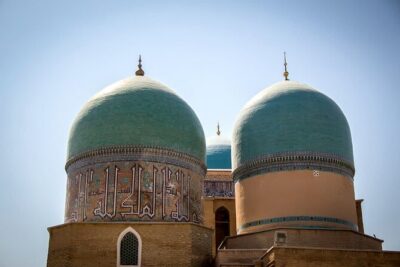
Private Daytrip to 7 Ancient Fortresses of Khorezm
Read our review →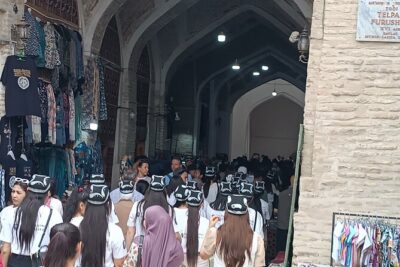
Browse the lists this tour appears in