
Review · TASHKENT TOURS
14-Day Uzbekistan Cultural Adventure Tour
The Silk Road still feels close here. This 14-day Uzbekistan tour brings together the country’s grand Islamic monuments, ancient desert fortresses, lively food markets, and quieter village life without making you arrange every transfer yourself. I like the excellent mix of cities and nature, especially the move from Khiva and Bukhara to a desert yurt camp and the Nuratau Mountains. I also like that local guides meet you in each major city, while an English-speaking driver handles the long road journeys.
The main consideration is the pace. You cover a lot of ground, including a six-hour drive from Khiva to Bukhara, several long sightseeing days, and many stairs and uneven surfaces at historic sites. The $2,676.08 price is reasonable for 13 nights, domestic transport, guides, entrance fees, and meals, but you should still budget for most lunches and dinners.
In This Review
- Key points at a glance
- Why this Uzbekistan tour works
- Tashkent: Plov, painted metro stations, and Islamic history
- Khiva and the fortresses of ancient Khorezm
- The long road to Bukhara
- Bukhara: domes, courtyards, and the old trading quarter
- Bukhara’s quieter sites and final emir
- Gijduvan ceramics and a night in the Kyzyl Kum Desert
- Aydar Lake and the Hayat village homestay
- Samarkand: Timur, astronomy, and blue tilework
- What the $2,676.08 price really covers
- Who should book this tour?
- FAQ
- How long is the Uzbekistan Cultural Adventure Tour?
- Where does the tour begin and end?
- Is the flight from Tashkent to Urgench included?
- Is the train from Samarkand to Tashkent included?
- Are meals included?
- How large is the group?
Key points at a glance
- Khiva’s walled old city: Spend five hours inside Itchan Kala, with major sights such as the Kalta Minor Minaret, Juma Mosque, and Kunya Ark.
- A real Silk Road range: Visit monumental Samarkand, scholarly Bukhara, desert fortresses, and the ancient ruins of Khorezm.
- One night under desert skies: Sleep in a traditional yurt camp, ride a camel for about 20 minutes, and hear local bards by the fire.
- Local life beyond monuments: Stay in a Hayat village homestay, help prepare a traditional meal if you wish, and hike in the Nuratau Nature Reserve.
- Small-group format: The maximum group size is 12, with local English-speaking guides in each city.
- Mostly arranged transport: The tour includes a flight from Tashkent to Urgench and a train from Samarkand back to Tashkent.
Why this Uzbekistan tour works
Uzbekistan is a rewarding country for a guided trip because its sights are spread over a wide area. Tashkent lies in the east, Khiva in the far west, Bukhara farther southeast, and Samarkand farther east again. Planning the sequence, booking the flight and train, and finding transport between desert sites can take real effort.
This itinerary removes much of that work. You arrive at Tashkent International Airport, meet a driver, and begin with a hotel transfer. Later, a flight cuts out an otherwise very long journey to Khiva, and a train brings you back to Tashkent from Samarkand.
The tour also avoids becoming a nonstop monument parade. The desert camp, Aydar Lake, Hayat village, and Nuratau hike give you a look at Uzbekistan beyond grand domes and tiled facades. That contrast is one of the trip’s best features.
The arrangements appear well coordinated. Sherzod is named as the person who meets arriving participants at the hotel, and the tour setup includes organized meetups with local guides and drivers. That matters in a country where changing vehicles and navigating unfamiliar cities can otherwise eat into your sightseeing time.
A few more options to weigh up in Tashkent
- Best of Tashkent Mountains: Amirsoy, Chimgan & Charvak Trip
★ 4.8 · 567 reviews - Samarkand One Day Tour – Departure From Tashkent
★ 5.0 · 313 reviews - Tashkent City Tour
★ 5.0 · 121 reviews
Tashkent: Plov, painted metro stations, and Islamic history
Your first full day in Tashkent begins with the Uzbekistan State Museum of Applied Art. Its collection includes more than 7,000 pieces, covering crafts from the early 19th century to the present. Allow an hour here to see textiles, decorative work, and other examples of Uzbek handiwork before you head into the city.
The Ensemble Hazrati Imam gives the day a more serious historical focus. The complex is connected with the oldest known Koran, dated to 655 AD, and offers an introduction to Uzbekistan’s Islamic traditions. It is a calm place, and the 90-minute visit should give you time to appreciate the buildings rather than simply take a quick photograph.
Then comes Chorsu Bazaar, the largest and oldest market in Central Asia. Give yourself time to walk through the food halls and stalls at an easy pace. This is one of the best places on the trip to see everyday commerce, local produce, and the social side of the city.
Lunch at Besh Qozon is a practical cultural stop. You can watch plov being prepared in huge cooking pots, then eat the rice dish yourself. The meal is not just a box to tick. Plov is central to Uzbek food culture, and seeing it cooked on such a large scale helps explain its place in public life.
The afternoon moves through central Tashkent, including Amir Temur Square and the Alisher Navoiy Theater. The theater visit is brief and does not include admission, so think of it as an exterior stop unless you arrange a performance separately.
Finish with a ride on the Tashkent Metro. Opened in 1977 as the first underground system in Central Asia, its stations use marble, granite, tilework, colorful reliefs, and carved decorative details. It is both useful transport and an inexpensive architectural tour.
Khiva and the fortresses of ancient Khorezm
Day three begins early with a flight from Tashkent to Urgench, taking about one hour and 40 minutes. From Urgench, you transfer to Khiva and leave your luggage at the hotel before entering Itchan Kala, the walled old city.
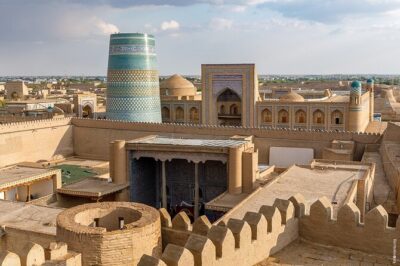
Five hours inside Itchan Kala is a strong introduction to Khiva. The route includes Mohammed Rakhim Khan Madrassah, the short but famous Kalta Minor Minaret, Tash Hauli Palace, Pakhlavon Mahmud Mausoleum, Juma Mosque, Islam Khodja Minaret, and Kunya Ark.
The concentration of major buildings is convenient, but the day can feel full. You will likely walk on old surfaces and climb for views at some sites. Comfortable shoes and modest clothing are sensible choices for this and the rest of the tour.
Day four leaves the city for the open country around Khorezm. Topraq-Kala, dating from the first to sixth centuries AD, gives you a sense of the scale of older settlements in the region. Kyzyl Kala, Ayaz-Kala, and Guldursun Qala add different forms of defensive architecture, from isolated fortifications to large walls and towers.
These ruins are spread across broad, exposed terrain. The stops are not long at Kyzyl Kala and Ayaz-Kala, but Guldursun Qala includes a two-hour walk along walls and toward a corner tower. Bring water, sun protection, and footwear suited to rough ground. This is a day for people who enjoy seeing archaeology in a plain, open setting rather than only visiting restored buildings.
The long road to Bukhara
The transfer from Khiva to Bukhara takes about six hours and covers roughly 480 kilometers through the Kyzyl Kum Desert. A break along the Amu Darya River makes the trip more manageable, but this remains one of the tour’s least comfortable stretches.
I would treat the drive as part of the geography lesson. You see how far apart Uzbekistan’s Silk Road centers are and why transport planning matters here. Still, if long car rides wear you down, this is the day to prepare for. You arrive in Bukhara with a free afternoon, which gives you time to rest rather than rush straight into another guided circuit.
A completely different kind of day:
- Amirsoy, Chimgan & Charvak Full-Day Adventure
★ 4.9 · 82 reviews - Shymkent Day Tour from Tashkent
★ 4.6 · 71 reviews - Highlights of Tashkent (old and new part)
★ 5.0 · 60 reviews - 2 Days Tour to Bukhara and Samarkand from Tashkent by train
★ 5.0 · 53 reviews
Bukhara: domes, courtyards, and the old trading quarter
Bukhara receives a full sightseeing day, and it earns the time. Begin with the Ismail Samani Mausoleum, a 10th-century structure known for intricate brick patterns and geometric design. The building is smaller and more restrained than the huge monuments of Samarkand, but its brickwork rewards a close look.
Nearby are the Chashma Ayub Mausoleum and Bolo Hauz Mosque. The former is linked with healing waters and peaceful gardens. The latter is noted for its wooden columns and reflecting pool. These stops slow the pace before the more crowded central sights.
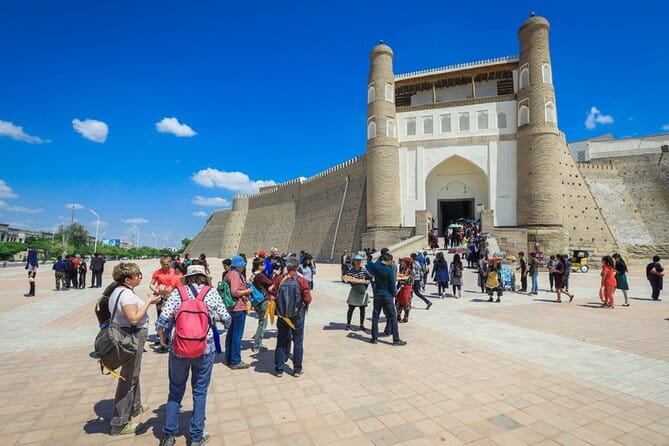
The Ark of Bukhara is the city’s massive fortress, with walls and gates linked to centuries of political power. Inside, the displays and buildings help explain how Bukhara functioned as a seat of government, not simply a collection of religious schools.
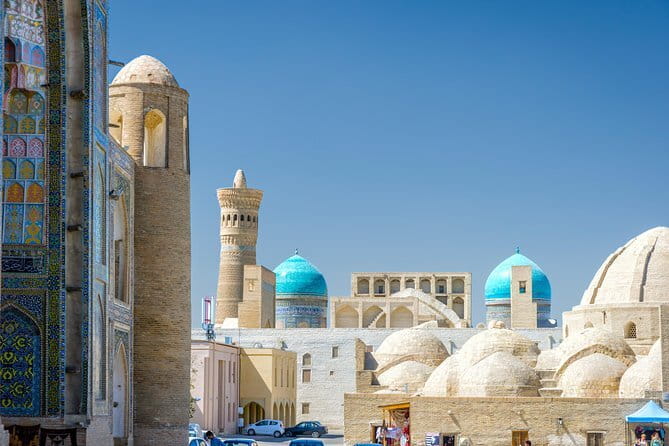
From there, the route threads through the old covered bazaars. Taqi-Zargaron was the jewelers’ dome, Toqi Telpakfurushon the cap makers’ dome, and Toqi Sarrofon the moneychangers’ dome. Today, these vaulted market spaces hold shops selling crafts, textiles, ceramics, and souvenirs.
You will also visit the Ulugbek and Abdulaziz-Khan madrasahs. Their decorated entrances and courtyards show the importance of education and religious study in Bukhara. Maghak-i Attari Mosque, described as the city’s oldest known mosque, is another valuable stop because it reflects an earlier layer of Bukhara’s religious architecture.
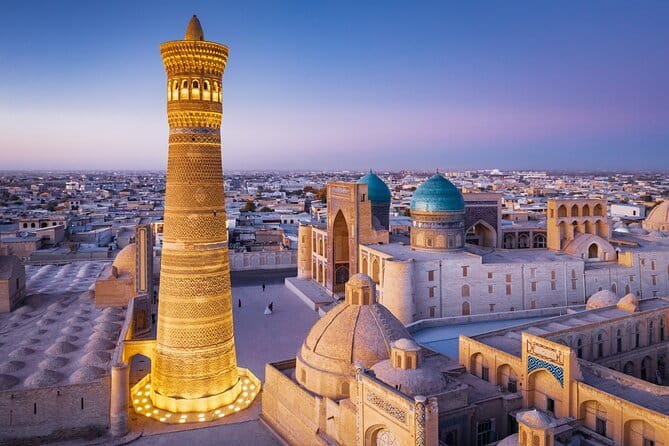
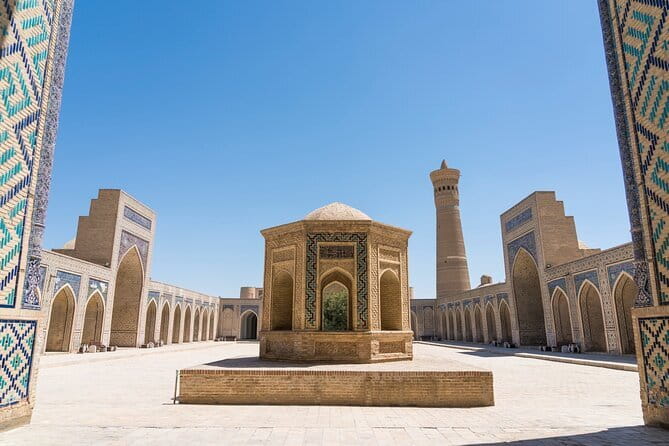
The day ends around Lyabi Khause and the Kalon complex. Lyabi Khause centers on a pool, with historic buildings and cafes around it. The Kalon Minaret, Kalon Mosque, and Miri Arab Madrassah form one of the city’s most impressive views. Since the schedule includes many short stops, you may want to return to one favorite area during your free time.
Bukhara’s quieter sites and final emir
Day seven looks beyond the central monuments. The Bakhautdin Naqshband Mausoleum honors the Sufi saint and offers a quieter spiritual setting. The listed duration appears unusually long, so confirm the intended timing with the operator, but the site itself is planned as a major visit.
Sitori-i-Mokhi Khosa, the summer palace of the last Emir of Bukhara, shifts the mood again. Mosaic walls, carved wood, and gardens show the tastes of the ruling family in a setting far removed from the city’s older madrasahs.
The Chor-Bakr necropolis includes tombs and mausoleums dating from the 10th century. It is a place for reflection, with a strong connection to Bukhara’s religious traditions. The Fayzulla Khodjaev House Museum then brings you into the 20th century through furniture, documents, and personal objects connected with the Uzbek political figure.
Gijduvan ceramics and a night in the Kyzyl Kum Desert
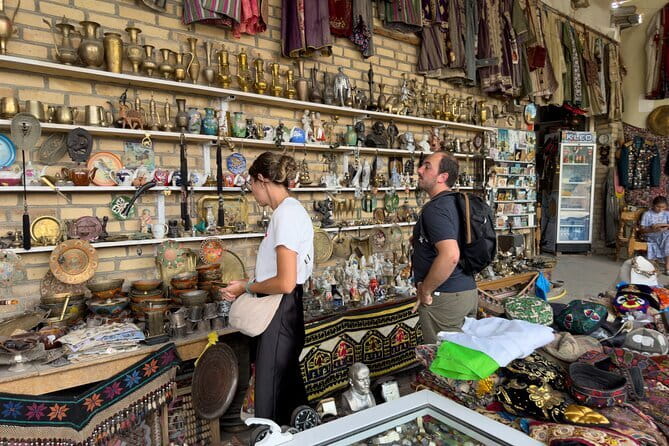
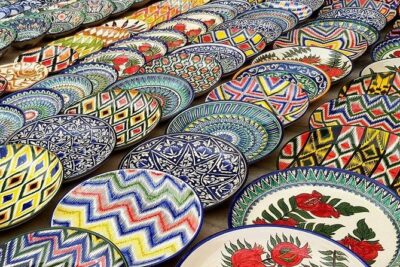
After breakfast, you drive toward Nurata and the desert yurt camp. A stop at the Narzullaev family ceramics shop in Gijduvan offers a close look at a craft practiced by the family for generations. This is a good place to buy a useful souvenir, though you should remember that the tour price does not include personal purchases.
In Nurata, you visit the remains of Alexander the Great’s fortress and the Chashma Holy Spring. Lunch takes place in a traditional house before the transfer to camp.
The yurt night is one of the trip’s most distinctive elements. After settling in, you can take a short camel ride or walk among the dunes. In the evening, local bards perform by the fireplace, giving the stay a cultural character that a standard desert hotel could not provide.
Expect simpler accommodation than in the city hotels. The point is the setting, local welcome, and change of pace. If you need a fully private, polished hotel room every night, this will feel basic. If you value variety, it is a fair trade.
Aydar Lake and the Hayat village homestay
After breakfast, the route continues to Aydar Lake. Depending on the season, you may swim or simply walk along the shore and watch birds. The lake stop gives you open space after several days of architecture and enclosed courtyards.
You reach Hayat village around lunchtime and stay with local homestay owners. You can watch or help with the preparation of a traditional meal, then eat dinner with the household. This is the most direct chance on the tour to take part in daily life rather than observe it from the outside.
The following morning, a guided hike enters the Nuratau Nature Reserve. The walk includes a breeding enclosure for endangered Severtzov’s sheep, ruins of a local fortress, and a self-help elementary school. It lasts about five hours, so a moderate fitness level is important.
The tour describes free time at the homestay after lunch. That pause is welcome because the schedule has been active. You should not expect a luxury retreat here, but you can expect a more personal setting than a conventional hotel.
Samarkand: Timur, astronomy, and blue tilework
A four-hour drive brings you to Samarkand on day 11. After settling into your hotel, the first stops are Gur Emir Mausoleum and Registan.
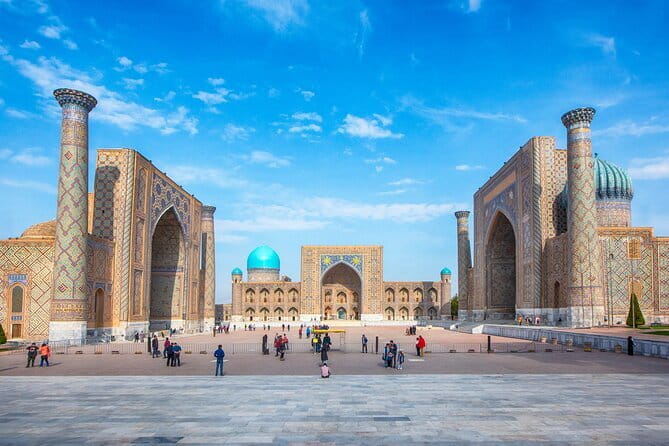
Gur Emir has a turquoise dome and decorated interior, with the tombs of Tamerlane and his descendants. It is an effective starting point because it introduces Timurid architecture before you see the larger public monuments.
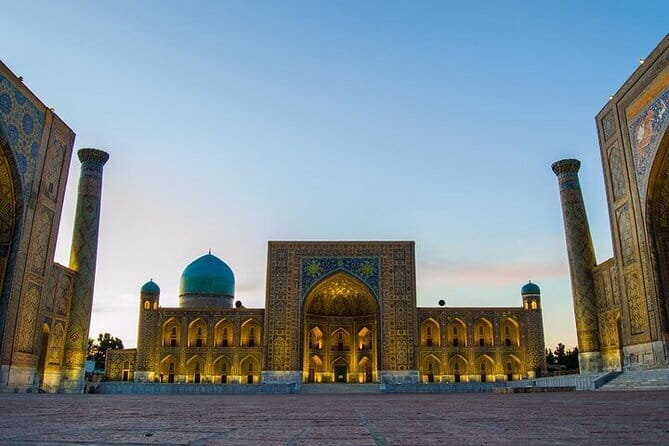
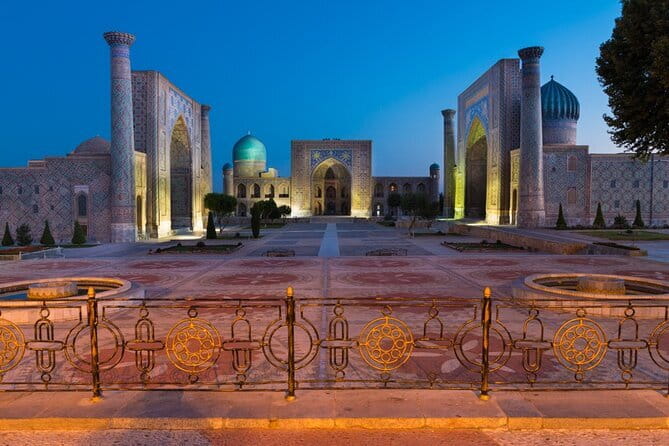
Registan is the visual high point for many people. Three madrasahs surround the square, each with its own tilework, portals, and domes. Give yourself the full 90-minute visit, and if you have free time later, return at a different hour to see how the light changes the facades.
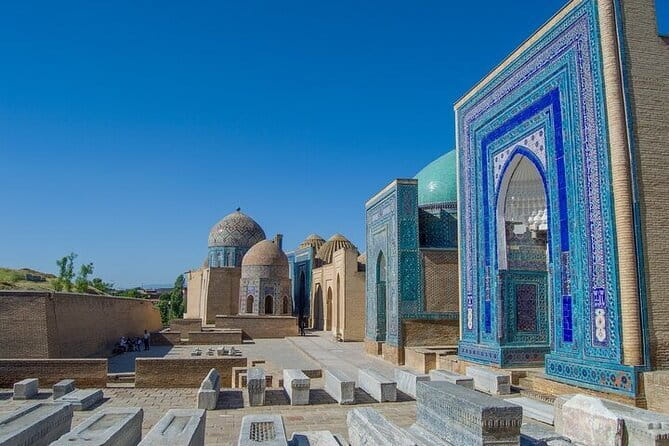
Day 12 continues with Shah-i-Zinda, a burial complex containing mausoleums and mosques from the ninth through 14th centuries. The decorated passage is one of Samarkand’s most detailed architectural experiences, but expect stairs and plenty of walking.
The Afrosiab Museum adds archaeological context through pottery, coins, and murals from the ancient city. At Ulugh Beg Observatory, you learn about the 15th-century ruler and astronomer’s work, including the large sextant used to measure the positions of stars and planets.
Bibi Khanym Mosque is immense, with a monumental entrance and tall minarets. End at Siyob Bazaar, where you can browse produce, spices, handicrafts, and souvenirs. This final market stop is a good chance to buy food gifts before leaving Samarkand.
What the $2,676.08 price really covers
The price includes 13 nights in locally owned small boutique hotels, a twin or double room, breakfast every day, three lunches, and three dinners. It also covers the Tashkent to Urgench flight, the Samarkand to Tashkent train, private transport during the tour, English-speaking guides in each city, entrance tickets, taxes, and fees.
That is a substantial package for a 14-day trip across four major regions. The domestic flight and train are especially useful inclusions. You are not paying only for sightseeing, you are also buying the structure that keeps a complicated route moving.
The main extra cost is food. Most lunches and dinners are not included, except on the yurt and homestay days. You also need international flights and personal travel insurance. Dietary needs can be accommodated, including vegetarian, vegan, and gluten-free meals, but you should state them when booking.
Who should book this tour?
I would recommend this tour if you want Uzbekistan’s major Silk Road cities, but also want desert, village, lake, and mountain time. It suits people who prefer a planned route, appreciate local accommodations, and can manage long drives and active sightseeing.
It is less suitable if you want a slow holiday in one or two cities, dislike early starts, or need high-end lodging every night. The maximum group size of 12 keeps the experience relatively small, though the days remain busy.
Book it if the combination of monuments and rural life is the main appeal. Skip it if you would rather design your own schedule and spend several extra days lingering in Bukhara or Samarkand. For an organized first look at Uzbekistan, the range of experiences and included transport make the price defensible.
FAQ
How long is the Uzbekistan Cultural Adventure Tour?
The tour lasts approximately 14 days and includes 13 nights of accommodation.
Where does the tour begin and end?
It begins at Leader Hotel in Tashkent at 9:00 am. It ends with a transfer to Tashkent International Airport, or another location in Tashkent if arranged.
Is the flight from Tashkent to Urgench included?
Yes. An economy flight from Tashkent to Urgench is included.
Is the train from Samarkand to Tashkent included?
Yes. An economy train ticket from Samarkand to Tashkent is included.
Are meals included?
Breakfast is included for all 13 mornings. Three lunches and three dinners are included, mainly during the yurt camp and homestay portions. Other lunches and dinners are not included.
How large is the group?
The tour can have a maximum of 12 participants. It includes an English-speaking driver and local English-speaking guides in each city.
Just added in Tashkent
- Uzbekistan and Tajikistan 9-Day Tour★ 5.0 · 1 review
- Tashkent International Airport (TAS) to Tashkent – Arrival Private Transfer★ 5.0 · 2 reviews
- Uzbek Brews & Views: Tashkent Craft Beer Discovery Tour★ 5.0 · 2 reviews
- 8-Day Private Tour in Uzbekistan with Pick Up★ 5.0 · 2 reviews
- Uzbekistan Tour – 6 Days 5 Nights★ 5.0 · 4 reviews
- Uzbekistan Private Tour 6 Days★ 5.0 · 1 review
- Tashkent to Tashkent International Airport (TAS) – Departure Private Transfer★ 5.0 · 1 review
- Full Day Private Tour to Fergana Valley from Tashkent★ 5.0 · 1 review
Tashkent Tours, compared.
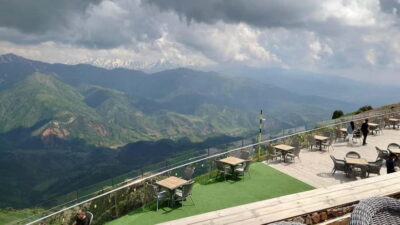
Best of Tashkent Mountains: Amirsoy, Chimgan & Charvak Trip
Read our review →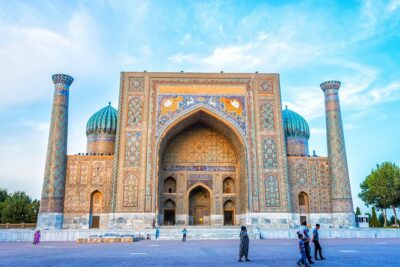
Samarkand One Day Tour – Departure From Tashkent
Read our review →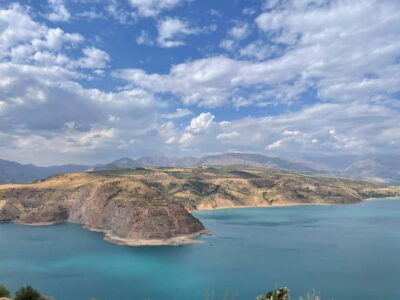
2 Days Tour to Bukhara and Samarkand from Tashkent by train
Read our review →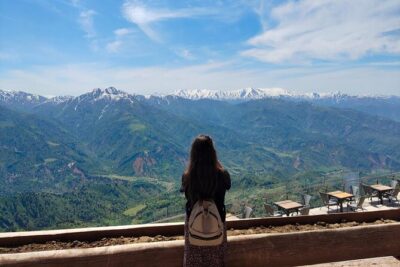
Uzbekistan 6 days private tour Tas-Khiva-Buk-Sam-Tas
Read our review →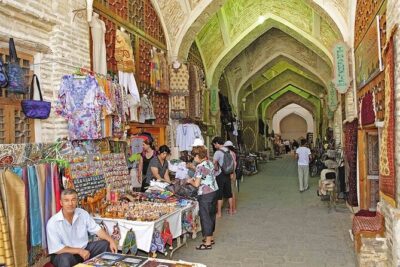
Uzbekistan 8 Days Private Tour Tashkent-Urgench-Bukhara-Samarkand-Tashkent
Read our review →Browse the lists this tour appears in