
Review · 6-DAY EXPERIENCES
Uzbekistan 6 days private tour Tas-Khiva-Buk-Sam-Tas
Four Silk Road cities, six busy days. This private Uzbekistan tour is appealing because it handles the hard parts, including hotels, breakfast, city transport, train tickets, entry fees, and local internet access. I especially like the custom itinerary and the use of local guides in each city, so you are not left trying to decode Uzbek or Russian transport systems on your own.
I also like the thoughtful pickup service, including airport and railway-station transfers and border pickup when requested. The main caution is the pace: you cover enormous distances, take an internal flight, spend up to six hours between cities, and may receive a regular train instead of the faster service if tickets have sold out.
In This Review
- Key points to know
- What $850 buys you across Uzbekistan
- Day one in Tashkent: a soft landing
- Day two: Khiva’s walled old city
- Day three: six hours from Khiva to Bukhara
- Day four: Bukhara’s mosques, pools, and royal fortress
- Day five: Timur’s Samarkand
- Day six: Samarkand to Tashkent, then home
- Guides, drivers, and the private format
- What to confirm before booking
- Who should book this six-day route?
- Should you book it?
- FAQ
- Is the Tashkent to Urgench flight included?
- What accommodation is included?
- Are train tickets included?
- Are breakfasts included?
- Can the itinerary be changed?
- Are museum photo fees included?
Key points to know
- Khiva’s walled Itchan Kala: You explore a compact old city filled with minarets, mosques, palaces, and mausoleums.
- Four cities without solo logistics: Tashkent, Khiva, Bukhara, and Samarkand are linked by flights, trains, and private transfers.
- Private and flexible: Your group can request changes focused on food, architecture, history, or extra stops.
- Strong guide and driver support: Guides work in each city, while drivers meet you at airports and railway stations.
- Good value at $850 per person: Hotels, five breakfasts, transport within the tour, train tickets, guides, and admission fees are included.
- A fast-moving schedule: The route delivers a lot, but free time is limited and transport days can be long.
What $850 buys you across Uzbekistan
At $850 per person, this is not a bare sightseeing package. The price includes twin-room accommodation in centrally located, highly rated three-star or boutique hotels, five breakfasts, an air-conditioned vehicle, local licensed guides, site and museum entry, and the Khiva to Bukhara, Bukhara to Samarkand, and Samarkand to Tashkent train travel.
The Tashkent to Urgench flight is extra. You also pay cash for photo and video permits at museums, usually $1 to $2 per museum. A single room costs an additional $20 per night, which is modest compared with the main tour price.
I see the strongest value in the coordination. You are not only paying to hear explanations at monuments. You are paying to have someone manage airport pickups, station transfers, hotel arrivals, city driving, train arrangements, and local guides in four different places.
The tour is often booked well ahead, with an average booking window of 58 days. That matters because Uzbekistan’s faster trains can sell out. One recent scheduling problem involved a regular Samarkand to Tashkent train being used after fast-train seats were no longer available. If the high-speed train matters to you, ask about availability before you commit to dates.
A few more options to weigh up in Tashkent
- Best of Tashkent Mountains: Amirsoy, Chimgan & Charvak Trip
★ 4.8 · 567 reviews - Samarkand One Day Tour – Departure From Tashkent
★ 5.0 · 313 reviews - Tashkent City Tour
★ 5.0 · 121 reviews
Day one in Tashkent: a soft landing
The first day is deliberately light. You arrive in Tashkent, meet your transport, and go to the hotel. The listed sightseeing time is about 30 minutes, so think of this as an arrival and orientation day rather than a full city tour.
That slower start can be useful after an international flight. Tashkent is much larger and more modern than Khiva or Bukhara, so having a driver take you directly to a central hotel saves time and confusion.
The central location also helps later in the trip. You return to Tashkent on the final day for sightseeing and your international departure. Ask for the exact hotel name and arrival plan before you travel, especially if your flight lands late.
Day two: Khiva’s walled old city
Your second day begins with a transfer to Tashkent’s domestic terminal and a flight to Urgench, taking about two hours. From Urgench, you transfer to Khiva and its old city, Itchan Kala.
Itchan Kala is the heart of the Khiva visit. The enclosed historic town covers about 26 hectares and has more than two thousand years of history. Its compact streets make it easier to explore on foot than the wide streets of Tashkent or the spread-out sights of Samarkand.
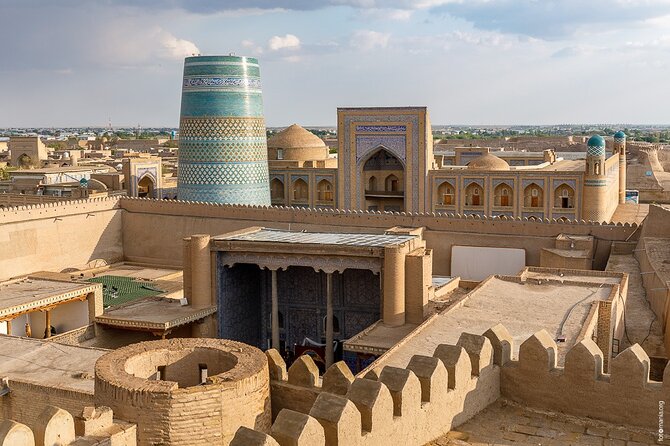
You begin with the Kunya Ark Citadel, a fortified royal compound against the western wall. Give it about an hour. The citadel helps explain how Khiva functioned as a seat of power, not simply as a pretty collection of tiled buildings.
The Pahlavan Mahmud Mausoleum is a smaller, more personal stop. Pahlavan Mahmud was a poet, philosopher, wrestler, and healer in local tradition. The visit takes about 40 minutes and gives you a glimpse of the religious side of Khiva, with its decorated tilework and quiet atmosphere.
At the Juma Mosque, you spend about 20 minutes. Its location near the center of Itchan Kala fits its role as the Friday prayer mosque. The visit is brief, but the building is an important part of the old city’s religious plan.
The Islam Khoja complex includes a madrasa and the tall Islam Khoja Minaret. Plan on about 40 minutes. From street level, the minaret gives Khiva one of its most recognizable profiles, while the surrounding complex shows the city’s late architectural style.
Tash Khauli Palace, built from 1830 to 1838 by order of Allakuli Khan, takes another 40 minutes. Its name means Stone Palace, and the building offers a good contrast with the fortress and religious sites. Here, the focus is royal domestic life and formal court architecture.
You also see Kalta Minor, the famous unfinished minaret covered with glazed tile and majolica. Its truncated shape is not a flaw to hide. It is the reason the monument is so memorable. Allow about 30 minutes.
This is a packed sightseeing day, and the sequence leaves little spare time. The upside is that you see the main Khiva sights in one organized sweep. The downside is that you may want a second evening to wander Itchan Kala slowly, browse crafts, or return to a favorite courtyard.
Day three: six hours from Khiva to Bukhara
Day three gives you free time in Khiva before the long transfer to Bukhara. You can choose a train or a car, with the journey taking about six hours either way.
The train option is useful if you prefer to relax and watch the country pass by. The car gives you more control and may suit your group if you have requested roadside stops. One previous custom arrangement added visits to the remains of a fortress linked with Alexander the Great and a caravanserai, so it is worth asking about extra stops before departure.
The schedule then gives you some free time in Bukhara. Do not expect a full guided visit on this day. The main Bukhara sightseeing comes the following day, so use this window to rest, walk near the old center, or get an early look at the city’s evening atmosphere.
The six-hour transfer is the clearest example of the tour’s tradeoff. You can cover an extraordinary amount of Uzbekistan in six days, but you cannot do it without spending serious time in transit.
A completely different kind of day:
- Amirsoy, Chimgan & Charvak Full-Day Adventure
★ 4.9 · 82 reviews - Shymkent Day Tour from Tashkent
★ 4.6 · 71 reviews - Highlights of Tashkent (old and new part)
★ 5.0 · 60 reviews - 2 Days Tour to Bukhara and Samarkand from Tashkent by train
★ 5.0 · 53 reviews
Day four: Bukhara’s mosques, pools, and royal fortress
Bukhara receives a focused sightseeing day beginning at Lyab-i-Hauz. The ensemble was built in the 16th and 17th centuries around a pool, or hauz, and remains one of the city’s best-known gathering places.
I like this stop because it gives you a sense of Bukhara as a social city. The monuments are not isolated museum pieces. They form a town square where people once met, rested, and conducted daily business.
The Kalyan Minaret is next, with about 90 minutes at the complex. Built in 1127, the minaret reaches 45.6 meters and survived the Mongol conquest that destroyed much of the surrounding city. Its scale is impressive, but your guide can also help you understand why it mattered as a religious and civic marker.
Bolo Hauz Mosque sits opposite the Ark Fortress. Its name means above the pool, referring to the artificial pond in front of the mosque. The visit is short, about 20 minutes, but the location lets you see how water, worship, and public space worked together in old Bukhara.
The Ark of Bukhara deserves about 90 minutes. This massive royal citadel was a city within the city and housed Bukhara’s rulers for centuries. It is one of the tour’s most useful stops for understanding power in Central Asia. Instead of seeing only elegant tilework, you see the administrative and defensive machinery behind the court.
Later, you transfer about 15 kilometers to the railway station in Kagan for the train to Samarkand. The train is subject to availability, and the listed schedule allows around three hours for the transfer and onward arrival process.
This is another long day. Bukhara itself rewards slow wandering, but the onward train means you should not plan a relaxed late-night meal unless your departure time allows it.
Day five: Timur’s Samarkand
Samarkand is the visual high point of the route for many people. Your day begins at the Gur Emir Mausoleum, the tomb of Timur, also known as Tamerlane. The mausoleum dates from 1404 to 1405 and contains the remains of Timur and members of his family.
Allow about 40 minutes here. The building is more than a royal tomb. It introduces the scale of Timur’s ambition and the architectural style that later influenced major monuments across the region.
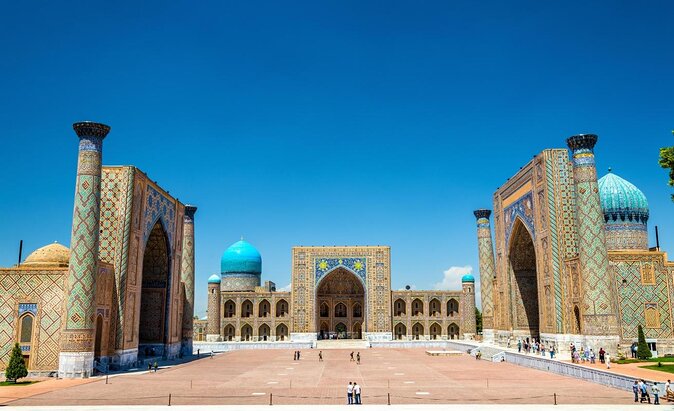
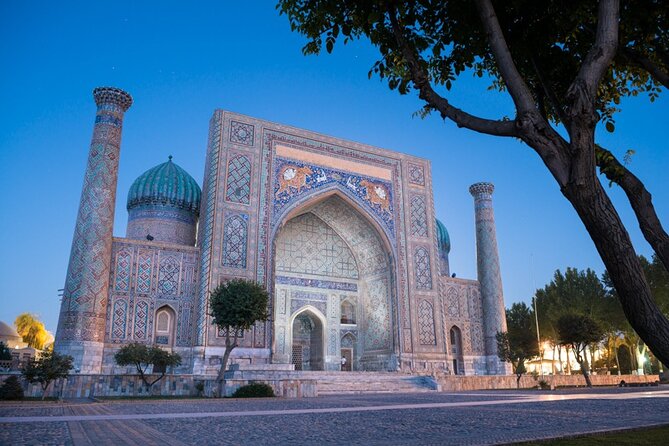
Then comes Registan, Samarkand’s great square, surrounded by the Ulugh Beg, Sherdor, and Tillokori madrasas. You have about 90 minutes, which is enough for a guided visit and time to look closely at the tile patterns and monumental facades.
Bibi Khanym Mosque takes about 30 minutes. Built between 1399 and 1404 on Timur’s order, it is one of Central Asia’s best-known architectural sites. Its size helps explain how rulers used construction to display authority, even when the practical limits of building on such a scale were severe.
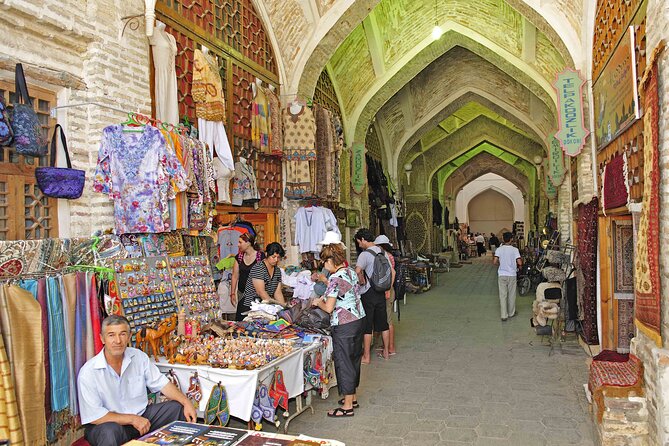
Siab Bazaar provides a welcome change of pace. The market offers produce and handicrafts, and the planned 40-minute visit gives you time to see a working part of Samarkand rather than only its monuments.
Shah-i-Zinda is the most detailed stop of the day. The ensemble includes 44 tombs in more than 20 mausoleums on the southeastern mound of ancient Afrosiab. Allow an hour. The tiled facades are close together, so this is a place where a guide’s explanation can help you notice differences that blur together at first glance.
The day ends at the Ulugh Beg Observatory, about 50 minutes away. Only the foundations remain, but the site connects Samarkand’s royal story with astronomy and mathematics. Ulugh Beg, Timur’s grandson, was a ruler and scientist, and this stop adds intellectual weight to a day otherwise dominated by royal monuments.
The Samarkand schedule is efficient, but it is not leisurely. You may want to ask if one sight can be shortened in exchange for more time at Registan or Shah-i-Zinda.
Day six: Samarkand to Tashkent, then home
The final day starts early with a transfer to Samarkand station and a train to Tashkent. The train is subject to availability, so check the planned departure time before booking an evening flight.
Once in Tashkent, you meet a guide and driver for about three hours of city sightseeing. The Alisher Navoi Theater takes around 20 minutes. Designed by Alexey Shchusev and built from 1942 to 1947, it adds a Soviet-era layer to a trip otherwise focused on medieval and Timurid sites.
The Hazrati Imam complex is scheduled for about 90 minutes. This old-city religious center includes the Tillya Sheikh Mosque and Abu Bakr Mausoleum, among other buildings. It is an important final look at Tashkent’s spiritual character.
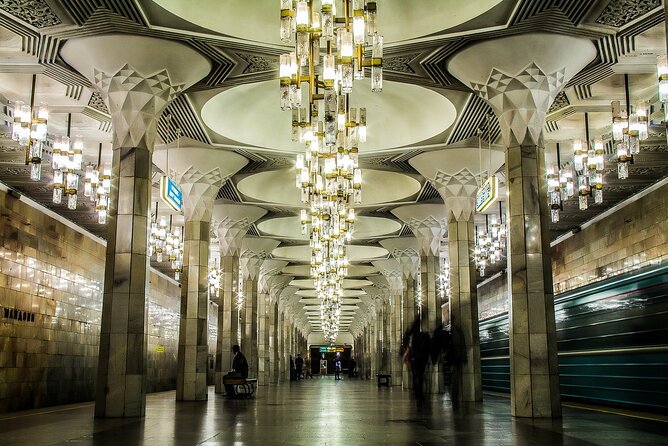
You also ride the Tashkent metro for about an hour. Opened in 1977 as the first underground system in Central Asia, its stations use marble, granite, columns, colored reliefs, and decorative plasterwork. This is one of the best choices in the schedule because it shows modern public architecture rather than another palace or mausoleum.
Amir Temur Square gives you 40 minutes in a central green space with fountains and a statue of Tamerlane on horseback. The State Museum of History of Uzbekistan is listed for one hour and was founded in 1876.
One practical warning: opening information can change. A previous booking included the History Museum and Hazrati Imam complex even though both were closed at the time, with a replacement museum arranged only after the issue was raised. Ask for current opening status shortly before your final day. The operator has acknowledged this kind of problem, but you should still check the plan yourself.
Finally, a transfer takes you to Tashkent International Airport. The listed transfer time is only about 15 minutes, though your actual journey will depend on hotel location and city traffic.
Guides, drivers, and the private format
The private setup is one of the tour’s strongest features. You travel only with your own group, and the itinerary can be adjusted at no or small extra cost. You can ask for more emphasis on architecture, cuisine, history, or particular stops.
Guides are provided in each city rather than one person following you for all six days. That means you get local expertise at each destination and, according to the supplied feedback, guides from different generations and with different viewpoints. Four English-speaking guides were praised for explaining the culture and history clearly.
The coordinators Umid and Amir receive especially strong praise for fast replies and careful organization. Drivers are also repeatedly described as punctual, with airport and railway-station pickups already in place. That support matters most when you arrive tired, cannot read the signs, or have only a narrow connection window.
The private format also helps families and solo visitors. A parent traveling with a teenage daughter found the country comfortable and the arrangements reassuring. A solo visitor from the United Kingdom found the organized transport useful because speaking Uzbek or Russian was not necessary.
What to confirm before booking
I would ask these questions before paying:
- Is the Tashkent to Urgench flight included in your quoted total? It is not included in the stated tour price.
- Which train class and departure times are planned?
- Are fast-train seats available for your dates?
- Are the listed Tashkent museums and religious sites currently open?
- What hotel names will be used in each city?
- Can you add a yurt night, extra roadside stops, or more free time?
The tour allows free cancellation up to 24 hours before the start time for a full refund. Changes made inside that 24-hour period are not accepted, so make any major requests early.
Who should book this six-day route?
I would choose this tour if you want to see the main Silk Road cities but do not want to arrange domestic flights, long train rides, hotel transfers, and separate guides yourself. It is also a good fit for a private family trip, a first visit to Uzbekistan, or a short stop before or after a larger Central Asian journey.
I would hesitate if you prefer slow travel. Khiva, Bukhara, and Samarkand each deserve more than a quick introduction, and this plan gives you only limited free time. The six-hour Khiva to Bukhara transfer and early Samarkand to Tashkent departure can make the trip feel like a well-run sprint.
Should you book it?
Book this tour if ease, coverage, and private support matter most. For $850 per person, the package covers a great deal, and the strong praise for Amir, Umid, the city guides, and the drivers suggests that the human support is a major part of its value.
Before booking, confirm the flight cost, train availability, hotel list, and current opening hours. If those details are clear and you accept the fast pace, this is a practical way to see Uzbekistan’s four headline cities in six days. If you have ten days or more, I would use the same company’s flexibility to add rest time, extra nights, or a custom stop.
FAQ
Is the Tashkent to Urgench flight included?
No. The domestic flight from Tashkent to Urgench is not included in the tour price and must be paid separately.
What accommodation is included?
The tour includes twin-room accommodation in highly rated three-star or boutique hotels located centrally. A single room supplement of $20 per room per night applies.
Are train tickets included?
Yes. Train travel from Khiva to Bukhara, Bukhara to Samarkand, and Samarkand to Tashkent is included, subject to availability.
Are breakfasts included?
Yes. Five breakfasts are included during the six-day tour.
Can the itinerary be changed?
Yes. The itinerary can be customized to your requests at no or small extra charge. You can request changes related to cuisine, history, architecture, or additional stops.
Are museum photo fees included?
No. Photo and video charges at museums are paid in cash at the entrance and usually cost $1 to $2 per museum.
Just added in Tashkent
- Uzbekistan and Tajikistan 9-Day Tour★ 5.0 · 1 review
- Tashkent International Airport (TAS) to Tashkent – Arrival Private Transfer★ 5.0 · 2 reviews
- Uzbek Brews & Views: Tashkent Craft Beer Discovery Tour★ 5.0 · 2 reviews
- 8-Day Private Tour in Uzbekistan with Pick Up★ 5.0 · 2 reviews
- Uzbekistan Tour – 6 Days 5 Nights★ 5.0 · 4 reviews
- Uzbekistan Private Tour 6 Days★ 5.0 · 1 review
- Tashkent to Tashkent International Airport (TAS) – Departure Private Transfer★ 5.0 · 1 review
- Full Day Private Tour to Fergana Valley from Tashkent★ 5.0 · 1 review
6-Day Experiences, compared.
Uzbekistan 6 Days Private Tour Khiva-Bukhara-Samarkand by Train
Read our review →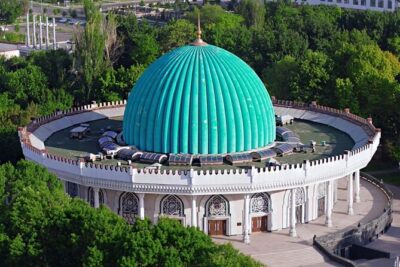
5 Nights / 6 Days Uzbekistan Tour Tashkent Samarkand and Bukhara
Read our review →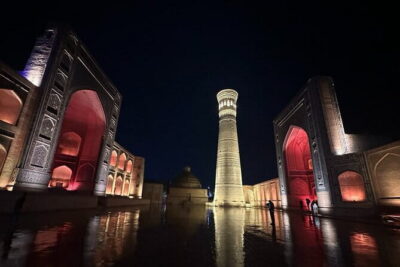
Browse the lists this tour appears in