
Review · CITY TOURS IN BUKHARA
Bukhara Full Day Old City Private Tour
Bukhara rewards slow footsteps. This private walking tour links the city’s grandest monuments with its quieter corners, from the soaring Kalyan Minaret to old trading domes and the Bukhara Synagogue. I like the local guides, who bring personal stories and Uzbek culture into the walk, and I like the flexible private format, which lets you pause, ask questions, shop, or take a coffee break. The main caution is that the advertised five to seven hours can vary, and one participant was left in a square rather than returned to the hotel.
The tour costs $85 per person and includes a licensed guide, taxes, and monument entrance fees. That is a fair price if you want one long, organized introduction to Bukhara without arranging separate tickets or guides. You should still budget for photo charges at museums, small purchases, lunch, and a tip.
In This Review
- Key points at a glance
- Why this tour works as a first day in Bukhara
- The Kalyan Minaret and Mir-i-Arab Madrasa
- Chor Minor and the Ark of Bukhara
- Lyab-i-Hauz, Bolo Hauz, and Nodir Devon Begi
- The trading domes and Silk Road Bukhara
- Abdulaziz-Khan, Ulugbek, and Maghak-i Attari
- The Bukhara Synagogue and a wider view of the city
- The guides make the largest difference
- Is $85 per person good value?
- Who should book this Bukhara walk?
- Should you book it?
- FAQ
- How long does the Bukhara Old City tour last?
- Is this a private tour?
- Is hotel pickup available?
- Where does the tour end?
- Are entrance tickets included?
- Are photography fees included?
- Is lunch included?
- Can I cancel for a full refund?
Key points at a glance
- Fourteen major stops cover the Kalyan complex, Ark fortress, trading domes, madrasas, mosques, and Jewish heritage.
- Private touring means your pace matters, with time for questions, shopping, coffee, or a meal if you arrange a break.
- The walk is extensive, and one review describes the entire day as being on foot.
- Guide quality is the tour’s strongest feature, with repeated praise for Shakhnoza, Maksad, Sunny, Guzel, Bekhruz, Sitora, Malika, and Guli.
- Museum photography may cost $1 per site, even though entrance tickets are included.
- Free cancellation is available until 24 hours before the start time, which gives you useful flexibility.
Why this tour works as a first day in Bukhara
Bukhara has more than 100 historical sites. That sounds exciting until you realize how easy it is to wander past an important building without knowing what you are seeing. This tour gives you a clear route through the old city and connects monuments to rulers, religious life, trade, local legends, and everyday Uzbek culture.
I especially like the private setup for Bukhara. A large group often turns an old city into a march from one photo stop to the next. Here, you can ask why a madrasa was built, how the Silk Road shaped the city, or what a particular symbol means without worrying about holding up strangers.
The experience is described as lasting five to seven hours, though some people have completed the main sightseeing in about three to five hours. That difference matters. Your guide may adjust the pace to your interests, walking speed, shopping plans, and appetite for interiors.
The walking format also suits Bukhara itself. The central old city is best understood on foot, where grand monuments sit close to small shops, shaded courtyards, old lanes, and ordinary city life. You will need comfortable shoes, sun protection, water, and a little patience for uneven surfaces and long periods of standing.
More City Tours in Bukhara
- City Tour Around Bukhara
★ 5.0 · 55 reviews - Bukhara Historical City Highlights Guided Walking Tour
★ 4.5 · 16 reviews - Bukhara: City Highlights Guided Tour with Pickup
★ 5.0 · 3 reviews
The Kalyan Minaret and Mir-i-Arab Madrasa
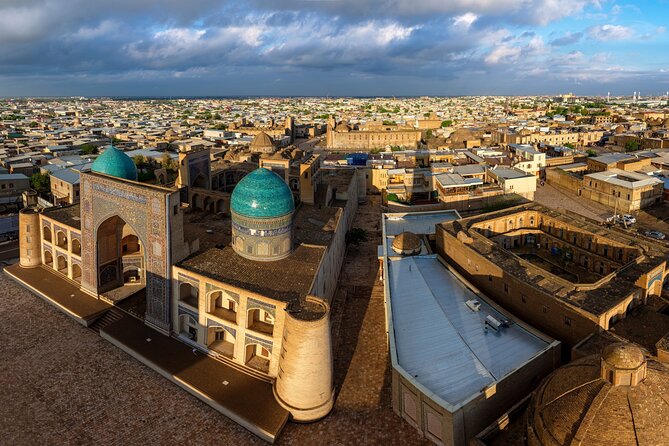
The tour usually begins with Bukhara’s great visual symbol, the Kalyan Minaret. It is part of the Po-i-Kalyan complex and gives you an immediate sense of the city’s scale and age. The stop is scheduled for about 30 minutes, enough to examine the brickwork, courtyard, and surrounding buildings while your guide explains why this monument became such an important marker of Bukhara.
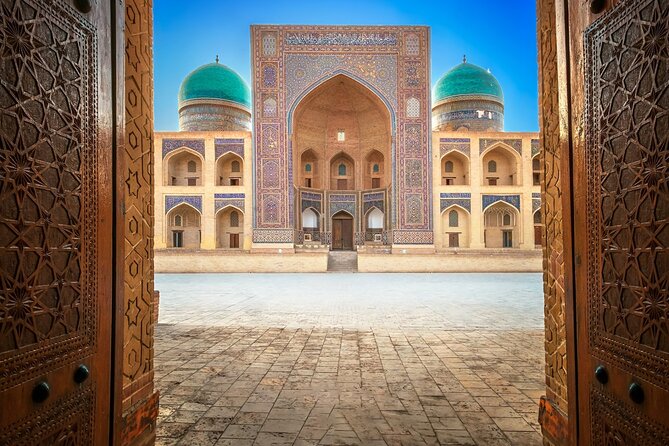
Next comes the Mir-i-Arab Madrasa, another 30-minute stop. Its patterned tilework and large hall make it one of the city’s most memorable religious schools. The building shares its courtyard with a mosque, so your guide can explain how education and worship worked together in the old city.
These first stops are visually powerful, but they can also be crowded and full of photography. Let your guide set the scene before you rush for pictures. The value here is not only the architecture. It is the connection between the minaret, mosque, madrasa, and Bukhara’s role as a center of Islamic learning.
The itinerary also includes the Poi Kalyan Mosque for about 20 minutes. Since the minaret, mosque, and Mir-i-Arab Madrasa belong to one complex, you get to see how the pieces relate rather than treating each monument as an isolated attraction.
Chor Minor and the Ark of Bukhara
Chor Minor Madrasah offers a change of mood. This small historic gatehouse once belonged to a madrasa that no longer survives. Its four towers give it a distinctive shape, and the shorter 30-minute visit works well because the structure is more compact than the Kalyan complex.
The guide can help you read Chor Minor as part of a vanished institution. That is one reason a local escort adds value here. Without context, you might see an unusual building, take a photo, and move on. With explanation, you get a glimpse of how much of old Bukhara has disappeared or changed.
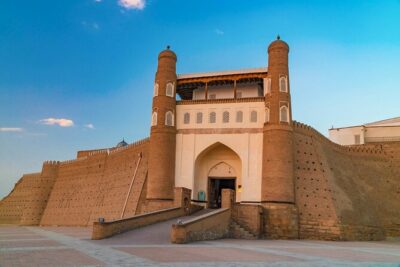
The Ark of Bukhara receives a full hour, making it one of the day’s main visits. This huge fortress was first built and occupied around the fifth century AD. It served as a seat of power for rulers of Bukhara and gives you a stronger sense of government, defense, and royal life.
An hour is useful because the Ark is not a single viewpoint. You will want time for the walls, courtyards, museum areas, and surviving structures. The fortress can also be a demanding stop in hot weather, so use the private format to slow down if needed.
Lyab-i-Hauz, Bolo Hauz, and Nodir Devon Begi
Lyab-i-Hauz is one of the most pleasant parts of the route. Its ensemble includes the Kukeldash Madrasa, a khanaka, and the Nodir Devon Begi building around a historic pool. The scheduled visit lasts about 30 minutes, but this is a place where you may naturally want extra time.
The setting helps explain how Bukhara functioned beyond its monuments. Water, shade, religious buildings, study, lodging, trade, and conversation all came together in this part of town. It is a good place for questions about daily life, not just dynasties and dates.
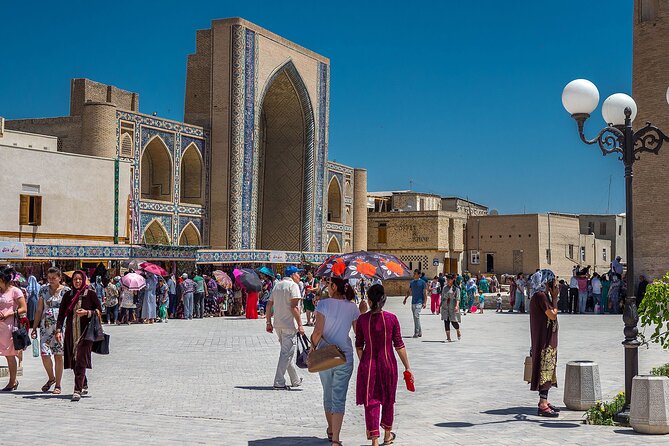
Nearby, the Nodir Devon Begi Madrasa has an ornate mosaic-covered gate and a courtyard with shops and folk dance shows. The 30-minute stop may include time to look at crafts or browse without feeling forced into a long shopping session. Still, keep your budget in mind. The tour includes entrance fees, not purchases.
The Monument to Hodja Nasreddin is a brief 15-minute stop beside Lyab-i-Hauz. The bronze figure, installed in 1979, brings humor into a city often presented through solemn religious and royal buildings. Hodja Nasreddin is associated with clever stories and comic wisdom, so this short visit gives the route a lighter touch.
Bolo Hauz Mosque takes about 15 minutes. Built in 1712 opposite the Ark in the Registan district, it is known for its historical connection to the citadel and its place within Bukhara’s protected old-city heritage. The visit is short, but it helps you compare a working religious setting with the grander architectural complexes.
A completely different kind of day:
- Best of Bukhara: All Day Private Old Town Tour
★ 5.0 · 66 reviews - Best of Bukhara: All Day Private Old Town Tour
★ 4.9 · 62 reviews - Yurt Camp Tour with Night from Bukhara
★ 3.8 · 35 reviews - All You Need To Know About Bukhara. A Walk In The Town
★ 4.9 · 31 reviews
The trading domes and Silk Road Bukhara
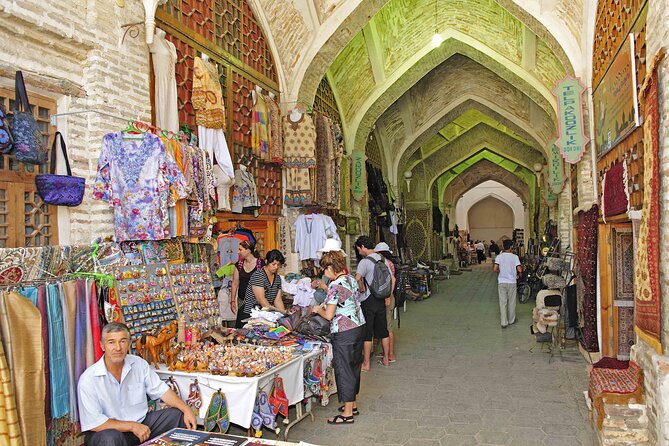
The four remaining trading domes are scheduled for about an hour. They sit along a north to south route through the old city and once helped organize commercial life. Today, you will find shops selling local arts, crafts, and products, along with the chance to see how trade remains part of the old center.
This is the most naturally flexible section of the tour. If you enjoy browsing, you can ask for more time. If shopping is not your priority, your guide can keep the historical focus moving. A private tour is especially useful here because you are not locked into a group timetable.
I recommend asking your guide how to separate a genuine local purchase from a simple souvenir before buying anything. The supplied information does not promise shopping assistance or fixed prices, but guides such as Shakhnoza and Guzel have been praised for adjusting the day to personal interests and allowing shopping breaks.
The domes also make the city’s past feel practical. Bukhara was not only a collection of beautiful buildings. It was a place where merchants, scholars, religious figures, craftspeople, and visitors crossed paths. The route gives you a physical sense of that movement.
Abdulaziz-Khan, Ulugbek, and Maghak-i Attari
The Abdulaziz-Khan Madrasa is a 20-minute stop. It is linked to Ulugbek, the ruler and scholar whose first madrasa in Bukhara was built in 1417. The building is a useful reminder that education and science mattered alongside military power and royal ceremony.
Ulugbek Madrasah, completed in 1420, receives another 20 minutes. Its features include exterior tiles, a fluted dome, stained windows, and old tombs. The two madrasas work well as a pair because your guide can explain their connection and compare their design.
These stops are less about one grand panoramic view and more about details. Look closely at tile patterns, doorways, domes, and decorative changes. If you enjoy architecture, this part of the walk may be especially rewarding. If you prefer only the biggest monuments, you may find the shorter visits less memorable.
Maghak-i Attari Mosque takes about 20 minutes and forms part of the Lyab-i-Hauz religious complex. Its location and layered past help show how Bukhara’s religious spaces were reused and reshaped over time. Your guide’s explanation is important here because the building may not make its full importance obvious at first glance.
The Bukhara Synagogue and a wider view of the city
The final listed stop is the Bukhara Synagogue, with about 30 minutes set aside. Bukhara’s Jewish community made important contributions to Central Asian and Silk Road civilization, and this visit broadens the tour beyond Islamic architecture and ruling dynasties.
I value this inclusion because it gives you a more complete picture of the city’s social past. Bukhara was shaped by different communities, languages, faiths, and trading connections. Ask your guide about the local Jewish heritage and how Bukhara Jews are spread around the world today.
The synagogue is also a reminder to listen for human stories. Architectural tours can become a parade of dates and rulers. The strongest guides on this experience, including Shakhnoza, Malika, Bekhruz, and Sitora, have been praised for discussing social life, religion, local legends, archaeology, anthropology, and culture as well as buildings.
The guides make the largest difference
The tour company assigns different guides, so your exact experience will depend on who leads your visit. Shakhnoza receives especially strong praise for her command of Bukhara, clear English, flexibility, warmth, and ability to tailor the route. She has also helped people find extra places to see on another day.
Maksad is praised for making the city come alive, answering questions, and adjusting the pace when a break is needed. Sunny has been described as calm, generous, and willing to help with practical problems such as getting cash. Guzel has been noted for arriving early and allowing time for shopping and coffee.
Other guides named in the feedback include Bekhruz, Sitora, Malika, and Guli. The consistent pattern is friendly, informed guiding with an emphasis on local stories. One guide has even been praised for speaking several languages, and the tour is offered in an impressive range of languages, though you should confirm your preferred language when booking.
A few practical points matter. Lunch is not included or planned as a fixed part of the day. Some guides have recommended restaurants or joined clients for plov after the tour, but you should ask to schedule a meal rather than assume one will happen.
One person reported that the tour finished in a square instead of at the hotel, ending the day abruptly. The stated arrangement is pickup from Hotel Malika-Bukhara and return to the meeting point, so confirm the drop-off plan with your guide at the start.
Is $85 per person good value?
At $85 per person, this is not the cheapest way to walk through Bukhara. It can be good value if you want a private guide, a full route, and entrance tickets handled in one booking.
The tour covers 14 stops, including the city’s major religious complex, fortress, trading areas, madrasas, mosque, synagogue, and public square. If you paid separately for a guide and several admissions, the price could compare well, especially for a small private group.
The value improves when you use the private format properly. Ask questions. Request a coffee or lunch break. Spend longer at a building that interests you and less time at a stop that does not. Several guides have adjusted the route or added suggestions when people had extra interests.
The price does not cover museum photo and video charges, listed as $1 per site. Tips are also separate. Carry cash for these costs, lunch, and shopping.
Who should book this Bukhara walk?
I would choose this tour for a first visit to Bukhara, especially if you have only one full day. It gives you a strong orientation and covers enough ground that you can return later to the places you liked most.
It suits people who enjoy architecture, Islamic art, Silk Road history, local stories, and cultural questions. It also works well for couples, families, and small groups who want control over the pace rather than a fixed group schedule.
You should think twice if you dislike long walks, standing in the sun, or visiting many monuments in one day. The route is ambitious, and the schedule can feel compressed if you stop for every detail. It is also less suitable if you expect a sit-down lunch, transport between each site, or a slow single-theme tour focused only on architecture.
The best approach is to tell your guide what matters most. Ask for more time at the Ark, trading domes, synagogue, or Kalyan complex if those are your priorities. Bukhara is too interesting to treat as a checklist.
Should you book it?
Book this tour if you want a well-organized first look at Bukhara with a private local guide and broad monument coverage. The strongest reason to choose it is the human element: guides such as Shakhnoza and Maksad can turn a long walk into a conversation about the city they know and love.
Skip it if you already have detailed plans, dislike walking for several hours, or want a slow food-and-shopping day. If you do book, confirm the guide’s language, ask when lunch can fit, carry cash for photo fees, and settle the return point before setting off. With those details clear, $85 buys a useful, substantial introduction to one of Uzbekistan’s most rewarding historic cities.
FAQ
How long does the Bukhara Old City tour last?
The tour lasts approximately five to seven hours. Some people have completed the main sightseeing in about three to five hours, depending on pace and stops.
Is this a private tour?
Yes. Only your group participates, so you can ask questions and request adjustments to the pace.
Is hotel pickup available?
Pickup is offered. The stated meeting point is Hotel Malika-Bukhara at Gavkushon Road 25 in Bukhara.
Where does the tour end?
The activity is scheduled to end back at the meeting point. Confirm the return arrangement with your guide at the start, since one participant reported being left in a square instead.
Are entrance tickets included?
Yes. Entrance tickets to all listed monuments, along with taxes and fees, are included in the tour price.
Are photography fees included?
No. Photo and video charges at museums cost $1 per site and are paid directly to the museums.
Is lunch included?
No. Lunch is not included as a planned part of the tour. Ask your guide to arrange a break if you want time to eat.
Can I cancel for a full refund?
Yes. You can cancel at least 24 hours before the experience starts for a full refund. Changes or cancellations made less than 24 hours before the start time are not accepted for a refund.
Just added in Bukhara
- Yurt Camp & Aydarkul Adventure from Bukhara★ 5.0 · 1 review
- Private Tour in 3 top Places Outside of Bukhara City★ 5.0 · 2 reviews
- Full-Day Private Guided Tour to Islamic 7 Saints of Bukhara★ 4.5 · 3 reviews
- Nurata Mountain & Kyzyl-kum Desert 3 Day Tour From Samarkand or Bukhara★ 5.0 · 1 review
- Bukhara Hammam Bathhouse with Massage★ 5.0 · 2 reviews
- Bukhara: Tour Outside of Old Town. Guide with Transportation★ 5.0 · 2 reviews
- Discover Bukhara One Day Group Experience★ 4.5 · 2 reviews
- Bukhara Old City Walking Tour★ 5.0 · 1 review
City Tours in Bukhara, compared.
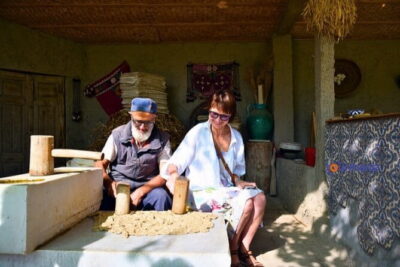
Bukhara Historical City Highlights Guided Walking Tour
Read our review →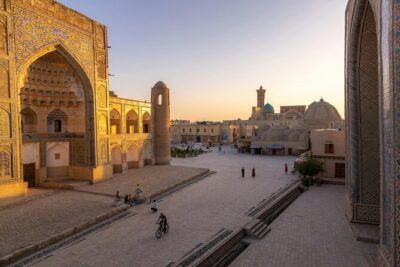
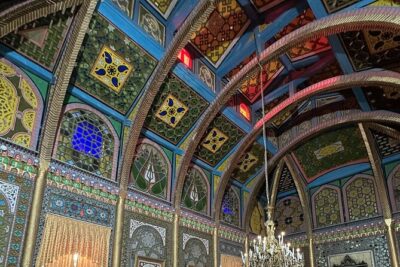
Private Tour in 3 top Places Outside of Bukhara City
Read our review →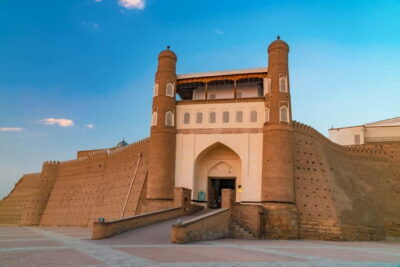
Browse the lists this tour appears in