
Review · TASHKENT TOURS
Discover Uzbekistan – explore top destinations: Samarkand, Bukhara & Tashkent
Three cities, one very full Uzbek sweep. I like the way this tour links Tashkent, Bukhara, and Samarkand by high-speed train, and I like that entrance fees, breakfast, lunch, and transport are already covered. The drawback is the pace: three days leaves little spare time, so you will see the major sights but rarely linger.
This is a useful choice if you want a guided first look at Uzbekistan without arranging every transfer yourself. The group is capped at eight, which can make daily sightseeing more personal, though the schedule still demands good physical fitness and a willingness to spend long hours on the move.
In This Review
- Key points to know before booking
- What this three-day Uzbekistan tour is really like
- Tashkent begins with Timurid power and modern Uzbekistan
- Tashkent’s mosques and applied art
- Bukhara brings the strongest old-city atmosphere
- Madrasas, the Ark, and Bukhara’s older layers
- Samarkand saves the biggest sights for last
- Shah-i-Zinda and the Siyob Bazaar
- Trains, meals, and the value of $999
- Pace, comfort, and the small-group limit
- Who should book this tour?
- FAQ
- How long is the tour?
- Which cities are included?
- Are high-speed train tickets included?
- Are meals included?
- What is the maximum group size?
- What is excluded from the price?
- Should you book it?
Key points to know before booking
- Three major cities in three days: Tashkent, Bukhara, and Samarkand are all included, with the main monuments packed into a tight schedule.
- High-speed rail is built in: Economy-class train tickets cover the route from Tashkent to Bukhara, Bukhara to Samarkand, and Samarkand back to Tashkent.
- Small maximum group: No more than eight people are listed, with some past arrangements apparently handled for only one person and a guide.
- Meals and admissions are covered: Three breakfasts, three lunches, an air-conditioned vehicle, and entrance tickets are included.
- Strong organization can make or break it: Past service has included guides and coordinators such as Sevinc, Outilla, Ibrohim, and Izzatullo, with especially warm comments about Sevinc and calm, clear handling in Tashkent.
- The price rewards convenience, not leisurely travel: At $999 per person, the value depends on how much you prize prearranged transport, guiding, meals, and a packed route.
What this three-day Uzbekistan tour is really like
Uzbekistan rewards slow travel, but this is not a slow trip. It is a concentrated introduction to three of the country’s best-known cities, designed for you to cover the essential monuments while someone else handles trains, vehicles, tickets, and much of the daily structure.
The route begins in Tashkent, then moves west to Bukhara, continues to Samarkand, and returns to Tashkent by train. That routing is efficient on paper, but you should expect early starts, fixed departure times, and limited freedom to change plans once the day is underway.
I see the tour as a practical answer to a common problem: you have only a few days and want to understand the broad shape of Uzbekistan. You will not see every museum, neighborhood, or small architectural detail, but you will visit the grand squares, mosques, madrasas, bazaars, and mausoleums that define the classic route.
A few more options to weigh up in Tashkent
- Best of Tashkent Mountains: Amirsoy, Chimgan & Charvak Trip
★ 4.8 · 567 reviews - Samarkand One Day Tour – Departure From Tashkent
★ 5.0 · 313 reviews - Tashkent City Tour
★ 5.0 · 121 reviews
Tashkent begins with Timurid power and modern Uzbekistan
Day one gives you a broad introduction to Tashkent through seven short stops. The Amir Timur Museum is the natural starting point, with portraits and artifacts connected to Timur, the fourteenth-century ruler also known as Tamerlane.
The visit is scheduled for only 30 minutes. That is enough for a clear first impression, but not enough for a slow museum visit. If you enjoy reading every display, you may want to ask how much time can be adjusted.
Amir Temur Square follows with its esplanades and equestrian statue. The 20-minute stop works well for photographs and orientation. It also gives you a first sense of how Timur remains central to Uzbekistan’s public story.
Independence Square, also called Mustakillik Square, shifts the focus toward modern Uzbekistan. It is a central civic space, so you are seeing more than a monument. You are also seeing how the capital presents the country today.
The nearby Memorial Square honors soldiers who died during the Great World War. The mood is quieter here, and the half-hour visit provides a useful change from grand civic avenues and royal imagery.
The Courage Earthquake Memorial recalls a major event in Tashkent’s past. The stop lasts about 20 minutes, so expect a brief look rather than a long historical presentation. It is a worthwhile addition because it moves the day beyond rulers and religious buildings.
Tashkent’s mosques and applied art
Minor Mosque brings a different visual note. Its white exterior and Islamic design make it one of the city’s more polished modern religious sites, and the 30-minute stop should allow time to appreciate the building without turning the visit into a rush.
The day ends at the Uzbekistan State Museum of Applied Art. This is one of the better choices for seeing decorative work and local artistic traditions in a museum setting. Again, the planned half hour is concise, so I would focus on the pieces that interest you most rather than trying to examine everything.
The Tashkent schedule is well chosen for a first visit, but it is also the clearest example of the tour’s limitation. Seven stops in one day means each place receives a short window. You get range, context, and plenty of photographs, but not much unplanned wandering.
Bukhara brings the strongest old-city atmosphere
Day two is devoted to Bukhara, and this may be the most satisfying day for anyone drawn to historic streets and Islamic architecture. The route begins at the Lyabi House area, an architectural ensemble organized around a pool and framed by the Kukeldash Madrasah, a khanaka, and the Nodir Devonbegi complex.
The 30-minute visit is enough to take in the layout and main facades. This is a place where I would pay attention to the relationship between the buildings, not only to each structure as an isolated sight.
Nodir Devonbegi Madrasah receives another 20 minutes. The building and nearby khanaka were ordered by the vizier Nadir, and the stop adds detail to the architectural setting around Lyabi Hauz.
The Kalyan Minaret is one of Bukhara’s most recognizable landmarks. Its 20-minute visit is brief, but the minaret works as a visual anchor for the city. You will likely appreciate it most from the surrounding square, where its height and decoration can be seen in relation to the mosque and madrasas.
Poi Kalyan Mosque follows. Dating to the fifteenth century, it is one of Bukhara’s major monuments. The short schedule means you should listen closely to the guide’s explanation and take a moment to notice the scale of the courtyard and the repeated architectural forms.
A completely different kind of day:
- Amirsoy, Chimgan & Charvak Full-Day Adventure
★ 4.9 · 82 reviews - Shymkent Day Tour from Tashkent
★ 4.6 · 71 reviews - Highlights of Tashkent (old and new part)
★ 5.0 · 60 reviews - 2 Days Tour to Bukhara and Samarkand from Tashkent by train
★ 5.0 · 53 reviews
Madrasas, the Ark, and Bukhara’s older layers
Ulugbek Madrasah is a compact stop with an important Timurid connection. It was founded in 1417, and its inscription provides a direct link to the period when Ulugbek supported scholarship and building projects across Central Asia.
Mir-i-Arab Madrasa is allotted 30 minutes. It is considered one of Bukhara’s most interesting monuments, and its position near Poi Kalyan makes the sequence feel coherent rather than like a string of unrelated stops.
The Ark of Bukhara gets the longest visit, one hour. That extra time matters. This massive fortress is not a quick photo stop, and you will want time to understand its role as a seat of power and to explore the areas open to you.
Bolo Hauz Mosque follows with a 30-minute visit. Built in 1712, it provides another architectural contrast, especially after the fortified Ark and the larger Kalyan complex.
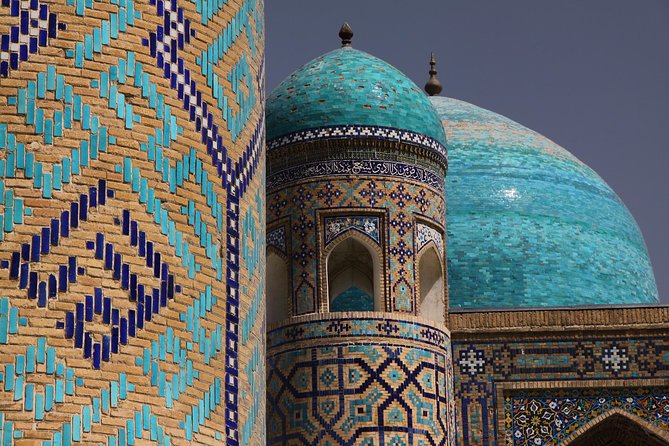
The final Bukhara stop is the Ismail Samani Mausoleum, scheduled for half an hour. It is a world-famous architectural masterpiece and one of the places where careful looking pays off. Notice the brickwork and the restrained design, which differ from the colorful tile and monumental facades seen elsewhere in the city.
Bukhara may become your favorite day if you prefer a strong sense of place over a long list of separate attractions. One past itinerary described the hotel as good and praised the city as a personal highlight. That fits the route: Bukhara receives a dense but fairly connected run of monuments.
Samarkand saves the biggest sights for last
Day three moves to Samarkand and begins at the Amir Temur Mausoleum, the Gur-i Amir complex. It is described as a masterpiece of medieval Islamic architecture, and its place in the itinerary is well judged. Starting here gives you a direct connection to Timur and the dynasty that shaped much of Samarkand’s monumental core.
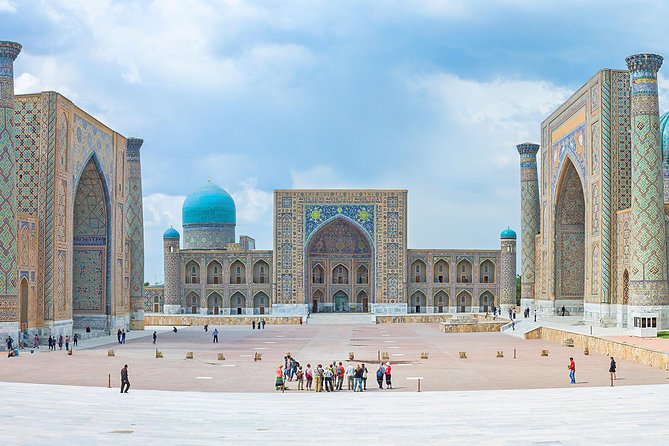
The Registan is the centerpiece of the day. It was the heart of ancient Samarkand during the Timurid period, and its three madrasa facades create the kind of grand urban space that photographs cannot fully convey.
The schedule lists separate visits to the buildings around the square. Sher-Dor Madrasah was built between 1619 and 1636, while Ulugbek Madrasah dates to 1417 to 1420. Tillya Kori Madrasah, built in 1660, completes the ensemble.
You will have about 30 minutes at each listed stop. That gives you time to study the facades, hear the basic story, and take photographs, but it may not leave room for an unhurried look at every interior detail. The repeated listing of the madrasas can also make the plan look confusing, though the practical meaning is clear: you are visiting the three principal buildings of the Registan.
Bibi Khanym Mosque is next. In the fifteenth century, it was one of the largest and most magnificent mosques in the Islamic world. The building’s scale makes this another place where a guide adds value, especially when explaining how it fits into Samarkand’s Timurid program.
Shah-i-Zinda and the Siyob Bazaar
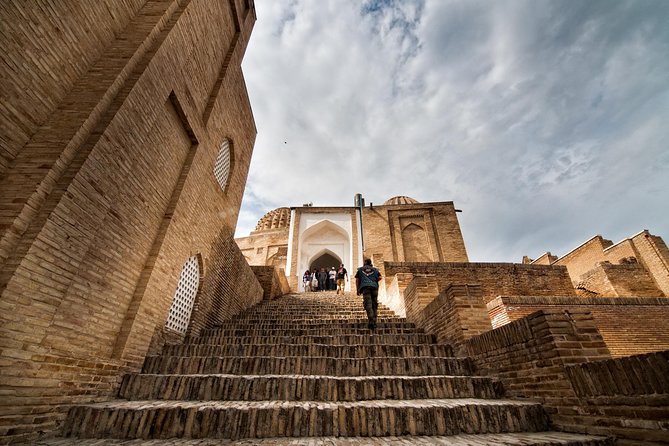
Shah-i-Zinda is a complex of mausoleums from the fourteenth and fifteenth centuries. The 30-minute stop is short for a site with many details, but even a quick visit lets you see why it is one of Samarkand’s essential monuments.
The route ends at Siyob Bozori, the city’s largest traditional bazaar. This is a smart final stop because it shifts you from monumental architecture to daily commerce. You can look at the stalls, notice local products, and get a less formal sense of Samarkand before the journey back toward Tashkent.
I would not treat the bazaar as a rushed shopping assignment. Use it to pause, observe, and enjoy the contrast with the Registan. The stop is only 30 minutes, so personal shopping time may be limited.
Trains, meals, and the value of $999
The $999 price is easiest to justify if you value convenience. It includes an air-conditioned vehicle, entrance tickets, three breakfasts, three lunches, and economy-class high-speed train tickets for the full Tashkent, Bukhara, Samarkand, Tashkent route.
Those inclusions remove several expenses that can add up quickly. They also reduce the work of coordinating tickets and getting between cities. A small group maximum of eight is another positive, particularly if you prefer not to move through busy historic sites in a large coach party.
Still, $999 is not a bargain-basement price. You are paying for a tightly managed package, not simply for entry to monuments. Personal expenses, travel insurance, and fees for wearing traditional clothing for photographs are excluded.
The value also depends on how much you use the included guiding and transport. If you want a flexible trip with long café stops, independent museum time, or spontaneous detours, this schedule may feel too controlled. If you want the main route handled for you, the price becomes easier to defend.
Past arrangements have involved drivers, guides, trains, flights, and backup planning handled in advance. That level of organization is useful in a short trip, though service quality can vary by local team. Sevinc in Samarkand has been singled out for warm, attentive care, while Outilla in Tashkent has been described as calm. If those guides are assigned to your dates, that is a welcome sign, but guide availability is not guaranteed by the tour details.
Pace, comfort, and the small-group limit
You should have a moderate level of physical fitness. The schedule includes repeated walking stops, historic complexes, fortress grounds, squares, and mosque areas. The tour information does not give exact walking distances or accessibility details, so ask directly if you have mobility concerns.
The vehicle is air-conditioned, which matters during long sightseeing days. The train tickets are economy class, and the route includes three intercity rail legs. Since the tour depends on fixed train departures, punctuality will matter more than it would on an independent trip.
The group maximum of eight is a real advantage. It can make it easier to hear the guide, ask questions, and move through entrances. Some past arrangements have apparently involved only one person and a guide, so the actual group may be smaller, but you should plan on the advertised maximum rather than count on a private tour.
The tour offers pickup, and it is near public transportation. Confirmation is provided at booking. Those details make the beginning and end of each day easier, but they do not remove the need to check the exact meeting and hotel arrangements before you go.
Who should book this tour?
I would choose this tour if you have only three days, want the country’s headline sights, and prefer a coordinated plan. It suits first-time visitors who do not want to arrange rail tickets, drivers, entrance fees, meals, and local guides separately.
It is also a good fit if you value a small group and want help making sense of Timur, Ulugbek, the madrasas, mosques, and mausoleums. The route gives you a useful framework for deciding where you might return on a longer trip.
I would hesitate if your main goal is slow exploration. Bukhara and Samarkand deserve time beyond 30-minute visits, and Tashkent’s museums could easily fill more than a morning. The trip is best understood as a highlights tour, not a relaxed cultural stay.
Cancellation is free up to 24 hours before the start time for a full refund. Changes or cancellations inside that window are not accepted for a refund, and poor weather or failure to meet the minimum group size may lead to a new date, another experience, or a full refund.
FAQ
How long is the tour?
The tour lasts approximately three days.
Which cities are included?
The route includes Tashkent, Bukhara, and Samarkand.
Are high-speed train tickets included?
Yes. Economy-class high-speed train tickets are included for Tashkent to Bukhara, Bukhara to Samarkand, and Samarkand to Tashkent.
Are meals included?
Yes. The package includes three breakfasts and three lunches.
What is the maximum group size?
The maximum is eight people.
What is excluded from the price?
Travel insurance, personal expenses, and fees for trying traditional clothing for photographs or other purposes are not included.
Should you book it?
Book this tour if your priority is seeing the major Uzbek monuments in a short, organized trip. The included trains, vehicle, tickets, meals, and small group remove much of the practical work, and the route covers the essential sights of all three cities.
Skip it if you want long visits, flexible hours, or a slower connection with each place. At $999, you are buying time-saving organization and broad coverage. For a first taste of Uzbekistan, that can be a fair trade, provided you accept the brisk pace.
Just added in Tashkent
- Uzbekistan and Tajikistan 9-Day Tour★ 5.0 · 1 review
- Tashkent International Airport (TAS) to Tashkent – Arrival Private Transfer★ 5.0 · 2 reviews
- Uzbek Brews & Views: Tashkent Craft Beer Discovery Tour★ 5.0 · 2 reviews
- 8-Day Private Tour in Uzbekistan with Pick Up★ 5.0 · 2 reviews
- Uzbekistan Tour – 6 Days 5 Nights★ 5.0 · 4 reviews
- Uzbekistan Private Tour 6 Days★ 5.0 · 1 review
- Tashkent to Tashkent International Airport (TAS) – Departure Private Transfer★ 5.0 · 1 review
- Full Day Private Tour to Fergana Valley from Tashkent★ 5.0 · 1 review
Tashkent Tours, compared.
Best of Tashkent Mountains: Amirsoy, Chimgan & Charvak Trip
Read our review →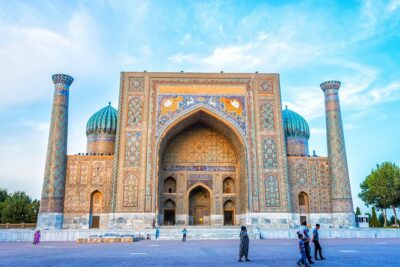
Samarkand One Day Tour – Departure From Tashkent
Read our review →
2 Days Tour to Bukhara and Samarkand from Tashkent by train
Read our review →
Uzbekistan 6 days private tour Tas-Khiva-Buk-Sam-Tas
Read our review →
Uzbekistan 8 Days Private Tour Tashkent-Urgench-Bukhara-Samarkand-Tashkent
Read our review →Browse the lists this tour appears in