
Review · COOKING CLASSES IN SAMARKAND
Samarkand: Uzbek Cooking Class in a Village Home
Food opens village doors. This five-and-a-half-hour outing takes you from Samarkand to a family home, where you help make plov over an open fire and learn the careful folding of mantu dumplings. I especially like the family setting and the chance to see gardens, animals, and daily rural life rather than only city sights. The main consideration is the one-hour journey each way, plus the fact that the cooking centers on meat.
The experience costs $52 per person and includes hotel, train-station, or airport pickup, ingredients, the cooking lesson, a village walk, and tea under a grapevine. Guide and host Bekjon receives especially strong praise for clear communication and friendly service, while his mother is often the person showing you how the food is really done. All 22 published ratings are five out of five, but you should still note the physical demands, food restrictions, and limited suitability for vegans, vegetarians, people with diabetes, and people with food allergies.
In This Review
- Five things to know before you book
- Leaving Samarkand for a family home
- A first look at rural Uzbek life
- Learning plov beside the open fire
- Folding mantu with the family
- Tea, animals, and the meal you helped make
- What the $52 price really buys
- Practical details that affect your day
- Who will enjoy this most
- Should you book the Samarkand village cooking class?
- FAQ
- How long does the cooking class take?
- How far is the village from Samarkand?
- What dishes can I learn to prepare?
- Is transportation included?
- Is the activity conducted in English?
- Are vegetarian options available?
- What should I bring?
- Can I cancel for a refund?
Five things to know before you book
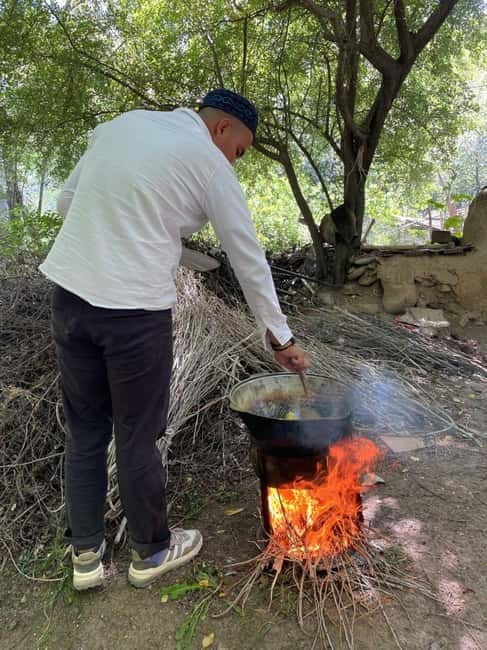
- Plov cooks over a wood fire: You help prepare rice, carrots, onions, meat, and spices in a large cast-iron qozon.
- Mantu is a hands-on second lesson: You roll dough, add filling, shape dumplings, and steam them in a mantuvarka.
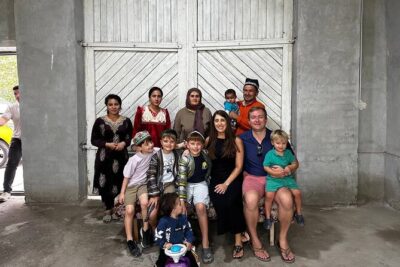
- The host family is part of the experience: Bekjon, his mother, and other family members help turn a cooking class into a window on village life.
- The countryside setting matters: Gardens, fields, livestock, clay-brick houses, and tea under grapevines give the meal its sense of place.
- The transfer is included: Pickup and return to Samarkand make this much easier than arranging a rural visit yourself.
- Plan around dietary and mobility limits: Meat is central, and the activity is not recommended for several medical or allergy-related conditions.
Leaving Samarkand for a family home
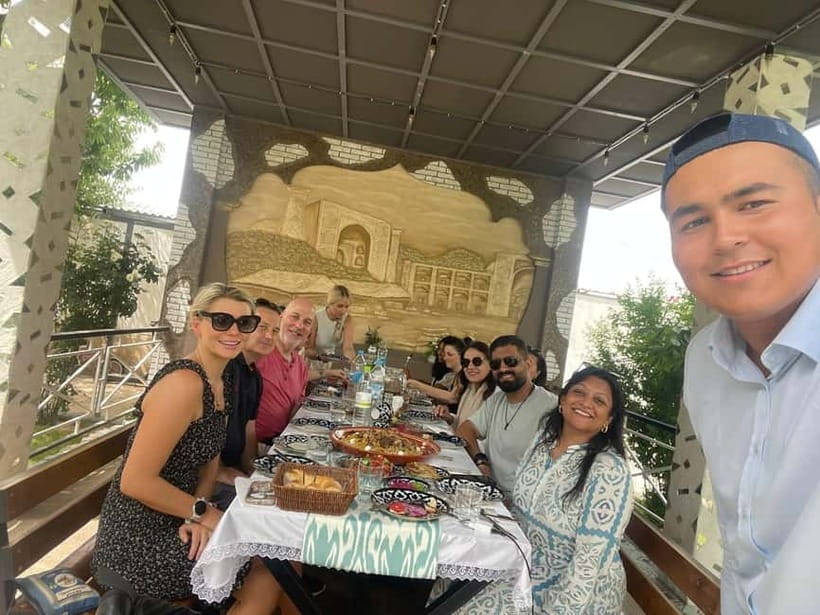
The day begins with pickup in Samarkand. You can give the provider a hotel, train station, or airport address, which is useful if your schedule does not begin or end at a standard hotel. The drive to the village takes about one hour, so the round trip is a meaningful part of the five-and-a-half-hour program.
That journey is not dead time. Bekjon has used the drive to explain local customs, history, village life, and sights along the way. His English is described as solid, and he checks in before pickup about what you hope to learn and whether you have anything to avoid. That small bit of advance contact is practical, especially for a food activity.
Transport has been praised for being punctual and smooth. Still, expect a countryside outing, not a quick cooking demonstration near Registan Square. If you have only one day in Samarkand, the time commitment matters. If you have a spare half-day and want to see how life changes beyond the monuments, the drive earns its place.
The exact village group size is not provided, so ask if that matters to you. The setting is a private family home rather than a purpose-built cooking school, and that is part of the charm. It also means the pace may feel more personal and informal than highly structured.
More Cooking Classes in Samarkand
- Samarkand: Village Tour with Plov Cooking Class & Home Visit
★ 5.0 · 29 reviews - Cooking class in Samarkand with local life experience
★ 5.0 · 19 reviews - cooking traditional food in Samarkand with local people
★ 4.8 · 17 reviews
A first look at rural Uzbek life
Arrival brings you into a traditional village home made of clay brick, with fruit trees, vegetable patches, and open space around it. The setting gives the cooking a useful context. Ingredients do not appear as anonymous items on a counter. They are connected to the garden, the household, and the work of feeding a family.
You can explore the garden, meet cows, sheep, chickens, and donkeys, and see how animals fit into ordinary village routines. For many people, this will be the most memorable part beyond the food. It is a simple encounter, but it gives you something that a restaurant cannot: a look at the practical rhythm of a working home.
The guided village walk is included. The description does not promise a major sightseeing circuit, so think of it as a close look at local surroundings rather than a formal historic tour. Bekjon also answers questions about Uzbek culture and history, and some outings have included extra cultural moments such as visiting a market or trying on traditional wedding clothes. Those additions are not listed as guaranteed parts of every booking, so ask ahead if they matter to you.
Learning plov beside the open fire
Plov, also called pilaf or plov in English-language descriptions, is Uzbekistan’s signature dish. It is more than rice with meat. The dish carries social weight, often appearing at celebrations, weddings, family gatherings, and large communal meals.
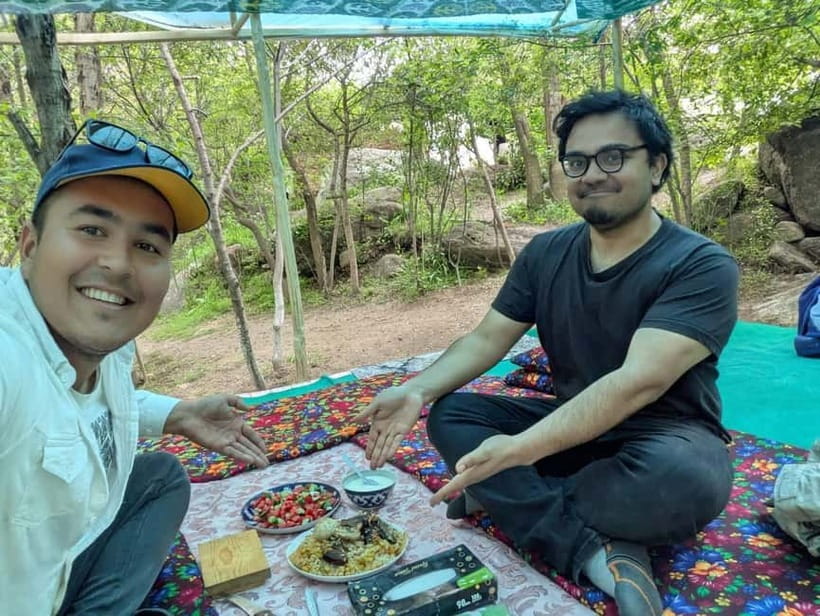
The class begins with fresh ingredients: rice, carrots, onions, lamb or beef, and spices. You help prepare them and learn how the ingredients are layered. The cooking takes place outside on a wood-fired stove, with the food simmering in a qozon, the broad cast-iron pot used for large quantities of plov.
This is the part where you should expect to work, not simply watch. You may stir, taste, assist with preparation, and follow the process as the dish develops. The open fire adds real character, but it also means heat, smoke, bending, and standing. Wear comfortable clothes and shoes, and do not arrive expecting a polished indoor kitchen.
The slow cooking creates a natural pause in the schedule. While the plov cooks, you can visit the garden, feed the animals, or sit under a grapevine with green tea and local snacks. I like this unhurried middle section because it reflects how food works in a home. The meal is not rushed between timed demonstrations. You have room to talk, look around, and let the aroma do its job.
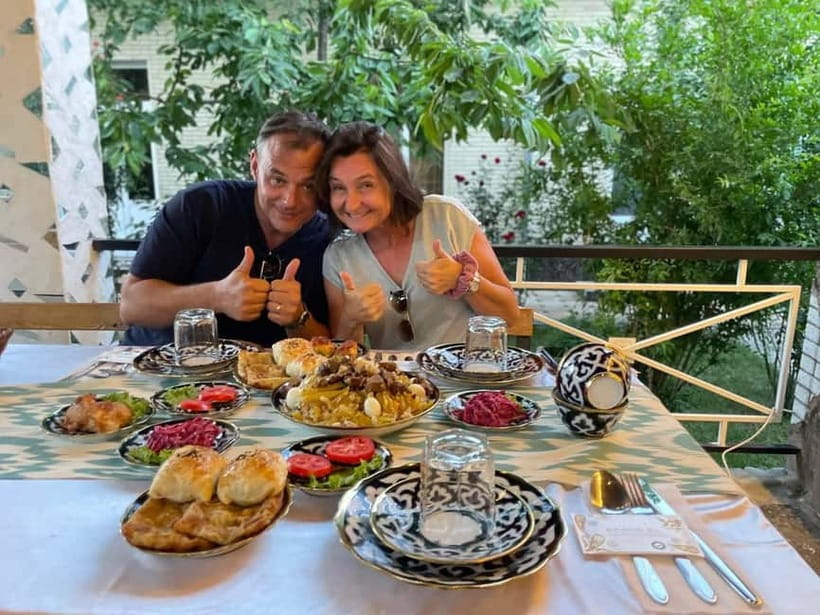
The final portion is generous. One person noted that the plov serving was large enough to share with Bekjon’s mother. That communal style is worth understanding before you sit down. This is not a carefully portioned tasting menu. It is a hearty family meal, prepared in quantity and eaten together.
Folding mantu with the family
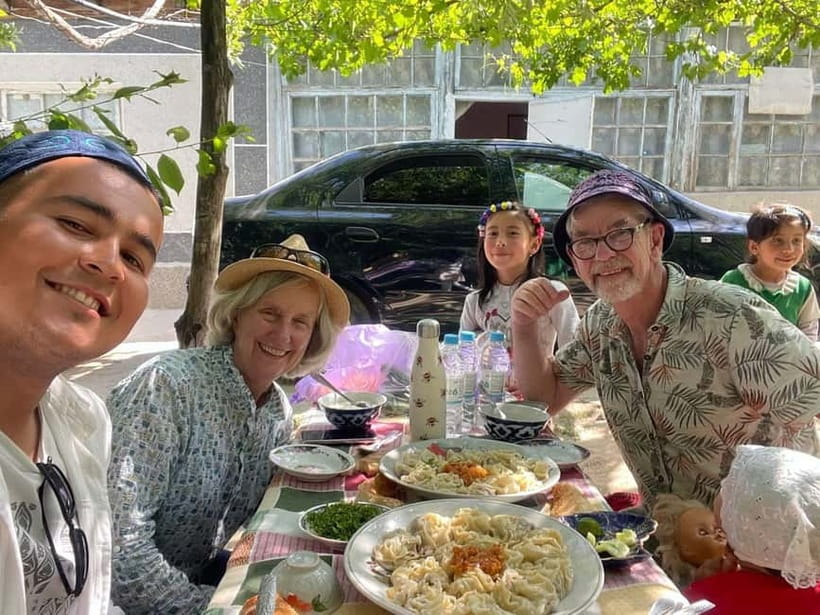
The second food focus is mantu, delicate steamed dumplings filled with minced meat and onions. You make the dough, roll it thin, add the filling, and shape the dumplings by hand. They are then cooked in a multi-level steamer called a mantuvarka.
Mantu takes a different kind of attention from plov. Plov asks you to understand heat, timing, and layers. Mantu asks for patience and hand coordination. The dough must be thin, and the shapes need to hold their filling while steaming. Your first dumpling may look less tidy than the host’s. That is normal, and it is part of the fun.
The family setting adds meaning here. Mantu preparation is often shared among women in village homes during holidays and family events. Sitting together to roll, fill, and shape the dumplings gives you a direct sense of how cooking passes between generations and how food creates time for conversation.
Several people especially enjoyed the mantu, while others booked the plov-focused version. Confirm which dish you will prepare when you reserve. The description presents plov or mantu as the main choice, though some bookings have included both. Vegetarian alternatives using pumpkin or potato are available for the mantu, but the wider activity still involves cooking meat. That makes this a poor fit for strict vegetarians and vegans.
A completely different kind of day:
- Samarkand: Historical Monuments Guided Walking Tour
★ 4.8 · 446 reviews - Private Samarkand City Tour With Transportation
★ 5.0 · 149 reviews - A City Tour Of Samarkand: The Pearl Of The East
★ 5.0 · 133 reviews - Full Day Private Tour in Seven Lakes from Samarkand
★ 5.0 · 94 reviews
Tea, animals, and the meal you helped make
Tea under the grapevine is not filler between activities. It gives the visit its social center. Uzbek hospitality often takes shape around tea, snacks, questions, and an open invitation to sit a little longer.
You may use this time to ask about family customs, village work, food, or the ingredients you have just handled. Bekjon’s mother has received particular praise for her demonstrations, tips, patience, and warm welcome. The family presence is what makes the class feel less like a tourist transaction and more like a shared household activity.
Then comes the meal. You eat the plov or mantu you helped prepare, along with tea and local snacks. The food is the reward, but the stronger point is the connection between preparation and place. You have seen the home, handled the ingredients, watched the fire, and shared the table.
The food is likely to feel substantial rather than delicate. Plov uses meat, oil, rice, and carrots, while mantu usually contains minced meat and onions. If you have a restricted diet, confirm exactly what can be changed before booking. Do not assume that a pumpkin or potato filling makes the whole meal vegetarian.
What the $52 price really buys
At $52, this is not just a cooking class. You are paying for a private cultural outing with transport, ingredients, guiding, a village visit, and a meal. Arranging those pieces separately would be difficult, particularly if you do not speak Uzbek or know which rural household to contact.
The included transfer is a major part of the value. The village is about an hour from Samarkand, and the provider handles the hotel-to-village-to-hotel journey. You also avoid buying ingredients, finding the home, and working out how to return after a long meal.
The value is strongest for you if you care about food, conversation, and ordinary life. It is weaker if you want a fast, technical lesson with recipe cards, professional equipment, or a short drive. The class is about cultural exchange as much as cooking technique.
The perfect five-star record across 22 ratings supports the provider’s reputation, especially for pickup, communication, and hospitality. Even so, a perfect rating does not remove the basic tradeoffs: the outing is long, meat is central, and the household setting may be informal. Those are not flaws for the right person, but they should shape your decision.
Practical details that affect your day
The total duration is 5.5 hours, with about 3 hours and 40 minutes listed for the village cooking portion and the rest covering transport. Starting times depend on availability, so check the schedule before fitting this around train departures or other tours.
The activity is conducted in English. Translation apps have also helped communication on some visits, but the guide’s English has been praised as strong. You can ask questions about local culture and history, though the central focus remains the food and family visit.
Bring a camera, sunscreen, and comfortable clothes. Rural outdoor cooking can involve sun, smoke, heat, and standing. The activity is not suitable for people with back problems, recent surgery, animal allergies, diabetes, food allergies, or several other listed conditions. Babies under one year and people over 95 are also listed as unsuitable.
Fireworks are not allowed. That is an unusual rule for a cooking class, but it is straightforward: leave them at home.
Free cancellation is available up to 24 hours before the activity for a full refund, and you can reserve without paying immediately. Those terms help if your Samarkand plans are still shifting, though you should still verify availability and pickup details before you finalize the day.
Who will enjoy this most
I would choose this for you if you want to:
- Learn a famous Uzbek dish by actually helping make it
- Meet a local family in their own home
- See village gardens, animals, and daily surroundings
- Take a break from monuments and city traffic
- Eat a generous meal in a communal setting
- Ask questions about Uzbek customs and family life
It is especially good for curious couples, solo visitors, small groups, and anyone who thinks food is one of the best ways to understand a country. It also works well for people who want a slower day with conversation rather than a packed list of monuments.
I would hesitate if you are vegan, strictly vegetarian, allergic to animals or food ingredients, or unable to stand and move comfortably around an outdoor cooking area. You should also think twice if your Samarkand schedule is tight. Five and a half hours is a real block of time, and two hours of that may be spent on the road.
Should you book the Samarkand village cooking class?
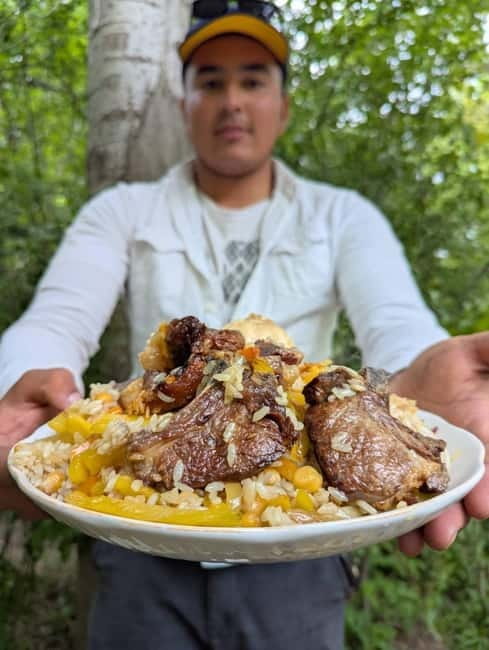
Book it if you want the meal to come with a story, a family, and a view of rural Uzbekistan. The strongest parts are the open-fire plov, the patient help from Bekjon’s mother, the included transport, and the easy warmth of the home setting.
Before paying, confirm whether your booking centers on plov, mantu, or both, and explain any dietary needs. Ask about optional extras such as a market visit or traditional clothing if those are important to you. For everyone else, $52 is a fair price for a half-day that combines food, transport, guiding, and genuine contact with village life.
FAQ
How long does the cooking class take?
The full experience lasts 5.5 hours. The village cooking portion is listed as approximately 3.67 hours, with transport making up the remaining time.
How far is the village from Samarkand?
The village is about one hour from Samarkand. Pickup and return transfers are included.
What dishes can I learn to prepare?
The experience focuses on Uzbek plov or mantu. Plov is cooked in a qozon over an open fire, while mantu are handmade steamed dumplings prepared in a mantuvarka.
Is transportation included?
Yes. Transfer between your Samarkand hotel, train station, or airport and the village home is included.
Is the activity conducted in English?
Yes. The listed tour language is English, and the guide is available to explain the cooking and local culture.
Are vegetarian options available?
Vegetarian fillings such as pumpkin or potato are offered for mantu. However, the activity involves cooking meat, so it is not suitable for vegetarians or vegans according to the stated restrictions.
What should I bring?
Bring a camera, sunscreen, and comfortable clothes. The cooking takes place in a rural home and includes outdoor work.
Can I cancel for a refund?
You can cancel up to 24 hours in advance for a full refund. The activity also offers reserve-now, pay-later booking.
More Craft Workshops in Samarkand
- Private Samarkand Cooking Class with Market Tour & Transfers
★ 5.0 · 14 reviews - Cooking Class in the Village with Local Family in Samarkand
★ 5.0 · 11 reviews - Samarkand Local Family Cooking Class and Siyob Bazaar Tour
★ 5.0 · 5 reviews - Plov Cooking Class at Local Uzbek House
★ 5.0 · 5 reviews
Just added in Samarkand
- Wine tour in Samarkand (Baguizagan) English★ 5.0 · 2 reviews
- Uzbek wedding ceremony★ 5.0 · 2 reviews
- Samarkand Capital of Amir Timur Private Tour with Transport★ 5.0 · 3 reviews
- The Golden City of Samarkand: A Self-Guided Audio Tour★ 4.0 · 4 reviews
- Seven Lakes Panjakent: One-Day Adventure from Samarkand★ 5.0 · 3 reviews
- Shakhrisabz Private Day Tour from Samarkand★ 5.0 · 4 reviews
- Tadjikistan 7 Lakes Day Trip from Samarkand with Lunch★ 5.0 · 5 reviews
- “Hidden Paradise: Seven Lakes & Voru Village in 2 Days”★ 5.0 · 2 reviews
Cooking Classes in Samarkand, compared.
Village Tour with Plov Cooking Class & Home Visit
Read our review →
Cooking class in Samarkand with local life experience
Read our review →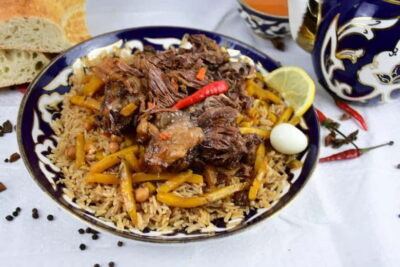
cooking traditional food in Samarkand with local people
Read our review →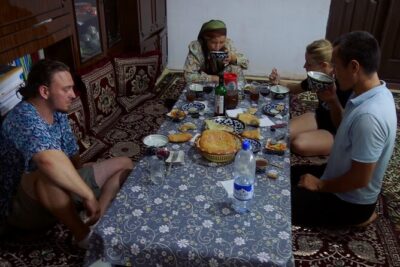
Private Samarkand Cooking Class with Market Tour & Transfers
Read our review →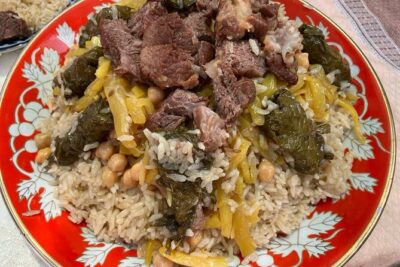
Cooking Class in the Village with Local Family in Samarkand
Read our review →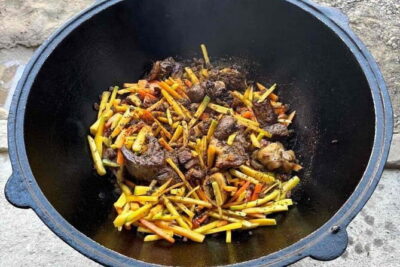
Samarkand Local Family Cooking Class and Siyob Bazaar Tour
Read our review →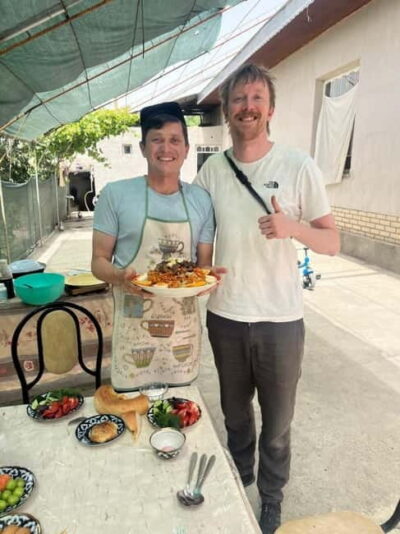
Browse the lists this tour appears in