
Review · TASHKENT TOURS
Tashkent Soviet Architecture (Modernism) and Subway station tour.
Tashkent reveals its past in concrete. This private walking tour links Soviet modernist buildings, earthquake memorials, grand public squares, and some of the city’s most decorated metro stations. I especially like the personal format, which lets your guide adjust the focus, and the chance to see several subway stations without having to work out the route yourself. The $50 price is fair for a private tour, though transport costs beyond the included metro admission are extra.
The walk is also a useful first look at central Tashkent. Guides such as Aziza, Waheed, Mirwaheed, and Mirvoxid have been praised for clear explanations, friendly company, and practical suggestions for places to visit afterward. The main caution is timing: the published details describe both a two-hour-15-minute tour and a two-and-a-half-hour tour, so confirm the exact schedule before you set up the rest of your day.
In This Review
- Key points to know before booking
- Why Soviet Tashkent is worth your time
- Starting at Amir Temur Square and the Uzbekistan Hotel
- Independence Square, the Romanov Palace, and the History Museum
- Riding the Tashkent Metro and seeing the decorated stations
- The Monument of Courage and Tashkent after the earthquake
- Friendship of Nations Square and Palace
- Chorsu Bazaar and the broader Tashkent introduction
- The guides and the private format
- Timing, walking, and extra costs
- Who should book this Tashkent walk?
- Should you book the Tashkent Soviet architecture tour?
- FAQ
- Where does the Tashkent Soviet architecture tour start?
- Where does the tour end?
- How long does the experience last?
- How much does the tour cost?
- Is this a private tour?
- Is the subway admission included?
- How many metro stations will you visit?
- Is Chorsu Bazaar included?
- Can you cancel for a full refund?
Key points to know before booking
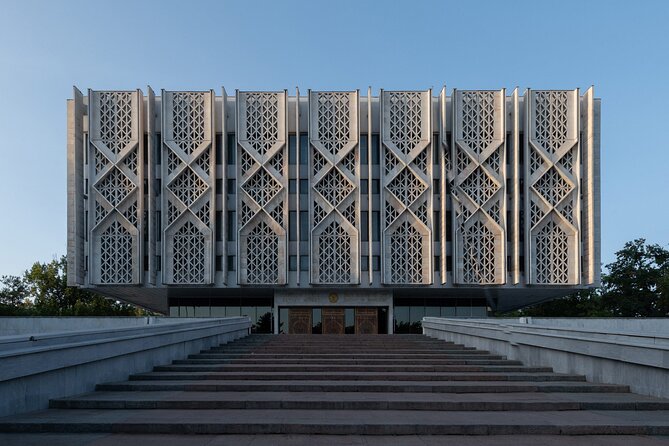
- The Tashkent Metro is the main prize: You visit three or four especially attractive stations, with some tours reaching five or six.
- The private format allows changes: Groups of one to 20 can book, and the guide can focus more heavily on Soviet architecture if you request it.
- Amir Temur Square begins the story: You get an explanation of the Uzbekistan Hotel and the surrounding architecture before moving through the city.
- The tour connects buildings to the 1966 earthquake: The Monument of Courage and later Soviet construction give the city’s architecture a clear human context.
- Guides add useful local advice: Aziza has suggested other Tashkent activities, while several guides have adjusted the route to suit first-time visitors.
- It is mostly a walking experience: Metro admission is included, but other fees, taxes, and transport costs are not.
Why Soviet Tashkent is worth your time
Tashkent is not a city where every important sight fits neatly into an old-town postcard. Its central districts show a mix of Soviet planning, Uzbek national symbols, broad avenues, rebuilt public buildings, and ambitious modernist design.
That makes this tour useful. You are not simply looking at large concrete structures and trying to guess what they mean. Your guide explains how the city changed, why certain buildings were placed where they are, and how the Soviet period still shapes daily life.
I like the fact that the tour does not treat architecture as decoration alone. The route brings together government squares, hotels, memorials, palaces, museums, and the metro. You get a sense of how public space was used to project power, celebrate friendship, commemorate disaster, and move people around a large capital.
The private setup matters here. If you are fascinated by Soviet modernism, you can ask for more buildings and fewer general sightseeing stops. If you are new to Tashkent, your guide can explain the wider story and add sights that make the city easier to understand.
A few more options to weigh up in Tashkent
- Best of Tashkent Mountains: Amirsoy, Chimgan & Charvak Trip
★ 4.8 · 567 reviews - Samarkand One Day Tour – Departure From Tashkent
★ 5.0 · 313 reviews - Tashkent City Tour
★ 5.0 · 121 reviews
Starting at Amir Temur Square and the Uzbekistan Hotel
The meeting point is the Hotel Uzbekistan on Mirzamakhmud Musakhanov Street. The tour begins around Amir Temur Square, a practical central location and an easy place to begin a city walk.
The first stop lasts about 35 minutes. Much of that time is devoted to the square and the architecture of the Uzbekistan Hotel. This is a good opening because the hotel gives the guide a clear subject: Soviet-era planning, monumental scale, and the way Tashkent presented itself as a major capital.
You can expect a short explanation of the hotel’s design and its place in the city. The surrounding square helps you read the wider plan of central Tashkent, with generous open space and large buildings set out for public effect.
For architecture fans, this is one of the strongest parts of the walk. You have time to look at proportions, facades, and the relationship between the hotel and the square rather than rushing past for a photograph.
The tradeoff is that the tour does not appear to include a formal interior visit to the hotel. The description does refer to panoramic views from the Soviet-era Uzbekistan Hotel, but the detailed route mainly promises exterior architecture and explanation. If the view is important to you, ask your guide in advance what access is possible on your date.
Independence Square, the Romanov Palace, and the History Museum
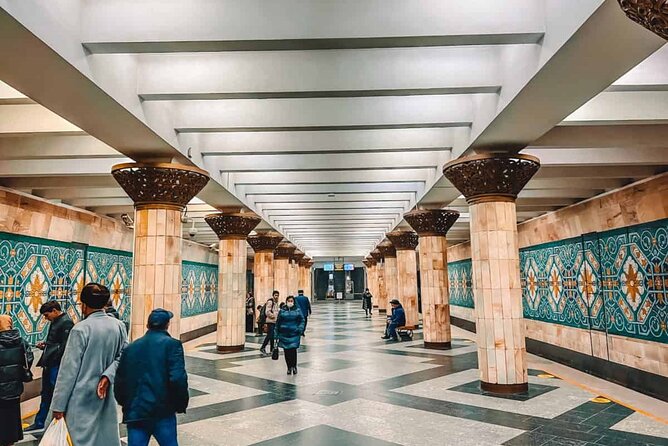
From Amir Temur Square, the walk continues to Independence Square, also called Mustakillik Square. The listed stop lasts about 15 minutes and includes the Palace of Duke Romanov and the Museum of History of Uzbekistan.
This short section adds an older layer to the Soviet story. The Palace of Duke Romanov gives you a reminder that Tashkent’s built environment did not begin with Soviet rule. The museum provides a wider national frame, though the tour information does not promise an extended museum visit or a ticketed interior tour.
The square itself helps explain how central Tashkent has been arranged as a ceremonial and political center. You will likely spend more time hearing about the setting and its buildings than exploring museum galleries.
That is not a weakness if you want an introduction rather than a full museum outing. If you want to visit the Museum of History properly, plan a separate stop. Fifteen minutes is enough for orientation, but not enough for a careful look at a major collection.
Riding the Tashkent Metro and seeing the decorated stations

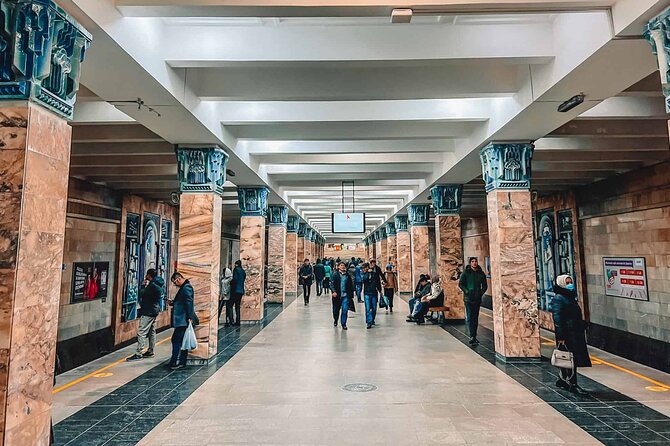
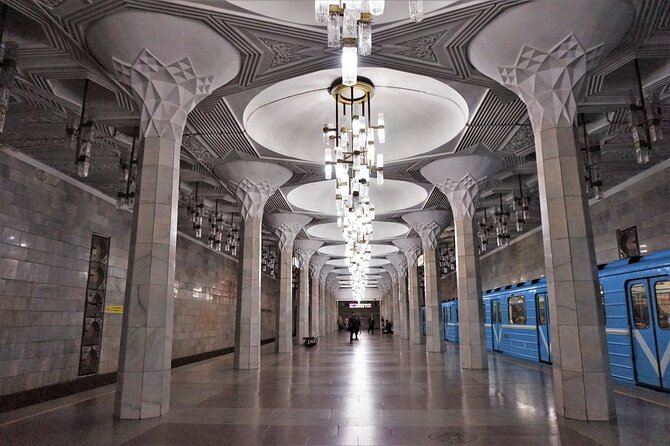
The subway section is the heart of the experience. It lasts about 30 minutes and includes the metro admission. Your guide takes you through the system and points out three or four especially attractive stations.
Several accounts praise this part above all else. One route reached five or six stations, including the Cosmonaut station, which is a particular favorite for its space-themed design. The exact number of stations may depend on timing, the guide, and the route that works on the day.
The Tashkent Metro is valuable for two reasons. First, it is practical public transport that you can use again during your stay. Second, its stations turn an ordinary commute into a lesson in public art and Soviet-era civic design.
A guide makes a real difference underground. You learn what to look for, how the stations relate to Soviet ideas of public space, and why certain themes appear. Without that context, you might enjoy the decoration but miss the political and cultural meaning behind it.
You should also expect a working subway, not a quiet museum. The visit is brief, and the pace needs to follow the transport system. This is one reason the private format helps. You can tell your guide if you want to spend more time looking at one station, though the rest of the route may need to be shortened.
The tour is not advertised as a complete survey of every notable station. It focuses on the best three or four, with some accounts describing more. If the Cosmonaut station is essential to you, say so before the walk begins.
A completely different kind of day:
- Amirsoy, Chimgan & Charvak Full-Day Adventure
★ 4.9 · 82 reviews - Shymkent Day Tour from Tashkent
★ 4.6 · 71 reviews - Highlights of Tashkent (old and new part)
★ 5.0 · 60 reviews - 2 Days Tour to Bukhara and Samarkand from Tashkent by train
★ 5.0 · 53 reviews
The Monument of Courage and Tashkent after the earthquake
The route also includes the Monument of Courage and Soviet architecture connected with the city’s earthquake. This is one of the most meaningful parts of the tour because it moves the discussion away from style and toward people.
The 1966 earthquake caused major damage in Tashkent and led to a large rebuilding effort. The monument gives your guide a natural place to explain that period and the role of Soviet construction in reshaping the capital.
You will see the monument as part of the walking route, with the guide providing the context. The supplied details do not promise an extended visit or a formal ceremony, so think of it as a focused stop rather than a long memorial experience.
I value this section because it explains why so much of central Tashkent can feel planned on a grand scale. The wide spaces and large public buildings were not simply artistic choices. They were also part of rebuilding and presenting a modern Soviet capital.
Friendship of Nations Square and Palace
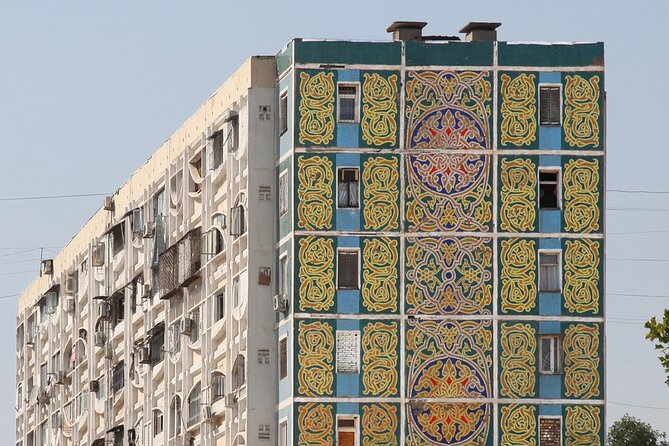
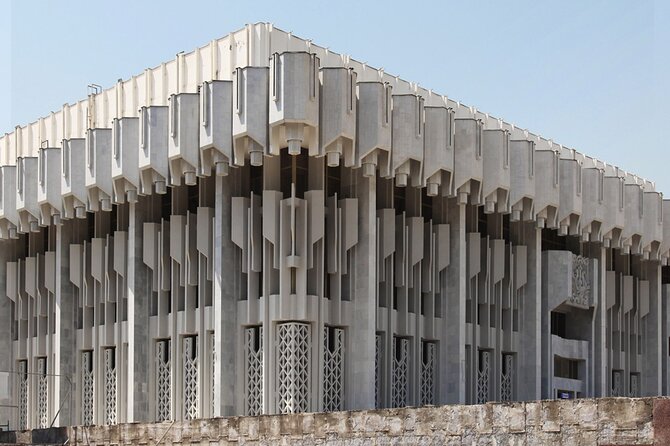
The final listed stop is Friendship of Nations Square and the Friendship of Nations Palace. The visit lasts about 20 minutes.
This stop continues the theme of public architecture used to express political ideals. The name itself points to the Soviet message of cooperation among the republics, while the palace and square provide another example of the scale favored for major public venues.
Your guide can connect the building to the other places on the route. After the hotel, government square, metro, and earthquake monument, the palace helps complete the picture of how Tashkent’s Soviet-era center was planned and presented.
The tour usually ends back at the Uzbekistan Hotel. That makes the walk easy to use on your first day, since you finish where you started rather than needing to find an unfamiliar final meeting point.
Chorsu Bazaar and the broader Tashkent introduction
The general tour description also includes the food stalls of Chorsu Bazaar as part of the wider Tashkent introduction. The detailed stop-by-stop schedule does not list Chorsu Bazaar among the four timed stops, so you should not assume it is always included in the two-hour-15-minute architecture route.
This distinction matters. Chorsu is a major food and shopping center, but it is not close enough to treat as a casual extra if the tour is concentrated around central Soviet architecture. Ask your guide before booking if the bazaar is a priority.
The same applies to the promised panoramic views from the Uzbekistan Hotel. They are mentioned as part of the experience, but the precise access and timing are not explained. A quick message before the tour can prevent disappointment and help your guide shape the walk around your interests.
The guides and the private format
The strongest personal praise goes to the guides. Aziza is described as warm, well organized, entertaining, and generous with her time. She has adjusted walks around a group’s interests, explained both past and present Tashkent, and suggested other activities beyond the route.
Waheed has been praised for the subway explanation and for including the Cosmonaut station. Mirwaheed and Mirvoxid are also described as helpful and strong on local history and architecture. The guide assigned to your booking may vary, so treat these names as examples of the guiding team rather than a guarantee.
The private format is the tour’s biggest practical advantage. Only your group participates, and the booking can cover one to 20 people. A group of six has used the flexibility to make Soviet architecture the main focus, while first-time visitors have received extra sightseeing suggestions along the way.
A private tour also gives you room to ask direct questions. You can spend less time on a building you find dull and more time on metro stations, modernism, or the earthquake story. The tradeoff is cost: $50 per person is much better value for a larger group than for one person traveling alone.
One booking account describes confusion about the meeting point and a late start. The tour still took place and was considered worthwhile, but I would confirm the exact start location and time directly. The listed meeting point is the Hotel Uzbekistan, and the usual ending is there as well.
Timing, walking, and extra costs
The experience is described as lasting about two hours and 15 minutes, or approximately two and a half hours. That is a compact introduction, not a full-day architectural study.
You will walk between central sights and use the subway as part of the route. The pace has generally been described as comfortable, but the tour still includes several stops in a short period. Wear shoes suited to city walking and leave some space in your schedule in case the start runs late.
The price is $50 per person. For a private group, that can be a sound deal because you are paying for personal guiding rather than simply joining a large crowd. For a solo visitor, the value depends on how much you care about the architecture and how much help you want navigating the metro.
Guided touring is included. Metro admission is included for the subway section, while all fees and taxes and transport fees are listed separately. Since the experience is mainly a walking tour, those extra costs may be limited, but you should still budget for them.
Group discounts are available. The activity accepts mobile tickets, and confirmation is provided at booking. Most people can participate, and service animals are allowed.
Who should book this Tashkent walk?
I would choose this tour if you are staying in Tashkent for the first time and want the city explained rather than simply photographed. It is also a strong match for anyone interested in Soviet modernism, public monuments, urban planning, or metro architecture.
It suits:
- Architecture fans who want buildings placed in historical context
- First-time visitors who want practical orientation
- Small private groups that prefer to set their own pace
- Solo visitors who would rather have a guide for the metro
- People who want ideas for further sightseeing after the walk
It is less suitable if you want long interior visits, a full museum tour, or a slow photographic study of each station. The route covers several subjects quickly, and the exact balance can change depending on your guide and requests.
The experience requires good weather. You can cancel for a full refund up to 24 hours before the start time. If bad weather or an insufficient number of bookings cancels the activity, you are offered another date or a full refund.
Should you book the Tashkent Soviet architecture tour?
Book it if you want a smart, personal introduction to Tashkent’s Soviet-era center and its remarkable metro stations. The best reasons are the private format, the flexible focus, and guides such as Aziza and Waheed, who have been praised for making the architecture easy to understand.
Before paying, ask two questions: exactly how long will the tour last, and will the route include the Cosmonaut station, Chorsu Bazaar, or the hotel viewpoint? If those details are clear, the $50 price offers good value for a private group and a useful first look at a city that rewards explanation.
FAQ
Where does the Tashkent Soviet architecture tour start?
The tour starts at Hotel Uzbekistan on Mirzamakhmud Musakhanov Street 45 in Tashkent.
Where does the tour end?
It usually ends back at Hotel Uzbekistan, the same place where it begins.
How long does the experience last?
The published timing describes the experience as approximately two hours and 15 minutes to two and a half hours.
How much does the tour cost?
The listed price is $50 per person. Group discounts are available.
Is this a private tour?
Yes. Only your group participates, and private bookings can include between one and 20 people.
Is the subway admission included?
Yes. Admission for the Tashkent Metro portion is included. Other fees, taxes, and transport costs are not included.
How many metro stations will you visit?
The route describes three or four especially attractive stations. Some accounts describe visits to five or six stations, so confirm the exact route if a particular station matters to you.
Is Chorsu Bazaar included?
Chorsu Bazaar is included in the wider tour description, but it is not listed among the timed stops in the detailed route. Ask the guide before booking if you specifically want to visit it.
Can you cancel for a full refund?
Yes. You can cancel at least 24 hours before the start time for a full refund. Changes or cancellations made less than 24 hours before the start are not accepted for a refund.
Just added in Tashkent
- Uzbekistan and Tajikistan 9-Day Tour★ 5.0 · 1 review
- Tashkent International Airport (TAS) to Tashkent – Arrival Private Transfer★ 5.0 · 2 reviews
- Uzbek Brews & Views: Tashkent Craft Beer Discovery Tour★ 5.0 · 2 reviews
- 8-Day Private Tour in Uzbekistan with Pick Up★ 5.0 · 2 reviews
- Uzbekistan Tour – 6 Days 5 Nights★ 5.0 · 4 reviews
- Uzbekistan Private Tour 6 Days★ 5.0 · 1 review
- Tashkent to Tashkent International Airport (TAS) – Departure Private Transfer★ 5.0 · 1 review
- Full Day Private Tour to Fergana Valley from Tashkent★ 5.0 · 1 review
Tashkent Tours, compared.
Best of Tashkent Mountains: Amirsoy, Chimgan & Charvak Trip
Read our review →
Samarkand One Day Tour – Departure From Tashkent
Read our review →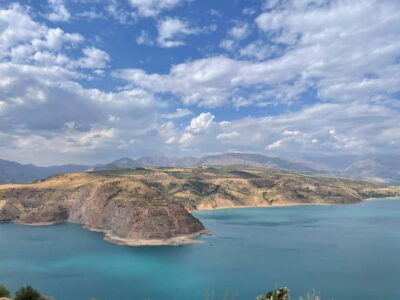

2 Days Tour to Bukhara and Samarkand from Tashkent by train
Read our review →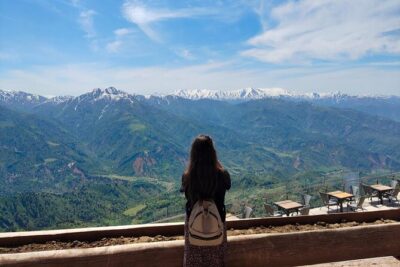
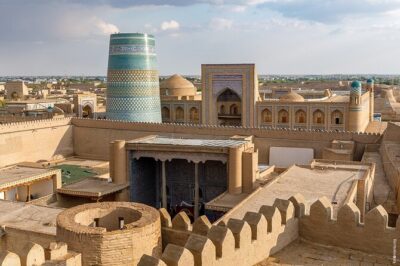
Uzbekistan 6 days private tour Tas-Khiva-Buk-Sam-Tas
Read our review →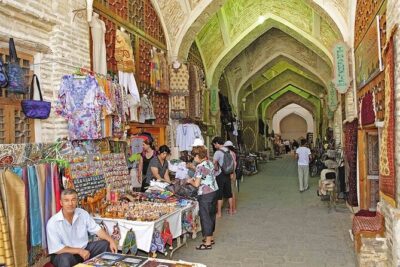
Uzbekistan 8 Days Private Tour Tashkent-Urgench-Bukhara-Samarkand-Tashkent
Read our review →Browse the lists this tour appears in