
Review · CITY TOURS IN TASHKENT
Welcome to Tashkent (City Tour with local guide)
Tashkent rewards a good first look. This six-hour tour mixes grand squares, sacred buildings, a lively bazaar, Soviet-era metro stations, and the chance to try Uzbekistan’s famous plov. I especially like the small group of up to four, which keeps the day flexible, and the clever mix of car travel, walking, and metro rides. The main caution is organization: one past booking involved a 40-minute delay and several guide changes, so confirm the pickup details by WhatsApp before the day begins.
The $165 group price makes the most sense for two to four people, since it covers the vehicle, local English-speaking guide, hotel pickup, bottled water, and Wi-Fi. I would choose this as a first-day introduction, but I would not treat it as a deep museum tour. Some stops are viewed from outside, museum tickets cost extra, and the quality of historical explanation may depend heavily on the guide you receive.
In This Review
- Key points to know before booking
- Why this six-hour Tashkent tour works well
- Amir Timur Square and the formal face of the capital
- Theater Square and the Alisher Navoi Opera House
- Independence Square and the Earthquake Memorial
- Khast Imam Square and the Quran Othman
- Chorsu Bazaar under its blue dome
- Riding the Tashkent Metro
- Plov and the food side of the day
- Transport, walking, and the pace of the day
- Is $165 good value for up to four people?
- Who should book this Tashkent experience?
- Final verdict: book it for a first look at Tashkent
- FAQ
- How long does the Tashkent city tour last?
- What is the price of the tour?
- Is hotel pickup included?
- What languages can the guide speak?
- How much walking is involved?
- Is the Tashkent Metro part of the tour?
- Are meals included?
- Are museum tickets included?
- Can I cancel the booking?
Key points to know before booking
- The metro is part of the sightseeing: Tashkent’s stations are decorated with different themes, ornaments, and lighting, making a short train ride part of the tour rather than mere transport.
- Khast Imam brings religious history into the day: You visit the Barakkhan Madrasah, Kaffal Shashi Mausoleum, and the Muyi Muborak Library Museum, home to the seventh-century Quran Othman.
- Chorsu Bazaar gives you the strongest local atmosphere: Its huge blue dome shelters food, fabrics, ceramics, carpets, jewelry, and everyday market trade.
- The route covers old and new Tashkent: Amir Timur Square and Independence Square show the formal side of the capital, while the bazaar and metro reveal more of its daily character.
- Expect about 1.5 kilometers of walking: Comfortable shoes matter, even though the air-conditioned vehicle handles the longer stretches.
- Food is an important extra: Plov is highlighted as the classic Uzbek dish, but lunch, dinner, street food, and personal purchases are not included in the price.
Why this six-hour Tashkent tour works well
Tashkent is spread out, and its sights do not all sit within one compact historic quarter. A car saves time between districts, while the metro lets you see one of the city’s most distinctive public spaces without spending the whole day in traffic.
That combination is the strongest feature of the experience. You are not confined to a bus window, but you also do not have to work out the city’s broad layout on your own. The tour includes hotel pickup in Tashkent, an air-conditioned vehicle, bottled water, and free Wi-Fi.
The small group limit matters. With no more than four people, it is easier to ask questions, pause for photographs, or adjust the pace than it would be on a large coach outing. Abror, also written as Abrar in one account, received repeated praise for being helpful, friendly, and well informed about Uzbek history and culture. One family particularly appreciated his help with a three-year-old’s stroller.
Still, the guide is the variable to watch. One booking had a friendly guide who covered every listed stop but offered only broad background. That same booking also had poor communication before the tour and a late arrival. Send a WhatsApp message after booking, confirm the pickup time, and wait in your hotel lobby 10 minutes early with your phone available.
More City Tours in Tashkent
- Tashkent City Tour
★ 5.0 · 121 reviews - Tashkent city tour
★ 5.0 · 50 reviews - Tashkent: Private Full-Day City Tour on a Premium Car
★ 4.8 · 38 reviews
Amir Timur Square and the formal face of the capital
The tour usually begins with the central sights of modern Tashkent, including Amir Timur Square. Founded in 1882, the square was first called Konstantinovsky Square and received its current name in 1994. Its location puts several important buildings within view.
Around the square you can see the Museum of History of Timurids, the Uzbekistan Hotel, Forum Palace, and the city’s famous clock. Even if you do not enter the museum, the stop gives you a useful introduction to how Amir Timur is remembered in present-day Uzbekistan.
I like this part of the route because it provides context before the tour moves toward the older religious center. The setting is formal and spacious, with large civic buildings rather than market stalls or narrow lanes. It is a good place for photographs, but it may feel more like a quick orientation stop than a full attraction if you want extended time inside museums.
Museum admission is not included. Ask your guide at the start which buildings are exterior visits and which require separate tickets, since six hours can disappear quickly if you try to enter every site.
Theater Square and the Alisher Navoi Opera House
Theater Square introduces another side of Tashkent’s cultural life. The State Academic Theater of Uzbekistan, named after the poet Alisher Navoi, was built in 1947 and presents both classical and national performances.
The theater is described as one of the world’s best opera houses, but the city tour is not an opera performance. You should think of this stop as an architectural and cultural viewpoint, with a chance to hear how music, theater, and national identity fit into Uzbekistan’s capital.
This is one of the shorter stops on a route already packed with major sights. If you want to attend a performance, that would need to be planned separately. The tour gives you the setting and background, not an evening at the theater.
Independence Square and the Earthquake Memorial
Independence Square presents the official face of Uzbekistan. Its fountains symbolize the life energy of the Uzbek people, while nearby government buildings and the Senate underline the square’s national importance.
You also see the Eternal Flame honoring soldiers who died during the Second World War. The square reflects the country’s past, present, and future, so your guide can help connect the monuments with the modern state.
The Earthquake Memorial offers a more personal and emotional stop. It marks the April 26, 1966 earthquake and sits near the approximate epicenter. The memorial honors the people who helped rebuild Tashkent after the disaster, and local residents still come to remember them.
I find these two stops useful together. Independence Square speaks in the language of national ceremony. The earthquake memorial shifts attention toward ordinary people and the work of rebuilding a city. Neither stop is a full museum visit, but both give you stories that are easy to miss if you simply drive past.
A completely different kind of day:
- Best of Tashkent Mountains: Amirsoy, Chimgan & Charvak Trip
★ 4.8 · 567 reviews - Samarkand One Day Tour – Departure From Tashkent
★ 5.0 · 313 reviews - Amirsoy, Chimgan & Charvak Full-Day Adventure
★ 4.9 · 82 reviews - Shymkent Day Tour from Tashkent
★ 4.6 · 71 reviews
Khast Imam Square and the Quran Othman
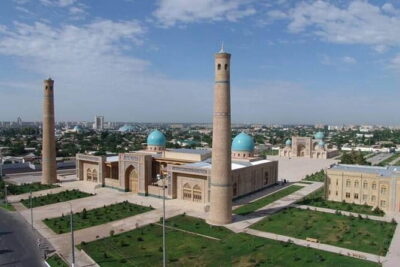
Khast Imam Square is the spiritual center of old Tashkent and one of the most important stops on the route. The complex includes the Barakkhan Madrasah, the Kaffal Shashi Mausoleum, and the Muyi Muborak Library Museum.
The library museum is scheduled for about an hour, including a guided visit, photo time, and a break. Its main treasure is the Quran Othman, described as a seventh-century original Quran. For many people, this is the most meaningful historic object on the tour.
The square itself also rewards a slower look. Its buildings introduce you to Islamic architecture in Uzbekistan, with tiled surfaces, courtyards, and religious institutions that continue to draw pilgrims and visitors from around the world.
Dress with respect and choose comfortable clothing, as the tour specifically advises. Bring cash for any personal needs, tickets, or purchases. The supplied information says Visa and Mastercard are available, but also advises all visitors to carry local cash, so I would follow the safer advice and have Uzbek currency with you.
The main limitation is time. Khast Imam contains enough material for a longer visit, particularly if you want detailed religious or architectural explanation. A strong guide can make the hour much more rewarding by explaining the Quran’s importance and the role of the complex. A weaker guide may give only general descriptions.
Chorsu Bazaar under its blue dome
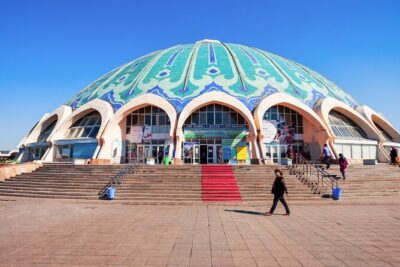
Chorsu Bazaar is where the tour feels most connected to everyday Tashkent. The name means four waters and refers symbolically to the meeting of four main parts of the old city.
The market’s large blue dome was built in the traditional style after the 1966 earthquake. Inside and around it, you may see stalls selling fruit, textiles, colorful fabrics, ceramics, handmade goods, carpets, jewelry, and souvenirs. The food sections provide some of the best visual material of the day, with produce and prepared items arranged for local shoppers rather than only for sightseers.
You should leave room in your bag and in your schedule. The bazaar is a good place to buy small gifts, but personal purchases are not included. Cash is useful, and bargaining may be part of the experience, though the tour information does not promise any particular shopping assistance.
Chorsu also helps balance the grand squares and formal monuments. You see what people buy, eat, and sell, not just what the city displays for official ceremonies. If you have only half a day in Tashkent, this is one stop I would not skip.
Riding the Tashkent Metro
Tashkent’s metro opened its first line in 1977. The stations are decorated in different thematic styles, with traditional ornaments and special lighting. That turns a simple transfer into one of the city’s most unusual sightseeing experiences.
The metro is especially valuable because it shows how public design can become part of a city’s identity. Each station has its own visual treatment, so the ride adds variety after the historic buildings and market halls.
You will not be spending the entire day underground. The metro is one section of a broader route, used alongside the car and walking. That makes the experience manageable for anyone who wants to see the stations without planning a full metro tour independently.
Keep your camera ready, but follow your guide’s instructions about photography in individual stations. The tour specifically recommends bringing a camera, and the stations are one of the clearest reasons why.
Plov and the food side of the day
Plov is Uzbekistan’s classic dish, usually centered on rice and served with other ingredients. The tour highlights it as a key part of the Tashkent experience, and one highly praised outing ended at a plov center where the group considered the dish the best of its Uzbekistan visit.
Food is not included in the tour price. Lunch, dinner, street food, and personal expenses are listed separately, so you should budget for anything you eat or buy. Some guides may introduce you to local dishes such as rice, naan, barbecue, or plov, but you should confirm what is planned rather than assume a meal is included.
This is also where the health restrictions matter. The experience is not recommended for people with food allergies or lactose intolerance. The provider also lists pregnancy, heart problems, respiratory issues, high blood pressure, recent surgery, and age over 75 as reasons to avoid the excursion. These restrictions are broad, so if you have a medical condition, check with your doctor before booking.
Transport, walking, and the pace of the day
The tour lasts six hours and combines an air-conditioned vehicle, the metro, and walking. The total walking distance is about 1.5 kilometers, which is modest, but you will still be on your feet at monuments, in the bazaar, and around Khast Imam.
Comfortable shoes are more important than formal clothes. The route includes paved public areas and market spaces, with repeated stops to look around and take photographs. Comfortable clothing is also recommended.
Hotel pickup and return transfer remove much of the usual city logistics. After booking, send the local guide a message on WhatsApp and make sure the hotel name and pickup point are clear. The driver should hold a sign with your last name, but timely communication remains important because one past booking had a late pickup.
The six-hour schedule is efficient rather than leisurely. You can see a lot, but you may not linger at every sight. That is a fair trade if your goal is to understand Tashkent’s main areas in one day. If you prefer long museum visits, extended shopping, or unhurried photography, plan additional time elsewhere.
Is $165 good value for up to four people?
At $165 per group, the price is strongest when shared by a couple, family, or small party of four. Split four ways, it becomes a reasonable half-day cost for private transportation, a professional local guide, hotel pickup, bottled water, Wi-Fi, and the convenience of connecting distant parts of the city.
For one person, the price feels less attractive because museums, meals, street food, and other personal expenses are extra. The value also depends on the guide. A lively guide who explains the city, helps with the metro, and introduces local food can make the experience feel worthwhile. A guide who gives only basic facts will make the same route feel hurried.
The tour holds a rating of 4.7 out of 5 from 11 ratings, with especially strong praise for the guide’s friendliness, language ability, comfort of the vehicle, and mix of transport. English, Russian, Uzbek, and Turkish are available. English service is specifically described in several positive accounts.
Free cancellation up to 24 hours before departure and reserve-now, pay-later booking add useful flexibility. Just remember that the final cost can rise once you add museum tickets, meals, snacks, and market purchases.
Who should book this Tashkent experience?
I would recommend it to first-time visitors who want a clear introduction to the capital without arranging taxis, metro routes, and historic sites separately. It also suits couples and families who value hotel pickup and a small group.
It is a good fit for you if you want:
- A broad look at old and new Tashkent in six hours
- A local guide who can explain history and culture
- A comfortable vehicle between spread-out sights
- A short but memorable metro experience
- Time at Chorsu Bazaar and Khast Imam
- A possible introduction to plov and other Uzbek food
I would hesitate if you want a specialist architecture tour, a full museum day, or guaranteed detailed commentary at every stop. I would also think twice if you dislike fixed schedules, have difficulty walking, or need strict control over food and health arrangements.
Final verdict: book it for a first look at Tashkent
I would book this tour for a first visit, especially with two to four people sharing the $165 cost. The route gives you the capital’s main contrasts: national squares, earthquake memory, Islamic monuments, a working bazaar, decorated metro stations, and the food culture represented by plov.
Before paying, message the provider on WhatsApp, confirm the guide’s name, ask which museum tickets are planned, and clarify whether a plov stop is included only as a visit or as a meal at your own expense. If those details are settled, this is a practical and well-rounded way to get your bearings fast. Just keep your expectations realistic: it is an efficient city introduction, not a slow study of every monument.
FAQ
How long does the Tashkent city tour last?
The excursion lasts six hours. The sightseeing program is described as approximately five to six hours, followed by transfer back to your hotel.
What is the price of the tour?
The price is $165 per group of up to four people. Meals, museum tickets, accommodation, travel insurance, street food, and personal expenses are not included.
Is hotel pickup included?
Yes. Pickup in Tashkent is included. You should wait in the hotel lobby 10 minutes before the scheduled time, and the driver should hold a sign with your last name.
What languages can the guide speak?
Guide service is available in English, Russian, Uzbek, and Turkish. The experience specifically includes a local professional English-speaking guide.
How much walking is involved?
You will walk approximately 1.5 kilometers during the excursion. Comfortable shoes are recommended.
Is the Tashkent Metro part of the tour?
Yes. The route includes a ride on the Tashkent Metro, whose stations are decorated with thematic designs, traditional ornaments, and special lighting.
Are meals included?
No. Lunch, dinner, street food, and personal food purchases are not included. Plov is highlighted as a local specialty, but you should confirm any planned food stop and expect to pay for food yourself.
Are museum tickets included?
No. Tickets for museums and other personal admissions are not included in the price.
Can I cancel the booking?
You can cancel up to 24 hours in advance for a full refund. The booking also offers a reserve-now, pay-later option.
Just added in Tashkent
- Uzbekistan and Tajikistan 9-Day Tour★ 5.0 · 1 review
- Tashkent International Airport (TAS) to Tashkent – Arrival Private Transfer★ 5.0 · 2 reviews
- Uzbek Brews & Views: Tashkent Craft Beer Discovery Tour★ 5.0 · 2 reviews
- 8-Day Private Tour in Uzbekistan with Pick Up★ 5.0 · 2 reviews
- Uzbekistan Tour – 6 Days 5 Nights★ 5.0 · 4 reviews
- Uzbekistan Private Tour 6 Days★ 5.0 · 1 review
- Tashkent to Tashkent International Airport (TAS) – Departure Private Transfer★ 5.0 · 1 review
- Full Day Private Tour to Fergana Valley from Tashkent★ 5.0 · 1 review
City Tours in Tashkent, compared.
Tashkent city Night Tour with Dinner & Free Pro Photography
Read our review →
Tashkent Private Full-Day City Tour on a Premium Car
Read our review →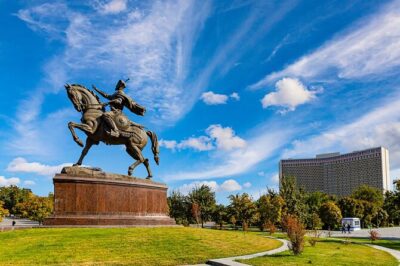
Tashkent City Tour with Hotel Pickup and Drop off
Read our review →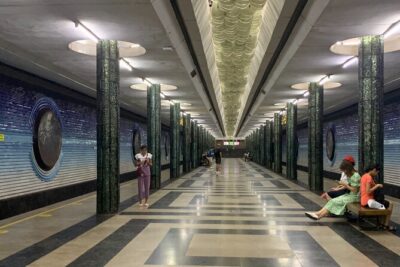
Browse the lists this tour appears in