
Review · CITY TOURS IN BUKHARA
Bukhara: City Highlights Guided Tour with Pickup
Bukhara rewards curious walkers. This four-hour tour links the city’s grandest monuments with quieter corners, lively bazaars, and stories about Uzbek faith and daily life. I like the broad route, especially the chance to see the Samanid Mausoleum and Ark Fortress in one morning. I also like the hotel pickup and small-group format, which should make the experience easier than sorting out Bukhara’s many sights alone. The main consideration is cost: $168 covers up to two people, while attraction tickets, about $7 per person, and food cost extra.
The guides are a major part of the appeal. Shahram is praised for his care and passion, while Bekruza, also written as Bexruza, is known for clear English, patience, and careful explanations. You should wear comfortable shoes, leave large bags at your hotel, and expect a fast-moving route with several stops.
In This Review
- Six details worth knowing before you book
- Why four hours works well in Bukhara
- Samanid Mausoleum and Chashma-Ayub
- Bolo-Hauz Mosque and the Ark Fortress
- Po-i-Kalyan, Bukhara’s great visual pause
- Two madrasahs, two different impressions
- Magoki-Attari Mosque and Lyab-i Hauz
- Chor-Minor and the city’s quieter corners
- What the guide adds to the experience
- Price, group size, and what you actually receive
- Who should book this Bukhara walk?
- Practical tips for a smoother morning
- Should you book this Bukhara tour?
- FAQ
- How long does the Bukhara guided tour last?
- What attractions are included?
- Is hotel pickup included?
- Where does the tour finish?
- What languages does the guide speak?
- How much do entrance fees cost?
- Are food and drinks included?
- What should I bring?
Six details worth knowing before you book
- Four hours cover Bukhara’s main historic center, from the Samanid Mausoleum to Chor-Minor Madrasah.
- Hotel pickup is included, with the guide waiting in the lobby five minutes before departure and carrying a sign with your name.
- The route mixes famous sights and quieter monuments, including mosques, mausoleums, madrasahs, and old trading areas.
- Guides explain religion and society, not only dates, rulers, and architectural styles.
- English and Russian are available, and recent feedback gives special praise to Shahram and Bekruza.
- Expect about $7 per person in entry fees, in addition to the tour price, with food and drinks also separate.
Why four hours works well in Bukhara
Bukhara’s old town is compact enough for a focused introduction, but it holds far more history than a quick walk can explain. This tour gives you a structured route through major monuments without asking you to plan every stop yourself.
I like the four-hour length for a first look. It is long enough to cover a serious list of sights, yet short enough to leave part of your day free for lunch, shopping, photography, or a second wander through the old town.
The pace will likely be steady. The itinerary includes mausoleums, mosques, fortifications, madrasahs, an ensemble around a pond, and bazaars. You should expect walking and standing, so comfortable shoes matter more than smart footwear.
The tour finishes at a central location rather than returning you to your hotel. That is useful if you want to continue sightseeing, find a meal, or explore the city at your own pace. If you need to return to your accommodation, ask the operator about the final drop-off arrangement before booking.
More City Tours in Bukhara
- City Tour Around Bukhara
★ 5.0 · 55 reviews - Bukhara Full Day Old City Private Tour
★ 5.0 · 46 reviews - Bukhara Historical City Highlights Guided Walking Tour
★ 4.5 · 16 reviews
Samanid Mausoleum and Chashma-Ayub
The Samanid Mausoleum is one of the tour’s most important early stops. Its appeal comes from the building itself, with brickwork arranged in geometric patterns that reward a close look. Here, your guide can give you a sense of Bukhara before the later Islamic monuments that dominate the central old town.
This stop is especially valuable because it offers architectural context. Instead of seeing every monument as an isolated photo opportunity, you can begin to follow the city’s changing styles and religious traditions.
Chashma-Ayub Mausoleum adds another layer. Its name is linked to the spring of Job, and the site gives the guide an opening to discuss local beliefs, sacred places, and the way legends become part of a city’s identity.
Entry charges apply at some attractions, with the additional cost listed at about $7 per person. Since the exact admission arrangement can vary by stop, carry some flexibility in your budget.
Bolo-Hauz Mosque and the Ark Fortress
Bolo-Hauz Mosque is known for its elegant wooden columns and its setting beside a pool. The name refers to the pool, making this a good place to connect architecture with the water features that once shaped public life in Bukhara.
I would pay attention to the carved details overhead rather than rushing toward the next monument. A guide can point out features you might otherwise miss, and the setting offers a change of scale after the enclosed mausoleum.
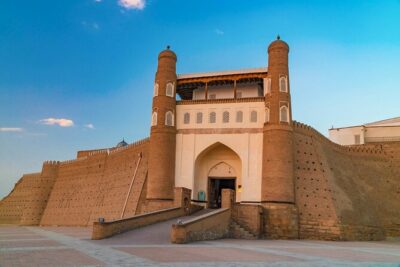
Nearby, the Ark Fortress gives the tour a more political and defensive side. This was not simply a wall around a settlement. It represents the seat of power, where rulers, officials, soldiers, and court life were concentrated.
The fortress is one of the places where a guide’s storytelling can make a real difference. The tour promises legends and humorous stories alongside historical explanation. That mix should help prevent the visit from turning into a string of dates and names.
The drawback is time. With four hours and many stops, you may not receive a long, unhurried visit inside every complex. If the Ark is your top priority, tell your guide early so you can understand how much time is available there.
Po-i-Kalyan, Bukhara’s great visual pause
The Po-i-Kalyan Complex is likely to be one of the tour’s strongest moments. Its monuments create one of the most memorable views in the old town, with the Kalyan Minaret drawing the eye above the surrounding religious buildings.
The complex gives you a chance to understand how Bukhara’s spiritual and civic life gathered around major centers. Your guide can explain the role of mosques and madrasahs in Uzbek society, along with the beliefs and practices connected to them.
This is also a good place to slow down for photographs. The tour is not only about entering buildings. Some of Bukhara’s best moments come from looking across a square, comparing brick and tile work, and noticing how the monuments relate to one another.
Dress with respect at religious sites. The information provided does not set out a detailed clothing rule, but modest clothing and considerate behavior are sensible when visiting mosques and other sacred places.
More walking tours in Bukhara:
- Khiva: Historical City Highlights Guided Walking Tour
★ 4.8 · 156 reviews - Khiva Historical City Highlights Guided Walking Tour
★ 5.0 · 30 reviews - Samarkand Historical City Highlights Guided Walking Tour
★ 5.0 · 22 reviews - Tashkent City Highlights Guided Walking Tour
★ 5.0 · 6 reviews
Two madrasahs, two different impressions
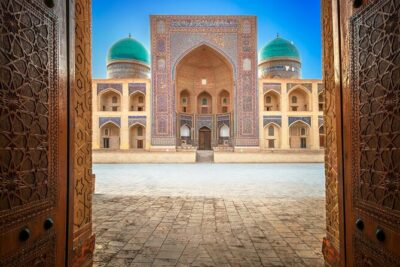
The itinerary includes the Ulugbek and Abdulaziz-Khan Madrasahs. Seeing both helps you compare Bukhara’s educational and religious architecture instead of treating every tiled facade as the same.
Ulugbek Madrasah carries the name of the famous Timurid ruler and scholar. Its inclusion gives your guide a chance to discuss the intellectual side of Central Asian history, not only royal power and trade.
Abdulaziz-Khan Madrasah offers another architectural setting and another point of comparison. Look for differences in decoration, scale, and the way each building frames its entrance and courtyard.
A good guide will help you notice these distinctions. Bekruza is praised for explaining clearly, checking that listeners have followed the discussion, and adjusting when English is not your first language. That is a useful quality on a tour with many unfamiliar names and historical periods.
Magoki-Attari Mosque and Lyab-i Hauz
Magoki-Attari Mosque brings a particularly old and layered feel to the route. Its place in the historic center reflects the way Bukhara was built up over many centuries, with older religious and urban structures remaining beneath or beside later additions.
This is the kind of stop that benefits from interpretation. On your own, you might admire the facade and move on. With a guide, you can ask why the building matters, how it fits into the city’s religious past, and what changed as Bukhara developed.
Lyab-i Hauz shifts the mood again. The ensemble is organized around a pool, with buildings and public space gathered around the water. It is a natural place to pause and watch Bukhara’s social life continue around an old architectural setting.
The tour also includes time in local bazaars. That matters because Bukhara is not only a collection of monuments. You can see how historic streets connect with shopping, food, conversation, and everyday activity.
Food and drinks are not included, but the guide may help you understand local cuisine and point out what deserves attention. The supplied details promise a taste of local cuisine, so clarify whether that means recommendations or an actual tasting before you count on a meal during the four-hour route.
Chor-Minor and the city’s quieter corners
Chor-Minor Madrasah is one of Bukhara’s most distinctive small monuments. Its four towers give it an unusual outline, and it feels different from the grand scale of Po-i-Kalyan or the Ark.
Including Chor-Minor is a smart choice. It shows that Bukhara’s character is not limited to its biggest landmarks. Smaller structures can reveal local taste, private patronage, and the variety of forms found across the old town.
The tour description also promises lesser-known monuments and places away from the standard route. Exact stops can depend on timing, access, and the guide’s judgment, so do not treat every extra corner as guaranteed. Still, this promise is useful for anyone who has already seen the main square or wants more than a checklist.
I would use this portion of the walk to ask questions. Bukhara has a long story shaped by religion, trade, scholarship, rulers, and ordinary residents. A personal guide can connect those themes to the streets in front of you.
What the guide adds to the experience
The guide is not just there to lead you from gate to gate. The strongest part of this experience should be the explanation of how Bukhara works as a living city.
Shahram is praised for being exceptionally helpful and for bringing genuine passion to the history and culture of the city. That kind of enthusiasm can turn a familiar monument into a place with human meaning.
Bekruza is praised for preparation, kindness, clear English, and patience. One useful detail is that she reportedly checked whether the explanation was easy to follow and invited questions when something was unclear. If you are not fully comfortable with English, that makes a real difference.
The available languages are English and Russian. Italian is not listed as a standard option. In one booking, an English-language change was offered at a lower price when Italian was unavailable, but you should confirm language and price directly before reserving.
The guide can also explain Uzbek traditions, religious practices, and social customs. That is one of the tour’s best features, since it gives you a more respectful way to understand what you are seeing.
Price, group size, and what you actually receive
The listed price is $168 per group of up to two people. For a couple, that works out to $84 each before entry tickets and any food or drinks. For two people who want a private-feeling introduction with hotel pickup, the price may be reasonable, especially if the guide is as attentive as the feedback suggests.
The group information says the experience is limited to seven participants. At the same time, the price is presented for a group of up to two. I would confirm whether your booking is private for two or part of a small shared group. That distinction affects the value and the amount of flexibility you can expect.
The tour includes a professional guide and hotel pickup. It does not include admission charges, meals, or drinks. Budget about $7 per person for attraction tickets, but ask if that amount covers every planned entrance or only the main paid sites.
The reserve-now, pay-later option is helpful if your Uzbekistan plans are still moving around. Free cancellation is available up to 24 hours before the start time for a full refund. These terms are practical, but the tour’s real value still depends on guide quality and group format.
Who should book this Bukhara walk?
I would choose this tour if you have only a short time in Bukhara, want the main monuments explained in one organized route, or prefer learning from a local guide instead of reading signs on your own.
It also suits you if history, architecture, religion, and daily life matter equally. The route is not limited to photogenic buildings. It includes bazaars, local customs, stories, and food culture.
Couples may find the $168 group price easiest to justify. Solo visitors should check how the group pricing works, since the published rate is for up to two people. Families and older visitors should also ask about walking pace, as the tour covers many locations in four hours and does not list a dedicated vehicle transfer between every stop.
This is less suitable if you want a slow photographic session at one or two monuments. You may also prefer independent sightseeing if you dislike fixed timing or want to decide how long to spend inside each complex.
Practical tips for a smoother morning
Meet in your hotel lobby five minutes before pickup. The guide should be holding a sign with your name, which makes the start simple.
Wear comfortable shoes. Large bags and luggage are not allowed, so leave suitcases and bulky daypacks at your hotel.
Bring money for entrance tickets and any food or drinks you buy. Since the tour ends centrally, plan what you want to do afterward before setting out.
Keep your questions ready. Ask about the role of madrasahs, the meaning of the pools, local religious customs, and how Bukhara changed over time. The guides praised for this experience appear especially good at patient explanations, so take advantage of that strength.
Should you book this Bukhara tour?
I would book it if you want a well-packed first look at Bukhara with hotel pickup, a local English or Russian-speaking guide, and a route that goes beyond the biggest square.
The best reasons are the broad itinerary and the strong praise for Shahram and Bekruza’s care, clarity, and passion. The main cautions are the extra admission fees, the brisk four-hour schedule, and the need to confirm whether the $168 price is private for two or part of a group capped at seven.
For a couple who values context and convenience, it offers solid potential value. For independent visitors with several days in Bukhara, it may work best as an orientation walk, followed by a slower return to the places that captured your attention.
FAQ
How long does the Bukhara guided tour last?
The tour lasts four hours.
What attractions are included?
The route includes the Samanid Mausoleum, Chashma-Ayub Mausoleum, Bolo-Hauz Mosque, Ark Fortress, Po-i-Kalyan Complex, Ulugbek Madrasah, Abdulaziz-Khan Madrasah, Magoki-Attari Mosque, Lyab-i Hauz Ensemble, and Chor-Minor Madrasah.
Is hotel pickup included?
Yes. Hotel pickup is included. You should wait in the hotel lobby five minutes before the scheduled pickup time, and the guide will hold a sign with your name.
Where does the tour finish?
The tour ends at a central location in Bukhara, allowing you to continue exploring or return to your hotel on your own.
What languages does the guide speak?
Live guiding is available in English and Russian.
How much do entrance fees cost?
Entrance tickets to some attractions cost around $7 per person. These fees are not included in the tour price.
Are food and drinks included?
No. Food and drinks are not included.
What should I bring?
Bring comfortable shoes. Luggage and large bags are not allowed.
Just added in Bukhara
- Yurt Camp & Aydarkul Adventure from Bukhara★ 5.0 · 1 review
- Private Tour in 3 top Places Outside of Bukhara City★ 5.0 · 2 reviews
- Full-Day Private Guided Tour to Islamic 7 Saints of Bukhara★ 4.5 · 3 reviews
- Nurata Mountain & Kyzyl-kum Desert 3 Day Tour From Samarkand or Bukhara★ 5.0 · 1 review
- Bukhara Hammam Bathhouse with Massage★ 5.0 · 2 reviews
- Bukhara: Tour Outside of Old Town. Guide with Transportation★ 5.0 · 2 reviews
- Discover Bukhara One Day Group Experience★ 4.5 · 2 reviews
- Bukhara in a Day History, Culture, and Local Insight Private Tour★ 5.0 · 4 reviews
City Tours in Bukhara, compared.
Bukhara Historical City Highlights Guided Walking Tour
Read our review →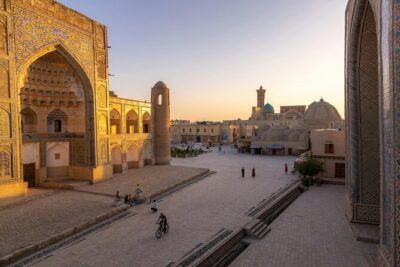
Private Tour in 3 top Places Outside of Bukhara City
Read our review →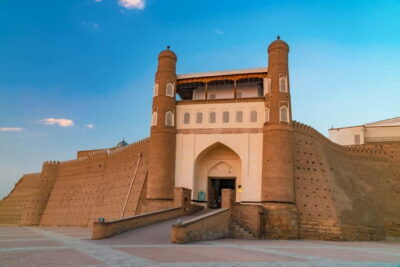
Browse the lists this tour appears in