
Review · WALKING TOURS IN BUKHARA
Bukhara Old City Walking Tour
Bukhara rewards slow looking. This $12.99 walking tour links the Old City’s main sights in about three to four hours, with a guide handling the route while you focus on tiled façades, old trading domes, and good photo angles. I like the relaxed pace and the clear focus on explanation rather than rushing you through monument interiors.
I also like the compact start and finish, from Nodir Devonbegi Madrasah near Lyab-i Hauz to the Ismail Samani Mausoleum. The tradeoff is important: monument entry is not included, and the tour stays outside the buildings, so you are paying for orientation, stories, and a well-planned walk rather than interior visits.
In This Review
- Key points at a glance
- Why Bukhara works so well on foot
- Starting at Lyab-i Hauz and Nodir Devonbegi
- Covered bazaars and Bukhara’s trading past
- The early mosque and the two madrasa façades
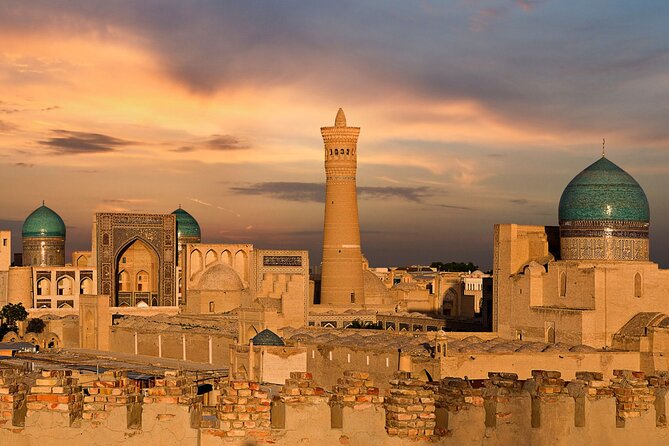
- Poi Kalon Square and the famous minaret
- Turquoise domes and a short photo pause
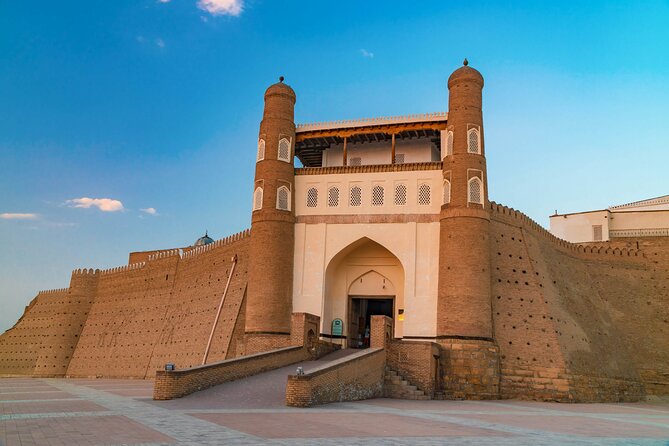
- Walking the outer walls of the Ark Fortress
- Wooden columns, a pond, and the final mausoleum
- What the $12.99 price really buys
- Timing, walking comfort, and practical planning
- Who should book this walk
- Should you book the Bukhara Old City Walking Tour?
- FAQ
- How much does the Bukhara Old City Walking Tour cost?
- How long does the walking tour last?
- Where does the tour begin?
- Where does the tour end?
- Does the tour go inside the monuments?
- Is transport included?
- How many people can join the tour?
- What time is the tour available?
- Can I cancel for a full refund?
Key points at a glance
- A practical route through Bukhara’s core: See Lyab-i Hauz, the covered bazaars, Poi Kalon, the Ark Fortress, and other major landmarks without plotting the route yourself.
- Outside views are the focus: You stop for explanations and photos, but you do not go inside the monuments.
- Small enough to remain manageable: The group can include up to 20 people, a reasonable limit for a walking tour.
- A guide adds historical context: Azat received especially strong praise for explaining Bukhara’s changes from its founding through the Soviet era.
- Flexible booking protection: Free cancellation is available up to 24 hours before the start time, subject to the stated weather and minimum-group conditions.
- Useful daytime schedule: Tours are listed from 9:00 a.m. to noon and from 1:00 p.m. to 3:00 p.m.
Why Bukhara works so well on foot
Bukhara’s Old City is best understood as a chain of squares, lanes, trading domes, mosques, madrasas, and fortress walls. A car would only get you close to the sights. Walking lets you notice how one landmark gives way to the next, with the city’s old commercial center still shaping the route.
I like this tour because it does not pretend every historic building needs a long interior visit. Instead, you get the basic story and the outside view of each place, then keep moving before the day becomes a lecture. That matters in hot weather and on cobbled or uneven streets, where a three-hour walk can feel much longer if the guide has no sense of pace.
The guide service is the main reason to book rather than simply follow a map. A good guide can point out what you are looking at, explain why it matters, and connect separate monuments into one story. Azat is specifically praised for covering not only famous sights but also how Bukhara changed from its early history into the Soviet period. That wider view gives the walk more substance than a photo stop at a minaret.
More City Tours in Bukhara
- City Tour Around Bukhara
★ 5.0 · 55 reviews - Bukhara Full Day Old City Private Tour
★ 5.0 · 46 reviews - Bukhara Historical City Highlights Guided Walking Tour
★ 4.5 · 16 reviews
Starting at Lyab-i Hauz and Nodir Devonbegi
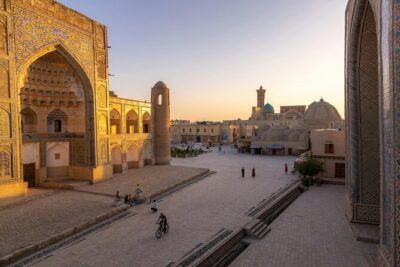
The meeting point is Nodir Devonbegi Madrasah on Bakhowuddin Nakshbandi Street, beside Lyab-i Hauz. This is a sensible place to begin because the square gives you an immediate picture of Bukhara’s historic center: a pond, surrounding religious buildings, open space, and a setting built for people to gather.
The pond is the visual anchor. Look across the water toward the madrasas and take a moment to notice the contrast between the shaded square and the grand decoration around it. This is a good opening stop because you can settle into the city before the walking becomes more concentrated.
I would arrive with water, comfortable shoes, and your phone ready for the mobile ticket. The tour does not include coffee or tea, and the included services do not mention transport, so you should take care of those basics before meeting the guide.
Covered bazaars and Bukhara’s trading past
From the square, the route continues through covered bazaars. These old market passages are not just places to buy souvenirs. They show how Bukhara’s historic center was organized around trade, with merchants, craftspeople, and shoppers using sheltered spaces along the main routes.
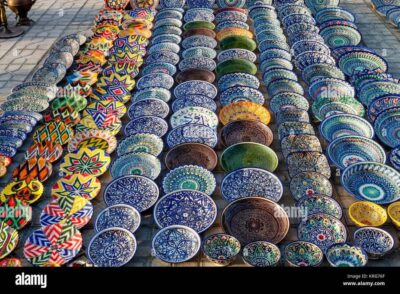
You can browse local crafts, textiles, and souvenirs as you walk. The guide’s presence helps you keep the shopping from taking over the whole morning, although you should be clear about your priorities. If you want time to inspect fabrics or compare handmade goods, tell the guide early. The tour is designed to keep moving through the main sights.
This part of the walk also gives you a useful break from monumental architecture. The old city is not only domes and façades. Its identity comes from the way commerce, worship, education, and daily life were placed close together. You will get a better feel for that mix here than from a single isolated building.
The early mosque and the two madrasa façades
The route stops outside one of Central Asia’s oldest mosques. Since the tour does not enter monuments, the guide’s explanation and your view from outside carry more weight here. Pay attention to the scale, entrance details, and the relationship between the mosque and nearby streets.
You also see the exterior of Bukhara’s first madrasa, built in the 15th century. This is a useful point of comparison with the later buildings on the walk. The age of the façade gives the guide a chance to explain how education and religious study shaped the city, even if you are not going indoors.
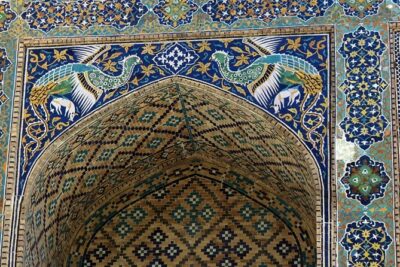
Another stop presents a richly decorated 17th-century madrasa beside the simpler style associated with Ulugbek. The contrast is one of the more useful visual lessons on the route. Instead of treating every tiled building as interchangeable, you can compare restrained decoration with a more elaborate later approach.
For you, the practical point is simple: these stops reward close attention, not just a quick photograph. Look at the patterns around portals, the lettering, and the balance of color. You may not receive every architectural detail in a short tour, but the guide can give you a framework for seeing why the façades differ.
More Walking Tours in Bukhara
- All You Need To Know About Bukhara. A Walk In The Town
★ 4.9 · 31 reviews - Bukhara: Private Guided Walking Tour with Hotel Pickup
★ 5.0 · 11 reviews - Bukhara: Walking Tour with a Small Group
★ 5.0 · 10 reviews - A Group Walking Tour Of Old Town
★ 5.0 · 8 reviews
Poi Kalon Square and the famous minaret
Poi Kalon is the visual high point of the walk. From the square, you can photograph the minaret, mosque, and madrasa together. The arrangement gives you a strong sense of Bukhara’s scale and religious importance without requiring a long detour.
The minaret is the feature most likely to pull your eye first, but do not stop there. Use the square to compare the vertical tower with the broad mosque and the patterned madrasa façade. This is one of the places where a guide can improve the experience by directing you to the best angle and explaining how the buildings work as a group.
The tour focuses on outside viewing, so you should book with the right expectation. If your main goal is to climb, enter, or spend a long time inside the complex, this walk will not provide that. If you want a clear introduction and strong photographs, the stop makes good sense at this price.
Turquoise domes and a short photo pause
The route includes an exterior view of turquoise domes and a grand façade. The color gives Bukhara a distinctive visual signature, especially when set against the older brick and earth-toned parts of the city.
This is a good place to let the guide explain what you are seeing before moving on. A short pause can be enough to take photographs from several angles, but the listing does not promise extended free time at each site. If you are serious about photography, ask the guide how long you have before the group moves.
That flexibility is one reason I would not treat this as a private photography tour. The group may include up to 20 people, and the aim is to cover the Old City in one outing. You will get repeated chances to take pictures, but the pace may not suit someone who wants to wait for perfect light at every stop.
Walking the outer walls of the Ark Fortress
The Ark Fortress provides a change of scale. Rather than looking at a single decorated façade, you walk around the massive outer walls of Bukhara’s old citadel. Even from outside, the walls communicate power and defense in a way that a madrasa cannot.
This stop is valuable because it shifts the story from study and worship to government and protection. The Ark was the seat of old authority, and its walls help you picture Bukhara as a city ruled from a fortified center.
Again, you do not go inside. That keeps the tour moving and avoids adding admission costs to the advertised price, but it also limits how much of the fortress you can see. I would treat the exterior walk as an introduction. If the Ark becomes one of your main interests, you may want to return on your own for a separate visit, if entry is available during your stay.
Wooden columns, a pond, and the final mausoleum
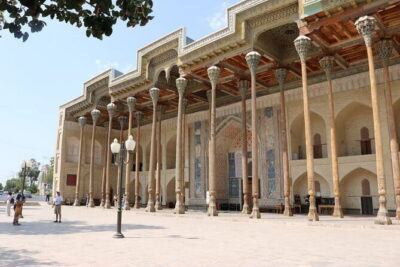
Another stop brings you to a courtyard with wooden columns and a pond. The columns add a different texture to the tour, with carved timber and shade replacing the large brick walls and tiled portals seen earlier. The pond also echoes the opening at Lyab-i Hauz, giving the walk a quiet visual thread.
The final stop is the park view of the oldest surviving monument in Bukhara, the Ismail Samani Mausoleum. The tour ends at the mausoleum, at QCG2+P6C in Bukhara, so the finish is not merely a return to the starting square. That can be helpful if you plan to continue exploring from the western side of the Old City or arrange your next activity nearby.
The mausoleum is best appreciated from the outside on this experience. Its age and compact form offer a contrast to the tall minaret and broad fortress walls earlier in the day. You finish with a monument that rewards looking at brick patterns and structure rather than bright tile alone.
What the $12.99 price really buys
At $12.99 per person, this is an inexpensive way to get a guided introduction to Bukhara. The value comes from the route, the guide’s explanations, and the time saved by not having to identify each building yourself.
The price does not include transport, fees and taxes, coffee, or tea. It also does not include monument entry, and the tour remains outside the buildings. That makes the value strongest for you if you want a broad first look at the Old City and plan to choose later which interiors deserve extra time.
The group limit of 20 is worth noting. That is not a private walk, but it is also not an unlimited crowd. Your experience will depend partly on the guide’s ability to keep everyone together and answer questions without slowing the route too much.
One especially encouraging detail is the praise for Azat. The strongest feedback gives him six stars in spirit for explaining Bukhara’s development from its founding through the Soviet era. Since the guide is the central paid feature, this kind of historical context is exactly what can turn a low-cost walk into a worthwhile introduction.
Timing, walking comfort, and practical planning
The experience lasts roughly three to four hours. Listed operating times are 9:00 a.m. to noon and 1:00 p.m. to 3:00 p.m., Monday through Sunday, for the stated operating period from September 22, 2025, through November 26, 2026.
The schedule deserves a close look. A three-to-four-hour experience does not fit neatly inside every listed window, so confirm your exact start time when booking. The morning option is likely better if you want cooler conditions and a full afternoon afterward. The afternoon option may suit you if your morning is already occupied, but it leaves less room around the stated end time.
There is no transport included. You need to reach Nodir Devonbegi Madrasah yourself and arrange your onward plans from the Ismail Samani Mausoleum. The tour is near public transportation, and most people can participate, but you should still be prepared for a sustained walk.
Service animals are allowed. Confirmation arrives at booking, and 24/7 support plus help with other bookings are included. Free cancellation is available until 24 hours before the start time. Changes made inside that period are not accepted, and a late cancellation is not refunded. The tour also depends on good weather and a minimum number of participants, with a different date, another experience, or a full refund offered if the operator cancels.
Who should book this walk
I would choose this tour if you are arriving in Bukhara and want to understand the Old City before exploring on your own. It suits you especially well if you value a clear route, historical explanation, outside views, and plenty of photo stops without paying for a private guide.
It is also a good fit for anyone who dislikes spending the first day of a city visit staring at a map. The route covers the major names and gives you a useful sense of where they sit in relation to one another.
I would be more cautious if you want long interior visits, a food experience, transport, or a specialist architecture tour. The walk is intentionally light and flexible, not an admission package. You also need to accept that a group of up to 20 can limit how much personal attention you receive at each stop.
Should you book the Bukhara Old City Walking Tour?
Yes, if you want a low-cost, well-organized first look at Bukhara’s historic center. For $12.99, the combination of Lyab-i Hauz, covered bazaars, Poi Kalon, the Ark Fortress, and the Ismail Samani Mausoleum gives you a strong overview in one morning or afternoon.
Book it with realistic expectations. You are buying guidance, context, and a sensible walking route, not monument admission or private access. If the guide is as strong as Azat was described, the historical explanation will be the best part of the experience. Afterward, you can return to the buildings that caught your eye and spend more time inside them on your own.
FAQ
How much does the Bukhara Old City Walking Tour cost?
The tour costs $12.99 per person.
How long does the walking tour last?
The experience lasts approximately three to four hours.
Where does the tour begin?
The tour begins at Nodir Devonbegi Madrasah on Bakhowuddin Nakshbandi Street in Bukhara.
Where does the tour end?
The tour ends at the Ismail Samani Mausoleum in Bukhara.
Does the tour go inside the monuments?
No. The tour focuses on outside views, explanations, photographs, and time to enjoy the surroundings.
Is transport included?
No. Transport is not included, so you must make your own way to the meeting point and arrange onward transport after the tour.
How many people can join the tour?
The maximum group size is 20 people.
What time is the tour available?
The listed hours are Monday through Sunday from 9:00 a.m. to noon and from 1:00 p.m. to 3:00 p.m.
Can I cancel for a full refund?
Yes. You can cancel up to 24 hours before the start time for a full refund. The tour may also offer a different date or a full refund if poor weather or an insufficient number of participants causes the operator to cancel.
Just added in Bukhara
- Yurt Camp & Aydarkul Adventure from Bukhara★ 5.0 · 1 review
- Private Tour in 3 top Places Outside of Bukhara City★ 5.0 · 2 reviews
- Full-Day Private Guided Tour to Islamic 7 Saints of Bukhara★ 4.5 · 3 reviews
- Nurata Mountain & Kyzyl-kum Desert 3 Day Tour From Samarkand or Bukhara★ 5.0 · 1 review
- Discover Bukhara One Day Group Experience★ 4.5 · 2 reviews
- Bukhara Hammam Bathhouse with Massage★ 5.0 · 2 reviews
- Bukhara: Tour Outside of Old Town. Guide with Transportation★ 5.0 · 2 reviews
- Bukhara in a Day History, Culture, and Local Insight Private Tour★ 5.0 · 4 reviews
Walking Tours in Bukhara, compared.
All You Need To Know About Bukhara. A Walk In The Town
Read our review →
Bukhara Historical City Highlights Guided Walking Tour
Read our review →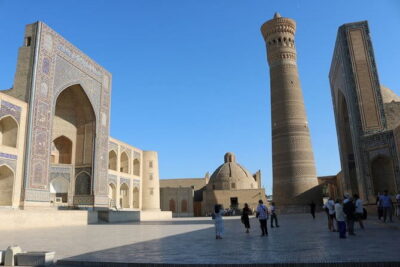
Browse the lists this tour appears in