
Review · FULL-DAY
Full-Day Private Guided Tour to Islamic 7 Saints of Bukhara
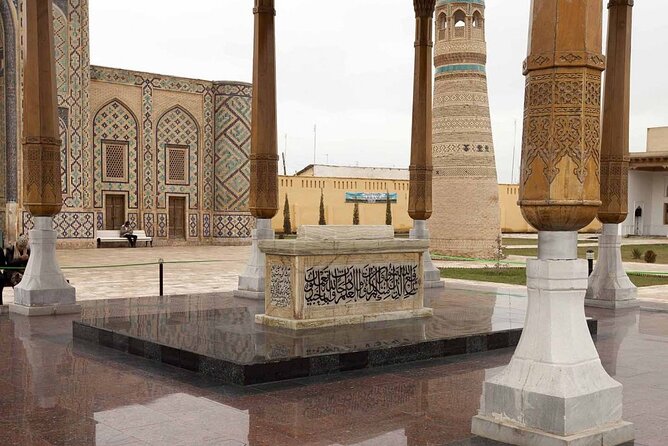
Bukhara’s holiest road leads beyond its old walls. This full-day private tour follows the seven Sufi saints linked to the Naqshbandi tradition, taking you through Gijduvon, Safirkon, Vobkent, Ramitan, Kogon, and the Bakhautdin Naqshband Mausoleum. It offers a look at Uzbekistan that the central monuments alone cannot provide.
I like the private car and guide, which make a long day across the Bukhara region much easier. I also like the chance to see small towns and burial places connected to real religious teachers, rather than spending another day only among grand city buildings. The main drawback is the amount of time on the road, and the tour may feel too specialized if your interest in Sufism is limited.
The guide is a major part of the experience. Hamza has been praised for his clear explanations of Uzbekistan, Sufism, Islamic culture, and the lives of the khwajas, while the driver has been described as friendly and well mannered. That combination matters on a route where the quality of the explanation can shape the entire day.
In This Review
- Key points about Bukhara’s Seven Saints tour
- Why the Seven Saints route matters
- Gijduvon and Abdalhalik Gijduvani
- Safirkon and Khoja Arif Rivgariya
- Vobkent and Khoja Mahmud Angirey Fagnaviya
- Ramitan and Ali Khoja Romitaniya
- Ramitan and Khoja Muhammad Babai Sammasi
- Kogon and Saint Mir Kulal
- Bakhautdin Naqshband Mausoleum
- What $160 per person really covers
- Who will enjoy this long private day
- My verdict on the Seven Saints route
- FAQ
- How long does the Seven Saints tour last?
- What is the price of the tour?
- Is the tour private?
- Is hotel pickup offered?
- Where does the tour end?
- Are entrance tickets included?
- Is lunch included?
- Are photo and video fees included?
Key points about Bukhara’s Seven Saints tour
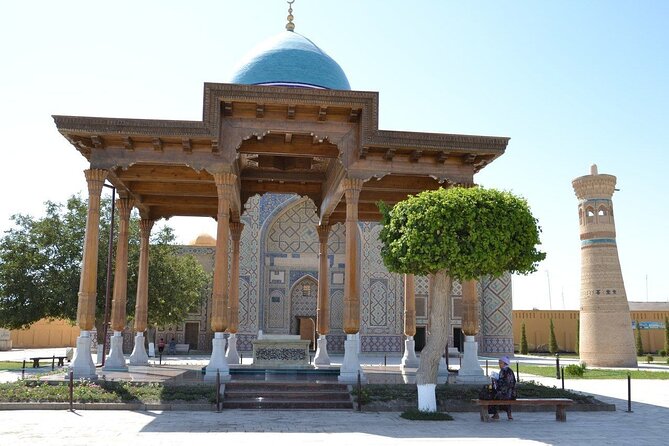
- Seven sacred sites in one day: Follow the spiritual chain from Abdalhalik Gijduvani to Bahaaddin Naqshbandi.
- A private experience: Only your own group takes part, with private transportation and a licensed guide.
- A wider view of Bukhara: Visit Gijduvon, Safirkon, Vobkent, Ramitan, Kogon, and the final mausoleum outside the city center.
- About $160 per person: The price includes the guide, vehicle, entrance tickets, taxes, and fees, but not lunch or small photo charges.
- Seven stops of about 40 minutes: The schedule gives each saint’s site attention, though driving time makes this a full and active day.
- Best for curious visitors: This suits you if you want religious history, Sufi traditions, and local context more than a relaxed sightseeing loop.
Why the Seven Saints route matters
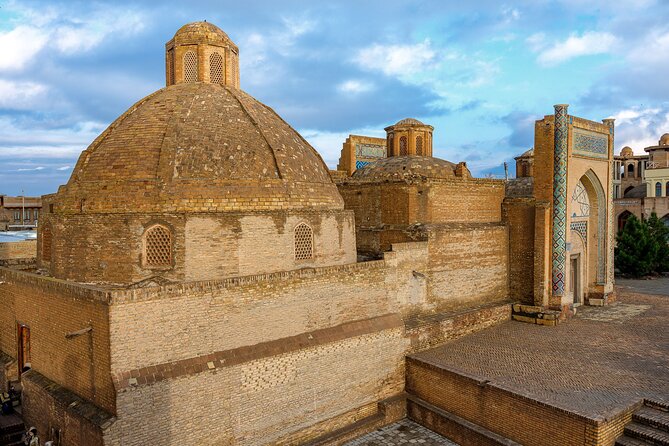
Bukhara has long carried an unusual religious reputation in Central Asia. It is around 2,500 years old and was once known for hundreds of mosques and dozens of madrassas. Its nickname, the Holy City of Central Asia, is not just a slogan for the tourist office. The city became a major center of Islamic learning and Sufi practice.
The Seven Saints route focuses on the Hadzhagan school, a spiritual tradition that later fed into the Naqshbandi brotherhood. The saints were linked through teaching relationships, so the route is not simply seven unrelated tombs. You are following a chain of spiritual succession, moving from early teachers toward Bahaaddin Naqshbandi, the best-known figure in the sequence.
I find this approach useful because it gives structure to a subject that can otherwise feel abstract. Your guide can explain who taught whom, how each figure shaped the tradition, and why Bukhara became such an important place in Islamic spiritual life. The sites themselves may be quiet and modest compared with famous monuments, so the spoken context is essential.
A few more options to weigh up in Bukhara
- Best of Bukhara: All Day Private Old Town Tour
★ 5.0 · 66 reviews - Best of Bukhara: All Day Private Old Town Tour
★ 4.9 · 62 reviews - City Tour Around Bukhara
★ 5.0 · 55 reviews
Gijduvon and Abdalhalik Gijduvani
The first stop is Gijduvon, the birthplace of Abdalhalik Gijduvani, who lived from 1103 to 1179. He is regarded as the founder of an independent school of mysticism in Maverannahr, known as the Path of Teachers.
Starting here makes good sense. You begin with the first saint in the sequence and learn the basic idea behind the tradition before visiting the later figures. The stop lasts about 40 minutes, which gives you time to see the burial place and listen without rushing from one room to the next.
The value of Gijduvon is mainly historical and spiritual. This is where the route’s story begins, and the guide’s explanation can help you understand why the teachings of one local religious master mattered across a much wider part of Central Asia.
Admission is listed as free at this stop. Still, allow time for the drive from Bukhara and remember that the overall day is not a quick city excursion. The first site may feel simple if you expect ornate architecture, but its importance comes from the person connected to it.
Safirkon and Khoja Arif Rivgariya
The second stop takes you to Safirkon, the burial place of Khoja Arif Rivgariya, also called Saint Khoja Arif Mohi Tobon. He was one of the important Sufi figures of Central Asia and a follower of the Hadzhagan tradition.
This visit builds on the first. Instead of treating each saint as an isolated name, you can ask the guide to explain how the school passed from one teacher to the next. That thread is one of the strongest reasons to book a private tour rather than simply hiring transport to the sites.
Again, you have about 40 minutes. That is enough for a focused visit, but not enough for a long independent exploration if the site has several buildings or surrounding areas. The pace should suit you if you prefer a clear schedule. If you like lingering, photographing every detail, or sitting quietly at each shrine, the full route may feel tightly timed.
Admission is free according to the tour details. You should also expect the character of the day to remain religious and reflective, not entertainment driven. That is a benefit for the right audience and a limitation for anyone hoping for markets, food stops, or a broad mix of attractions.
Vobkent and Khoja Mahmud Angirey Fagnaviya
In Vobkent, you visit the burial place of Khoja Mahmud Angirey Fagnaviya. He was recognized as a spiritual authority of Maverannahr and is described as the third saint in the chain.
By this point, the route’s pattern is clear: drive to a town, visit the saint’s burial place, and spend roughly 40 minutes with the guide. The repetition is part of the appeal. You are not racing through a collection of unrelated sights. You are tracing one religious lineage across the countryside around Bukhara.
For me, this is where a good guide makes the biggest difference. Names such as Fagnaviya and Rivgariya can blur together when you hear them one after another. A guide who explains the links in plain language can turn the route into a story instead of a list.
The stop has no separate admission charge listed. You will want to keep an eye on the clock, since the seven visits are only part of the day. Road time between towns is built into the seven to eight hour estimate, and delays could affect how long you have at later sites.
A completely different kind of day:
- Bukhara Full Day Old City Private Tour
★ 5.0 · 46 reviews - Yurt Camp Tour with Night from Bukhara
★ 3.8 · 35 reviews - All You Need To Know About Bukhara. A Walk In The Town
★ 4.9 · 31 reviews - One-Day Private Tour in the Old Town of Bukhara
★ 5.0 · 24 reviews
Ramitan and Ali Khoja Romitaniya
The route then reaches Ramitan, where you visit the burial place of Ali Khoja Romitaniya. He was a major spiritual authority of the Hadzhagan school and is associated with wisdom, spiritual quality, and personal charisma.
This stop adds another layer to the story. The route is not only about famous buildings or dates. It is about teachers remembered for their influence, discipline, and role in shaping a religious school. That makes the experience feel more personal than a standard monument tour.
Ramitan appears twice in the schedule, with two different saints connected to the town. The first visit is for Ali Khoja Romitaniya, and the second is for Khoja Muhammad Babai Sammasi. That makes Ramitan an important part of the route, not just a passing stop.
You may appreciate having the same driver and guide throughout this section. The trip is private, so you can ask for a quick clarification or request a little more explanation without worrying about a large group. The driver’s friendly and polite manner is another small but meaningful advantage on a day with repeated road travel.
Ramitan and Khoja Muhammad Babai Sammasi
The fifth saint is Khoja Muhammad Babai Sammasi, a Sufi mystic and follower of the Hadzhagan school. He was a student of Ali Khoja Romitani and is described as the fifth figure in the Seven Saints chain.
The relationship between these two men is the key point here. Visiting both sites in Ramitan gives you a chance to understand the teacher and student connection in the place where both are honored. Ask your guide to pause on this link, since it helps explain how the spiritual tradition continued across generations.
The stop lasts about 40 minutes and admission is free. You will probably find the visit more rewarding if you approach it as a lesson in Sufi succession rather than as a hunt for grand architecture. This is a place for listening, observing, and asking questions.
The repeated stops can also become tiring. I would choose comfortable clothing and keep water handy, though the provided information does not specify facilities or refreshments at the sites. Lunch is not included, but an additional lunch option is available for $10 per person. Clarify the timing of lunch when you book, because the published tour details do not say exactly where or when it takes place.
Kogon and Saint Mir Kulal
The sixth stop is in Kogon, at the site associated with Saint Mir Kulal. His title, Kulal, refers to a potter, and he was a spiritual authority of the Hadzhagan school. He is sixth in the chain of spiritual succession.
This detail about his craft gives the story a human touch. The saints were not only distant religious names. Their identities were also tied to work, teaching, and life within their communities. Your guide can help connect those details to the wider development of the school.
The schedule allows another 40-minute visit, with no separate admission charge listed. By now, you may be ready for the final site, but this stop still matters because it prepares you for Bahaaddin Naqshbandi, the most prominent figure on the route.
Kogon also shows why this tour is best taken by private vehicle. The stops are spread across several towns, and public transport would make the same sequence far less practical. The included driver removes much of the planning burden, while the private format lets your group keep the day focused.
Bakhautdin Naqshband Mausoleum
The final stop is the Bakhautdin Naqshband Mausoleum, the burial place of Bahaaddin Naqshbandi. He was the leading Central Asian Sufi figure of the 14th century and the person whose craft gave the Naqshbandi brotherhood its name. Naqshband is connected with the work of a chaser, a craftsman who decorates metal.
Ending here gives the route a strong sense of direction. You have followed six earlier teachers and now arrive at the saint whose name is most closely tied to the Naqshbandi tradition. The mausoleum is also the only stop specifically marked with an included admission ticket, though the tour package says entrance tickets to all monuments are covered.
You get about 40 minutes at the mausoleum. That is enough for a guided visit, though you may wish for longer if the setting interests you. Small photo and video charges of about $1 to $2 per site are paid directly at museum entrances, so carry some local cash or confirm payment arrangements with the operator.
This final visit is likely to be the emotional high point for anyone with a serious interest in Sufism. If your main goal is architecture, the experience may feel less satisfying than Bukhara’s central monuments. Its strength is the meaning of the place and its position at the end of the spiritual chain.
What $160 per person really covers
At $160 per person, this is not a cheap add-on. It is also not simply a car ride. The price includes a licensed guide, private transportation, entrance tickets, taxes, and other fees. For a private full-day outing across multiple towns, those inclusions give the cost real value.
The calculation works best for two or more people sharing the experience, especially since group discounts may be available. You are paying for a dedicated vehicle and guide, not a seat on a large bus with a fixed commentary track. The value improves if you care about asking questions and want the Seven Saints explained as one connected story.
Budget separately for lunch, offered at an extra $10 per person, and for photo or video fees of $1 to $2 per site. Tips are also not included. These are not large costs, but knowing about them helps you avoid surprises.
The tour is usually booked about 25 days ahead, which suggests you should not leave it until the last minute if the route is important to your Bukhara plans. Confirmation is provided when you book, and the experience returns to the starting point at Hotel Malika-Bukhara on Gavkushon Road.
Who will enjoy this long private day
I would recommend this tour to you if you want to understand Bukhara as a center of Islamic thought, not just see its famous old-town buildings. It is also a good match if you value a private guide, prefer a car to complicated regional transport, and have a full day available.
The tour suits:
- Visitors with a serious interest in Sufism and Islamic culture
- People who want to see towns outside central Bukhara
- Small groups that prefer private transportation
- Anyone who appreciates historical explanation more than fast sightseeing
- Those comfortable with a seven to eight hour schedule
I would be more cautious if you have only a short stay in Bukhara. The city itself has plenty to occupy you, and this route takes you away from the central monuments for most of a day. It may also disappoint you if you expect a food-focused excursion, shopping, or a wide range of unrelated sights.
The tour is private, and most people can participate. It is near public transportation, though pickup is offered and the stated meeting point is Hotel Malika-Bukhara. Confirm the pickup details when booking, especially if you are staying elsewhere.
My verdict on the Seven Saints route
Book this tour if you want the religious story behind Bukhara and are willing to spend much of the day on the road. The strongest features are the private format, the full regional route, and the chance to hear the chain of Sufi teachers explained by a committed guide.
I like that the itinerary does not stop at the most famous mausoleum. It begins with Gijduvani, passes through the teachers who followed him, and ends with Naqshbandi. That sequence gives the day purpose.
Skip it if your time is short or if your main interest is Bukhara’s architecture within the old city. For the right visitor, though, this is a thoughtful and well-organized way to see the spiritual side of the region, with the comfort of a private car and guide.
FAQ
How long does the Seven Saints tour last?
The tour lasts approximately seven to eight hours, including the visits and driving between sites.
What is the price of the tour?
The listed price is $160 per person. Group discounts may be available.
Is the tour private?
Yes. Only your own group participates in the activity.
Is hotel pickup offered?
Pickup is offered. The stated starting point is Hotel Malika-Bukhara, Gavkushon Road 25, Bukhara.
Where does the tour end?
The tour ends back at the meeting point.
Are entrance tickets included?
Yes. Entrance tickets to all monuments, along with all listed fees and taxes, are included.
Is lunch included?
No. Lunch is not included, but it can be arranged for an additional $10 per person.
Are photo and video fees included?
No. Photo and video fees are paid directly at museum entrances and cost about $1 to $2 per site.
Just added in Bukhara
- Yurt Camp & Aydarkul Adventure from Bukhara★ 5.0 · 1 review
- Private Tour in 3 top Places Outside of Bukhara City★ 5.0 · 2 reviews
- Nurata Mountain & Kyzyl-kum Desert 3 Day Tour From Samarkand or Bukhara★ 5.0 · 1 review
- Bukhara Hammam Bathhouse with Massage★ 5.0 · 2 reviews
- Bukhara: Tour Outside of Old Town. Guide with Transportation★ 5.0 · 2 reviews
- Discover Bukhara One Day Group Experience★ 4.5 · 2 reviews
- Bukhara in a Day History, Culture, and Local Insight Private Tour★ 5.0 · 4 reviews
- Bukhara – Samarkand Transfer (275 km)★ 4.0 · 1 review
Full-Day, compared.
Full Day Private Tour in Seven Lakes from Samarkand
Read our review →
Tashkent Private Full-Day City Tour on a Premium Car
Read our review →
Full Day Private Tour to Fergana Valley from Tashkent
Read our review →Browse the lists this tour appears in