
Review · 1-DAY TOURS
Discover Bukhara One Day Group Experience
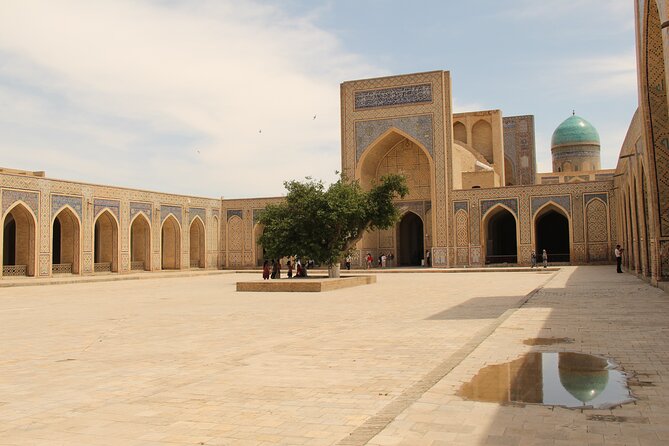
Bukhara rewards slow-looking. This $25 group tour links the city’s great Silk Road sights, from shaded Lyabi-Hauz to the Kalyan Minaret, with an English-speaking guide and a clear route. I like the strong mix of grand monuments and ordinary city life, and I like that the group is limited to 17 people. The main catch is that several entrance fees and lunch cost extra.
The route covers a lot in 5 to 7 hours, so comfortable shoes matter. Guide Maqsuda has earned special praise for her knowledge and for adjusting the walk to match personal interests, though a larger group may not receive quite the same individual attention.
In This Review
- Key points to know before booking
- Why this Bukhara day tour works
- Lyabi-Hauz: Bukhara begins beside the water
- Trading Domes: shopping under the old Silk Road roofs
- Magoki-Attori Mosque and the Carpet Museum
- Ulugbek and Abdulaziz-Khan Madrasas: two schools, two moods
- Poi Kalyan: Bukhara’s great visual moment
- Mir-i-Arab Madrasa: turquoise domes and living scholarship
- Ark of Bukhara: entering the rulers’ fortress
- Bolo Hauz Mosque: the emir’s prayer place
- Ismail Samani Mausoleum: a quiet final monument
- What the $25 price really covers
- Group size, pace, and practical comfort
- Who should book this Bukhara experience?
- Should you book it?
- FAQ
- How long does the Bukhara group tour last?
- Where does the tour start?
- Where does the tour end?
- Is lunch included?
- Are entrance tickets included?
- How large is the group?
Key points to know before booking
- Ten major sights in one day: The route includes Bukhara’s old trading domes, madrasas, mosques, royal fortress, and two major mausoleums.
- A strong $25 value: The price includes a professional English-speaking guide, bottled water, and meeting-point help, while several admission tickets remain separate.
- Mostly a walking experience: The itinerary moves through the historic center from Lyabi-Hauz to the Ismail Samani Mausoleum, with organized assistance and transfers noted in the tour description.
- Small by group-tour standards: The maximum is 17 people, enough to keep the guide reasonably accessible without promising a private tour.
- Maqsuda is a standout guide: Her ability to adapt the experience to a visitor’s interests is a useful sign for anyone who wants more than a memorized speech.
- A 9 a.m. start and free cancellation: You meet at Lyabi-Hauz, and you can cancel for a full refund up to 24 hours before departure.
Why this Bukhara day tour works
Bukhara is easy to underestimate on a map. The old center is compact, but its monuments belong to many different periods and served very different purposes. A short walk can take you from a tea house beside a pond to a medieval madrasa, then through a covered market and into a fortress once occupied by the city’s rulers.
That is the strength of this experience. Instead of treating Bukhara as a list of isolated buildings, the route shows how religious schools, markets, mosques, royal power, and neighborhood life worked together. You get the main sights without spending your first day figuring out the order yourself.
The starting point is the Lyabi-Hauz Ensemble at 9 a.m. The meeting arrangement is straightforward: look for the guide with a TravelX sign. The end point is the Ismail Samani Mausoleum, so you should not expect to finish back at the starting square.
The tour lasts about five to seven hours. That range matters. The shorter version may feel brisk, especially if you want time inside each monument. The longer version gives you more breathing room, but you should still expect a full morning and much of the afternoon on your feet.
A few more options to weigh up in Bukhara
- Best of Bukhara: All Day Private Old Town Tour
★ 5.0 · 66 reviews - Best of Bukhara: All Day Private Old Town Tour
★ 4.9 · 62 reviews - City Tour Around Bukhara
★ 5.0 · 55 reviews
Lyabi-Hauz: Bukhara begins beside the water
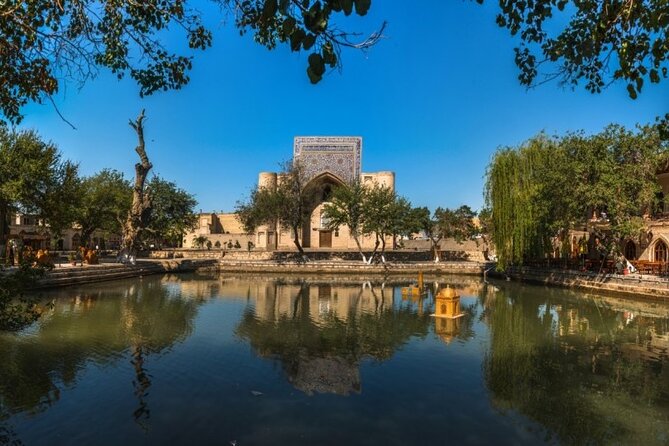
The first stop, Lyabi-Hauz, gives you one of the best introductions to Bukhara. The ensemble centers on a pool shaded by old mulberry trees, a setting where public life and historic architecture meet.
Allow about 40 minutes here. Your guide can explain how the square functioned as a gathering place and help you read the buildings around the water. This is not just a photo stop. It gives you a sense of how Bukhara’s public spaces were designed for conversation, rest, study, and trade.
The admission cost is included because there is no separate ticket listed. Arriving early also helps you look around before the day feels crowded. From here, the walking route moves naturally into the old commercial quarter.
Trading Domes: shopping under the old Silk Road roofs
Bukhara’s covered trading domes are among the most practical stops on the route. These were not decorative market halls built only for modern sightseeing. Each dome served a trade function, including money changing, and together they show how commerce shaped the city.
The planned visit lasts about 30 minutes. That is enough to walk through and understand the layout, but not enough for a long shopping session. If you see carpets, crafts, or souvenirs you want to consider, keep your purchases brief or return later on your own.
The domes also help break up the monument-heavy nature of the day. You are not simply moving from one religious building to another. You are seeing the spaces where money changed hands, goods were exchanged, and merchants passed through Bukhara.
Magoki-Attori Mosque and the Carpet Museum
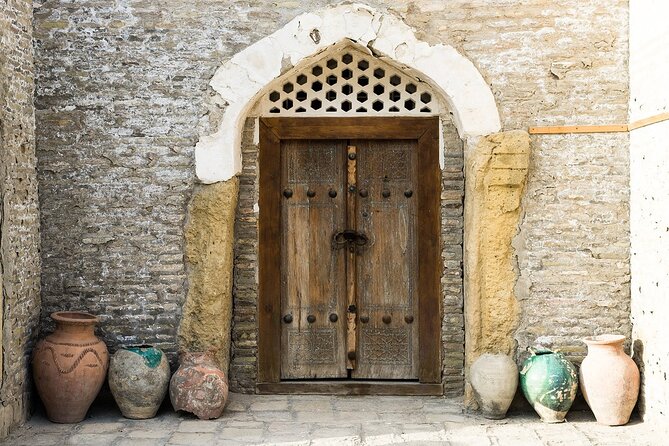
Next comes the Magoki-Attori Mosque, one of the oldest surviving mosques in Central Asia. Its site has an especially layered story, with earlier Zoroastrian connections and later use as a marketplace for herbs and spices.
That background makes this a valuable stop for anyone interested in how Bukhara changed over time. The building is not important only because of its age. It also shows how one urban site could take on new religious and commercial roles across many centuries.
The visit lasts about 30 minutes. Admission is not included, so carry some local currency or confirm the ticket arrangements with your guide. A carpet museum is also part of this stop, adding a craft element to the architectural focus.
You may find this stop more rewarding if you ask questions rather than simply taking photographs. The building’s small scale and long history call for explanation, and a good guide can make its layers easier to follow.
A completely different kind of day:
- Bukhara Full Day Old City Private Tour
★ 5.0 · 46 reviews - Yurt Camp Tour with Night from Bukhara
★ 3.8 · 35 reviews - All You Need To Know About Bukhara. A Walk In The Town
★ 4.9 · 31 reviews - One-Day Private Tour in the Old Town of Bukhara
★ 5.0 · 24 reviews
Ulugbek and Abdulaziz-Khan Madrasas: two schools, two moods
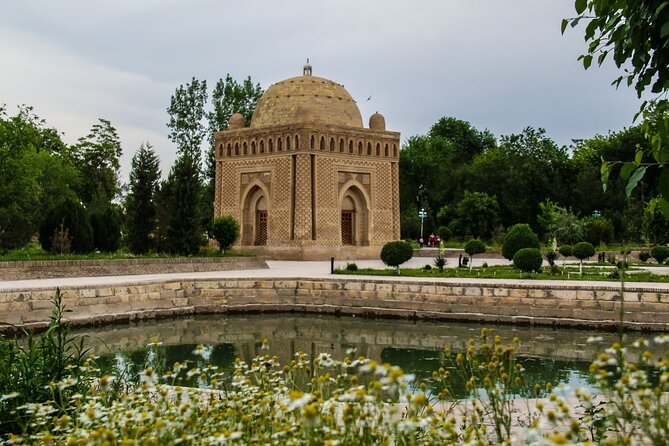
The Ulugbek Madrasa dates to 1417 and was built by Ulugh Beg, the astronomer-king. It is recognized as the oldest madrasa in Central Asia and began the paired madrasa arrangement later completed by the Abdulaziz-Khan Madrasa across the way.
You get about 30 minutes here, with no separate admission fee listed. Look at the relationship between the two façades rather than treating the buildings as unrelated stops. Their placement creates a useful lesson in architectural comparison.
The Abdulaziz-Khan Madrasa was built in 1652 under Abdulaziz Khan. It forms the other half of the Kosh Madrasa ensemble, or paired madrasa group. The tour allows another 30 minutes, but admission is not included.
The contrast is part of the appeal. Ulugbek’s building represents an earlier scholarly tradition, while Abdulaziz-Khan’s later design reflects a different period and decorative approach. Your guide can help point out these changes, which may be easy to miss if you rush from one entrance to the other.
If you want detailed interior exploration, keep your expectations measured. The time is enough for a guided look, not an extended study visit. The separate entrance charges also mean the advertised $25 price does not cover every monument.
Poi Kalyan: Bukhara’s great visual moment
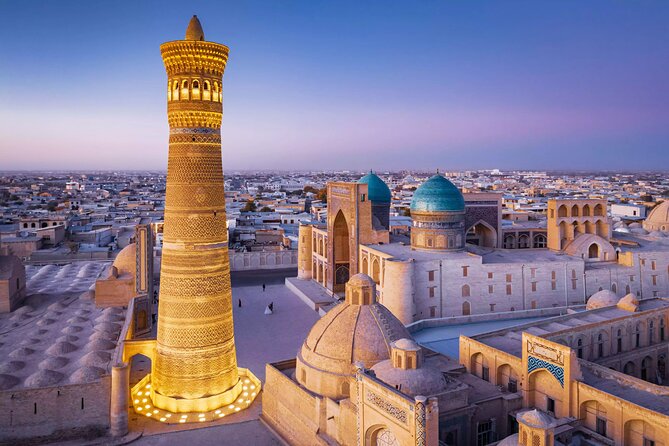
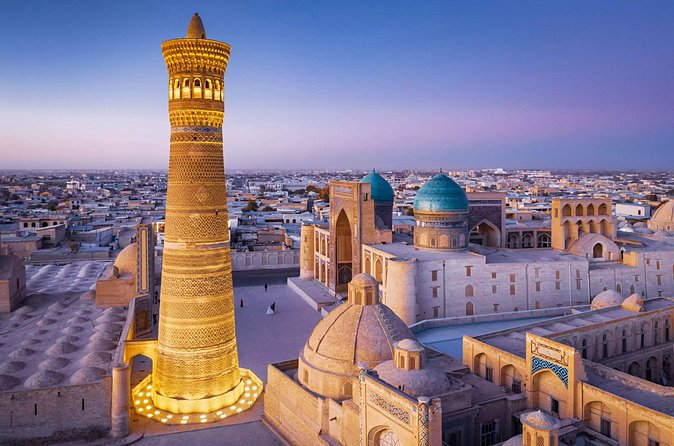
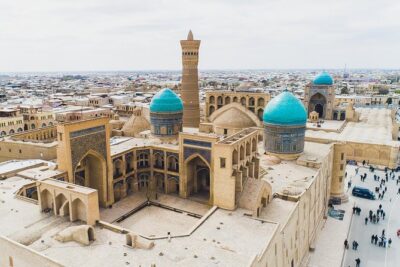
Poi Kalyan is the dramatic center of the day. The name means Foot of the Great, and the complex is dominated by the Kalyan Minaret, a 47-meter tower built in 1127.
You have about 50 minutes here, the longest scheduled stop so far. That is sensible. The scale of the minaret and the surrounding buildings deserves time, and this is one place where a rushed photograph would miss the point.
The Kalyan Minaret has guided Bukhara’s skyline for nearly nine centuries. The Poi Kalyan Mosque adds the wide religious setting, while the surrounding architecture creates one of the city’s most memorable views.
No admission fee is listed for this stop. That keeps the day’s main visual highlight available without another ticket. Still, the complex can be busy, and the open setting may feel exposed in strong sun. Bottled water is included, but you should also dress for a long day outside and bring practical sun protection.
Mir-i-Arab Madrasa: turquoise domes and living scholarship
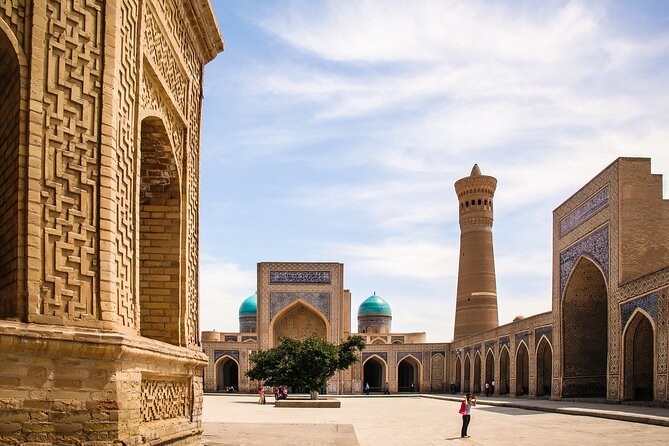
The Mir-i-Arab Madrasa gives the route another strong architectural pause. Built in the 16th century under Ubaydullah Khan, it became one of the most respected centers of Islamic learning in Central Asia.
The scheduled time is 20 minutes, with no admission charge listed. This is a shorter stop, so expect an introduction and time to admire the façade rather than a long interior visit.
The turquoise domes are the visual draw, but the building matters just as much for its educational role. Bukhara was not only a place where merchants passed through. It was also a center where religious study shaped public life.
This is a good moment to listen closely to the guide. The building’s proportions and decoration may catch your eye first, but its purpose gives the monument more meaning.
Ark of Bukhara: entering the rulers’ fortress
The Ark Citadel changes the mood completely. This massive mud-brick fortress served as the seat of Bukhara’s rulers for close to 1,500 years. Inside its walls were royal spaces, religious buildings, and the machinery of government.
The visit lasts about 40 minutes. Admission is not included, so this is another cost to add before you compare the tour price with a self-guided day.
The Ark rises above the old city, making its defensive role easy to understand. After spending the morning among markets and madrasas, you now see the center of political power. The contrast helps explain why Bukhara’s religious and commercial buildings were gathered so close to the citadel.
Fortresses can become tiring when a guide lists rulers and dates without connecting them to the place. Here, ask how the Ark functioned as a royal residence and administrative center. That question should make the stop more concrete.
Bolo Hauz Mosque: the emir’s prayer place
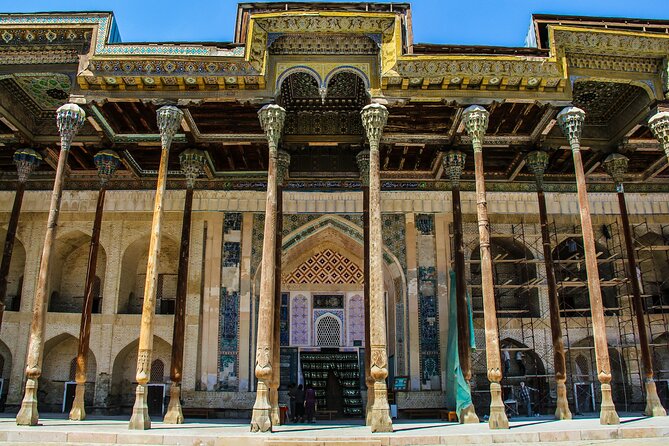
The Bolo-Khauz Mosque was built in the early 18th century and later expanded under Bukhara’s last emirs. It is known as the mosque used for the emir’s official prayers.
Its most eye-catching feature is the elegant wooden columned entrance. You have 30 minutes here, and admission is listed as free. The stop offers a welcome change from the heavy brickwork of the Ark and the monumental scale of Poi Kalyan.
Pay attention to the woodwork and the relationship between the prayer hall and the nearby water. The mosque’s name refers to its pool, linking it to Bukhara’s long tradition of building public and religious life around water.
This stop is especially useful for showing that Bukhara’s architecture is not all towering domes and fortress walls. Sometimes the most memorable detail is a row of painted or carved wooden columns.
Ismail Samani Mausoleum: a quiet final monument
The tour ends at the Ismail Samani Mausoleum, built in the ninth or tenth century and dedicated to Ismail Samani. It is described as Bukhara’s oldest surviving monument and one of the finest examples of early Islamic architecture in Central Asia.
The scheduled visit is 30 minutes. Admission is not included, so plan for one more separate ticket. The end point is important: after visiting the mausoleum, you are not returned to Lyabi-Hauz.
The mausoleum is a fitting final stop because it feels different from the grand public spaces earlier in the day. Its importance rests in its age, structure, and fine brick patterning rather than sheer size. You can finish the tour with a closer look at early Islamic design, after seeing later madrasas, mosques, and royal buildings.
The route’s ending also gives you a clear choice. You can continue exploring independently from the mausoleum, arrange your next transfer, or return toward the center using local transport. The experience itself does not include lunch, so confirm your plans before setting out.
What the $25 price really covers
At $25 per person, this is priced as an accessible introduction rather than a premium private tour. You receive a professional English-speaking guide, meeting-point assistance, bottled water, and a full program through the main historic sights.
The value is strongest if you want structure. A guide saves you from arranging the order of ten stops and gives context to buildings that can otherwise blur together. The route also covers a lot of ground for a modest fee.
The price does not include lunch, tips, personal spending, souvenirs, or several entrance tickets. The extra admission costs are not a flaw, but they should be part of your budget. Lunch is paid directly at the restaurant, with the guide available to help with ordering and recommendations.
Other languages may be available on request if enough people join. English is the standard option described here.
Group size, pace, and practical comfort
The maximum group size is 17 people. That is much more manageable than a large coach group, especially in narrow historic areas and covered markets. It is still not a private experience, so your time at each stop may need to follow the group’s pace.
The strongest individual guide feedback concerns Maqsuda. She is praised for adapting the route and discussion to personal interests. If you want that kind of flexibility, tell the guide early what matters most to you, such as architecture, Islamic education, trade, or local history.
Wear shoes suitable for several hours of walking. The itinerary contains many 20 to 50-minute visits, but the spaces between them also count. Bottled water is supplied, and nearby public transportation makes the meeting area practical.
The tour requires suitable weather. If poor weather cancels the experience, you are offered another date or a full refund. It also requires a minimum number of participants, so a cancellation for that reason brings the same choice of another date or experience, or a refund.
You receive confirmation when booking, and service animals are allowed. Most people can participate, but the supplied information does not promise a fully step-free route, so anyone with specific mobility needs should ask the operator before paying.
Who should book this Bukhara experience?
I would choose this tour if you have one main day in Bukhara and want the city’s essential monuments arranged into a sensible route. It suits first-time visitors who prefer explanation over map reading and who want a local guide to help with lunch and practical questions.
It is also a good match if you value variety. You will see a pond-side ensemble, old markets, an early mosque, paired schools, a monumental mosque complex, a royal fortress, an emir’s mosque, and an early mausoleum.
I would hesitate if you want long museum visits, extensive shopping, or a relaxed private pace. Ten stops in five to seven hours means the day is full. The $25 price is excellent for orientation and access to a qualified guide, but the added tickets and lunch make the final cost higher.
Should you book it?
Book it if you want a well-planned first look at Bukhara, especially with limited time. The route is broad, the group cap is reasonable, bottled water is included, and the price leaves room in your budget for meals and souvenirs.
Skip it if you already know the old city well or prefer to spend an hour at every monument. For most first-time visitors, though, this is a practical way to meet Bukhara: follow the domes, listen to the stories, and let the city’s layers reveal themselves one stop at a time.
FAQ
How long does the Bukhara group tour last?
The experience lasts approximately five to seven hours, beginning at 9 a.m.
Where does the tour start?
The meeting point is the Lyabi-Hauz Ensemble in Bukhara. The guide will have a TravelX sign.
Where does the tour end?
The tour ends at the Ismail Samani Mausoleum.
Is lunch included?
No. Lunch is paid directly at the restaurant. The guide can help with ordering and recommendations.
Are entrance tickets included?
Some stops have free admission, while tickets for the Magoki-Attori Mosque and Carpet Museum, Abdulaziz-Khan Madrasa, Ark Citadel, and Ismail Samani Mausoleum are not included.
How large is the group?
The experience has a maximum of 17 participants.
Just added in Bukhara
- Yurt Camp & Aydarkul Adventure from Bukhara★ 5.0 · 1 review
- Private Tour in 3 top Places Outside of Bukhara City★ 5.0 · 2 reviews
- Full-Day Private Guided Tour to Islamic 7 Saints of Bukhara★ 4.5 · 3 reviews
- Nurata Mountain & Kyzyl-kum Desert 3 Day Tour From Samarkand or Bukhara★ 5.0 · 1 review
- Bukhara Hammam Bathhouse with Massage★ 5.0 · 2 reviews
- Bukhara: Tour Outside of Old Town. Guide with Transportation★ 5.0 · 2 reviews
- Bukhara Old City Walking Tour★ 5.0 · 1 review
- Bukhara in a Day History, Culture, and Local Insight Private Tour★ 5.0 · 4 reviews
1-Day Tours, compared.
Samarkand One Day Tour – Departure From Tashkent
Read our review →
Samarkand One Day Tour: one day walking & group tour
Read our review →
Browse the lists this tour appears in