
Review · CITY TOURS IN BUKHARA
City Tour Around Bukhara
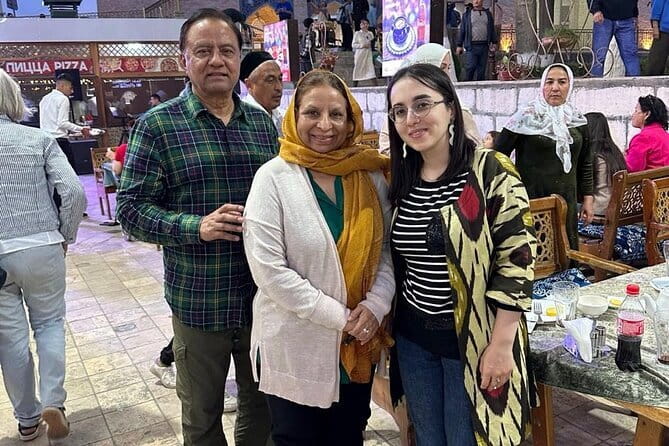
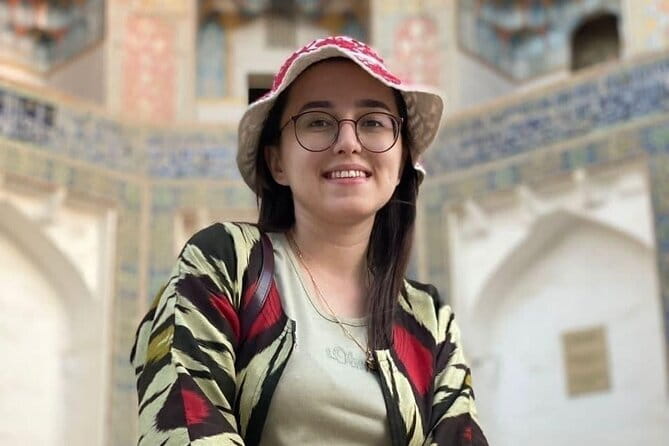
Bukhara rewards curious visitors. This private tour with Kamilla Yu connects the city’s grand monuments with working crafts, local customs, food, and modern Uzbek life. I especially like the personal touch of the handmade messages from the past and the chance to ask questions without being rushed through a fixed group schedule. I also like that Kamilla can adapt the pace, add artisan visits, or arrange a traditional cooking or bread-making class.
The main consideration is time. Eleven stops are packed into roughly four to six hours, and several sites charge separate admission. You will see a lot, but anyone who wants long museum visits, quiet photography, or extended shopping should discuss the pace with Kamilla before starting.
In This Review
- Key things to know before booking
- Why this Bukhara tour feels different
- Starting with Bukhara’s oldest brickwork
- Holy water and three religious traditions
- Wooden columns at Bolo Hauz Mosque
- Inside the Ark of Bukhara
- The Kalon Minaret and Poi Kalyan
- Mir-i-Arab and the continuing religious school
- Three trading domes and the business of the Silk Road
- Kosh Madrasah and two styles in one square
- Magoki Attori Mosque below the modern street
- Ending beside the pond at Lyab-i-Hauz
- Crafts, food, and Uzbek life beyond the monuments
- Is $66 good value for a private group?
- Who will enjoy this tour most?
- Should you book City Tour Around Bukhara?
- FAQ
- How much does City Tour Around Bukhara cost?
- How long does the tour last?
- Is this a private tour?
- Where does the tour start?
- Where does the tour end?
- Are admission fees included?
- Are food, coffee, and tea included?
- Can the tour be canceled for free?
Key things to know before booking
- Handmade messages from the past: A memorable personal touch that gives the day a playful link to Bukhara’s old Silk Road world.
- Kamilla’s flexible guiding: She can adjust timing and interests, with options for local food, artisans, folk performances, and cooking demonstrations.
- Eleven major sights: The route covers the mausoleums, mosques, citadel, trading domes, madrasas, carpet museum, and Lyab-i-Hauz.
- Private value for small groups: At $66 for up to six people, the per-person cost can be very low for a private half-day experience.
- A useful finish in the old city: The tour ends at Lyab-i-Hauz, a good place to continue exploring, eat, shop, or rest.
- Some costs remain separate: Admission fees, coffee, and tea are not included, so budget a little extra.
Why this Bukhara tour feels different
Many city tours in Bukhara follow the same list of famous buildings. This one does too, but it tries to explain how the city still functions beyond its monuments.
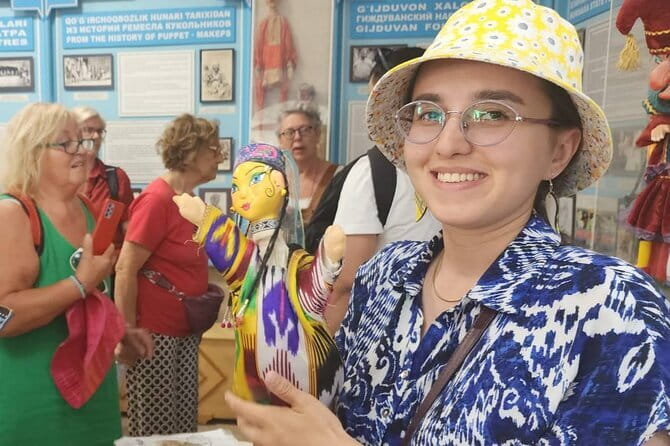
Kamilla brings in Uzbek crafts such as puppet making, blacksmithing, gold embroidery, fabric production, and wood carving. That matters because Bukhara is not only a collection of old walls and blue tiles. You get a look at skills that helped shape daily life and trade across the region.
I also like the guide’s stated approach to history. Instead of filling your head with long strings of dates and rulers, Kamilla aims for short, clear explanations. That should suit you if you want context without a lecture. Her English is described as strong and conversational, and her guiding style includes personal stories about Uzbek life.
The handmade messages add a small theatrical element. You receive written messages connected to the idea of hearing from the past. It is not a major historical artifact, of course, but it gives children and adults something personal to remember from the day.
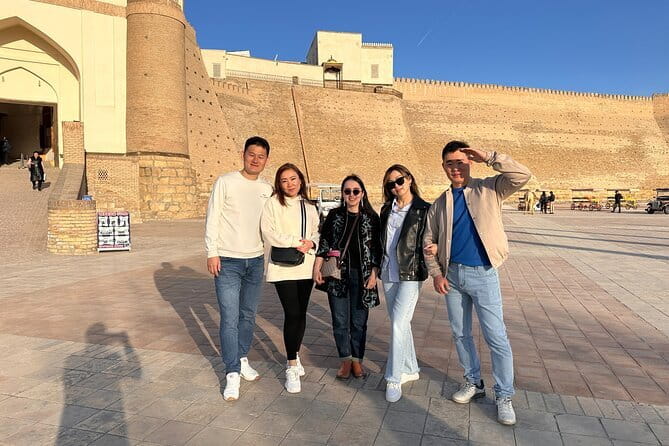
The tour is private, so only your group participates. That gives you room to ask about religion, architecture, food, family life, or anything else that catches your attention. Kamilla has also adapted timing for photography, shopping, lunch, and personal interests.
More City Tours in Bukhara
- Bukhara Full Day Old City Private Tour
★ 5.0 · 46 reviews - Bukhara Historical City Highlights Guided Walking Tour
★ 4.5 · 16 reviews - Bukhara: City Highlights Guided Tour with Pickup
★ 5.0 · 3 reviews
Starting with Bukhara’s oldest brickwork
The first stop is the Ismail Samani Mausoleum, where you spend about 30 minutes. This is one of the strongest places to begin because the building makes its impression through brickwork rather than colorful tile.
The mausoleum dates from the ninth or tenth century and uses more than 20 brick-laying styles. Look closely at the walls and you will see how pattern, shadow, and texture create decoration without painted surfaces. The building changes as the light moves across its small brick forms.
Admission is not included. The listed meeting point is at the mausoleum, though pickup is offered, so confirm the exact arrangement with Kamilla before the day begins. A 30-minute stop is enough for an introduction and photographs, but not for a slow architectural study.
Holy water and three religious traditions
Next comes Chashmai Ayub Mausoleum, with about 20 minutes here. The complex dates to the 12th century and is connected with the Prophet Job, known here as Ayub.
A natural well with water associated with healing for skin conditions is part of the site. The place is described as holy to three religions, which gives Kamilla an opening to explain how different faiths have shared and shaped Bukhara.
The stop is short, so you should expect a focused visit rather than an extended religious history lesson. Dress and behave respectfully at all religious sites. Admission is not included.
Wooden columns at Bolo Hauz Mosque
Bolo Hauz Mosque is scheduled for around 30 minutes and offers a change from brick domes and fortress walls. Its carved wooden columns are the feature that catches the eye. The mosque is often called the mosque with 40 pillars, even though the visible structure is associated with 20 wooden columns.
Kamilla explains the reason for the name and the building’s role in announcing news about a new ruler. This is exactly the kind of story that turns a photograph into a place you understand.
Admission is free. This stop should appeal to you if you enjoy woodwork, local customs, and the practical role religious buildings played in public life.
A completely different kind of day:
- Best of Bukhara: All Day Private Old Town Tour
★ 5.0 · 66 reviews - Best of Bukhara: All Day Private Old Town Tour
★ 4.9 · 62 reviews - Yurt Camp Tour with Night from Bukhara
★ 3.8 · 35 reviews - All You Need To Know About Bukhara. A Walk In The Town
★ 4.9 · 31 reviews
Inside the Ark of Bukhara
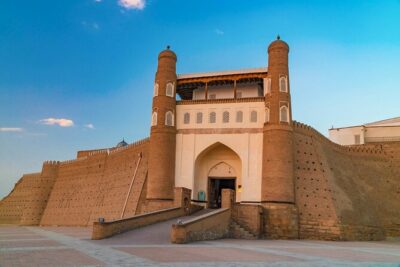
The Ark of Bukhara receives about 40 minutes, making it one of the longer stops. This massive citadel served as a home for Bukhara’s rulers from ancient times until 1920.
Parts of the fortress are now ruins, but that is part of its power. You are not walking through a perfectly restored palace. Instead, you see layers of government, defense, residence, and destruction gathered on one site.
The top offers a view over the city. Bring your camera, but also give yourself time to look at how the old citadel sits beside the modern streets. Kamilla uses the fortress to explain stories and secrets connected with the rulers who lived there.
Admission is separate. Forty minutes should provide a solid overview, although anyone fascinated by the citadel may wish for longer.
The Kalon Minaret and Poi Kalyan
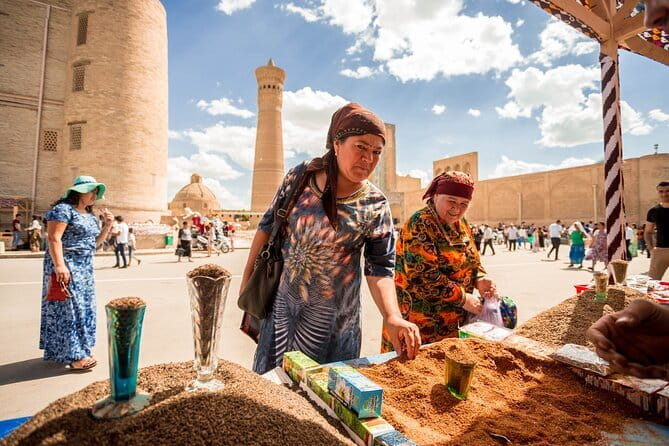
The Great Minaret of the Kalon is one of Bukhara’s unmistakable sights. The stop lasts about 25 minutes and focuses on how the tower has survived since the 12th century, as well as the different purposes it served.
Its height and brick patterning are impressive in daylight. The minaret is also illuminated in the evening, so a summer evening tour could give you a different view from a daytime visit.
Poi Kalyan Mosque follows, with another 25 minutes. The mosque is still active and dates from the 16th century. Its 288 domes create a repeated pattern that is easy to appreciate from different corners of the complex.
Admission is not included at the mosque, while the minaret stop is listed as free. Check the current arrangements with Kamilla because site access and fees can change.
This pair of stops gives you Bukhara’s grandest visual moment. It is also where the schedule may feel tight if you want extensive photos or quiet time. Tell your guide if architecture matters more to you than covering every remaining stop.
Mir-i-Arab and the continuing religious school
Mir-i-Arab Madrasa is visited for about 25 minutes. This is not simply an old facade. It has continued to function as a religious college since the 16th century.
Kamilla explains how religious education worked and how a madrasa was typically constructed. You can look at the arrangement of the building and consider how students, teachers, prayer, and study fitted into one complex.
Admission is listed as free. Access inside can depend on current rules, religious activity, or restoration work, so listen to your guide’s instructions. The value here is less about rushing through rooms and more about understanding that the building remains tied to religious learning.
Three trading domes and the business of the Silk Road
The trading domes take about 40 minutes, giving you a chance to move through three separate commercial spaces. Each dome served a particular trading purpose.
This is where the old city becomes easier to picture as a working market. Traders came here to display goods, bargain, and earn money. You can still browse and shop, but the useful part of the visit is seeing how the covered spaces organized commerce.
A private guide helps you understand the difference between simply passing through a market and reading its design. You may also want time for souvenirs, especially if textiles, carved wood, embroidery, or other handmade goods interest you.
Shopping can stretch the schedule quickly. If you plan to buy something substantial, tell Kamilla early so the rest of the day does not become rushed.
Kosh Madrasah and two styles in one square
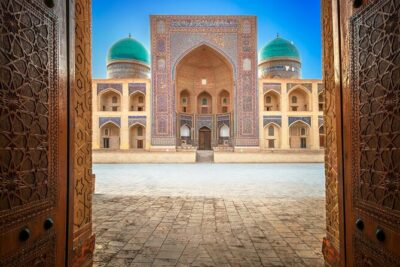
Kosh Madrasah takes around 40 minutes. The name refers to the pairing of two madrasas in one square, each with a different architectural style.
You can see an original classroom from the 17th century and a mosque designed in a cave-like style. Kamilla also explains two main religious currents connected with the site.
This stop is useful because it shows that Bukhara’s religious architecture was not all built to one formula. Similar institutions could express different ideas through layout, decoration, and use of space.
Admission is separate. The longer stop allows more time for questions, but the tour still covers a great deal before and after it.
Magoki Attori Mosque below the modern street
At Magoki Attori Mosque, you spend about 20 minutes. The mosque is associated with the 12th century and sits unusually low, partly hidden beneath later layers of the city.
The site also reflects Bukhara’s religious changes. It was once a place of worship connected with both Judaism and Islam. That detail adds weight to the city’s long story of different communities living, trading, and worshipping in the same urban center.
A carpet museum is part of this stop, giving you a chance to connect architecture with textile craft. Admission is not included. The visit is brief, so ask Kamilla to point out the most important architectural and cultural details before moving on.
Ending beside the pond at Lyab-i-Hauz
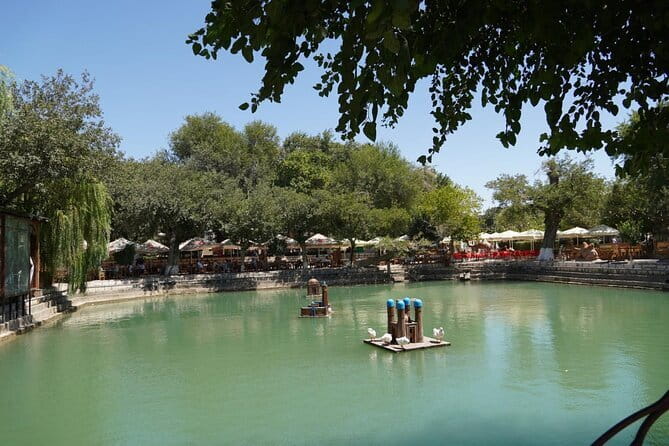
The tour finishes at Lyab-i-Hauz, the heart of Bukhara’s old city. You spend about 30 minutes around a large pond and a complex that includes a mosque and two distinctive madrasas.
A caravanserai, the old form of roadside hotel for merchants, is also part of the area. Learning how such a place worked helps connect Bukhara’s monuments to the trade routes that made the city important.
Ending here is practical. You are close to the center of the old part of Bukhara, with a natural place to continue your evening. The stop is also a good time to ask Kamilla for local food suggestions or help deciding what to visit next.
The tour ends at Lyabi Khause Square rather than returning you to the first stop. If you need a ride back to your hotel, arrange that separately or confirm whether pickup service includes your return.
Crafts, food, and Uzbek life beyond the monuments
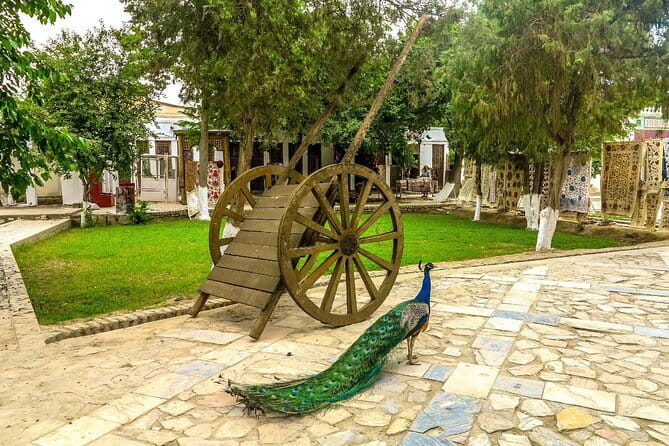
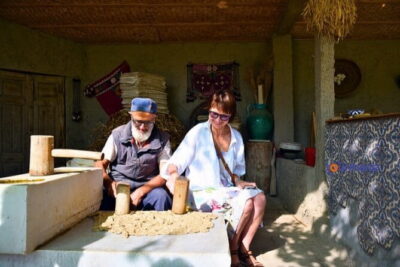
The strongest feature of this experience may be its cultural flexibility. Kamilla can include local artisans and show how puppets, metalwork, embroidery, fabric, and carved wood are made.
These encounters give you something a monument cannot: a sense of process. You see hands, tools, materials, and decisions. You also have a better basis for judging souvenirs, since you can understand more about the work behind them.
Food can be added to the day. A traditional cooking class or bread-making masterclass is available by request, and one visit included a lunch stop for plov. Coffee and tea breaks are also part of the general rhythm, but the drinks are not included in the $66 price.
Local music, traditions, and folk shows may also be arranged. These options are not guaranteed as a standard part of every departure, so ask Kamilla what is available on your date and how much extra time or money it requires.
Is $66 good value for a private group?
For a private group of up to six, $66 is a strong price. One person pays the full amount, but six people can split it to $11 each before admission fees and optional extras. Even for two people, you are paying for a private guide across a long route rather than joining a large group.
The value comes from flexibility as much as from the number of buildings. You can ask questions, pause for photos, discuss modern Uzbekistan, and possibly adjust the plan for food or crafts.
Still, keep the exclusions in mind. Admission to the Ismail Samani Mausoleum, Chashmai Ayub, the Ark, Poi Kalyan Mosque, Kosh Madrasah, and Magoki Attori Mosque and Carpet Museum is not included. Coffee and tea are also separate.
The route covers eleven stops in four to six hours, so this is best viewed as a broad introduction. You will see the city’s main sights and get helpful context, but you will not have unlimited time at every site.
Who will enjoy this tour most?
I would choose this tour if you want Bukhara explained by a person who can connect buildings with daily life. It suits couples, families, and small groups who prefer a private pace and like to ask plenty of questions.
It is also a good fit if you want more than architecture. The artisan visits, food possibilities, music, and stories about present-day Uzbek society give the day a wider shape.
Families may appreciate the handmade messages and the variety of stops. The route changes often enough to keep the day moving, though younger children may find eleven sites tiring.
You should think twice if you want a slow specialist tour focused on one building or one subject. You should also be clear about your priorities at the start. If you care most about photography, shopping, food, or religious architecture, Kamilla can use the private format more effectively when she knows this in advance.
The tour operates Monday through Friday from 9 a.m. to 6 p.m. during the stated booking period. Evening tours are available in summer. Since the experience requires good weather, poor conditions can lead to a new date or a full refund.
Should you book City Tour Around Bukhara?
I would book it if you want a personal, flexible introduction to Bukhara at a reasonable group price. Kamilla’s greatest strength is her ability to add meaning to the famous sights while discussing modern Uzbek life in a natural way.
Book with realistic expectations. The schedule is full, several admissions cost extra, and optional food or craft activities need to be arranged. If you confirm your priorities, budget for entry fees, and allow yourself to enjoy the changing pace, this tour can give you both Bukhara’s famous monuments and a more human sense of the city.
FAQ
How much does City Tour Around Bukhara cost?
The price is $66 per group, with up to six people allowed in the private group.
How long does the tour last?
The tour lasts approximately four to six hours, depending on the pace and activities included.
Is this a private tour?
Yes. Only your group participates in the activity.
Where does the tour start?
The listed starting point is the Ismail Samani Mausoleum in Bukhara. Pickup is offered, so confirm the exact pickup arrangement when booking.
Where does the tour end?
The tour ends at Lyabi Khause Square near the pond at Lyab-i-Hauz in the old part of Bukhara.
Are admission fees included?
No. Admission is not included for several sites, including the Ismail Samani Mausoleum, Chashmai Ayub Mausoleum, Ark of Bukhara, Poi Kalyan Mosque, Kosh Madrasah, and Magoki Attori Mosque and Carpet Museum. Bolo Hauz Mosque, the Great Minaret of the Kalon, Mir-i-Arab Madrasa, the trading domes, and Lyab-i-Hauz are listed as free.
Are food, coffee, and tea included?
Coffee and tea are not included. A traditional meal or bread-making class may be arranged if requested, but the provided tour details do not state that these options are included in the base price.
Can the tour be canceled for free?
Yes. You can cancel at least 24 hours before the start time for a full refund. If poor weather causes the tour to be canceled, you will be offered another date or a full refund.
Just added in Bukhara
- Yurt Camp & Aydarkul Adventure from Bukhara★ 5.0 · 1 review
- Private Tour in 3 top Places Outside of Bukhara City★ 5.0 · 2 reviews
- Full-Day Private Guided Tour to Islamic 7 Saints of Bukhara★ 4.5 · 3 reviews
- Nurata Mountain & Kyzyl-kum Desert 3 Day Tour From Samarkand or Bukhara★ 5.0 · 1 review
- Discover Bukhara One Day Group Experience★ 4.5 · 2 reviews
- Bukhara Hammam Bathhouse with Massage★ 5.0 · 2 reviews
- Bukhara: Tour Outside of Old Town. Guide with Transportation★ 5.0 · 2 reviews
- Bukhara Old City Walking Tour★ 5.0 · 1 review
City Tours in Bukhara, compared.
Bukhara Historical City Highlights Guided Walking Tour
Read our review →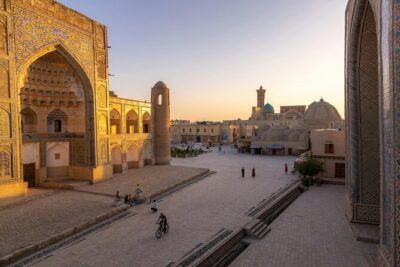
Private Tour in 3 top Places Outside of Bukhara City
Read our review →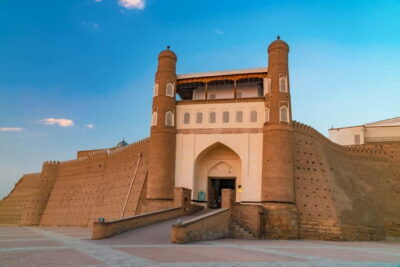
Browse the lists this tour appears in