
Review · KHIVA AND URGENCH TOURS
Best of Khiva: Exclusive Private Tour!
Khiva rewards curious walkers. This private half-day tour takes you through Itchan Kala, the walled core of Khiva, with a historian who can connect its tiled monuments, old gates, mosques, palaces, and Silk Road past. I like the efficient route and the fact that admission tickets are included. I also like that the tour is private, so you can ask questions and set the pace within the day’s schedule.
The main consideration is time. Five to six hours is enough to see the major sights, but not enough for a slow look at every courtyard, museum, market stall, and photo stop. The optional climb up the highest tower costs an additional $15, and lunch is not included.
The guides Nilufer and Nargis receive especially warm praise for bringing Khiva’s mosques and madrasas to life. If you have only one day in town, this tour gives you a strong first look without making you sort out the old city’s many monuments on your own.
In This Review
- Five useful things to know before booking
- Why Khiva works so well as a walking tour
- Beginning at the walls of Itchan Kala
- Kunya-Ark, the khan’s old castle
- Mohammed Rakhim Khan Madrasa and the world of Islamic learning
- Kalta Minor, the unfinished blue landmark
- Toshhovli Palace and the khan’s private world
- Pahlavan Mahmoud Mausoleum and local devotion
- Mohammed Amin Khan Madrasa and Khiva’s monumental facades
- Juma Mosque and its central position
- Polvon Darvoza and Ota Darvaza, entering and leaving Khiva
- What the $76.80 price gets you
- Which kind of visitor will enjoy this most
- Booking, cancellation, and practical details
- Should you book Best of Khiva?
- FAQ
- Where does the tour take place?
- How long does the experience last?
- Is this a private tour?
- Is pickup available?
- Are entrance tickets included?
- Is a tour guide included?
- Does the price include lunch?
- Does the tour include a tower climb?
- Can most people participate?
- Can I cancel for a full refund?
Five useful things to know before booking
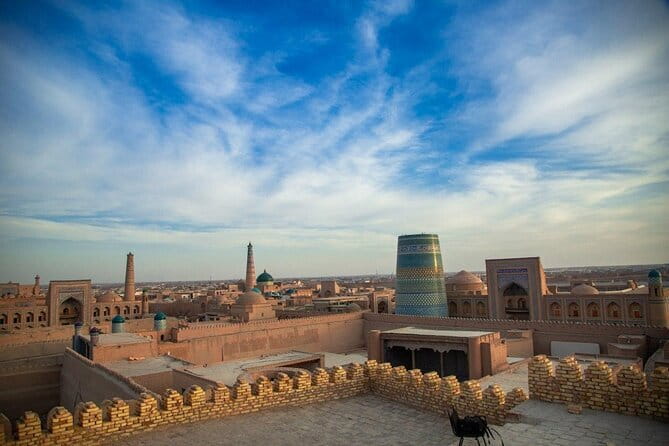
- You spend the day inside Itchan Kala: Khiva’s UNESCO-listed inner city provides the setting for nearly every major stop.
- A historian guides the walk: Nilufer and Nargis are specifically praised for clear explanations and engaging stories.
- Monument admission is included: You do not need to buy separate tickets for the listed stops.
- The tour is private: Only your group participates, which makes questions and timing easier.
- The tower climb costs extra: Budget another $15 if reaching the highest tower matters to you.
- Pickup has two forms: You can choose pickup on foot, while private transportation is included with the pickup and transportation option.
Why Khiva works so well as a walking tour
Khiva is unusually well suited to exploring on foot. The old city, Itchan Kala, gathers an impressive number of monuments within its defensive walls. Narrow streets connect madrasas, mosques, palaces, mausoleums, and gates, so you get a sense of the city as a living place rather than a string of unrelated photo stops.
That concentration is the tour’s great practical advantage. You are not spending half the day riding between distant sites. Instead, the guide can move you from one courtyard or facade to the next while explaining how the buildings fit into Khiva’s political, religious, and commercial life.
I also like the private format for Khiva because the architecture invites questions. You may want to know why Kalta Minor was never completed, how a khan’s palace was arranged, or what makes Juma Mosque different from the city’s other religious buildings. With only your group present, the conversation can follow your interests.
The five to six hour duration is brisk but sensible. You should expect a full morning or afternoon of walking, standing, listening, and taking photographs. Khiva’s streets are the main stage, so comfortable shoes and protection from the sun are practical choices, even though those details are not formally listed as tour requirements.
A few more options to weigh up in Khiva and Urgench
- Khiva: Historical City Highlights Guided Walking Tour
★ 4.8 · 156 reviews - Transfer: Bukhara – Khiva via Ancient Fortresses
★ 4.5 · 101 reviews - Daytrip From Khiva To Ancient Fortresses
★ 4.6 · 60 reviews
Beginning at the walls of Itchan Kala
The tour starts with Itchan Kala, Khiva’s inner walled city and the heart of the experience. The opening visit is listed at about 10 minutes, but the importance of this stop goes well beyond the clock.
This is where you get your bearings. The walls frame a compact historic center filled with blue tile, brick facades, domes, minarets, and old gateways. Rather than seeing Khiva as a modern city with a few scattered monuments, you immediately understand its enclosed urban form.
Your guide can also help you read the city’s visual language. Khiva is full of buildings that look grand in photographs, but the stories behind their purpose give them meaning. A madrasa was not simply a decorated facade, a gate was not merely an entrance, and a palace was not just a collection of rooms.
The short scheduled time suggests that this first stop is an introduction before the detailed visits begin. Keep your camera ready, but do not expect to cover all of Itchan Kala in ten minutes. The rest of the tour continues inside the same old city.
Kunya-Ark, the khan’s old castle
Kunya-Ark means old castle, and this fortress offers one of the clearest ways to understand Khiva’s ruling power. It was built from 1686 to 1688 by Arangakhan, the son of Anushakhan, and measures about 130 by 93 meters.
The complex included a hall for official receptions and other functions tied to the khan’s court. A 40-minute visit gives you enough time to see the site without rushing through it, while still leaving room for the many stops that follow.
I would pay attention to the change in scale here. The surrounding streets can feel intimate and tightly packed, while the citadel represents authority, administration, and ceremony. It helps explain how Khiva operated as a political center along the Silk Road.
Because admission is included, you can concentrate on the guide’s explanation rather than ticket arrangements. The private setting is useful here, since the difference between a fortress, a palace, and a religious school can blur when you are seeing them one after another.
Mohammed Rakhim Khan Madrasa and the world of Islamic learning
The Mohammed Rakhim Khan Madrasa sits east of Kunya-Ark. It takes its full name from Said Muhammad Rahim Bahadur Khan, known locally as Madraim Khan II.
The visit lasts about 40 minutes. That is a worthwhile amount of time for a building where the educational function matters as much as the decorative exterior. Your guide can place the madrasa within Khiva’s religious and civic life, helping you see it as a working institution rather than a pretty tile-covered backdrop.
This stop also creates a useful contrast with Kunya-Ark. The citadel shows the khan’s political center, while the madrasa points toward scholarship and religious education. Khiva’s character becomes clearer when you see both side by side.
The supplied details do not specify every room or exhibit you will enter, so expect the guide to shape the visit around the accessible parts of the building and the day’s pace. The included admission covers the planned monument visit.
A completely different kind of day:
- Khiva Historical City Highlights Guided Walking Tour
★ 5.0 · 30 reviews - Aral Sea Adventures (2 day)
★ 5.0 · 30 reviews - Guided Tour To Old Fortresses
★ 5.0 · 25 reviews - Private Daytrip to 7 Ancient Fortresses of Khorezm
★ 5.0 · 25 reviews
Kalta Minor, the unfinished blue landmark
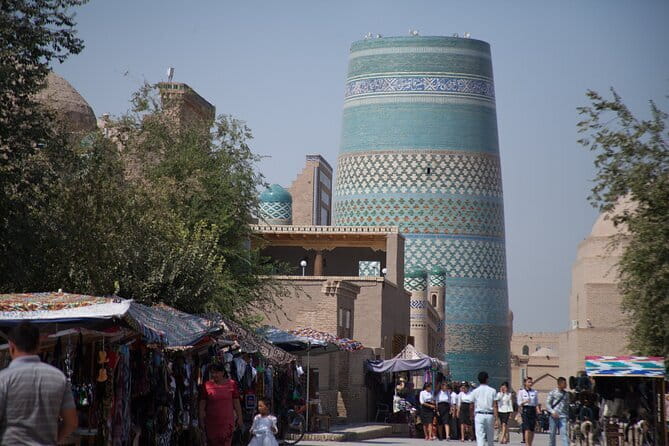
Kalta Minor is one of Khiva’s most recognizable sights. Its name means low tower, an amusing label for a monument designed to be much taller. Built in the 19th century by ruler Mukhammad Amin-khan, the minaret is famous because construction stopped before it was completed.
The scheduled visit is about 30 minutes, making this a natural place for photographs and a short explanation of the tower’s unusual story. Its broad form and colorful tile work give it a different presence from a narrow, finished minaret.
This is also one of the stops where a guide adds real value. Without context, you see an unfinished tower. With context, you see ambition, politics, architecture, and an incomplete plan preserved in the middle of the old city.
Do not confuse the included visit with the optional tower climb elsewhere. The additional $15 fee applies to climbing the highest tower, not to seeing Kalta Minor from the city.
Toshhovli Palace and the khan’s private world
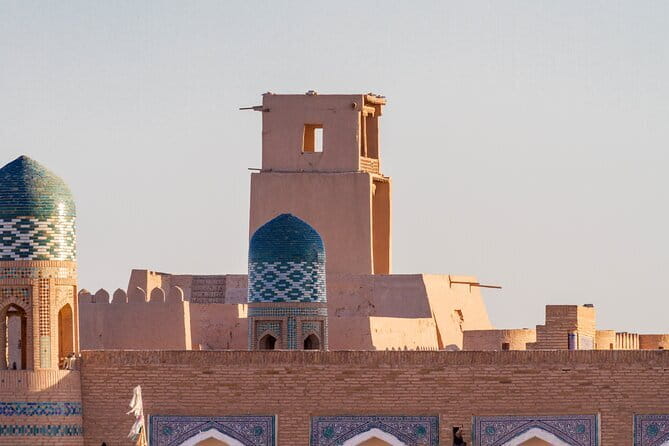
Allow a full hour for Toshhovli Palace, also spelled Tash-Hauli or Tosh-Hauli. It is one of the longer stops and deserves that time because a palace can reveal a side of Khiva that a fortress or religious building cannot.
The name means stone house, and the complex is a major historic residence inside the old city. Here, the focus shifts toward court life, domestic spaces, decoration, and the organization of power within the khan’s household.
A 60-minute visit gives your guide room to explain the palace’s layout and architectural details. It also provides a welcome pause from the rapid rhythm of shorter stops. You can look closely at tile patterns and courtyards instead of treating every monument as a quick backdrop.
The palace may be one of the most rewarding places for anyone interested in architecture. At the same time, the amount you take from it depends on the explanation. The building’s name and walls alone do not tell you how its spaces were used, so listen closely and ask questions.
Pahlavan Mahmoud Mausoleum and local devotion
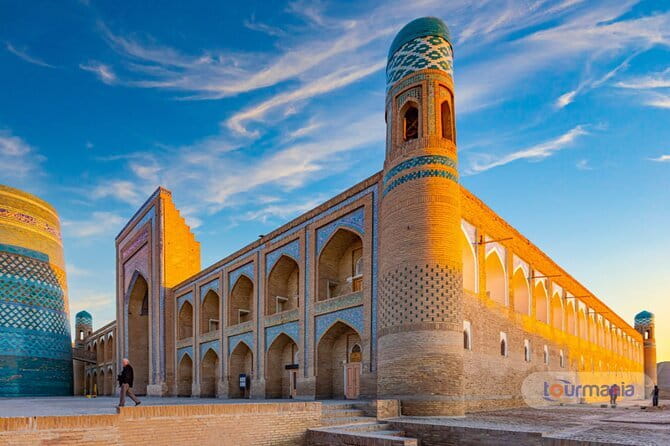
The Pahlavan Mahmoud complex lies near Juma Mosque. Pahlavan Mahmoud was a local poet and philosopher, famous for heroic strength and for the ability to heal people.
This 40-minute visit adds a more personal and spiritual layer to the day. Khiva is not only a place of rulers, trade, and grand construction. It also honors figures remembered for poetry, philosophy, strength, and healing.
The mausoleum can help you understand how local memory works. A person may be remembered through religious devotion, literary reputation, and popular stories all at once. That combination makes the stop different from the royal sites.
The supplied details do not promise a particular ceremony or special event, so you should expect a historic complex visit led by the guide. Its location near Juma Mosque also makes the route efficient, with two important places close together.
Mohammed Amin Khan Madrasa and Khiva’s monumental facades
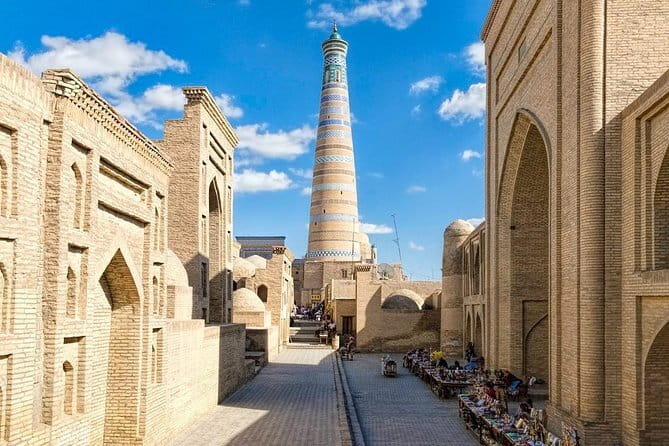
The tour includes another visit to the Mohammed Amin Khan Madrasa, scheduled for about 30 minutes. It is a major landmark within Itchan Kala and one of the buildings that helps define Khiva’s grand architectural appearance.
This stop may feel familiar after the earlier madrasa visit, but the guide can help you notice different details and explain its place in the old city. The name is easy to mix up with Mohammed Rakhim Khan Madrasa, so having a historian along is useful.
For photographers, the madrasa provides another chance to study Khiva’s tiled surfaces and formal entrances. For history-minded visitors, it shows the scale of the city’s investment in religious and educational buildings.
The two madrasa visits also reinforce a useful point: Khiva’s old center is not built around just one famous monument. Its appeal comes from the close grouping of many substantial buildings.
Juma Mosque and its central position
Juma Mosque sits in the central part of Itchan Kala, near several of Khiva’s best-known monuments. The visit lasts about 40 minutes.
A central mosque is a natural place to pause and think about the old city as a community. The mosque was not designed only for sightseeing. Its position links it to the daily religious life and movement of the city.
This is another stop where the guide’s stories matter. The tour description identifies the mosque’s location and role, but the experience will be stronger if you ask about its design, use, and relationship to nearby monuments.
Because Juma Mosque comes after several palaces and madrasas, it gives the day a different rhythm. You move from royal and educational buildings into a place of worship. The private format lets you ask questions respectfully and at once, rather than waiting for a large group to move on.
Polvon Darvoza and Ota Darvaza, entering and leaving Khiva
The final part of the tour focuses on two historic gates: Polvon Darvoza and Ota Darvaza. Each is scheduled for about 30 minutes.
Polvon Darvaza once controlled access to Khiva’s walled old city. It welcomed merchants and other people moving along Silk Road routes, making it more than a piece of defensive architecture. The gate helps you picture Khiva as a trading center connected to a much wider world.
Ota Darvaza was another main entrance and served as a key route for traders and travelers. Its architecture and history provide a fitting final look at the city’s relationship with movement, commerce, and protection.
Ending with the gates is a smart choice. You have already seen the buildings inside the walls, and now you can think about how people entered that world. The gates give the tour a clear beginning-and-ending shape, even though the sightseeing itself remains within the old city.
What the $76.80 price gets you
At $76.80 per person, this tour is not the cheapest way to walk around Khiva, but the price includes several items that can add up separately. You receive a private historian guide, entrance tickets to the monuments, all fees and taxes, photo stops, and pickup on foot.
Private transportation is included if you select the pickup with transportation option. That distinction matters. Read the pickup choice carefully so you know if you are arranging a walking meeting point or using a vehicle transfer.
The strongest value comes from time saved. Khiva has many monuments close together, but deciding which entrance to use, understanding which buildings matter, and keeping track of ticket costs can take attention away from the city. This tour handles that work for you.
The price makes the most sense for a first visit, a short stay, or anyone who wants a focused overview before exploring alone. A larger group discount may improve the per-person cost if you are booking with family or friends.
Lunch is not included. Since the tour lasts five to six hours, plan your meal before or after the experience rather than expecting a restaurant stop to be part of the schedule.
Which kind of visitor will enjoy this most
I would choose this tour if you want structure, context, and broad coverage in a single half-day. It is especially useful when your time in Khiva is limited and you want to see the main monuments without guessing which narrow street leads where.
The tour also suits anyone who enjoys asking questions. A private historian can explain details that are easy to miss, and the strong praise for Nilufer and Nargis suggests that guide quality is one of the experience’s best features.
You may want a different approach if you prefer to spend an entire day at one palace, wander without a schedule, or stop for long meals and shopping breaks. The route covers ten listed stops, so its pace is active.
The tour is suitable for most participants according to the supplied information. Still, expect a substantial amount of walking and standing because the experience is built around the old city’s streets and monuments.
Booking, cancellation, and practical details
Confirmation arrives when you book, and the activity is private, with only your group taking part. It is booked an average of 41 days ahead, so early planning is sensible if your dates are fixed.
Free cancellation is available up to 24 hours before the start time for a full refund. Cancellations or changes made less than 24 hours before the start are not accepted for a refund, and the cut-off uses Khiva’s local time.
Bring enough time for the full five to six hours. If climbing the highest tower is important to you, set aside the extra $15. If not, you can still enjoy the listed monuments and photo stops without paying that additional charge.
Should you book Best of Khiva?
I would book it for a first visit, a short stay, or a group that wants a private guide rather than a large shared walk. The combination of monument tickets, a historian, private participation, and a tightly packed route gives the $76.80 price solid value.
The best reason to choose it is the human explanation. Nilufer and Nargis are praised for making the mosques, madrasas, and museums easier to understand, and that kind of storytelling can turn a beautiful old city into a place with meaning.
Skip it only if you want a loose, self-guided day or plan to spend far more time at each site. For most people with limited time, this is a practical and engaging way to meet Khiva.
FAQ
Where does the tour take place?
The tour takes place in Khiva, Uzbekistan, mainly within Itchan Kala, the city’s UNESCO-listed inner town.
How long does the experience last?
The tour lasts approximately five to six hours.
Is this a private tour?
Yes. Only your group participates in the activity.
Is pickup available?
Yes. Pickup on foot is included, and private transportation is included when you select the pickup with transportation option.
Are entrance tickets included?
Yes. Entrance tickets to the listed monuments are included.
Is a tour guide included?
Yes. The experience includes a historian tour guide.
Does the price include lunch?
No. Lunch is not included.
Does the tour include a tower climb?
The highest tower climb is not included in the base price. It costs an additional $15.
Can most people participate?
Yes. The supplied information says most participants can take part.
Can I cancel for a full refund?
Yes, if you cancel at least 24 hours before the experience start time. Changes or cancellations made less than 24 hours before the start are not accepted for a refund.
Just added in Khiva and Urgench
- Urgench Airport / Railway Station – Khiva Transfer★ 3.0 · 2 reviews
- Traditional Khiva Cooking Class with Market Visit & Lunch★ 5.0 · 4 reviews
- Uzbekistan 6 Days Private Tour Khiva-Bukhara-Samarkand by Train★ 5.0 · 4 reviews
- Transfer From Khiva To Bukhara★ 5.0 · 2 reviews
- Old Khiva Stories with Your Local Guide★ 5.0 · 5 reviews
- Day Trip Top 3 Fortresses departure from Khiva Self-Guided Tour★ 5.0 · 2 reviews
- Plov Tour : Taste, Tradition & History of Plov with a local guide★ 5.0 · 1 review
- Master Class – Uzbek Bread (Khiva)★ 3.5 · 4 reviews
Khiva and Urgench Tours, compared.
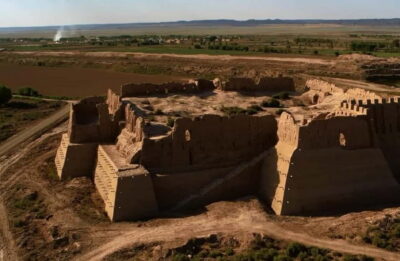
Transfer: Bukhara – Khiva via Ancient Fortresses
Read our review →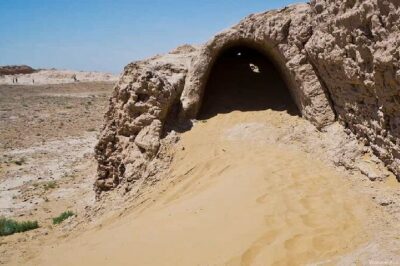
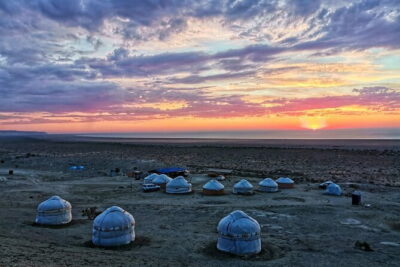
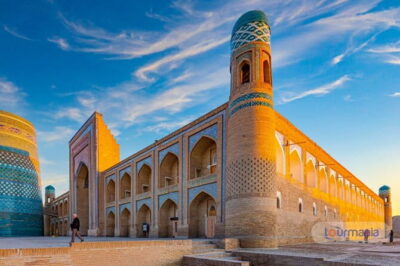
Khiva Historical City Highlights Guided Walking Tour
Read our review →
Private Daytrip to 7 Ancient Fortresses of Khorezm
Read our review →
Browse the lists this tour appears in