
Review · KHIVA AND URGENCH TOURS
Old Khiva Stories with Your Local Guide
Khiva rewards slow looking. This three-hour walk through Itchan Kala brings the city’s blue tiles, wooden columns, royal palaces, and Silk Road gates into focus with local guide Sarvar. I like the route’s strong mix of famous sights and everyday culture, especially the wood-carving workshop and Allakuli Khan market. I also like that Sarvar adds personal stories and practical tips about food, shopping, and further exploring Khiva. The main catch is the extra entrance fee: the $22 tour price does not include the 250,000 Uzbek sum museum ticket.
Sarvar is praised for his clear English, warm manner, and long experience guiding in Khiva and Uzbekistan. The tour is limited to 15 people, which should keep the walk manageable, though a smaller private group may allow more time for questions at each stop.
In This Review
- Key things to know before booking
- Starting at Ata Darwaza, Khiva’s old city gate
- Muhammad Amin Khan Madrassah and the Kalta Minor
- Kunya Ark reveals the power of Khiva’s khans
- Khiva’s wood-carving workshop shows a living tradition
- A short stop for scientists from Uzbekistan
- Tash Khauli Palace and the world of Allakuli Khan
- Allakuli Khan Caravanserai and market time
- Juma Mosque and its forest of wooden columns
- Islom Khodja Complex and Khiva’s tallest minaret
- What Sarvar adds to the walk
- Is the $22 price good value?
- Who should book this Khiva walking tour?
- Should you book Old Khiva Stories?
- FAQ
- Where does the Khiva walking tour begin?
- Where does the tour finish?
- How long does the tour last?
- What is included in the tour price?
- How much does the tour cost?
- Are entrance tickets included?
- Can entrance fees be paid by card?
- How many people can join the tour?
- What is the cancellation policy?
Key things to know before booking
- Itchan Kala is the main event: The walk stays inside Khiva’s walled inner city, a UNESCO World Heritage Site filled with compact, walkable sights.
- The route covers ten important stops: You see Ata Darwaza, Kalta Minor, Kunya Ark, Tash Khauli, Juma Mosque, Islom Khodja, and more.
- The wood-carving workshop adds local life: This is not only a procession of old buildings. You also see a living craft tradition.
- Sarvar’s local perspective is central: His appeal comes from personal stories, cultural context, and practical advice for the rest of your stay.
- Budget for the museum ticket: Entry costs 250,000 sum per person and can be paid in cash or by card.
- The timing is brisk: Three hours gives you a useful first look, but some stops receive only 10 or 15 minutes.
Starting at Ata Darwaza, Khiva’s old city gate
The walk begins at the west gate of Itchan Kala, known as Ata Darwaza. This is a fitting meeting point because the gate once received caravans and traders moving along the Silk Road. It also gives you an immediate sense of Khiva’s compact design: high walls, narrow lanes, tiled facades, and monuments packed close together.
The tour ends back at the meeting point, so you do not need to arrange a second pickup or figure out where the walk finishes. The gate is near public transportation, another useful detail if you are reaching the old city from elsewhere in Khiva.
I like beginning here because you enter the historic center with a clear frame of reference. You are not simply walking toward attractive buildings. You are entering a former trading city through one of its main doors.
A few more options to weigh up in Khiva and Urgench
- Khiva: Historical City Highlights Guided Walking Tour
★ 4.8 · 156 reviews - Transfer: Bukhara – Khiva via Ancient Fortresses
★ 4.5 · 101 reviews - Daytrip From Khiva To Ancient Fortresses
★ 4.6 · 60 reviews
Muhammad Amin Khan Madrassah and the Kalta Minor
The first major architectural stop is Muhammad Amin Khan Madrassah, built in 1851 by Muhammad Amin Khan. It was once the largest Islamic school in the region, with room for more than 250 students.
Your guide can help you read the building beyond its surface decoration. A madrassah was a place of study, but in Khiva these religious schools also formed part of the city’s political and social structure. The size of this one reflects the ambition of its patron.
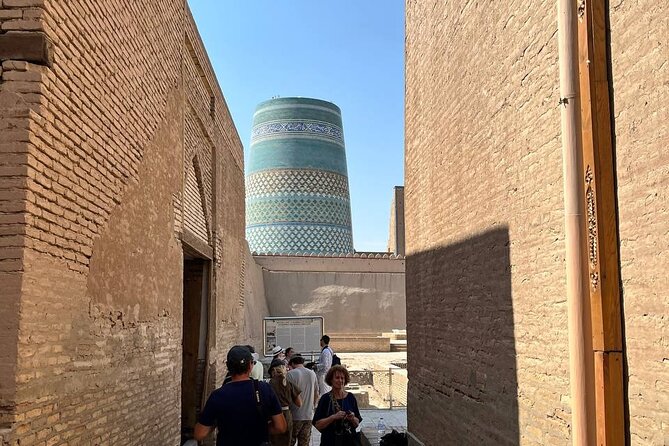
Next comes Kalta Minor, the short, wide minaret covered in turquoise tile. It is one of Khiva’s most recognizable sights, and its unusual proportions make it easy to remember. Muhammad Amin Khan intended it to be much taller, but the project was never completed.
The ten-minute stop is enough to hear the central story and take photographs. If you want detailed architectural discussion or quiet time with the tilework, you may wish you had longer. Still, the close spacing of the madrassah and minaret keeps the pace comfortable.
Kunya Ark reveals the power of Khiva’s khans
Kunya Ark was the fortress and residence of Khiva’s khans. The complex included a throne room, harem, mint, mosque, and reception spaces, so it offers a useful picture of how government, religion, ceremony, and private life operated in one royal compound.
This is one of the tour’s most important stops, and the scheduled 25 minutes gives it more attention than several other sites. I would pay close attention here to the way the fortress functioned as a small city within the city. The buildings were not only decorative. They supported the daily work of ruling.
The entrance fee matters at this point. The guide fee does not include admission, and the stated museum ticket costs 250,000 sum per person. That ticket includes access to 10 to 13 museums, according to the tour information, so it may offer fair value if you plan to visit several sites during your time in Itchan Kala. You can pay by cash or card.
Khiva’s wood-carving workshop shows a living tradition
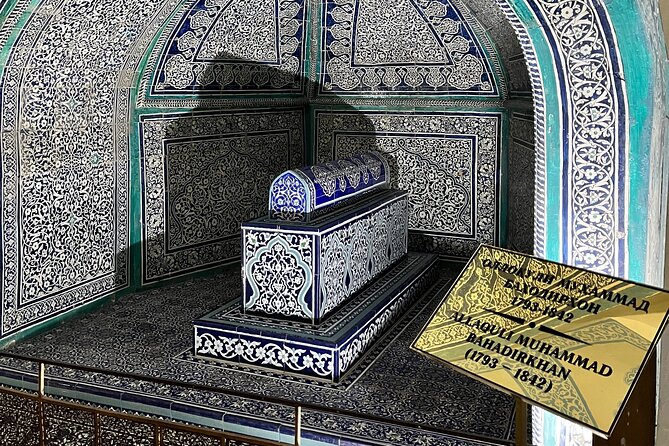
The stop at a Khiva wood-carving workshop is a welcome change of pace. Khiva is known for detailed carved columns, doors, and souvenirs, and the workshop lets you see artisans working with a craft passed down through generations.
I especially like this part of the route because it connects the old buildings with present-day skill. The carved wood in Khiva’s mosques and palaces can seem like a finished museum object. Seeing people create similar work gives you a better sense of the time and care behind it.
The visit lasts about 15 minutes. It is not presented as a full craft class, and the information does not promise hands-on work. You may have an opportunity to shop for souvenirs, but the main value is seeing the process and learning why wood carving matters in Khiva.
A completely different kind of day:
- Khiva Historical City Highlights Guided Walking Tour
★ 5.0 · 30 reviews - Aral Sea Adventures (2 day)
★ 5.0 · 30 reviews - Guided Tour To Old Fortresses
★ 5.0 · 25 reviews - Private Daytrip to 7 Ancient Fortresses of Khorezm
★ 5.0 · 25 reviews
A short stop for scientists from Uzbekistan
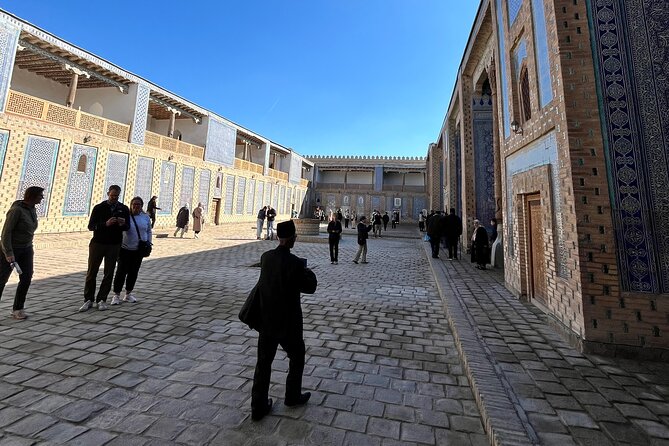
The Scholars Museum provides a different subject. Here, Sarvar discusses major scholars connected with Uzbekistan and world civilization, including Al-Khwarizmi, Al-Biruni, Al-Zamakhshari, and Avicenna, also known as Abu Ali Ibn Sina.
The 15-minute visit is brief, but it widens the story beyond khans, mosques, and caravan routes. These figures represent the region’s contributions to mathematics, astronomy, language, medicine, and scholarship.
This stop may appeal most if you enjoy intellectual and cultural context. If your main interest is architecture, it may feel less essential than Kunya Ark or Juma Mosque. The value depends on how much you want to understand the broader world connected to Uzbekistan.
Tash Khauli Palace and the world of Allakuli Khan
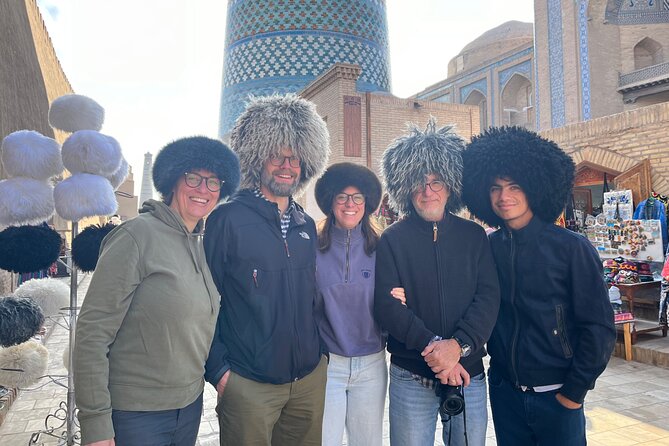
Tash Khauli, also called Tosh Khovli or Allakuli Khan Palace, was built in the 19th century as a residence for the khan and his court. Its name means Stone Palace, and it provides a contrast with the earlier Kunya Ark.
The palace is a good place to compare royal spaces. Kunya Ark feels tied to the older fortress tradition, while Tash Khauli represents another stage of palace life under Khiva’s rulers. The decorated courtyards and reception areas help explain how the khan’s court was arranged.
The listed time here is only 15 minutes, so do not expect an exhaustive palace tour. The admission fee is also not included. If you want to study the tile patterns or courtyards at length, plan to return on your own after the guided walk, using the museum ticket if it applies.
Allakuli Khan Caravanserai and market time
The Allakuli Khan Tim Market and Caravanserai brings the Silk Road story back to trade. This preserved caravanserai once offered a stopping place for merchants and their goods. Today, the area is also useful for shopping, with local souvenirs available.
I like the practical side of this stop. Sarvar can point out places to shop and offer advice for the rest of your visit. That kind of guidance is often more useful than another long list of dates and rulers, especially in a small historic center where you may want to browse without wasting time.
The stop is scheduled for 15 minutes. That is enough to look around, but not enough for a relaxed shopping session. Treat it as an introduction, then return later if you find something worth examining or buying.
Juma Mosque and its forest of wooden columns
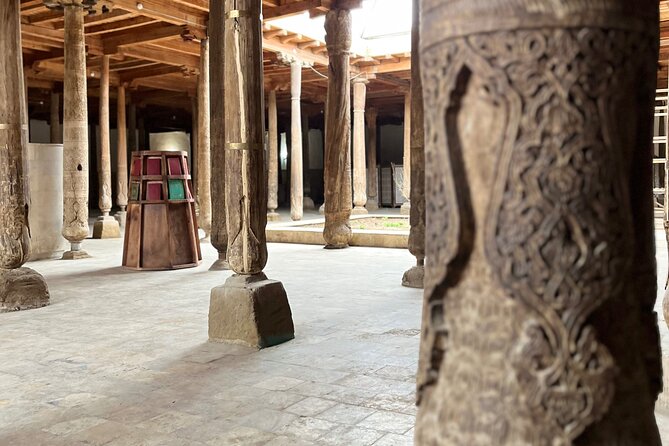
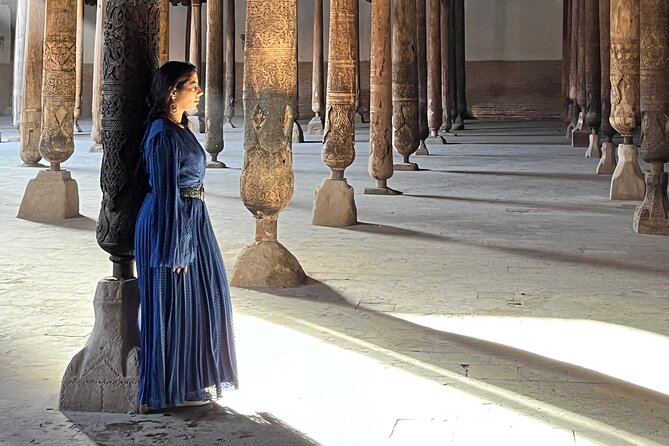
The Juma Mosque is one of Khiva’s most distinctive buildings. Its interior is famous for 215 wooden columns, each carved with detail and arranged like a forest supporting the roof.
The mosque dates to the 10th century, according to the tour description, and combines Islamic design with local artistic traditions. The columns are the reason to slow down here. Instead of one grand central feature, the room creates its effect through repetition, shadow, wood grain, and varied carving.
Twenty minutes gives you a reasonable first visit. I would use the time to look closely at several columns rather than trying to inspect all 215. The guide’s explanation can also help you understand why a mosque built around columns feels so different from a large domed prayer hall.
Islom Khodja Complex and Khiva’s tallest minaret
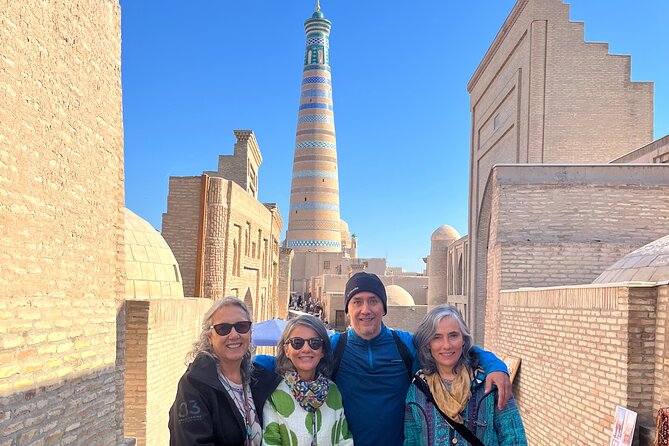
The final major stop is the Islom Khodja Complex. It includes the Islom Khodja Madrassah and Khiva’s tallest minaret, built in the 19th century and named for Islom Khodja, an important local figure.
This is a strong finish because the minaret gives the old city a clear vertical marker after hours spent among low courtyards and narrow lanes. The complex also reinforces a theme that runs through the whole walk: Khiva’s rulers and officials used architecture to express faith, authority, education, and civic ambition.
Admission is not included here. The 15-minute visit should give you the main facts and a look at the complex, but check with Sarvar about the exact entry arrangements on the day. The tour information says museum admission is paid separately and can be handled with cash or card.
What Sarvar adds to the walk
The guide is the main reason to choose this experience instead of simply walking through Itchan Kala alone. Sarvar was born and raised in Khiva, and the tour is built around his local connection. His role is not limited to naming buildings. He shares local legends, cultural observations, personal stories, and suggestions for eating, shopping, and seeing more of Uzbekistan.
The comments about his guiding style repeatedly emphasize his English, kindness, professionalism, and ability to explain the country’s past and traditions. One person who has known him since 2018 describes his continued effort to improve his work. Another account notes that he was helpful even during trip planning and remained available with suggestions.
That matters in Khiva because the old city can feel like a stage set at first glance. A local guide helps you connect the monuments to real people, political decisions, religious study, trade, and craft. Sarvar’s experience also appears to extend beyond this walk, with an Aral Sea tour mentioned in connection with his guiding work.
The group limit is 15 people. That is not an intimate private tour, but it is small enough for questions if everyone stays engaged. The short stop times mean you should ask about your priorities early. If you care most about the palaces, woodwork, or minarets, say so.
Is the $22 price good value?
At $22 per person, the tour is reasonably priced for a three-hour English-language walk led by a local guide. You are paying for structure, explanation, and cultural context rather than transportation or an elaborate meal.
The extra 250,000 sum entrance ticket changes the total cost. Since that fee includes access to 10 to 13 museums, it can still be worthwhile if you plan to see several interiors. If you only want to walk the streets and view buildings from outside, the additional charge may feel less appealing.
The route covers a lot in three hours, but the schedule is tight. Several stops receive only 10 or 15 minutes, and the itinerary totals roughly three hours when the walking time is included. I would see this as a strong orientation tour, not the final word on every monument.
Who should book this Khiva walking tour?
I would recommend it to a first-time visitor who wants a clear introduction to Itchan Kala without spending the first day guessing which buildings matter. It suits anyone who values local stories, cultural background, and practical suggestions as much as photographs.
It also fits travelers who prefer walking and can manage several hours on their feet. Most people can participate, and the tour is near public transportation, but the information does not provide details about wheelchair access or specific mobility arrangements. Ask the provider if that is important for you.
You may want a different plan if you prefer very slow photography, private guiding, or long museum visits. The route is broad rather than leisurely. For many people, that is its strength. You see the city’s major sights, then decide which ones deserve a second look.
Confirmation is provided when you book, and free cancellation is available up to 24 hours before the start time. Inside that window, the payment is not refunded, and changes are not accepted.
Should you book Old Khiva Stories?
Book this walk if you want a local voice and a well-planned first look at Khiva. Sarvar’s English, friendliness, long experience, and personal connection to the city receive the strongest praise, and the route gives you far more than the standard postcard views.
Go in knowing that admission costs extra and that the schedule moves quickly. I would book it early, especially since it is commonly reserved well ahead of time, then use the rest of your stay to return to Juma Mosque, the palaces, markets, or minarets that catch your eye.
FAQ
Where does the Khiva walking tour begin?
The tour begins at the west gate of Itchan Kala, at Ata Darwaza, in Khiva.
Where does the tour finish?
The activity ends back at the meeting point.
How long does the tour last?
The tour lasts approximately three hours.
What is included in the tour price?
An English-speaking guide is included.
How much does the tour cost?
The listed price is $22 per person.
Are entrance tickets included?
No. Entry tickets are paid separately. The stated fee is 250,000 Uzbek sum per person, with access to 10 to 13 museums included.
Can entrance fees be paid by card?
Yes. The tour information says entrance fees can be paid by cash or card.
How many people can join the tour?
The maximum group size is 15 people.
What is the cancellation policy?
You can cancel at least 24 hours before the start time for a full refund. Cancellations or changes made within 24 hours are not accepted for a refund.
Just added in Khiva and Urgench
- Urgench Airport / Railway Station – Khiva Transfer★ 3.0 · 2 reviews
- Traditional Khiva Cooking Class with Market Visit & Lunch★ 5.0 · 4 reviews
- Uzbekistan 6 Days Private Tour Khiva-Bukhara-Samarkand by Train★ 5.0 · 4 reviews
- Transfer From Khiva To Bukhara★ 5.0 · 2 reviews
- Day Trip Top 3 Fortresses departure from Khiva Self-Guided Tour★ 5.0 · 2 reviews
- Plov Tour : Taste, Tradition & History of Plov with a local guide★ 5.0 · 1 review
- Master Class – Uzbek Bread (Khiva)★ 3.5 · 4 reviews
- A Night In The Kyzylkum Desert [2] From Khiva★ 4.5 · 3 reviews
Khiva and Urgench Tours, compared.
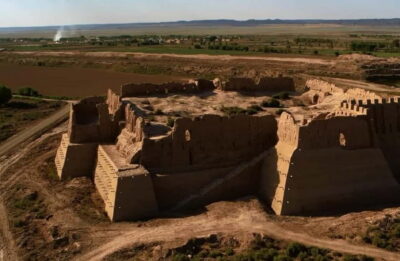
Transfer: Bukhara – Khiva via Ancient Fortresses
Read our review →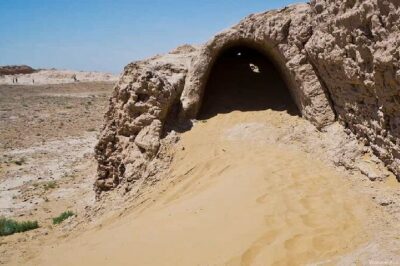
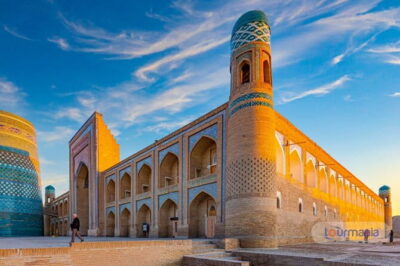
Khiva Historical City Highlights Guided Walking Tour
Read our review →
Private Daytrip to 7 Ancient Fortresses of Khorezm
Read our review →
Browse the lists this tour appears in