
Review · BUKHARA TOURS
Bukhara Countryside Private Tour with Transport
Bukhara has stories beyond its old walls. This private countryside tour takes you to the Palace of Moon-like Stars, the Naqshbandi mausoleum, and the quiet Chor-Bakr necropolis, giving you a look at places many visitors miss. I like the mix of grand architecture and living religious tradition, and I like that private transport removes the trouble of arranging rides between sites.
The tour also gives you a guide for the full outing, with Shakhnoza and Bekhruz receiving especially warm praise for clear explanations, patience, and local advice. At $99 per person, the cost is reasonable if you value a private vehicle, entrance tickets, and a licensed guide, though it may feel high if you are traveling alone and only want a quick look at one monument.
The main consideration is time. At roughly three to five hours, this is not a full rural day trip, but each of the three stops is planned for about an hour. Photo and video fees cost an extra $1 to $2 per site, and lunch is optional at an additional $10 per person.
In This Review
- Key points to know before booking
- Why leave Bukhara’s old town?
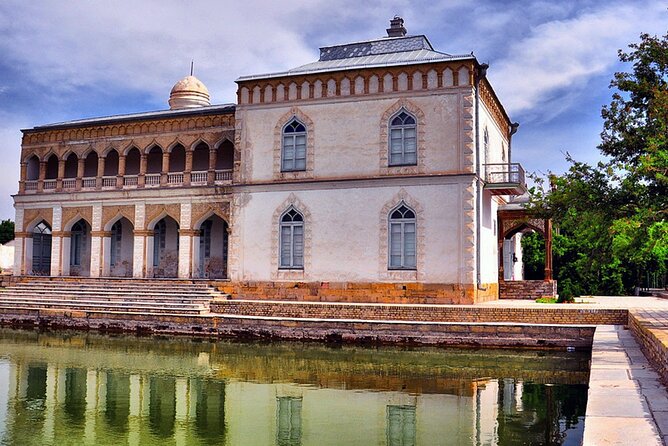
- Sitorai-Mokhi-Khosa, the Palace of Moon-like Stars
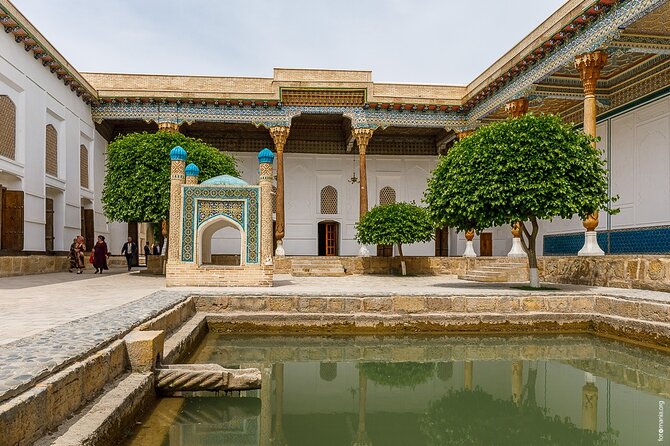
- Bakhautdin Naqsband Mausoleum and living devotion
- Chor-Bakr necropolis and Bukhara’s memory
- What the guide adds to the day
- Private transport makes the countryside easier
- Is $99 per person a fair price?
- Who will enjoy this Bukhara outing?
- Practical advice for a smoother visit
- Should you book the Bukhara countryside tour?
- FAQ
- How long does the Bukhara countryside tour last?
- What sites are included?
- Is transportation included?
- Are entrance tickets included?
- Are lunch and photography included?
- Can I cancel for a full refund?
Key points to know before booking
- Three major stops beyond central Bukhara: Visit Sitorai-Mokhi-Khosa Palace, Bakhautdin Naqsband Mausoleum, and Chor-Bakr necropolis.
- Private transport and pickup: Your group travels together, with pickup and drop-off included.
- A strong choice for history fans: The tour connects palace life, Sufi practice, dynastic memory, and local pilgrimage.
- Guides praised for patience: Shakhnoza is noted for clear explanations and helpful food recommendations, while Bekhruz is praised for his local knowledge.
- Admission tickets are included: You do not pay separate entrance fees for the three main monuments.
- Plan for small extra costs: Photography and video fees are paid at museum entrances, and lunch costs $10 per person if added.
Why leave Bukhara’s old town?
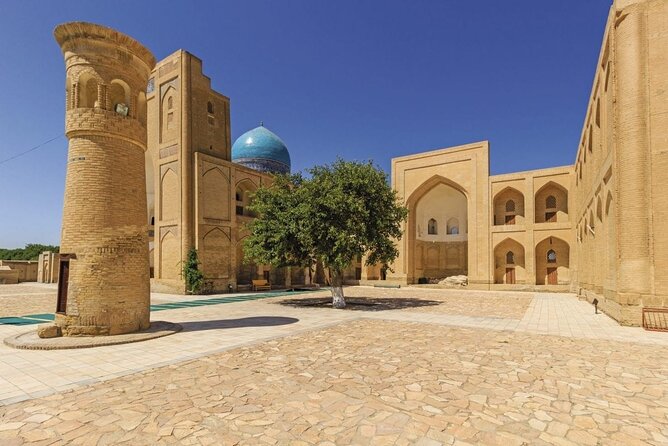
Bukhara’s center can easily fill your day. Its mosques, madrassas, domes, and lanes reward slow wandering, so it is tempting to stay close to the old town and call it enough. I think this outing makes sense when you have extra time and want to see how Bukhara’s past extends into the surrounding area.
The three sites offer a useful contrast. Sitorai-Mokhi-Khosa shows the tastes of the ruling court. Bakhautdin Naqsband Mausoleum introduces one of the most important Sufi traditions linked to Bukhara. Chor-Bakr turns the focus toward burial, remembrance, and pilgrimage.
That range is the real value. You are not simply visiting three old buildings. You are moving between royal life, religious devotion, and local memory. The guide’s role matters here because the meaning of each place is not always obvious from its walls alone.
You can book the experience for your own group, rather than joining a larger shared party. That gives you room to ask questions and control the pace within the time available. It is also a practical choice if you prefer not to work out transport to three sites outside town.
A few more options to weigh up in Bukhara
- Best of Bukhara: All Day Private Old Town Tour
★ 5.0 · 66 reviews - Best of Bukhara: All Day Private Old Town Tour
★ 4.9 · 62 reviews - City Tour Around Bukhara
★ 5.0 · 55 reviews
Sitorai-Mokhi-Khosa, the Palace of Moon-like Stars
The first stop is Sitorai-Mokhi-Khosa, whose name means Palace, like the stars and the moon, also rendered as Palace of Moon-like Stars. The name was given by Muzaffar-Khan in memory of his deceased beloved wife, which adds a personal note to what might otherwise seem like a formal royal residence.
You have about an hour here, and admission is included. That is enough time to hear the palace story from the guide, see the architecture, and take in the setting without turning the visit into a long museum session.
The palace represents a different side of Bukhara from the religious monuments in the old center. Here, the focus is on rulers, court life, and architectural taste. Your guide can help connect the building to the dynasties that shaped the region, rather than leaving you with only a name and a few photographs.
I would pay close attention to the contrast between the poetic name and the practical role of the building. Royal residences often tell you how power wanted to be seen. The title suggests beauty and romance, while the palace itself points to status, ceremony, and dynastic life.
The one-hour visit may feel short if you enjoy examining every architectural detail. Still, the fixed timing helps keep the whole tour within a manageable half day. Since your admission is already covered, you can focus on the visit rather than sorting out ticket costs at the entrance.
Photography and video may require a separate payment of $1 to $2 at the site. If taking pictures is important to you, keep small extra funds available instead of assuming every camera is covered by the tour price.
Bakhautdin Naqsband Mausoleum and living devotion
The second stop is the Bakhautdin Naqsband Mausoleum, dedicated to Bahá-ud-dín Shah an-Naqshband Muhammad al-Uwaysi al-Bukhárí. He founded what became one of the largest Sufi Sunni orders, the Naqshbandi order.
This visit shifts the mood from palace grandeur to religious memory. The site is not only an architectural stop. It is also connected to worship and pilgrimage, and you may see local pilgrims paying tribute to earlier generations and respected figures.
That detail gives the tour a human dimension. You are not looking at an abandoned monument with no present use. You are seeing a place that still matters to people from the region. Your guide can explain the religious and historical background, helping you understand why the mausoleum remains important.
You have roughly an hour here. That is a useful amount of time for listening, observing, and asking questions, but you should approach the stop with respect. This is a religious site, not just a sightseeing backdrop. Dress and behavior should be appropriate for the setting, although specific dress rules are not provided in the tour details.
For me, this is likely the most meaningful stop for anyone interested in faith and culture. The palace shows how rulers lived. The mausoleum shows how spiritual ideas continued to shape Bukhara and its people.
The tour description points to local pilgrims paying tribute to past dynasties and religious figures. That means your experience can include more than the guide’s explanation. You might also gain a sense of how historical figures remain part of daily religious life.
Chor-Bakr necropolis and Bukhara’s memory
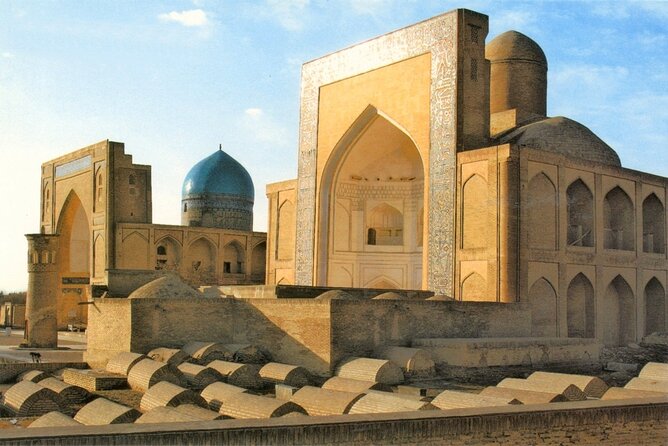
The final stop is the Chor-Bakr necropolis, a memorial complex built over the burial place of Abu-Bakr-Said. He died in the year 360 of the Muslim calendar and was one of four Abu-Bakrs described as descendants of Muhammad.
You have about an hour to explore the complex and learn why the site carries such importance. The word necropolis can sound formal, but the visit is really about remembrance, family lines, religious respect, and the way a community preserves its past.
This stop completes the tour’s story. Sitorai-Mokhi-Khosa presents courtly power. Bakhautdin Naqsband Mausoleum presents Sufi devotion. Chor-Bakr focuses on burial and inherited spiritual authority. Taken together, the three sites give you a broader picture of Bukhara than a palace visit or city walk alone.
The main drawback is that the supplied details do not describe the exact buildings, gardens, or facilities at Chor-Bakr. You should therefore book it for the historical and religious context, not because you expect a highly scripted attraction with a long list of modern visitor services.
A guide is particularly useful here. Names, dates, and religious connections can be difficult to follow without explanation. The site’s importance is tied to people and traditions, so a clear account adds far more than simply walking around the complex.
A completely different kind of day:
- Bukhara Full Day Old City Private Tour
★ 5.0 · 46 reviews - Yurt Camp Tour with Night from Bukhara
★ 3.8 · 35 reviews - All You Need To Know About Bukhara. A Walk In The Town
★ 4.9 · 31 reviews - One-Day Private Tour in the Old Town of Bukhara
★ 5.0 · 24 reviews
What the guide adds to the day
The guide may shape your experience more than any other part of the tour. Bekhruz is praised for knowing the area as a local and for drawing on a large store of information when presenting his hometown. That kind of local perspective is useful outside the central monuments, where context may be harder to find on your own.
Shakhnoza is also singled out for informative explanations and patience with questions and comments. That matters on a private tour because you can ask about details that interest you, instead of following a fixed speech meant for a mixed group.
She also offered a recommendation about where to eat. That is a small but practical benefit, especially if you add the optional lunch or want advice after returning to Bukhara.
The tour provider is Malika ST Tours. The information names a fully licensed guide, and the experience is private, meaning only your group participates. You should still confirm your preferred pickup time when booking, since the day is arranged around your group rather than a large public departure.
Private transport makes the countryside easier
Transport is included from pickup through drop-off. You only need to arrange a pickup time, which keeps the outing simple if you are staying in Bukhara and do not want to organize separate rides to each monument.
That convenience has real value. The sites are outside the main town area, and arranging transport independently could mean negotiating several fares or trying to coordinate taxis. With a private vehicle, you travel directly with your guide and keep the group together.
The experience lasts about three to five hours. The three visits are each planned for about an hour, with the remaining time allowing for transport between sites and the start and end of the tour. The exact total may depend on the pickup location and time spent moving between monuments.
You can request pickup, and the tour is near public transportation. Still, the included vehicle is the simpler choice for this route. Public transport may get you near some areas, but the tour’s main advantage is having one arranged ride for the complete circuit.
Most people can participate according to the supplied details. No special fitness requirement is stated, but the tour involves visiting three historic sites, so you should be comfortable spending several hours moving between monuments and walking around each stop.
Is $99 per person a fair price?
At $99 per person, the price includes private transportation, all taxes and fees, a licensed guide, and entrance tickets to all three monuments. You also receive pickup and drop-off, which makes the cost easier to justify than a simple admission-only excursion.
The value is strongest for two or more people who want a private outing. You are paying for more than access to the sites. You are paying for a vehicle, a guide who can explain religious and historical details, and the ability to visit places outside town without making your own transport plan.
Solo visitors may judge the price differently. If you are alone, $99 can feel substantial for a three to five-hour experience. In that case, the tour makes the most sense if you place high value on private service and expert explanation.
Group discounts are available, though no discount amount is given. Ask about the final rate for your group before booking. The optional lunch costs an extra $10 per person, and photography or video fees add $1 to $2 per site at museum entrances.
I would budget a little above the advertised price for those extras. You do not have to add lunch or pay for every type of image, but the small fees can add up across three stops.
Who will enjoy this Bukhara outing?
I recommend this tour most strongly if you have already seen the main sights in central Bukhara or have at least half a day to spare. It gives you a change of setting without demanding a full-day commitment.
History and architecture fans will find plenty to discuss. The palace, mausoleum, and necropolis each reveal a different part of Bukhara’s past, and the guide can connect those parts into a clear story.
It also suits anyone interested in religion and local customs. The Naqshbandi connection and the possibility of seeing pilgrims pay tribute make this more than an architecture-only trip.
Families and small groups may appreciate the private format because you can ask questions without worrying about strangers in the group. The tour is also a good choice if you prefer having transport handled for you.
I would hesitate if your Bukhara schedule is very short and you have not yet seen the central old town. The city itself deserves time, and this countryside outing works best as an addition rather than a replacement for the main urban sights.
I would also avoid booking it solely for dramatic scenery. The main draw is the monuments, religious meaning, and local connection. The available details do not promise a scenic nature excursion or a long rural drive.
Practical advice for a smoother visit
Book at least a day ahead if possible. The experience is often reserved about 24 days in advance on average, which suggests that leaving it until the last minute may not give you your preferred date or guide.
Ask for the pickup time that fits your schedule, and leave enough room around the three to five-hour estimate. Since each site receives about an hour, rushing between other appointments could make the day feel tight.
Carry money for the optional costs. Photo and video fees are paid directly at museum entrances and run $1 to $2 per site. Lunch is not included, but it can be added for $10 per person.
If weather becomes poor, the experience may be canceled. In that case, you are offered another date or a full refund. Standard cancellation allows a full refund when you cancel at least 24 hours before the start time. Changes or cancellations inside that window are not accepted for a refund.
The tour has received six five-star ratings, with praise focused on local insight, clear explanations, patience, warm service, and the chance to visit places outside Bukhara. Those are the qualities I would use to judge the experience, because they directly affect how much meaning you get from each monument.
Should you book the Bukhara countryside tour?
Book it if you want to see Bukhara beyond its famous central streets, prefer private transport, and enjoy having historical and religious context explained as you go. The strongest reasons are the three very different sites, the included admissions, and guides such as Shakhnoza and Bekhruz, who are praised for clarity and local understanding.
Skip it if your time in Bukhara is too short for the old town or if you want a long rural excursion filled with food and scenery. At $99 per person, it is a good-value private half-day for people who care about context and convenience, but less attractive if you only want a quick monument visit.
For most visitors with an extra half day, I would book it. It gives you a respectful look at royal Bukhara, Sufi Bukhara, and the Bukhara remembered through its burial places, all without the transport headache.
FAQ
How long does the Bukhara countryside tour last?
The tour lasts approximately three to five hours. Each of the three listed stops is planned for about one hour, with the remaining time used for transport and pickup or drop-off.
What sites are included?
The tour visits Sitorai-Mokhi-Khosa, also called the Palace of Moon-like Stars, Bakhautdin Naqsband Mausoleum, and the Chor-Bakr necropolis.
Is transportation included?
Yes. Private transportation, pickup, and drop-off are included. You need to arrange a pickup time when booking.
Are entrance tickets included?
Yes. Entrance tickets to all monuments, along with all fees and taxes, are included in the tour price.
Are lunch and photography included?
Lunch is not included, but it can be added for $10 per person. Photo and video fees are also separate and cost $1 to $2 per site, paid directly at the museum entrance.
Can I cancel for a full refund?
Yes, if you cancel at least 24 hours before the experience start time. Cancellations or changes made less than 24 hours before the start time are not refunded, while poor-weather cancellations offer a different date or a full refund.
Just added in Bukhara
- Yurt Camp & Aydarkul Adventure from Bukhara★ 5.0 · 1 review
- Private Tour in 3 top Places Outside of Bukhara City★ 5.0 · 2 reviews
- Full-Day Private Guided Tour to Islamic 7 Saints of Bukhara★ 4.5 · 3 reviews
- Nurata Mountain & Kyzyl-kum Desert 3 Day Tour From Samarkand or Bukhara★ 5.0 · 1 review
- Bukhara: Tour Outside of Old Town. Guide with Transportation★ 5.0 · 2 reviews
- Discover Bukhara One Day Group Experience★ 4.5 · 2 reviews
- Bukhara Hammam Bathhouse with Massage★ 5.0 · 2 reviews
- Bukhara Old City Walking Tour★ 5.0 · 1 review
Bukhara Tours, compared.
All You Need To Know About Bukhara. A Walk In The Town
Read our review →
Bukhara Historical City Highlights Guided Walking Tour
Read our review →

Browse the lists this tour appears in