
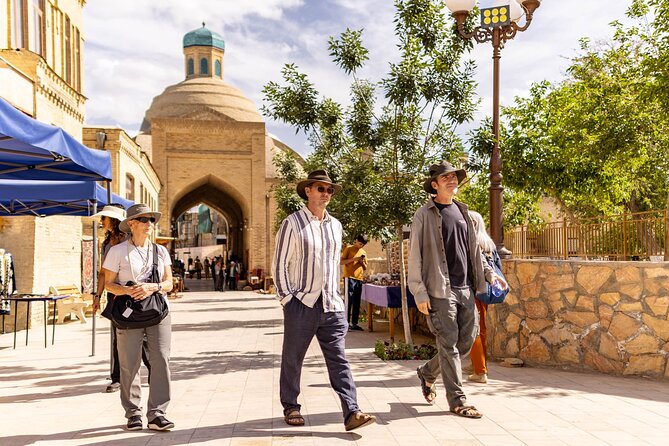
Review · FULL-DAY
Best of Bukhara: All Day Private Old Town Tour
Bukhara rewards slow-looking. This private Old Town tour brings the city’s mosques, madrasas, trading domes, fortress, and Jewish quarter into one well-filled day, with a local guide to explain what you are seeing. I especially like the one-to-one format, which lets you ask questions and adjust the pace, and the chance to see both famous monuments and working craft shops. The main caution is cost: at $65 per person, entrance fees are extra, and the long walking route can feel packed.
The guides are the real strength. Names praised by past customers include Shakhnoza, Shaxnoza, Behrouza, Malika, Nargiz, Gulnaz, Shehnaz, and Shaherzat. I also like that the tour can move beyond tiles and photographs into Uzbek textiles, carpets, metalwork, miniature painting, food advice, and Bukhara’s Jewish heritage. Just confirm the start time and meeting plan carefully, since a few visitors experienced confusion over schedule changes or the number of people booked.
In This Review
- Key points to know before booking
- Why this private Bukhara tour works well
- Lyab-i-Hauz and the old center
- The Kalon Minaret and Poi Kalyan complex
- Bolo Hauz Mosque and the Ark fortress
- Trading domes, crafts, and useful souvenirs
- Ulugbek and Abdulaziz-Khan madrasas
- Bukhara’s Jewish quarter and synagogue
- Pace, transport, and the shape of the day
- Guides who add value
- Is $65 per person good value?
- Who should book this Old Town day?
- FAQ
- How long does the Best of Bukhara tour last?
- Is hotel pickup included?
- Is this a private tour?
- What entrance fees are included?
- Are the trading domes included?
- Can most people participate?
- Can I cancel for a full refund?
- Who operates the tour?
- Should you book it?
Key points to know before booking
- Thirteen major sights in one private route: You cover Lyab-i-Hauz, the Kalon complex, the Ark, trading domes, several madrasas, a synagogue, and more.
- A true walking tour after pickup: Hotel pickup is offered, but the first ride into the center may be by local taxi.
- Strong local guiding: Guides are praised for clear English, cultural insight, and the ability to adapt the route and pace.
- Only $6 in listed site and museum fees: That cost is separate from the $65 tour price, so budget for it.
- Good for history and architecture fans: The route links Bukhara’s religious, commercial, royal, and Jewish past.
- Shopping is part of the experience: Trading domes and artisan workshops add useful context to Uzbekistan’s famous crafts.
Why this private Bukhara tour works well
Bukhara’s Old Town is easy to admire and harder to understand. A blue-tiled dome may look impressive, but a guide helps you connect it to the Silk Road, Islamic education, royal power, Soviet-era religious life, and the city’s craft traditions.
That context is where this tour earns its keep. You are not simply moving from one photogenic building to the next. You can ask why a madrasa was built, how a trading dome worked, or what role a mosque still plays. The route also gives you a useful first orientation, which matters in an old city of lanes, courtyards, and monuments that can blur together after a few hours.
The private setup is especially helpful. If you are traveling with older family members, young adults, or someone who needs a slower pace, the guide can adjust the day. One guide even paid for a tuk-tuk when the group finished some distance from the starting point. Another added the Ismail Samani Mausoleum after a delayed train changed the schedule.
Do not expect a quiet museum-style visit. This is an active day on foot, with many stops and a lot of information. You will get the best value if you enjoy asking questions and looking closely rather than racing through a checklist.
A few more options to weigh up in Bukhara
- Best of Bukhara: All Day Private Old Town Tour
★ 4.9 · 62 reviews - City Tour Around Bukhara
★ 5.0 · 55 reviews - Bukhara Full Day Old City Private Tour
★ 5.0 · 46 reviews
Lyab-i-Hauz and the old center
The tour often begins at Lyab-i-Hauz, a central square built around a pond. The name means at the pond, and the setting gives you a pleasant introduction to Bukhara’s public life.
The architectural group dates from the sixteenth and seventeenth centuries. Here, you begin to see the city’s characteristic mix of brickwork, tiled decoration, religious buildings, shade, and open gathering space. The nearby monument to Hodja Nasreddin adds a lighter note. His bronze figure, installed in 1979, brings humor to a city otherwise filled with rulers, scholars, conquerors, and saints.
Nodir Devon Begi Madrasah is also part of this area. Built in 1622 and 1623, it first served as a caravanserai before becoming a madrasa. That change tells you something useful about Bukhara: religious buildings were also tied to travel, trade, lodging, and public life.
Maghak-i Attari Mosque is another important stop near Lyab-i-Hauz. It forms part of the same historic religious area and gives the guide a chance to explain how Bukhara’s sacred buildings developed over time. The entry fee is not included, so ask your guide which interiors are open and worth paying for on the day.
The Kalon Minaret and Poi Kalyan complex
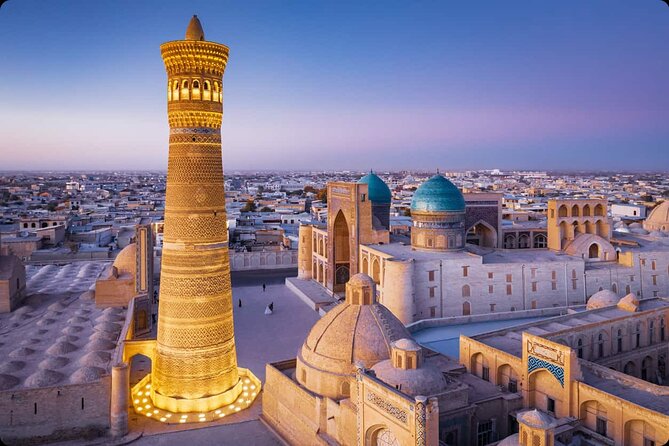
The Great Minaret of the Kalon is the visual anchor of the Old Town. Its tall brick shaft is one of Bukhara’s most recognizable sights, and it is hard to miss as you approach the surrounding complex.
The minaret belongs to the Poi Kalyan complex, which also includes the Kalyan Mosque and Mir-i-Arab Madrasa. Give yourself time here. The scale of the courtyard, the repeated arches, and the patterned tilework are best appreciated slowly, not during a quick photograph stop.
The minaret itself has an especially powerful presence because it rises above the lower Old Town. Your guide can help place it within Bukhara’s religious and civic story, rather than leaving it as an isolated monument. The minaret, mosque, and madrasa are linked, so seeing them together makes the architecture easier to read.
Mir-i-Arab Madrasa has a notable twentieth-century story. It was the only spiritual educational institution in the Soviet Union that resumed operation after the Second World War, and leading imams of the period studied there. That detail gives the building importance beyond its appearance. It also shows that religious education did not simply disappear during the Soviet period.
Entrance fees for the Kalon Minaret, Mir-i-Arab Madrasa, and Poi Kalyan Mosque are extra. The supplied cost for museums and historical sites is $6 per person, but it is sensible to clarify which interiors that amount covers before entering.
Bolo Hauz Mosque and the Ark fortress
Bolo Hauz Mosque sits opposite the Ark in the Registan area. Built in 1712, it is a useful contrast to the grander Poi Kalyan complex. The mosque is part of the UNESCO-listed historic center, along with other monuments in Bukhara.
You spend only about ten minutes here in the planned schedule, so this is mainly an exterior and orientation stop unless your guide changes the timing. Look closely at the columns and porch if access allows. The short visit makes sense in a day already crowded with major interiors, but architecture fans may want to ask for a few extra minutes.
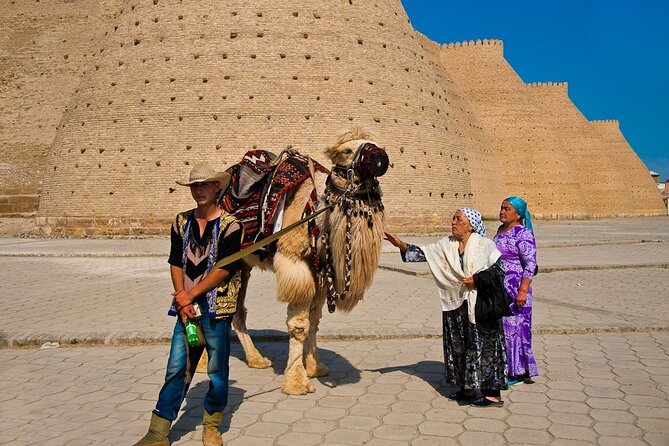
The Ark of Bukhara receives about an hour, and it deserves that time. This massive fortress was first built and occupied around the fifth century AD. It served as a center of power for rulers of Bukhara, and its walls make the old city’s political past feel more tangible.
The Ark is not a single decorative building. It is a fortified compound, and the visit helps you understand how authority operated from behind thick walls. Expect uneven surfaces and possible stairs inside historic sites. The guide can slow down when needed, which several customers found helpful after surgery, with walking problems, or while traveling with senior parents.
The Ark has an admission fee. Since this is one of the tour’s main paid sights, I would not skip it simply to save a small amount. The fortress adds the royal and military side of Bukhara to a route otherwise weighted toward mosques and madrasas.
A completely different kind of day:
- Yurt Camp Tour with Night from Bukhara
★ 3.8 · 35 reviews - All You Need To Know About Bukhara. A Walk In The Town
★ 4.9 · 31 reviews - One-Day Private Tour in the Old Town of Bukhara
★ 5.0 · 24 reviews - Bukharian Bath in Ancient Hammam with Massage
★ 4.4 · 19 reviews
Trading domes, crafts, and useful souvenirs
Bukhara once had a larger network of covered market structures. Four trading domes remain in the Old Town, positioned along a north to south route. Their nickname comes from their historic role as places where merchants traded goods, and their rounded roofs helped create recognizable market halls.
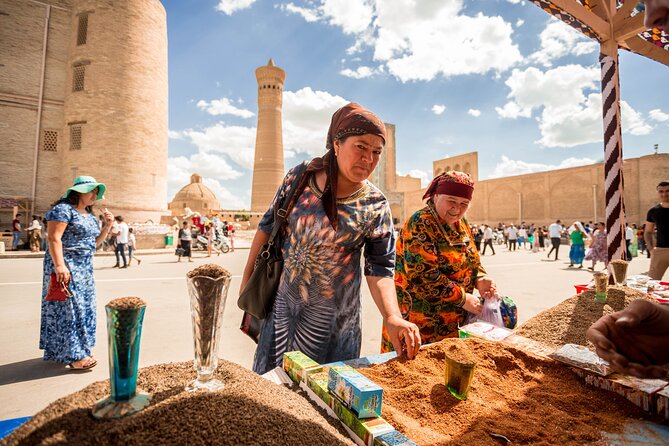
This is one of the most enjoyable sections if you like practical history. You can see where commerce took place while browsing carpets, spices, textiles, and other Uzbek goods. The setting gives you a better sense of how Bukhara worked as a major stop on long-distance trade routes.
The tour description specifically highlights hand-woven textiles, and past customers also visited workshops for carpet weaving, metal carving, and miniature painting. These stops may depend on your interests and the guide’s choices, so tell your guide early if you want craft demonstrations rather than more monument interiors.
Shopping can be pleasant here, but it is still shopping. Prices are not included, and the tour does not promise a fixed number of workshops. I would use the guide’s advice to compare goods and learn what you are buying, not assume that every item is a bargain.
Ulugbek and Abdulaziz-Khan madrasas
The Ulugbek Madrasa was completed in 1420 and is tied to Ulugbek, a ruler and scholar known for supporting science and education. Its exterior tiles, fluted dome, stained windows, and old tombs give you several details to look for beyond the main facade.
The Abdulaziz-Khan Madrasa provides a later architectural comparison. Ulugbek’s first madrasa in Bukhara was built in 1417, and the paired sites help show how madrasa design and decoration changed over time.
This is where a strong guide matters most. Without explanation, two madrasas can become a parade of portals and tile patterns. With a clear account of who commissioned them, what they were used for, and how their designs differ, the buildings become far easier to remember.
Both sites list entrance fees as extra. If you are trying to control spending, ask your guide which madrasa interiors offer the most for your interests. If you love architecture, paying for several interiors may be worthwhile. If you mainly want an orientation to the city, the exterior explanations may be enough.
Bukhara’s Jewish quarter and synagogue
The synagogue adds a needed change of subject. Bukhara is often presented through Islamic monuments, but its Jewish heritage is part of the city’s story too.
The route includes the old Jewish quarter and Bukhara Synagogue. One account describes a synagogue dating to the sixteenth century, while the supplied tour details simply identify the building as a place of Jewish worship. Your guide can provide the historical background and explain how Jewish and Muslim communities lived alongside one another.
This stop is brief at about twenty minutes, yet it can be one of the most memorable. It broadens your view of Bukhara and keeps the day from becoming only a sequence of grand religious monuments.
The synagogue has no separate included admission listed, so confirm the current entry arrangement with your guide. Access to religious sites can change, and respectful clothing and behavior are appropriate.
Pace, transport, and the shape of the day
The advertised duration is about five to seven hours. In practice, the route can take roughly half a day or close to six hours, depending on walking speed, interior visits, questions, shopping, and schedule changes.
Pickup is offered from central hotels. The experience then becomes a walking tour through the Old Town. Past customers describe using a local taxi for the initial ride to the center, so do not picture a private vehicle carrying you from monument to monument.
That arrangement is sensible. Bukhara is best seen on foot, and the pedestrian-friendly roads and old lanes are part of the experience. Still, this is a lot of ground. Wear supportive shoes, bring water, and expect pauses rather than a smooth ride between attractions.
The private format lets you request a slower pace. It has worked well for families with seniors and for people recovering from back surgery. Most people can participate, but the route includes historic buildings where stairs or uneven ground may occur. Share mobility concerns when booking rather than waiting until the day begins.
Clear communication also matters. There were isolated mix-ups over a changed start time and the number of people expected. Confirm the meeting time, hotel pickup, group size, and whether a taxi is needed before setting out.
Guides who add value
The strongest part of this experience is the personal guide. Shakhnoza and Shaxnoza are praised for clear English, local knowledge, friendly manner, and good pacing. Behrouza is noted for strong English, detailed explanations, and the ability to add artisan workshops when requested.
Malika is described as a Bukhara native who answered questions about local history with ease. Nargiz met a customer promptly and arranged a tuk-tuk at the end. Gulnaz, Shehnaz, and Shaherzat also received praise for their warmth, flexibility, and ability to make the city easier to understand.
These details matter because a private tour depends heavily on the individual guide. You are paying for interpretation, not only transport or admission. Ask questions about daily life, crafts, food, religion, and current culture. Several guides also offer advice on where to eat and where to shop, which can save you time later.
The guide can also help you decide what to prioritize. On a packed route, that is more useful than forcing every stop to receive equal attention.
Is $65 per person good value?
At $65 per person, this is not the cheapest way to walk around Bukhara. You also pay about $6 per person for museums and historical sites, with shopping and any food separate.
I still see good value for a couple or small private group that wants a serious introduction in one day. You receive hotel pickup from central hotels, a professional local guide, a private route, photo opportunities, and access to thirteen listed sights. The guide’s local advice and ability to adjust the pace add value that a self-guided walk does not provide.
The price is harder to justify if you have several days in Bukhara, prefer wandering alone, or plan to enter only a few buildings. You could see many exteriors independently. The tour makes most sense when your time is limited and you want the city’s religious, commercial, royal, and Jewish history explained in a connected way.
Group discounts may be available, which could improve the price for larger parties. Ask before booking rather than assuming the per-person rate changes automatically.
Who should book this Old Town day?
I would choose this tour if you have one full day in Bukhara and want an organized introduction without joining a large group. It suits first-time visitors, history fans, architecture lovers, families, and anyone who values direct access to a local guide.
It is also a good match if you want help with crafts and shopping. The trading domes, textiles, carpet work, metal carving, and miniature painting can be difficult to understand on your own.
I would hesitate if you dislike long walks, have no interest in religious architecture, or want a loose day with only two or three stops. The route is full, and even a friendly guide cannot make thirteen sights feel leisurely.
Free cancellation is available until 24 hours before the local start time. Inside that window, the payment is not refunded and changes are not accepted.
FAQ
How long does the Best of Bukhara tour last?
The tour lasts approximately five to seven hours. The exact length can depend on walking pace, questions, interior visits, and time spent at the various sights.
Is hotel pickup included?
Pickup is offered from central hotels. The walking portion begins in the Old Town, and the initial transfer may use a local taxi.
Is this a private tour?
Yes. Only your group participates, and the experience is led by a private professional local guide.
What entrance fees are included?
The tour price does not include entrance fees. Museum and historical site admission is listed as $6 per person.
Are the trading domes included?
The trading domes are part of the route, and admission is listed as free. Items you choose to buy are not included.
Can most people participate?
The experience states that most people can participate. Because the route covers historic buildings and walking streets, tell the provider in advance about mobility concerns or a need for a slower pace.
Can I cancel for a full refund?
You can cancel for a full refund at least 24 hours before the experience start time. Cancellations or changes made within 24 hours are not refunded or accepted.
Who operates the tour?
The experience provider is GM TOURS.
Should you book it?
Book this tour if you want Bukhara explained, not merely photographed. The combination of the Ark, Kalon complex, trading domes, madrasas, crafts, and synagogue gives you a strong view of the city in one day, while the private format lets you shape the pace.
Before paying, confirm your start time, pickup details, expected walking distance, and the $6 admission cost. If those terms suit you, the tour offers a practical and personal way to get your bearings and understand why Bukhara deserves more than a quick stop.
Just added in Bukhara
- Yurt Camp & Aydarkul Adventure from Bukhara★ 5.0 · 1 review
- Private Tour in 3 top Places Outside of Bukhara City★ 5.0 · 2 reviews
- Full-Day Private Guided Tour to Islamic 7 Saints of Bukhara★ 4.5 · 3 reviews
- Nurata Mountain & Kyzyl-kum Desert 3 Day Tour From Samarkand or Bukhara★ 5.0 · 1 review
- Bukhara Hammam Bathhouse with Massage★ 5.0 · 2 reviews
- Bukhara: Tour Outside of Old Town. Guide with Transportation★ 5.0 · 2 reviews
- Discover Bukhara One Day Group Experience★ 4.5 · 2 reviews
- Bukhara Old City Walking Tour★ 5.0 · 1 review
Full-Day, compared.
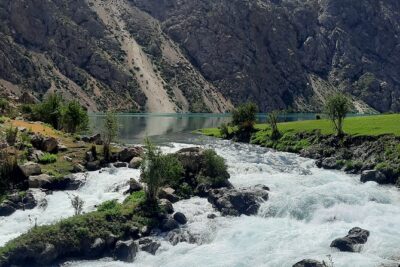
Full Day Private Tour in Seven Lakes from Samarkand
Read our review →
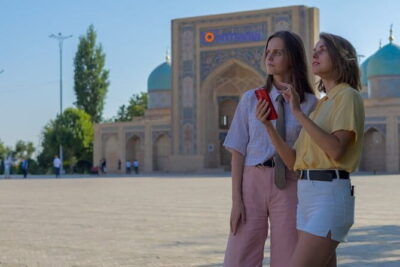
Tashkent Private Full-Day City Tour on a Premium Car
Read our review →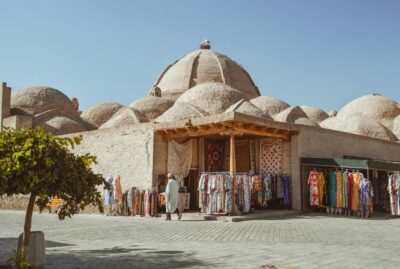
Full-Day Private Guided Tour to Islamic 7 Saints of Bukhara
Read our review →
Browse the lists this tour appears in