
Review · KHIVA AND URGENCH TOURS
Guided tour around Khiva
Khiva rewards slow walking. This four to five-hour tour makes the old city easier to read, pairing major monuments with personal stories, local customs, and lesser-known corners. I especially like the small-group format for up to 10 people and the chance to shape the route around your interests.
I also like that the guide, Makhfirat Arziyeva, contacts you ahead of time and can prepare around your questions. Her English explanations cover architecture, legends, history, and even old coins, according to the detailed feedback provided. The main drawback is the long walking time, with entrance tickets and food charged separately.
In This Review
- Key points to know before booking
- Why a guided walk helps in Khiva
- Starting at Deshan Kala and Ota Darvoza
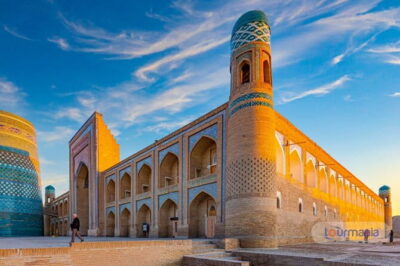
- Mukhammad Aminkhan Madrasah and the Blue Tower
- Kunya Ark and Mukhammad Rakhimkhan II
- Oq Masjid Mennonite Museum and Juma Mosque
- Mukhammad Amin Inoq Madrasah and Tosh Hovli Palace
- Caravan Sarai and Allaqulikhan Madrasah
- Palvan Darvoza, Islam Khodja, and the new school
- Workshops where Khiva’s craft traditions continue
- What $90 means for value
- Who will enjoy this Khiva walk most
- Should you book this Khiva tour?
- FAQ
- Where does the Khiva walking tour start?
- Where does the tour end?
- How long does the walking tour last?
- What language is the tour offered in?
- How much does the tour cost?
- Are entrance tickets included?
- Is food included?
- What should I bring?
- What clothing is recommended?
- Can I cancel for a full refund?
Key points to know before booking
- A four to five-hour walk through Khiva’s main sights: The route covers gates, palaces, madrasahs, mosques, minarets, museums, and workshops.
- Makhfirat Arziyeva leads in English: She is praised for careful planning, clear timing, and adapting the experience to personal interests.
- The $90 price covers the whole group: Up to 10 people can join, which can make the cost very good value for families or friends.
- Entrance tickets are not included: You keep control over what you enter, but you should budget beyond the tour price.
- Dress rules matter: Bring a scarf, wear clothing below the knee, and be ready to cover your head at two locations.
- A good first look at Khiva: The route gives you the city’s broad story before you return to explore favorite places at your own pace.
Why a guided walk helps in Khiva
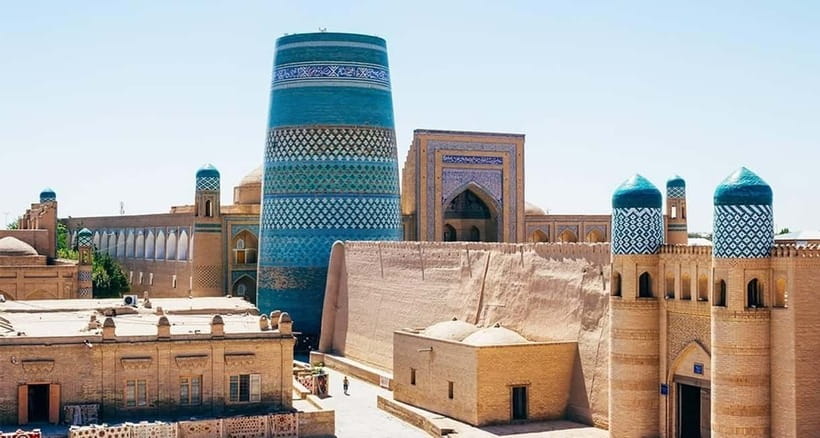
Khiva is compact, but its monuments can blur together when you see them without context. A tall minaret, a tiled madrasah, and a palace courtyard may look impressive on their own, yet a good guide helps you understand how they fit into the city’s religious, royal, commercial, and everyday life.
That is the real value here. You are not simply moving from one photogenic building to the next. Makhfirat can explain the stories and legends connected with the monuments, point out architectural details, and answer questions as they come up. One especially useful detail from the feedback is her attention to specific interests, including architecture and ancient coins.
The tour also includes places where daily craft and local culture remain visible. A stop at the woodcarvers’ workshops and silk carpet workshop gives the route a human scale. You see more than grand buildings. You get a look at skills that help explain why Khiva feels like a living town rather than an outdoor museum.
The tradeoff is time. Four to five hours on foot is a serious morning or afternoon, especially in warm weather. You will want comfortable shoes, water, and a realistic attitude toward the pace. The schedule is flexible, but this is still a full walking tour.
A few more options to weigh up in Khiva and Urgench
- Khiva: Historical City Highlights Guided Walking Tour
★ 4.8 · 156 reviews - Transfer: Bukhara – Khiva via Ancient Fortresses
★ 4.5 · 101 reviews - Daytrip From Khiva To Ancient Fortresses
★ 4.6 · 60 reviews
Starting at Deshan Kala and Ota Darvoza
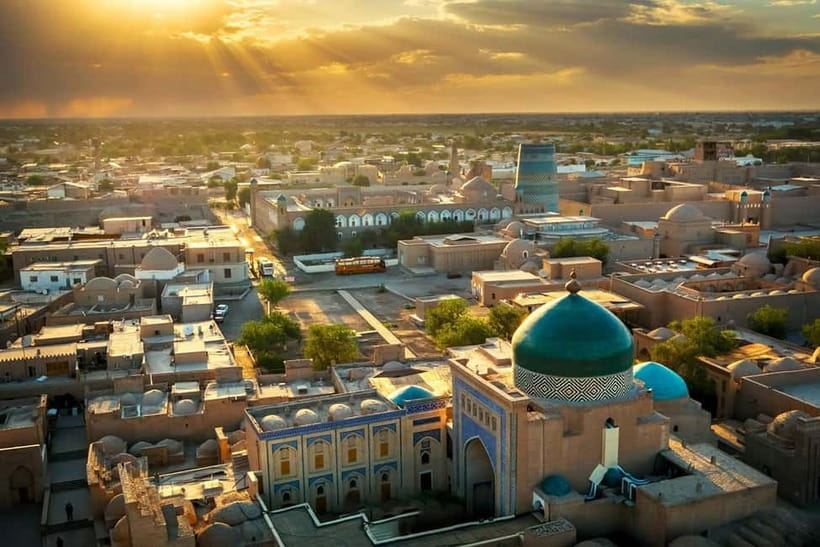
The meeting point is beside the ticket office, and the tour begins with Deshan Kala and Ota Darvoza Gate. These opening stops help you understand Khiva as a fortified settlement, not just a cluster of famous buildings inside the old town.
Deshan Kala refers to the outer part of the city. Beginning here gives you a wider frame before the route moves into the monuments that most people associate with Khiva. Ota Darvoza Gate then provides a natural entrance point and a useful place to discuss movement through the city.
I like this kind of start because it avoids rushing straight to the most photographed sight. You begin with the city’s structure, gates, and sense of enclosure. Ask Makhfirat to explain how the outer and inner areas relate, especially if you are interested in urban design or defensive architecture.
The ticket office meeting point should make the start fairly simple, but confirm the exact time and location when you book. At the end, the activity returns to the same meeting point, so you will not need to arrange a separate finish location.
Mukhammad Aminkhan Madrasah and the Blue Tower
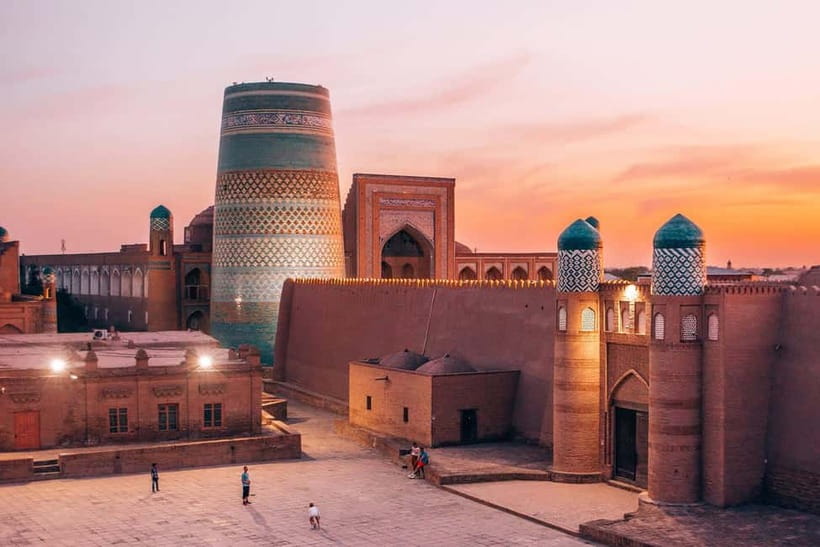
The Mukhammad Aminkhan Madrasah introduces the decorated religious architecture that defines much of central Khiva. The Blue Tower adds a strong visual marker, and this section of the route is likely to be one of the most rewarding for anyone who enjoys tilework, proportions, and Islamic design.
Your guide’s role matters here. A short explanation can help you notice why a madrasah was built, how its rooms were arranged, and how decoration was used to give a building status. Without that context, you may simply see blue tile and a grand facade.
The itinerary then includes the Palvan Qari complex, another opportunity to compare different religious and educational buildings. The advantage of seeing several sites with one guide is that you can ask for contrasts. Which details are typical of Khiva? Which ones are unusual? Which places served worship, study, lodging, or administration?
Because the group can be kept small, questions should be easier than on a large coach excursion. That is especially useful when you want more than a memorized list of dates.
Kunya Ark and Mukhammad Rakhimkhan II
Kunya Ark Palace is one of the major stops, and it gives the tour a royal dimension. The name refers to the old citadel, a place associated with the ruling court and the practical business of governing.
A palace visit can become a blur of courtyards and walls unless someone explains how the spaces worked. Here, ask about the relationship between public areas, private quarters, official functions, and the ruler’s household. The itinerary also includes the Mukhammad Rakhimkhan II Madrasah, allowing you to compare a royal complex with a religious school.
This pairing is valuable because it shows two sides of authority in Khiva. The palace represents political power. The madrasah reflects religious learning and public architectural patronage. The buildings may be close together, but their purposes were different.
Keep in mind that entrance fees are not included in the $90 group price. This gives you some choice, but it also means the final cost depends on which sites you enter. Ask Makhfirat early in the walk which admission tickets are needed and how much time each paid site deserves.
A completely different kind of day:
- Khiva Historical City Highlights Guided Walking Tour
★ 5.0 · 30 reviews - Aral Sea Adventures (2 day)
★ 5.0 · 30 reviews - Guided Tour To Old Fortresses
★ 5.0 · 25 reviews - Private Daytrip to 7 Ancient Fortresses of Khorezm
★ 5.0 · 25 reviews
Oq Masjid Mennonite Museum and Juma Mosque
The Museum of Oq Masjid Mennonites adds a different thread to the tour. It moves beyond the familiar story of rulers, mosques, and madrasahs, showing that Khiva’s past also includes minority communities and cultural connections that are easy to miss.
This is one of the itinerary’s more unusual choices. If you want a broader picture of the city, it is worth giving this stop proper attention rather than treating it as a quick aside. Ask questions about the Mennonite presence and the building’s museum role, staying mindful that the supplied information does not specify how extensive the exhibits are.
Juma Mosque then brings you back to one of Khiva’s major religious buildings. A mosque is not only a place for photographs. Its layout, columns, lighting, and sense of space can tell you how worshippers used it and what local builders valued.
The tour description stresses that exhibits should not be touched and that noise is not allowed. That is simple advice, but important in museums and historic religious sites. A scarf is required, and women must cover their heads at two locations on the route.
Mukhammad Amin Inoq Madrasah and Tosh Hovli Palace
The Mukhammad Amin Inoq Madrasah continues the architectural story, while Tosh Hovli Palace shifts the mood back to royal life. Tosh Hovli means stone courtyard, and the palace is known for its enclosed courtyards and decorated rooms.
Here, I would pay close attention to how the route moves between public monuments and palace interiors. A madrasah can suggest education and religious life. A palace reveals ceremony, residence, hierarchy, and the private side of power.
The Harem is included as part of the palace visit. This is a place where guide interpretation is particularly useful, since palace spaces often attract oversimplified stories. Makhfirat can help keep the explanation grounded in what the building tells us, rather than turning it into a string of dramatic legends.
The itinerary includes legends as well as historical information, so you can ask where a story comes from and how it relates to the physical site. That kind of question often produces a more interesting conversation than simply asking for another date.
Caravan Sarai and Allaqulikhan Madrasah
The Caravan Sarai and the Allaqulikhan Madrasah bring trade and education into the picture. A caravan sarai served the needs of merchants and long-distance travel, making it a useful reminder that Khiva was connected to wider routes across Central Asia.
You can expect the guide to connect the buildings with commerce, lodging, religion, and the movement of goods. The route does not treat Khiva as an isolated royal town. It shows a place shaped by people arriving, trading, studying, praying, and making their homes.
The Allaqulikhan Madrasah gives another chance to compare the city’s educational buildings. Seeing several madrasahs in one walk may sound repetitive on paper, but the guide’s commentary can make the differences clearer. If architecture interests you, tell Makhfirat at the start. The schedule is described as flexible, and the tour can be adjusted to your preferences.
This is also a good point to think about food. Local cuisine and cultural encounters are part of the stated experience, but food is not included. You should treat that as an opportunity to choose what suits you, not as a promised meal built into the price.
Palvan Darvoza, Islam Khodja, and the new school
Palvan Darvoza Gate marks another important passage through the city. Gates help explain Khiva’s physical organization, and seeing more than one gives you a better sense of how people entered and moved through the fortified center.
The Minaret of Islam Khodja is likely to be one of the visual highlights. Its height and shape make it easy to recognize, but the guide can add meaning by explaining its connection with the nearby Islam Khodja Madrasah. The two should be considered together rather than as isolated monuments.
The New Method School adds a useful contrast. It points to changing ideas about education and modernity, showing that Khiva’s story did not stop with medieval or early royal architecture. This is the sort of stop that helps keep the tour from becoming a parade of old walls.
You should expect some walking between these sites, and the route may feel long by the final hour. Wear modest clothing that extends beyond the knee. The guidance specifically recommends skirts or shorts below the knee for comfort and respect, and two locations require women to cover their heads.
Workshops where Khiva’s craft traditions continue
The woodcarvers’ workshops and silk carpet workshop give the final part of the tour a practical, hands-on feel, even though the supplied information does not promise a demonstration or purchase.
These stops matter because craft makes the city easier to understand. Carved wood and hand-made carpets are not just souvenirs. They reflect patience, design, materials, and skills passed through local working traditions.
You can ask how the patterns are made, how long a piece takes, and what separates ordinary work from fine work. Since the itinerary allows questions, this is a good place to slow down and focus on the people behind the objects.
Be respectful in the workshops. The general rules prohibit touching exhibits, making noise, littering, smoking indoors, and feeding animals. Pets are not allowed, except assistance dogs. The list also bans weapons, sharp objects, alcohol, drugs, fireworks, explosives, and fire, so this is clearly a controlled cultural visit rather than a casual open-market stop.
What $90 means for value
The price is $90 per group of up to 10 people. For one person, that is a costly private experience. For two people, it is still a substantial fee, but the cost becomes much more reasonable as your group grows.
At the full group limit, the guide fee works out to $9 per person before tickets and food. That is strong value for a private, English-language walk lasting four to five hours, especially if you care about personal questions and a flexible route.
The price includes an expert local guide, tailored storytelling, access to less familiar places, and the chance to shape the itinerary. It does not include admission tickets or food. You should compare the total cost with your interests. If you mainly want photographs from the streets, you may not need this much guided time. If you want to understand the buildings and connect them into a story, the fee makes more sense.
The reserve-now, pay-later option also helps if your Central Asia schedule is still changing. Cancellation is free up to 24 hours before the tour, which gives you a practical safety net.
Who will enjoy this Khiva walk most
I would recommend this tour to first-time visitors who want a clear introduction to Khiva without joining a large group. It suits people who enjoy architecture, local stories, religious buildings, palace history, and traditional craft.
It is also a good match for families or friends who can share the $90 price. The small group limit allows you to keep the conversation focused, and the flexible plan should help if one person cares more about coins while another prefers buildings or local customs.
You should think twice if you dislike long walks, cannot manage four to five hours on foot, or want every entrance fee and meal included. The route is packed with stops, and the experience depends on your willingness to walk, listen, ask questions, and follow site rules.
English is the stated language. The tour is not suitable for people over 95 years old. Bring a scarf, dress below the knee, and avoid tight or ripped clothing. Bare feet, intoxication, alcoholic drinks in a vehicle, smoking indoors, and touching exhibits are not permitted.
Should you book this Khiva tour?
I would book it if you want Khiva explained rather than simply photographed. Makhfirat Arziyeva receives especially strong praise for advance preparation, careful timing, clear English, and adapting the tour to personal interests. Those qualities matter in a city with this many monuments.
The best value comes with several people sharing the $90 group rate. Confirm the likely entrance costs, wear practical modest clothing, and reserve enough energy for a full half-day of walking. If that sounds right for you, this is a thoughtful first introduction to Khiva, with enough flexibility to feel personal rather than mechanical.
FAQ
Where does the Khiva walking tour start?
The guide will meet you next to the ticket office.
Where does the tour end?
The activity ends back at the meeting point.
How long does the walking tour last?
The tour lasts approximately four to five hours.
What language is the tour offered in?
The tour is offered in English.
How much does the tour cost?
The price is $90 per group of up to 10 people.
Are entrance tickets included?
No. Entrance tickets are not included.
Is food included?
No. Food is not included, so you can choose your own dining experiences.
What should I bring?
Bring a scarf. Women should be prepared to cover their heads at two locations.
What clothing is recommended?
Wear skirts or shorts that extend beyond the knee for comfort and respect. Tight and ripped clothing is not allowed.
Can I cancel for a full refund?
Yes. You can cancel up to 24 hours in advance for a full refund.
Just added in Khiva and Urgench
- Urgench Airport / Railway Station – Khiva Transfer★ 3.0 · 2 reviews
- Traditional Khiva Cooking Class with Market Visit & Lunch★ 5.0 · 4 reviews
- Uzbekistan 6 Days Private Tour Khiva-Bukhara-Samarkand by Train★ 5.0 · 4 reviews
- Transfer From Khiva To Bukhara★ 5.0 · 2 reviews
- Old Khiva Stories with Your Local Guide★ 5.0 · 5 reviews
- Day Trip Top 3 Fortresses departure from Khiva Self-Guided Tour★ 5.0 · 2 reviews
- Plov Tour : Taste, Tradition & History of Plov with a local guide★ 5.0 · 1 review
- Master Class – Uzbek Bread (Khiva)★ 3.5 · 4 reviews
Khiva and Urgench Tours, compared.
Transfer: Bukhara – Khiva via Ancient Fortresses
Read our review →
Khiva Historical City Highlights Guided Walking Tour
Read our review →
Private Daytrip to 7 Ancient Fortresses of Khorezm
Read our review →
Browse the lists this tour appears in