
Review · EVENING EXPERIENCES
A Night In The Kyzylkum Desert [2] From Khiva
The desert night is only half the story. This private two-day trip links Khiva with Nukus, Muynak, the Aral Sea ship cemetery, and seven ancient fortresses scattered across Karakalpakstan. I like the unusual mix of modern environmental tragedy and ancient desert archaeology, and I like that you sleep in a yurt near Ayaz Kala rather than returning to town. The main drawback is the amount of driving. You will cover a lot of ground, and the schedule may feel rushed at some stops.
I also like the chance to see daily life in the desert, including camels walking near local homes and the possibility of tasting camel milk. The yurt stay includes dinner and breakfast for an extra $50 per day, but museum and fortress admission costs are also separate, so the advertised price is not the complete cost.
In This Review
- Key points to know before booking
- Why this trip is different from a standard Khiva excursion
- Chilpiq Qala, a 2,200-year-old Zoroastrian monument
- The Savitsky Museum in Nukus
- Muynak and the Aral Sea ship cemetery
- Sleeping beside Ayaz Kala
- Ayaz Kala and the first fortress views
- Toprak Kala, once a royal center
- Guldursun Qala and Kyzyl Kala
- Koi Krylgan Kala and Angka Kala
- The final stop near Itchan Kala
- Transport, pace, and group size
- Who should book this experience?
- Should you book the Kyzylkum Desert night?
- FAQ
- How much does the private tour cost?
- What does the tour price include?
- Are museum and fortress admission fees included?
- What time does the tour start?
- Where does the overnight stay take place?
- What age and fitness level are required?
- Can I cancel for a full refund?
Key points to know before booking
![A Night In The Kyzylkum Desert [2] From Khiva - Key points to know before booking](https://l8.uzbekistanexplorer.com/wp-content/uploads/a-night-in-the-kyzylkum-desert-2-from-khiva-1.jpg)
- The Aral Sea story is personal and visible: Muynak’s ship cemetery shows how a major inland sea disappeared within living memory.
- Seven fortresses fill the second day: Ayaz Kala, Toprak Kala, Guldursun Qala, Kyzyl Kala, Koi Krylgan Kala, Angka Kala, and Duman Kala near Itchan Kala.
- The overnight stay is extra: A yurt, dinner, and breakfast cost $50 per day, on top of the $499 private tour price.
- You get a private vehicle: The price covers up to three people, air conditioning, private transport, pickup, and drop-off.
- This is a long road trip: The experience suits people who value rare sights more than a relaxed pace.
- The desert night is the emotional high point: With little around you, the stars and quiet become part of the experience.
Why this trip is different from a standard Khiva excursion
![A Night In The Kyzylkum Desert [2] From Khiva - Why this trip is different from a standard Khiva excursion](https://l8.uzbekistanexplorer.com/wp-content/uploads/a-night-in-the-kyzylkum-desert-2-from-khiva-2.jpg)
Khiva is one of Uzbekistan’s great historic cities, but this trip takes you far beyond its tiled walls. You head into Karakalpakstan, a region with its own traditions, strong desert identity, and some of Central Asia’s most striking archaeological sites.
The experience brings together three very different subjects. You see the remains of ancient Khorezm, learn about the Aral Sea disaster, and spend a night in a traditional yurt near Ayaz Kala. That combination gives the trip its value. Many excursions offer ruins or museums. This one connects archaeology, ecology, and living desert culture in a single route.
The tour costs $499 per private group of up to three people. For one person, that is expensive. Split among three, it becomes much more reasonable for a private, air-conditioned vehicle covering this much territory. Pickup is offered from Khiva or Nukus, with drop-off in Khiva or Urgench, which can also help you fit the trip into a wider Uzbekistan route.
The price includes the driver, private transport, air conditioning, and an audio guide. It does not include the yurt stay, meals, museum tickets, or most fortress admission fees. Plan for the $50 yurt supplement, plus about $10 for the Savitsky Museum, $7 for the Muynak museum, and roughly $2 per fortress where an admission charge applies.
A few more options to weigh up in Khiva and Urgench
- Khiva: Historical City Highlights Guided Walking Tour
★ 4.8 · 156 reviews - Transfer: Bukhara – Khiva via Ancient Fortresses
★ 4.5 · 101 reviews - Daytrip From Khiva To Ancient Fortresses
★ 4.6 · 60 reviews
Chilpiq Qala, a 2,200-year-old Zoroastrian monument
The first stop is Chilpiq Qala, also called Shilpiq or Chilpak Kala. This round, roofless Zoroastrian funerary tower is more than 2,200 years old. It rises about 15 meters and measures roughly 65 meters across, sitting high above the surrounding desert.
You have around 30 minutes here. That is enough to see the circular form and take in the broad setting, but not enough for a slow archaeological study. Admission is not included, so keep small entrance fees in mind.
What makes Chilpiq useful as a first stop is its age and purpose. It is not simply another ruined fortress. As a dakhma, it belonged to an ancient Zoroastrian funerary tradition. The open top and isolated position help you understand how sharply local beliefs shaped the architecture.
The Savitsky Museum in Nukus
Nukus is home to the State Museum of Art named after I. V. Savitsky, one of the most unexpected cultural stops in Uzbekistan. You have about an hour inside, with admission listed at $10.
The museum is closely tied to Igor Savitsky and his effort to preserve a major collection of Russian and Central Asian art. Its importance comes partly from the quality and range of the works, and partly from its location. You are not visiting a small provincial display. This is a serious museum in a remote regional capital.
An hour lets you see the main collection, but you will need to keep moving. If modern art is not your interest, the stop may feel less essential than the fortresses. Still, I would not dismiss it. The museum gives you a look at a side of Uzbekistan that ancient walls and desert ruins cannot provide.
Admission is extra, and the $10 fee should be included in your planning. If your group has strong museum interests, you may want to ask how much time can be spent here before setting out for Muynak.
Muynak and the Aral Sea ship cemetery
![A Night In The Kyzylkum Desert [2] From Khiva - Muynak and the Aral Sea ship cemetery](https://l8.uzbekistanexplorer.com/wp-content/uploads/a-night-in-the-kyzylkum-desert-2-from-khiva-4.jpg)
The road then reaches Muynak, a former port on the Aral Sea. The Regional History and Aral Sea Museum takes about 30 minutes and costs $7. It provides local context before you see the famous ships.
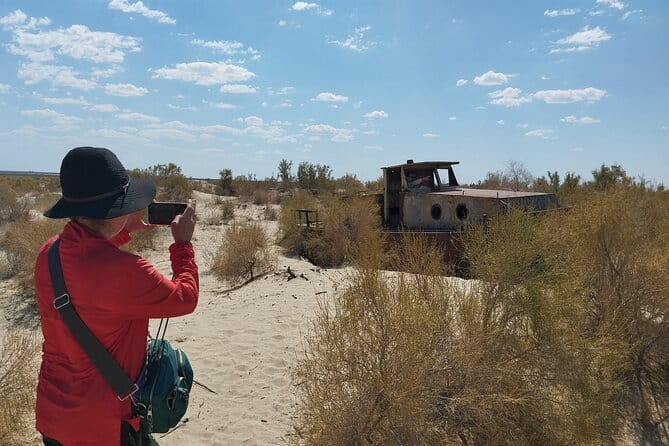
The Ships Cemetery is free and also lasts about 30 minutes. Rusting vessels sit far from the water that once supported Muynak’s fishing economy. The sight is stark because the change happened within a single human lifetime. This is not an abstract environmental lesson. The abandoned ships make the loss physical and easy to grasp.
I value this part of the trip because it adds weight to the rest of the journey. Ancient fortresses can feel safely removed from modern life. Muynak reminds you that places can change quickly when water systems and human decisions collide.
Do not expect a seaside visit. The ship cemetery is a memorial to a vanished shoreline, not a beach or working harbor. The museum and cemetery visits are both fairly short, so the main challenge is the long drive required to reach them.
A completely different kind of day:
- Khiva Historical City Highlights Guided Walking Tour
★ 5.0 · 30 reviews - Aral Sea Adventures (2 day)
★ 5.0 · 30 reviews - Private Daytrip to 7 Ancient Fortresses of Khorezm
★ 5.0 · 25 reviews - Guided Tour To Old Fortresses
★ 5.0 · 25 reviews
Sleeping beside Ayaz Kala
![A Night In The Kyzylkum Desert [2] From Khiva - Sleeping beside Ayaz Kala](https://l8.uzbekistanexplorer.com/wp-content/uploads/a-night-in-the-kyzylkum-desert-2-from-khiva-5.jpg)
The yurt night is the trip’s most memorable feature for many people. Your accommodation is in the Kyzylkum Desert near Ayaz Kala, with dinner and breakfast available for $50 per day.
This is not a luxury hotel moved into the desert. The appeal is the setting and the chance to experience a traditional form of accommodation linked to nomadic life in Central Asia. Camels may walk around the area, and local families may offer camel milk. Those details give the overnight stay a human scale that a quick photo stop cannot match.
At night, the open desert provides the setting for stargazing. With little around you, the sky becomes the entertainment. The quiet is part of the experience too, although you should choose this trip because you enjoy simple accommodation and remote places, not because you expect resort comforts.
The yurt cost is separate from the $499 tour price. Dinner and breakfast are included in the $50 daily yurt charge according to the supplied details, so confirm the exact arrangement when booking. Since the tour requires moderate physical fitness, bring practical clothing and shoes for uneven ground around the ruins and desert camp.
Ayaz Kala and the first fortress views
![A Night In The Kyzylkum Desert [2] From Khiva - Ayaz Kala and the first fortress views](https://l8.uzbekistanexplorer.com/wp-content/uploads/a-night-in-the-kyzylkum-desert-2-from-khiva-6.jpg)
Day two begins at Ayaz Kala, an archaeological site built between the fourth century BCE and the seventh century CE. The ruins sit on a hill overlooking the Kyzylkum Desert, giving you both an archaeological visit and a broad view across the dry surroundings.
You have about an hour here, and admission is listed as free. This is likely to be one of the day’s strongest stops because the setting makes the defensive purpose easy to picture. From above, the fortification feels connected to the open desert rather than separated from it.
The hilltop position also means you should expect some walking and uneven surfaces. The experience is not difficult for most people with moderate fitness, but it is not a stroll across a paved museum floor. Take water, protect yourself from the sun, and wear shoes with a firm sole.
Toprak Kala, once a royal center
![A Night In The Kyzylkum Desert [2] From Khiva - Toprak Kala, once a royal center](https://l8.uzbekistanexplorer.com/wp-content/uploads/a-night-in-the-kyzylkum-desert-2-from-khiva-7.jpg)
Toprak Kala receives about 30 minutes, with admission not included. The site dates to the Kushan period, around the second and third centuries CE, when it served as a royal residence for the kings of Khorezm.
Its importance comes from the change in scale and function. You are not only looking at a defensive outpost. Toprak Kala was connected to royal power and administration, and it later served as a royal sanctuary before being abandoned for a time.
Half an hour gives you a focused visit. You can appreciate the plan and surviving walls, but you will not have time to study every detail. This is one reason the audio guide matters. Since the driver takes you between the locations, the audio commentary can help fill in the gaps while the stops themselves remain short.
Guldursun Qala and Kyzyl Kala
![A Night In The Kyzylkum Desert [2] From Khiva - Guldursun Qala and Kyzyl Kala](https://l8.uzbekistanexplorer.com/wp-content/uploads/a-night-in-the-kyzylkum-desert-2-from-khiva-8.jpg)
Guldursun Qala is a fortified town with exterior walls and towers dating to the 12th century. Archaeological work found pottery, bronze objects, and coins inside the site. You have 30 minutes, and admission is free.
The short stop works well if you want to compare defensive structures across different eras. Guldursun is not presented as a single-period ruin. The remains point to a settlement with a long and complicated life, and the objects found there help show that this was more than an empty military shell.
Kyzyl Kala takes another 30 minutes. Its first construction dates from the Late Antique period, roughly the first to fourth centuries CE. It was later abandoned and rebuilt in the 12th and 13th centuries, shortly before the Mongol invasions. Admission is not included.
The repeated rebuilding is the main reason to pay attention here. Kyzyl Kala shows that these fortresses were not frozen in one historical moment. Communities repaired, changed, and reused them as political conditions shifted.
Koi Krylgan Kala and Angka Kala
Koi Krylgan Kala sits outside the village of Taza-Kel’timinar in the Ellikqala District. The stop lasts about 30 minutes and is listed as free.
Its unusual name and isolated archaeological setting make it one of the more distinctive stops, but you should know that the visit is brief. The value lies in seeing another site within the wider Khorezm network, not in expecting a fully reconstructed monument with extensive visitor facilities.
Angka Kala is also allotted 30 minutes and is listed as free. The settlement dates to the first through third centuries and again to the 10th through 12th centuries. It lies about 22 kilometers north of Turtkul and has an almost square plan with relatively well-preserved fortifications.
Angka Kala may appeal to you if you enjoy reading ruins as a plan rather than looking for grand decoration. The square form and visible defenses help you see how settlements were organized. As with the other sites, the absence of long exploration time means you should listen carefully to the audio guide and stay aware of the schedule.
The final stop near Itchan Kala
The itinerary ends with a 20-minute visit to Duman Kala, described as having three connected sections: a square western enclosure with corner towers, a smaller square citadel, and a northern enclosure with an irregular four-sided plan. The site is listed as free.
This is a very short final stop after a full day of ruins. You may find it useful as a last comparison point, but do not expect an extended visit. The name Itchan Kala can also cause confusion because most people know it as Khiva’s famous walled inner city. Here, the supplied route specifically refers to Duman Kala and its separate defensive sections.
The trip then returns you to Khiva or Urgench, depending on the arrangement. Because the route starts from Khiva or Nukus and ends in Khiva or Urgench, confirm your pickup and drop-off points before paying.
Transport, pace, and group size
This is a private tour for your group only, with a maximum of three people. That matters on a route with so many stops. You can ask questions, control small breaks, and avoid being tied to a large bus group, although the overall route still has a fixed structure.
The air-conditioned vehicle is an important inclusion. Karakalpakstan and the Kyzylkum Desert require long road transfers, and air conditioning makes a real difference. The driver handles the route while the audio guide provides information at the sites.
The supplied schedule gives stop lengths but not total driving times. That uncertainty is worth addressing before departure. The combination of Khiva, Nukus, Muynak, and seven archaeological sites means you should prepare for substantial time on the road.
A start at 8:00 a.m. helps fit the route together. You need moderate physical fitness, and the minimum age is seven. Children who handle long drives and outdoor ruins well may enjoy the variety, but this is not an easygoing family sightseeing day.
Free cancellation is available if you cancel at least 24 hours before the local start time. Changes or cancellations inside that window are not accepted for a refund.
Who should book this experience?
I would recommend it most strongly to someone who has already seen Khiva’s old city and wants a more demanding regional trip. It is especially good for people interested in archaeology, desert life, the Aral Sea crisis, and unusual museums.
The trip is also a good fit for a couple or small family that can split the $499 cost. For one person, the price is harder to justify unless the private format and unusual route are exactly what you want.
I would think twice if you dislike long drives, simple overnight accommodation, or short visits at multiple ruins. You may prefer to spend more time in Nukus, Muynak, or Khiva rather than trying to cover all these sites in two days.
Should you book the Kyzylkum Desert night?
Book it if you want an ambitious, story-filled trip rather than a restful desert break. The combination of the Aral Sea ship cemetery, the Savitsky Museum, ancient Khorezm fortresses, camel culture, and a starry yurt night is unusual and hard to recreate independently.
Before booking, confirm the total supplement for the yurt, meals, museum tickets, and fortress fees. Also confirm the exact pickup and drop-off plan, since the route can begin in Khiva or Nukus and end in Khiva or Urgench.
For the right person, this is more than a collection of ruins. It is a close look at how people lived, ruled, traveled, and adapted in a demanding part of Central Asia. The pace is the price you pay for seeing so much.
FAQ
How much does the private tour cost?
The tour costs $499 per private group of up to three people. The yurt overnight stay, dinner, and breakfast cost an additional $50 per day.
What does the tour price include?
The price includes an audio guide, driver, hotel pickup from Khiva or Nukus, drop-off in Khiva or Urgench, an air-conditioned vehicle, and private transportation.
Are museum and fortress admission fees included?
No. The Savitsky Museum costs $10, the Muynak museum costs $7, and fortress admission is around $2 at sites where a fee applies.
What time does the tour start?
The scheduled start time is 8:00 a.m.
Where does the overnight stay take place?
The overnight stay is in a yurt in the Kyzylkum Desert near Ayaz Kala.
What age and fitness level are required?
The youngest age accommodated is seven years old. Participants should have a moderate level of physical fitness.
Can I cancel for a full refund?
Yes, if you cancel at least 24 hours before the experience start time. Cancellations or changes made less than 24 hours before the start time are not refunded.
Just added in Khiva and Urgench
- Urgench Airport / Railway Station – Khiva Transfer★ 3.0 · 2 reviews
- Traditional Khiva Cooking Class with Market Visit & Lunch★ 5.0 · 4 reviews
- Uzbekistan 6 Days Private Tour Khiva-Bukhara-Samarkand by Train★ 5.0 · 4 reviews
- Transfer From Khiva To Bukhara★ 5.0 · 2 reviews
- Old Khiva Stories with Your Local Guide★ 5.0 · 5 reviews
- Day Trip Top 3 Fortresses departure from Khiva Self-Guided Tour★ 5.0 · 2 reviews
- Plov Tour : Taste, Tradition & History of Plov with a local guide★ 5.0 · 1 review
- Master Class – Uzbek Bread (Khiva)★ 3.5 · 4 reviews
Evening Experiences, compared.
From Khiva To Aral Sea 2-Days One Night In Yurt Stay
Read our review →
Tashkent city Night Tour with Dinner & Free Pro Photography
Read our review →
Samarkand Moonlight Tour: A Timeless Night Experience
Read our review →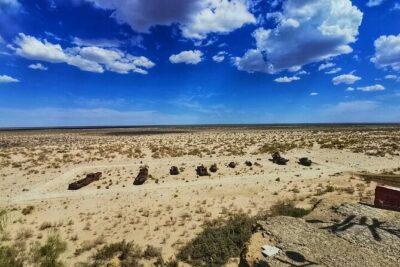
Experience a Breathtaking Sunset at Aral Sea with Friendly People
Read our review →Browse the lists this tour appears in