
Review · FOOD AND DRINK TOURS IN TASHKENT
Tashkent Wine Tasting & Ceramics Workshop Experience
Wine and pottery make a fine Uzbek pairing. This two-hour experience in Tashkent Province brings together five locally made wines, traditional snacks, and a hands-on ceramics lesson led by a local artisan. I like the easy mix of tasting and making, and I like the open conversations about Uzbek customs, superstitions, and wine production. The main consideration is that glazing and coloring your ceramic piece cost extra, so the $90 price does not cover every possible finishing touch.
The meeting point is simple: the entrance to Navruz Park beside the Big Ferris wheel. You will meet your guide there, then settle into a private session with plenty of room for questions and conversation. Guides can speak English, Russian, Polish, and Uzbek, and non-drinkers can request non-alcoholic drinks in advance.
In This Review
- Key points to know before booking
- Why wine and pottery work so well together
- Starting with Uzbek wine and local snacks
- The stories behind the glasses
- Making your own ceramic piece with an artisan
- A relaxed two-hour format, with a practical meeting point
- Is $90 a fair price?
- Who will enjoy this experience most?
- The human side of the experience
- What to clarify before you go
- Should you book the Tashkent wine and ceramics workshop?
- FAQ
- How long does the Tashkent wine tasting and ceramics workshop last?
- How much does the experience cost?
- Where is the meeting point?
- What does the price include?
- Are glazing and coloring included?
- Can non-drinkers join?
- Who is not suitable for this activity?
Key points to know before booking
- Five Uzbek wines in one sitting: Expect a selection that can include full reds and crisp whites, with explanations of local wine-making traditions.
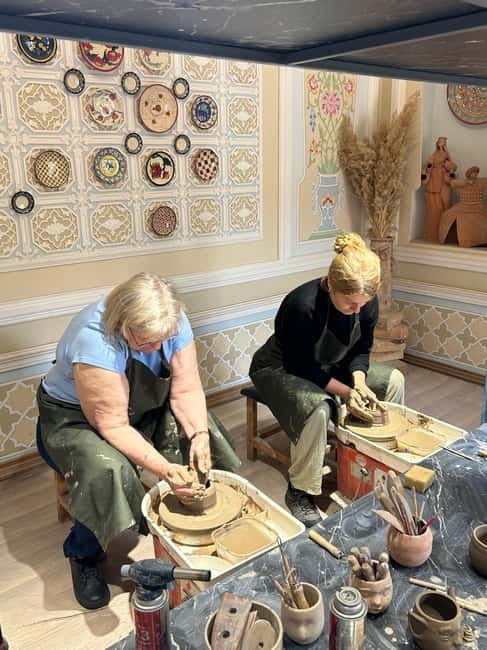
- A real piece made by your hands: You choose what to shape, such as a plate, vase, or another small ceramic object.
- Jusuf and Julia bring personal stories: Their approach includes history, food, customs, and frank comparisons between Uzbek life and your own.
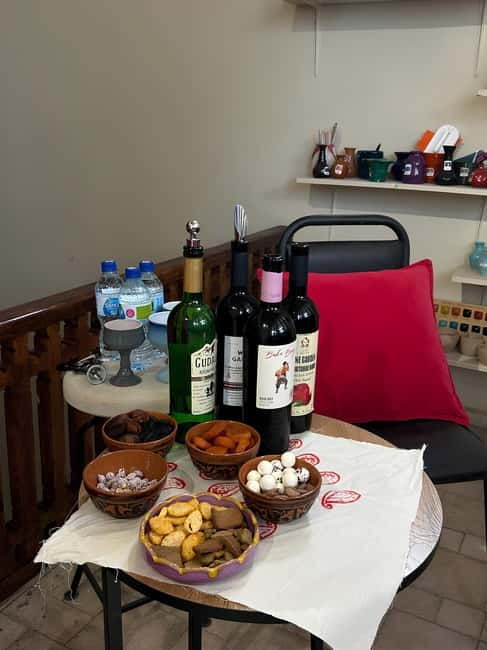
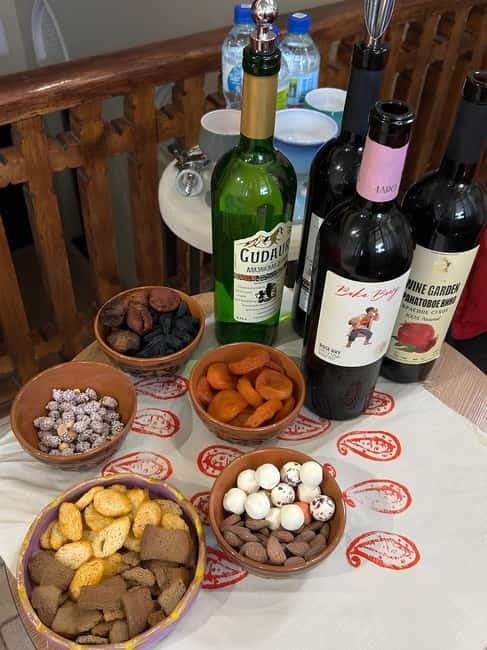
- Traditional snacks are part of the tasting: Dried fruit, nuts, and cheese balls help make the wine session feel like a social Uzbek table rather than a formal pour-and-sip event.
- The private format suits curious adults: Two hours can feel relaxed and personal, though you should budget extra if you want glazing or coloring.
- The location is central and easy to find: Look for the guide near the Navruz Park entrance and Big Ferris wheel.
Why wine and pottery work so well together
Many cultural activities ask you to listen. This one asks you to listen, taste, touch, and make something. That change of pace matters. You begin with conversation around the table, then move into a workshop where your hands take over.
The wine portion gives the experience its social start. You are not simply handed a glass and left to guess what you are tasting. Each wine comes with context about Uzbekistan’s wine-making traditions, including the curious question of how wine developed in a Muslim-majority country. That topic opens the door to a wider discussion about custom, faith, food, and daily life without turning the session into a lecture.
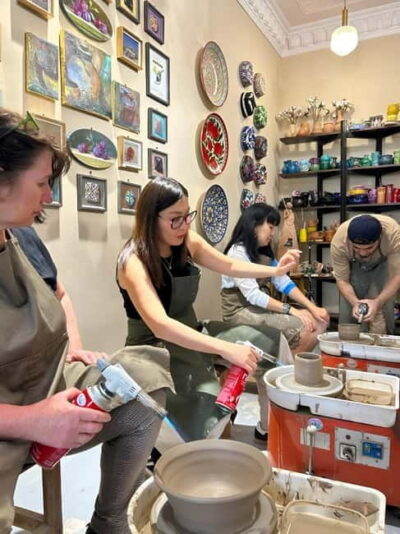
The pottery portion then gives you something concrete to do. If your hand-building skills are rusty, that is no problem. The artisan provides close help, and one participant managed to finish a pot quickly with a little guidance. You do not need to arrive with a plan for a perfect vase. The pleasure is in shaping something that carries the marks of your own hands.
More Food and Drink Tours in Tashkent
- Tashkent: Uzbek Culture, Food, Crafts & Pottery Masterclass
★ 5.0 · 24 reviews - Tashkent Vegan Street Food Tour
★ 5.0 · 22 reviews - Tashkent Walking & Food Tour: Highlights + Local Flavors
★ 5.0 · 18 reviews
Starting with Uzbek wine and local snacks
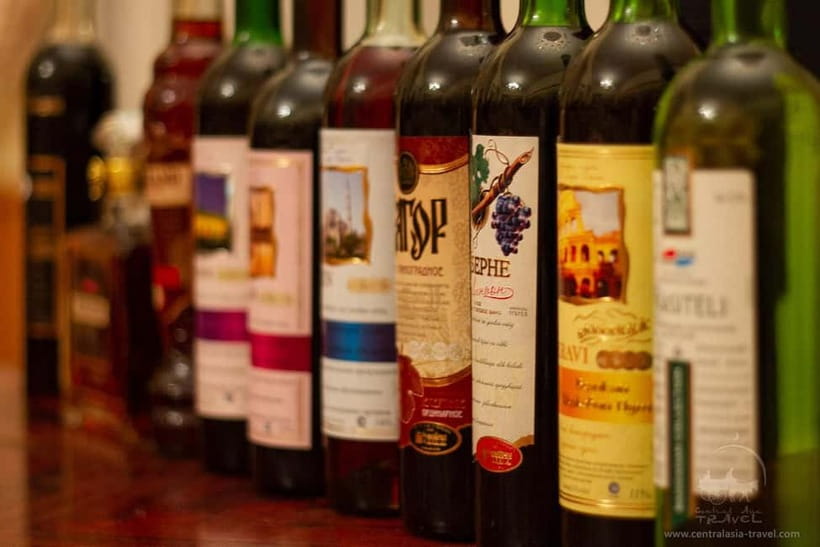
The tasting begins with a selection of Uzbek wines, including reds and whites. The exact bottles are not specified in advance, so you should treat the tasting as a chance to sample local production rather than a fixed professional wine flight with named vintages.
That is part of the appeal. Uzbekistan is not usually the first place people name when discussing wine, and the session gives you a useful introduction without assuming specialist knowledge. Jusuf has explained the background of Uzbek wine-making in a thoughtful way, including the cultural setting that makes the subject especially interesting.
The snacks help keep the tasting informal. Expect items such as dried fruits, nuts, and cheese balls. Julia has presented the food with direct explanations rather than dressing it up with grand claims. That plain approach is valuable: you get a better sense of what you are eating and how the flavors fit with the wines.
I would not book this for a serious sommelier lesson. The experience is more about place, people, and curiosity than tasting scores or technical vocabulary. If you want to learn how a local drink fits into Uzbek culture, though, the format works well.
You can also join without drinking alcohol. Tell the provider in advance, and a selection of non-alcoholic beverages can be arranged. Pregnant women and anyone under 18 should not book, but non-drinkers who meet the age requirement are welcome.
The stories behind the glasses
The strongest part of the tasting is the conversation. Uzbek traditions and superstitions become topics at the table, and the discussion can move naturally between the wines and everyday customs.
This is where the private group format earns its keep. You can ask why a custom exists, compare it with something from home, or pause over a detail that catches your attention. A larger group would make that harder. The supplied experience is designed for a private group, so you should expect a more personal exchange rather than a scripted presentation delivered to a crowd.
The tone also appears to be relaxed and generous. One session continued beyond the planned two hours because the conversation was going so well. That is a pleasant bonus, but I would not count on extra time when planning the rest of your day. Keep the official two-hour schedule in mind.
If you are interested in Uzbekistan beyond monuments and photographs, this part may be the most useful. You hear how people talk about their own traditions, not just how those traditions appear in a museum caption. That kind of cultural exchange is usually worth more than another quick stop on a packed sightseeing route.
Making your own ceramic piece with an artisan
After the wine and snacks, you move to the ceramics workshop. A skilled Uzbek artisan guides you through traditional pottery methods and helps you turn a lump of clay into a usable or decorative object.
The information provided does not promise a specific pottery technique, kiln process, or finished shape. You can choose the general object you want to make, with examples including a delicate plate, a bold vase, or something entirely your own. The right attitude is to treat the piece as a personal souvenir, not a studio-quality commission.
That distinction matters. Handmade pottery is rarely perfect, and the small irregularities are exactly what show that you made it. The artisan’s help keeps the project from becoming frustrating, while still leaving you with a sense of ownership.
You should also note the finishing charge. Glazing and coloring are not included in the $90 price. Ask about the additional cost before you begin if the final appearance matters to you. As supplied, the experience includes the materials and the making session, but not every stage from raw clay to a fully finished, colored object.
For many people, an unglazed piece may still be a satisfying keepsake. It records the afternoon in a direct way. If you want a polished plate or a colored vase, plan for the extra payment and whatever additional handling the provider explains.
More craft workshops in Tashkent:
- Plov and Samsa Cooking Class in Tashkent
★ 4.3 · 6 reviews - Private Traditional Uzbek Cooking Class in a Lovely Tashkent Home
★ 4.5 · 2 reviews - Samarkand: Village Tour with Plov Cooking Class & Home Visit
★ 5.0 · 29 reviews - Samarkand: Uzbek Cooking Class in a Village Home
★ 5.0 · 22 reviews
A relaxed two-hour format, with a practical meeting point
The meeting point is at the entrance to Navruz Park, next to the Big Ferris wheel. This is a helpful landmark, especially if you are new to Tashkent and do not want to search for a small workshop on an unfamiliar side street.
Look for your guide near the entrance. Pick-up and drop-off are not included, though they can be arranged for an additional charge. That gives you a choice: meet at the stated point to keep costs down, or pay extra for a more door-to-door arrangement.
Two hours is enough for a focused introduction to both wine and pottery. It is not enough for a long winery visit, a full ceramics course, or a detailed historical seminar. I see that as a fair trade. You get a compact activity that fits neatly into a day in Tashkent, but you should not expect to master pottery or cover every chapter of Uzbek wine-making.
Starting times vary, so check availability when you book. The private group setup is especially useful for couples, friends, or families of adults who prefer conversation over a fixed group routine. The activity is not suitable for wheelchair users, so accessibility should be considered before booking.
Is $90 a fair price?
At $90 per person, this is not the cheapest way to spend two hours in Tashkent. You are paying for more than five samples of wine. The cost includes the guided tasting, snacks, pottery materials, artisan instruction, cultural discussion, and a private group setting.
I consider the price reasonable if you value personal contact and want to make something yourself. A standard tasting can give you drinks and information, but this experience adds a tangible souvenir and a second activity. The combination makes the price easier to justify, particularly for someone who would otherwise pay separately for a cultural workshop and a food or drink experience.
The value drops if you only care about wine. The session is not presented as a formal wine qualification course, and the exact wine list is not fixed in the information provided. It also drops slightly if you expect every pottery stage to be included. Remember that glazing and coloring cost extra, and transport is also outside the base price.
The flexible booking terms help. You can reserve now and pay later, and cancellation is free up to 24 hours in advance for a full refund. Those terms are useful when your Tashkent schedule is still changing.
Who will enjoy this experience most?
I would recommend it first to adults who want a social cultural activity rather than a standard city tour. Couples and small private groups should appreciate the chance to talk freely, taste local products, and make an object together.
It is also a good match for curious food and craft enthusiasts. You do not need prior pottery experience, wine expertise, or artistic confidence. The artisan’s guidance is there to keep the activity approachable, and the finished piece does not need to look perfect to have value.
This may suit a solo participant too, provided the private booking arrangement works for your plans. The conversation is a major part of the experience, so you should be comfortable asking questions and comparing customs.
I would skip it if you are pregnant, under 18, or use a wheelchair. I would also choose another activity if you want a long, technical wine tasting or a full-day ceramics course. The compact format favors variety and conversation over specialist depth.
The human side of the experience
The warmth of the hosting is central to the appeal. Jusuf has shared the background of Uzbek wine-making, while Julia has helped explain the snacks and food customs. Their roles make the session feel like an afternoon with local friends, not simply a transaction.
That personal quality also makes the discussion more memorable. Comparing Uzbek customs with your own can reveal small differences that formal sightseeing rarely shows. You may learn as much from an offhand story about a superstition as from the planned material.
There is some useful honesty in the way the food and drinks are presented. You are encouraged to taste, ask, and decide what you like. Nothing here requires you to pretend that every wine or snack is your favorite.
The activity has received two five-star ratings, with particular praise for discovery, enjoyment, cultural learning, and value. That matches the structure: the experience gives you several ways to engage, and if one part is not your passion, the other parts help carry the afternoon.
What to clarify before you go
A few questions are worth settling before the session begins:
- Ask about the extra charge for glazing and coloring.
- Confirm whether you want pick-up or drop-off and what that will cost.
- Tell the provider in advance if you want non-alcoholic beverages.
- Check the available start time and allow for the full two-hour schedule.
- Confirm the meeting point at Navruz Park, beside the Big Ferris wheel.
- If you hope to take home a finished colored object, ask how and when that will be handled.
These are small matters, but they prevent surprises. The base experience is clear, while the final pottery treatment and transport require separate planning.
Should you book the Tashkent wine and ceramics workshop?
Book it if you want a personal, hands-on introduction to Uzbek culture and like the idea of leaving with something you made yourself. The wine tasting, dried fruit, nuts, and cheese balls create an easy opening, while the pottery gives the experience a practical second half.
I would especially choose it for a free afternoon in Tashkent when you want something more social than sightseeing but more substantial than a quick tasting. The private format, multilingual guides, and relaxed conversation add real value.
Think twice if your main goal is advanced wine study, fully finished pottery, or a wheelchair-accessible activity. Also budget for optional glazing, coloring, and transport. For the right adult audience, though, this is a distinctive two-hour experience that links Uzbek wine, craft, food, and personal stories in a memorable way.
FAQ
How long does the Tashkent wine tasting and ceramics workshop last?
The experience lasts two hours. Starting times vary, so check availability when booking.
How much does the experience cost?
The listed price is $90 per person.
Where is the meeting point?
Meet your guide at the entrance to Navruz Park, next to the Big Ferris wheel.
What does the price include?
The price includes a guided Uzbek wine tasting, locally produced wines, traditional snacks, a hands-on ceramics workshop, pottery materials, artisan guidance, and discussions about Uzbek culture and traditions.
Are glazing and coloring included?
No. Glazing and coloring cost extra.
Can non-drinkers join?
Yes. Non-drinkers are welcome if they request non-alcoholic beverages in advance.
Who is not suitable for this activity?
The experience is not suitable for pregnant women, wheelchair users, or children under 18.
More Food Tours in Tashkent
- With John Private Tashkent city & Food tour
★ 5.0 · 13 reviews - Food tour in Tashkent
★ 4.7 · 7 reviews - Ten Bites Adventure Food Tour in Tashkent
★ 5.0 · 6 reviews - Food tour in Tashkent
★ 5.0 · 5 reviews
Just added in Tashkent
- Uzbekistan and Tajikistan 9-Day Tour★ 5.0 · 1 review
- Tashkent International Airport (TAS) to Tashkent – Arrival Private Transfer★ 5.0 · 2 reviews
- Uzbek Brews & Views: Tashkent Craft Beer Discovery Tour★ 5.0 · 2 reviews
- 8-Day Private Tour in Uzbekistan with Pick Up★ 5.0 · 2 reviews
- Uzbekistan Tour – 6 Days 5 Nights★ 5.0 · 4 reviews
- Uzbekistan Private Tour 6 Days★ 5.0 · 1 review
- Uzbekistan 4 Days Private Tour Tashkent-Bukhara-Samarkand-Tashkent bullet train★ 5.0 · 1 review
- Tashkent to Tashkent International Airport (TAS) – Departure Private Transfer★ 5.0 · 1 review
Food and Drink Tours in Tashkent, compared.
Uzbek Culture, Food, Crafts & Pottery Masterclass
Read our review →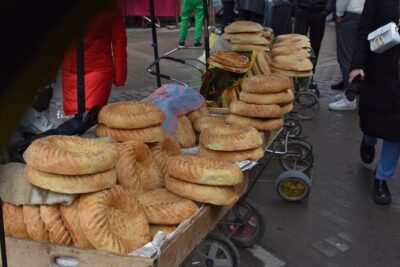
Tashkent Walking & Food Tour: Highlights + Local Flavors
Read our review →
Browse the lists this tour appears in