
Review · COOKING CLASSES
Private Traditional Uzbek Cooking Class in a Lovely Tashkent Home
Palov tastes better when you help make it. This private Tashkent cooking class brings you into Dilnoza’s home kitchen, where a doctor by profession shares family recipes, Uzbek customs, and a welcoming meal. I especially like the personal setting and the chance to learn palov from scratch rather than simply order it in a restaurant.
I also like the small cultural touches, from ceremonial hand washing to tea, dried fruit compote, kazi, and kurt. The main consideration is the $130 per person price, which is high for a three-hour food activity, although the private format, cooking instruction, meal, drinks, and family contact help explain the cost.
In This Review
- Key points at a glance
- Why a home kitchen tells you more than a restaurant
- Arriving with tea, snacks, and a traditional welcome
- Two hours at the stove with Dilnoza
- Sitting low and eating what you prepared
- What makes the family setting worthwhile
- Price, timing, and practical value
- Who should book this Tashkent cooking class
- Should you book it?
- FAQ
- Where does the cooking class take place?
- What time does the experience start?
- How long does the activity last?
- What dishes will I learn to cook?
- Is the activity private?
- Can dietary restrictions be accommodated?
- Is hotel transportation included?
Key points at a glance
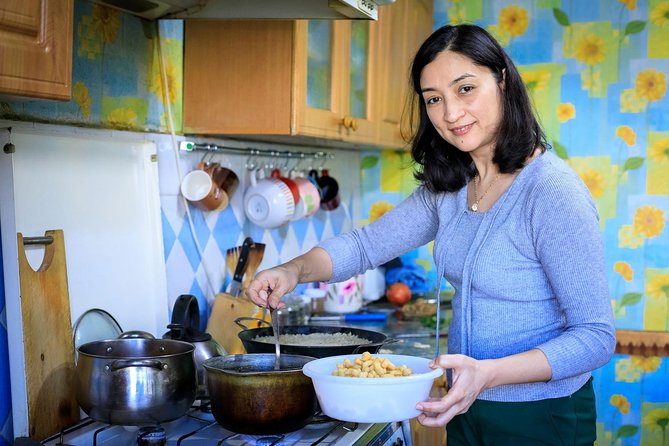
- Cook palov from scratch: Learn to prepare Uzbekistan’s famous rice, meat, and vegetable dish alongside a local host.
- Enter a real Tashkent home: The setting is a residential neighborhood, not a restaurant or demonstration kitchen.
- Share a low Uzbek dining table: After cooking, you eat the meal together in a traditional home setting.
- Meet Dilnoza and possibly her family: Her husband and children may join the meal when they are home.
- Expect about three hours: The cooking portion lasts around two hours, followed by the shared meal.
- Plan your route carefully: You meet at Usta Shirin Street at 5:00 pm, and hotel pickup is not included.
Why a home kitchen tells you more than a restaurant
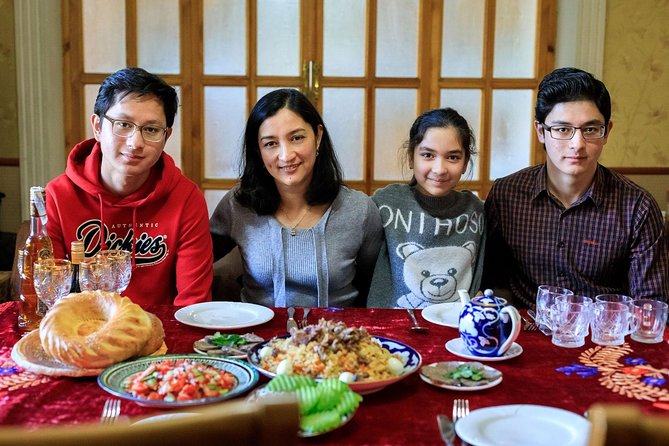
Tashkent has plenty of places to eat Uzbek food, but a private home gives you something a restaurant cannot: a look at how food fits into daily family life. You are not just tasting a national dish. You are helping prepare it, hearing how recipes pass through a family, and eating in the same home where the host normally lives.
Dilnoza is a doctor, but cooking and travel are her passions. That combination gives the experience a personal angle. She is not presented simply as a professional chef. You meet someone who cooks because food matters to her, and that can make the lesson feel less like a formal class and more like an invitation into local life.
The activity is fully private. Only your own group takes part, so you can ask questions, work at your own pace, and focus on the dishes that interest you. That matters in a cooking class, where a large group can leave you watching from the back while someone else does the useful work.
The main tradeoff is cost. At $130 per person, this is not a budget meal. You are paying for the host’s time, a private class, ingredients, drinks, a full meal, and access to a residential setting that is difficult to arrange independently. It makes the most sense for you if personal contact and cultural exchange rank above finding the cheapest plate of palov in town.
More cooking classes in Tashkent:
- Plov and Samsa Cooking Class in Tashkent
★ 4.3 · 6 reviews - Samarkand: Village Tour with Plov Cooking Class & Home Visit
★ 5.0 · 29 reviews - Samarkand: Uzbek Cooking Class in a Village Home
★ 5.0 · 22 reviews
Arriving with tea, snacks, and a traditional welcome
The experience begins at Dilnoza’s home on Usta Shirin Street. The stated start time is 5:00 pm, and the activity returns to the same meeting point when it ends. Since hotel pickup and drop-off are not included, you need to arrange your own way there and back. The location is near public transportation, which helps, but you should allow enough time to find a residential address rather than a clearly marked tourist attraction.
Inside, Dilnoza welcomes you with a ceremonial hand washing. This is a small ritual, but it sets the tone. Food in Uzbekistan is closely tied to hospitality, and washing before a meal carries more meaning than simply cleaning your hands before cooking.
You then receive green or black tea and a selection of Uzbek snacks. These can include dried fruit compote, slices of kazi, or kurt. Kazi is a traditional smoked meat snack, while kurt is a firm, salty cheese. If you have not tried either before, this opening tasting gives you an early introduction to flavors you may not see on a standard restaurant menu.
The welcome also gives you time to settle in before the cooking starts. You can ask about the ingredients, the home, and the dishes ahead. If you have food allergies, dietary restrictions, or strong cooking preferences, tell the operator when you book. Vegetarian, vegan, and gluten-free options are available when requested in advance.
Two hours at the stove with Dilnoza
The cooking lesson lasts about two hours. You learn to prepare two or three traditional Uzbek dishes from recipes passed down through Dilnoza’s family. The exact menu can change with the season, so you should expect a home-style lesson rather than a fixed restaurant menu.
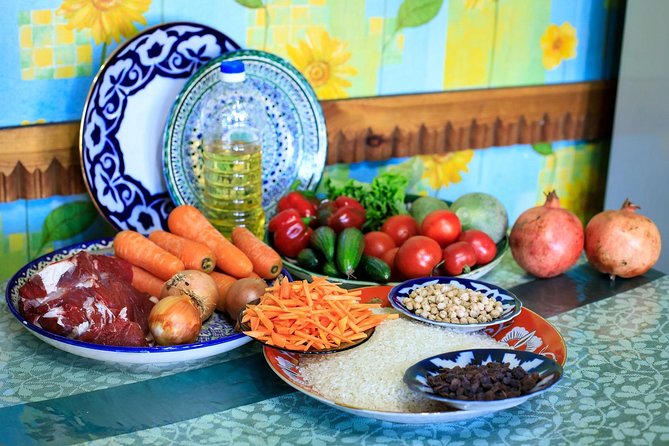
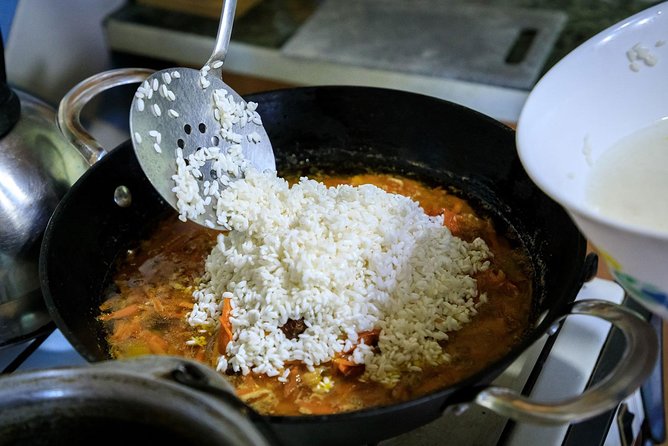
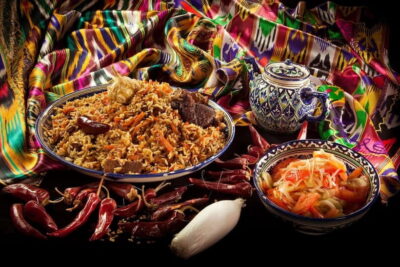
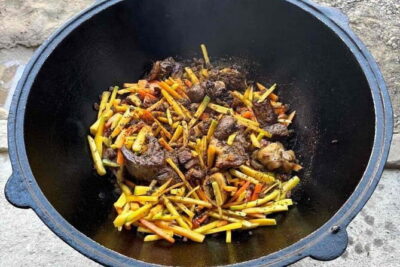
The main dish is palov, Uzbekistan’s most famous food. It combines meat, rice, and vegetables, and it is far more satisfying to eat after you have helped prepare it. The value of the lesson is not only the final bowl. You get to see how the ingredients come together and gain a better sense of why palov is such an important part of Uzbek food culture.
A salad is also part of the meal. The planned version uses tomato, cucumber, onion, and basil with a lemon dressing. It is a simple dish, but that simplicity is useful. After the heavier palov, the fresh vegetables and sharp dressing give the meal balance.
The class may include a third dish, depending on the menu and season. Because the details can vary, you should not book this expecting one exact set of recipes every time. That flexibility is normal for a home kitchen, where ingredients and family habits change throughout the year.
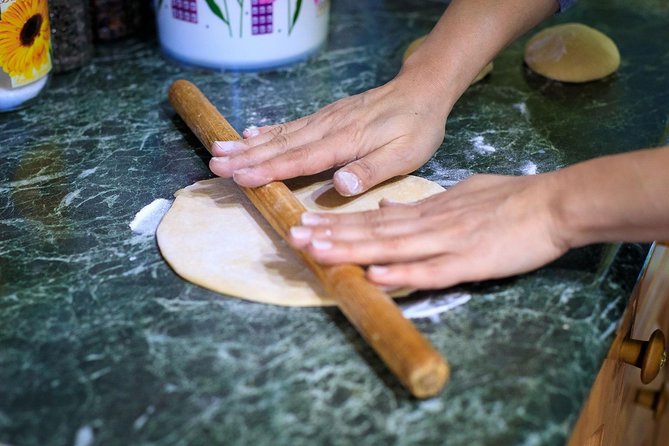
You should also expect to participate rather than sit through a cooking show. The experience is described as hands-on, so you will help prepare the food under Dilnoza’s guidance. The private format gives you room to ask practical questions, repeat a step, or spend more time on a technique that is new to you.
Still, this is not necessarily a professional culinary course. The information provided focuses on traditional dishes and family methods, not knife skills, advanced instruction, or a take-home recipe booklet. Choose it for cultural connection and a shared meal, not for restaurant-level chef training.
Sitting low and eating what you prepared
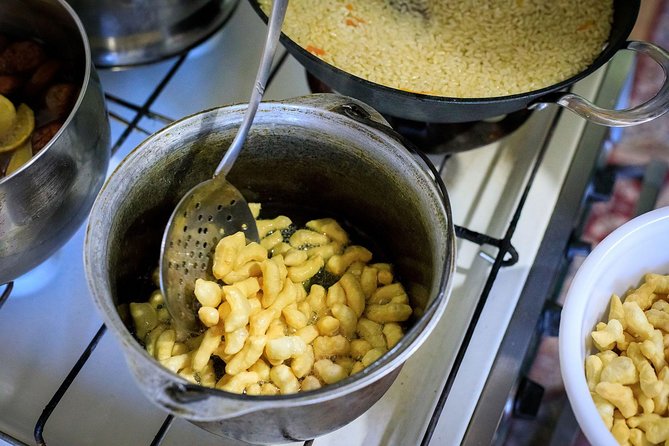
After cooking, you gather around a traditional Uzbek dining table set low to the ground. This changes the pace of the evening. Instead of standing around the kitchen or eating quickly at a normal-height table, you share a more traditional meal in the host’s home.
The meal includes bread, the tomato and cucumber salad, and the palov you helped make. Bread is a central part of many Uzbek meals, and its presence alongside the rice dish makes the table feel complete rather than built around one main course alone.
Dessert is a local sweet such as halva, pashmak, or kazinaki. Pashmak is a candy floss style sweet, while kazinaki is a nut-based confection. The exact choice may vary, but the final course keeps the meal focused on local tastes rather than familiar international dessert.
Alcoholic beverages are listed as included. The information does not specify what will be served, so you should ask ahead if that detail matters to you. Tea is also part of the welcome and may be the more central drink in the household setting.
Dilnoza’s husband and children may join the meal if they are home. This is one of the most appealing parts of the evening, but it is not guaranteed. Their presence can add a more natural family atmosphere, while their absence does not change the private cooking lesson with Dilnoza.
The strongest praise attached to this experience centers on the warmth of Dilnoza and her family, along with the quality of the food. That is exactly where this activity earns its value. You are not simply checking palov off a list. You are sharing dinner with a family and getting a glimpse of Uzbek hospitality in practice.
More craft workshops in Tashkent:
- Tashkent Wine Tasting & Ceramics Workshop Experience
★ 5.0 · 2 reviews - Cooking class in Samarkand with local life experience
★ 5.0 · 19 reviews - Private Samarkand Cooking Class with Market Tour & Transfers
★ 5.0 · 14 reviews - Cooking Class in the Village with Local Family in Samarkand
★ 5.0 · 11 reviews
What makes the family setting worthwhile
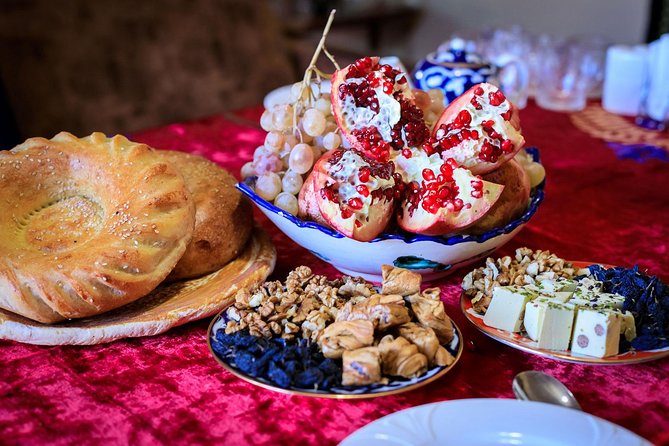
A family meal can be more revealing than a polished cultural performance. You may notice the way food is served, how tea fits into conversation, or how the dining space is arranged. Even a short visit can give you a clearer sense of home life than a guide explaining customs from a bus.
The personal contact is also useful if you want to ask questions that do not fit neatly into a sightseeing tour. You can talk about family recipes, food traditions, and the place of palov in Uzbek culture. Since the class is private, you are not competing with a large group for conversation.
At the same time, you should respect the limits of a short visit. The activity lasts about three hours, so it cannot offer a complete picture of Uzbekistan or Tashkent life. You are seeing one host’s home and one family’s cooking traditions. That is a strength because it feels personal, but it is not meant to represent every regional style of Uzbek food.
The setting may also feel less predictable than a restaurant. The menu changes with the season, and the family may or may not be present. If you prefer a tightly timed program with a guaranteed menu and polished facilities, this may feel too informal. If you want a real home setting, the same informality is part of the appeal.
Price, timing, and practical value
The price is $130 per person. For a three-hour activity, that is a premium price, especially in a country where a restaurant meal can cost much less. You should judge it as a private cultural experience with food, not as a simple cooking lesson.
The fee includes the private class, gratuities, and alcoholic beverages. It does not include transportation to or from the home. The mobile ticket is convenient, but you still need to manage the journey to Usta Shirin Street yourself.
This experience is booked, on average, about 100 days in advance. That suggests you should reserve early if it is important to your Tashkent schedule, especially if you are visiting during a busy travel period. Confirmation arrives within 48 hours of booking and remains subject to availability.
The 5:00 pm start works well for a relaxed evening meal. You can spend the afternoon sightseeing, then head to the home for tea, cooking, and dinner. The three-hour estimate is long enough for a proper lesson without taking an entire day from your Tashkent plans.
Free cancellation is available up to 24 hours before the local start time. If you cancel or request changes within 24 hours, the payment is not refunded and changes are not accepted. Keep that deadline in mind when building your itinerary.
Who should book this Tashkent cooking class
I would recommend this experience most strongly to you if food is one of your main ways of understanding a place. It suits couples, families, and small groups who prefer conversation and participation to a formal sightseeing program.
It is also a good match if you want to meet local people in a genuine residential setting. The family element is a major reason to book, especially if Dilnoza’s husband and children happen to be home for dinner.
Vegetarians, vegans, and people avoiding gluten can request suitable food. You should make that request at booking, not at the door. The same applies to allergies and other restrictions.
You may want to skip it if you are looking for a low-cost meal, a large menu, or a professional chef’s master class. You should also think twice if you dislike sitting at a low dining table or prefer hotel pickup. Neither the transport nor a Western-style dining setup is part of the stated plan.
The activity received an overall rating of 4.5 from two published ratings, with the strongest praise focused on Dilnoza’s hospitality, her family, and the food. That is a small sample, so I would not treat the number alone as decisive. The detailed praise does, however, point clearly to the experience’s main strength: a warm, personal evening built around national food.
Should you book it?
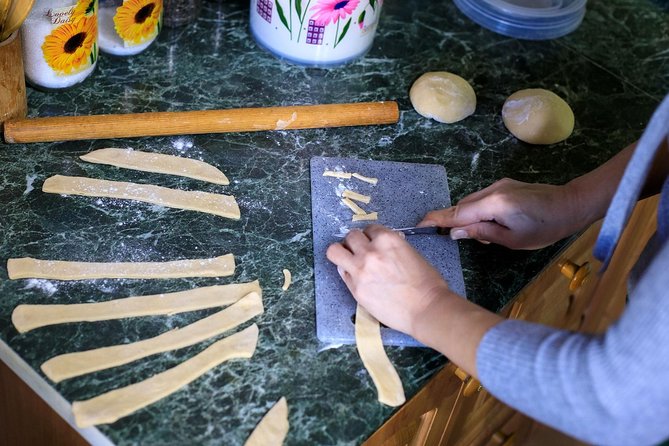
Book this class if you want a private evening with a local family, hands-on palov preparation, and a meal that carries cultural meaning. The chance to begin with ceremonial hand washing, taste kazi or kurt, cook family recipes, and eat at a low Uzbek table gives the experience real character.
At $130 per person, it is expensive for three hours, and you must arrange your own transport. But if you see the price as payment for time in a private home rather than just for food, it can be a fair choice. Reserve early, share your dietary needs in advance, and choose this activity for hospitality and connection, not simply for the cheapest dinner in Tashkent.
FAQ
Where does the cooking class take place?
The class takes place in Dilnoza’s home in a residential neighborhood of Tashkent. The meeting point is on Usta Shirin Street.
What time does the experience start?
The stated start time is 5:00 pm.
How long does the activity last?
The experience lasts approximately three hours. The cooking lesson itself takes about two hours, followed by the shared meal.
What dishes will I learn to cook?
You will learn to prepare two or three traditional Uzbek dishes from family recipes. The meal includes a salad and palov, made with meat, rice, and vegetables. The menu may vary by season.
Is the activity private?
Yes. Only your own group participates in the activity.
Can dietary restrictions be accommodated?
Vegetarian, vegan, and gluten-free options are available. You should provide information about allergies, dietary restrictions, or cooking preferences when booking.
Is hotel transportation included?
No. Hotel pickup and drop-off are not included. The activity ends back at the meeting point on Usta Shirin Street.
Just added in Tashkent
- Uzbekistan and Tajikistan 9-Day Tour★ 5.0 · 1 review
- Tashkent International Airport (TAS) to Tashkent – Arrival Private Transfer★ 5.0 · 2 reviews
- Uzbek Brews & Views: Tashkent Craft Beer Discovery Tour★ 5.0 · 2 reviews
- 8-Day Private Tour in Uzbekistan with Pick Up★ 5.0 · 2 reviews
- Uzbekistan Tour – 6 Days 5 Nights★ 5.0 · 4 reviews
- Uzbekistan Private Tour 6 Days★ 5.0 · 1 review
- Tashkent to Tashkent International Airport (TAS) – Departure Private Transfer★ 5.0 · 1 review
- Full Day Private Tour to Fergana Valley from Tashkent★ 5.0 · 1 review
Cooking Classes, compared.
Village Tour with Plov Cooking Class & Home Visit
Read our review →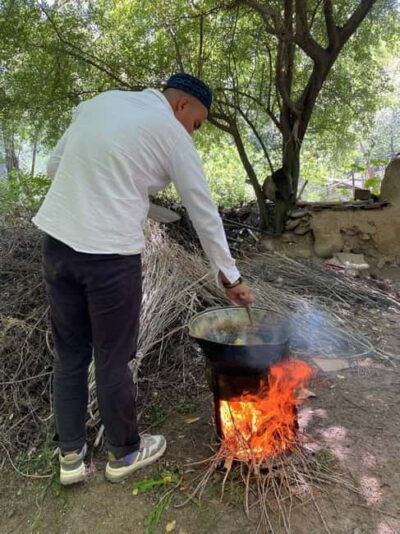
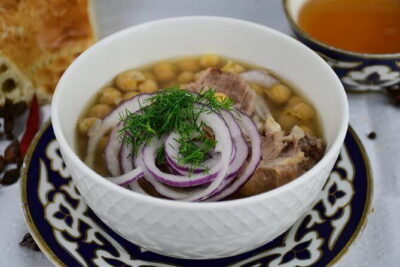
Cooking class in Samarkand with local life experience
Read our review →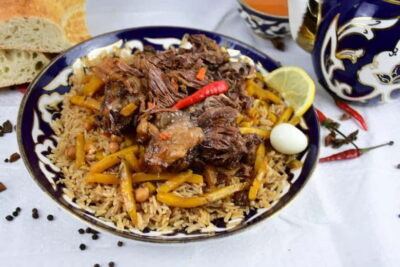
cooking traditional food in Samarkand with local people
Read our review →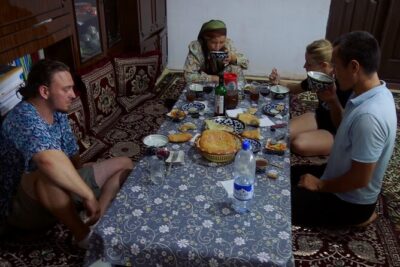
Private Samarkand Cooking Class with Market Tour & Transfers
Read our review →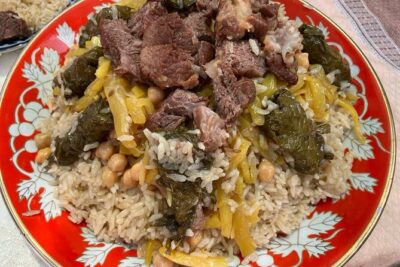
Cooking Class in the Village with Local Family in Samarkand
Read our review →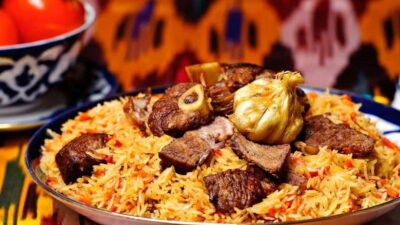
Browse the lists this tour appears in