
Review · WALKING TOURS IN BUKHARA
Bukhara: Walking Tour with a Small Group
Bukhara rewards slow steps. This 4 to 4.5-hour walk brings you through the old city’s trading domes, madrasahs, mosques, mausoleums, and everyday cultural corners with an English-speaking local guide. I especially like the small maximum of 10 people, which should make questions and conversation easier, and the route’s clear focus on architecture and local life rather than pushing you through a shopping circuit. The only catch is that entry fees, food, and drinks are extra, and the long walk can feel demanding in hot weather.
The strongest part of the experience is the guiding. Sunny is praised for making the tour interactive, while Nuriddin is noted for fluent English, engaging stories, and detailed answers about Uzbek customs. I also like the flexibility: the route can include an extra stop or a short café break, though you should allow some patience if the group spends longer at a favorite monument.
In This Review
- Key points to know before you book
- Why this walking tour is a good first look at Bukhara
- Lyabi-Hauz: the best place to begin
- Magoki-Attori and the first trading domes
- Abdulaziz-Khan and Ulugbek: two madrasahs, two eras
- Toqi Zargaron and the road to Poi Kalyan
- Poi Kalyan: the grandest stop on the walk
- The Ark and Bolo-Hauz: royal power and public worship
- Ismail Samani Mausoleum and the oldest architecture
- Guides, group size, and the human side of the tour
- What is not included, and how to plan your budget
- Who should book this Bukhara walk?
- Should you book it?
- FAQ
- How long does the Bukhara walking tour last?
- What language is the tour conducted in?
- How many people can join the tour?
- Where does the tour begin?
- Where does the tour end?
- Are entrance fees included?
- Is the Ark Fortress visited from inside?
Key points to know before you book
- A four-hour route through Bukhara’s central monuments: You see the Lyabi-Hauz area, trading domes, Poi Kalyan, the Ark from outside, Bolo-Hauz, and the Samanid Mausoleum.
- A genuinely small group: The tour accepts no more than 10 people, a useful limit for a walking tour with frequent explanations.
- Guides are the main attraction: Sunny and Nuriddin are praised for fluent English, local stories, flexibility, and thoughtful answers.
- Shopping is not the purpose: Artisan workshops are included to show local life and craft, not to pressure you into buying.
- Some admissions cost extra: The Magoki-Attori Mosque, Abdulaziz-Khan Madrasah, Ulugbek Madrasah, Poi Kalyan Mosque, Ark, and Ismail Samani Mausoleum may require separate payment.
- The finish changes by season: In late autumn and winter, the walk ends at Bolo-Hauz Mosque rather than the Ismail Samani Mausoleum.
Why this walking tour is a good first look at Bukhara
Bukhara is compact in the center, but its monuments can blur together when you see them without a guide. One blue-tiled madrasah leads to another, domed bazaars interrupt the streets, and centuries of religious, commercial, and political life overlap in a surprisingly small area.
This route gives you a useful framework. You begin at Nodir Devonbegi Madrasah beside Lyabi-Hauz and then follow the old commercial spine toward the Poi Kalyan complex. After that, the walk continues toward the Ark, Bolo-Hauz Mosque, and the Samanid Mausoleum.
At $28 per person, the price is sensible if you want context rather than only photographs. You are paying for a professional guide, online support, and a small-group format. You are not paying for meals, drinks, or monument admissions, so keep some extra Uzbek som available. The value improves if you use the walk to decide which interiors deserve a later, slower visit.
The tour is conducted in English and uses a mobile ticket. Most people can take part, but you should be comfortable walking for roughly four and a half hours. Hot weather can be a real factor. One guide adapted the pace and even included a short café stop, but that sort of flexibility depends on the guide and the group.
More Walking Tours in Bukhara
- All You Need To Know About Bukhara. A Walk In The Town
★ 4.9 · 31 reviews - Bukhara Historical City Highlights Guided Walking Tour
★ 4.5 · 16 reviews - Bukhara: Private Guided Walking Tour with Hotel Pickup
★ 5.0 · 11 reviews
Lyabi-Hauz: the best place to begin
The meeting point is Nodir Devonbegi Madrasah on Bakhawuddin Nakshbandi Street. From there, the first 40 minutes are spent around Lyabi-Hauz, a square built around a pool and framed by three important monuments: Kukeldash Madrasah, Nodir Devonbegi Madrasah, and the Nadir Divan Begi Khanaka.
This is a smart starting point because the square introduces the mix that defines Bukhara. You get religious schools, a gathering place, decorative façades, and the remains of an old water-centered urban design. A guide can explain how these buildings worked together rather than treating each one as an isolated photo stop.
The free exterior viewing is enough to make the square worthwhile, but the time can pass quickly. If you care about tile patterns, carved details, or the stories behind the people who built and used these buildings, stay close to the guide and ask questions early.
Magoki-Attori and the first trading domes
The Magoki-Attori Mosque is a short but important stop. The building dates to the 12th century and forms part of the Lyabi-Hauz religious complex. Its location also hints at how much older Bukhara is than the grand façades might suggest.
Admission is not included. The tour description also refers to a carpet museum connected with this stop, so you should ask the guide what is open and what the extra charge covers on your date. That small question can prevent confusion, especially if you are trying to keep the day’s costs under control.
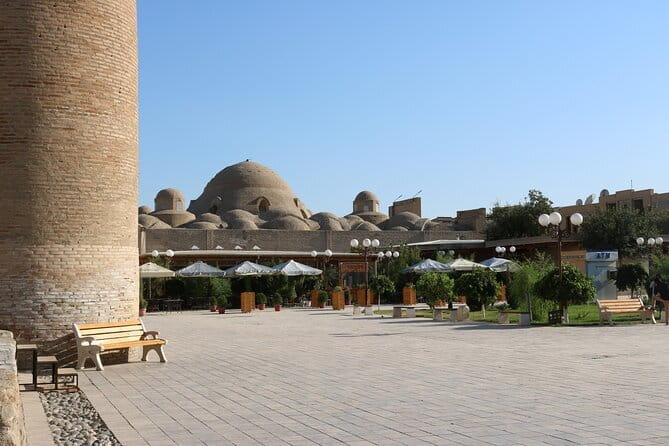
From there, the route moves through Bukhara’s trading domes. Toki Sarrafon, the money changers’ dome, and Sayfuddin Caravanserai are included in the broader route, while Toqi Telpakfurushon receives about 20 minutes. The old domes were not simply decorative roofs. They organized commerce and gave merchants sheltered places to sell goods and meet customers.
Toqi Telpakfurushon is associated with hats and headwear. Today, the atmosphere may be quieter than in the trading days of the Silk Road, but the domed spaces still make the city’s commercial past easy to picture. The tour is not designed as a shopping expedition, which is good news if you prefer architecture and local context to sales pitches.
Abdulaziz-Khan and Ulugbek: two madrasahs, two eras
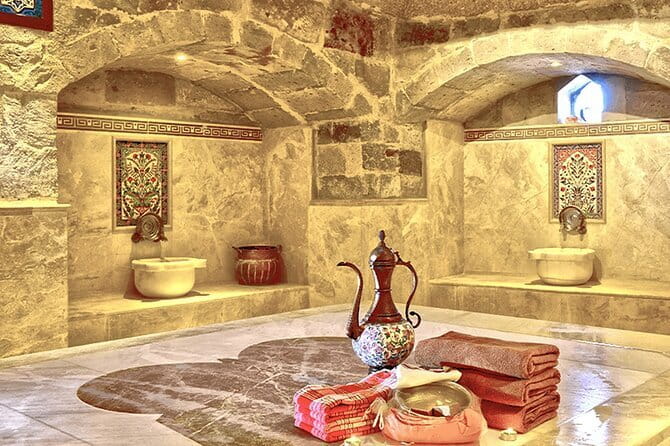
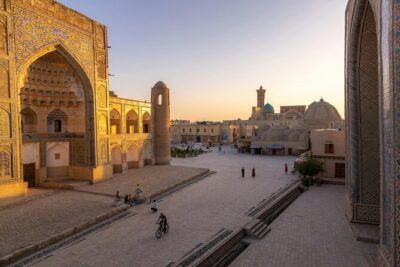
The Abdulaziz-Khan Madrasah gets about 20 minutes. Built in 1652 during the rule of Abdulaziz Khan, it is known for detailed tilework and decorative frescoes. This is one of the places where a guide adds real value, since the visual details are easy to miss when you are looking only at the main entrance.
The Ulugbek Madrasah follows with about 15 minutes. It was built by Ulugbek, the grandson of Amir Timur, and is one of the oldest buildings on the route. Seeing these two schools close together helps you compare different periods of Bukhara’s architecture without needing a separate lecture.
Admissions are not included at either madrasah. The short scheduled times suggest that the main goal is orientation and explanation, not a long museum visit. If you want to study every courtyard or inscription, you may need to return independently.
A completely different kind of day:
- Best of Bukhara: All Day Private Old Town Tour
★ 5.0 · 66 reviews - Best of Bukhara: All Day Private Old Town Tour
★ 4.9 · 62 reviews - City Tour Around Bukhara
★ 5.0 · 55 reviews - Bukhara Full Day Old City Private Tour
★ 5.0 · 46 reviews
Toqi Zargaron and the road to Poi Kalyan

Toqi Zargaron is known as the dome of jewelers and dates to the 16th century. This was a center for gold and jewelry trading, another reminder that Bukhara was a working commercial city as well as a religious center.
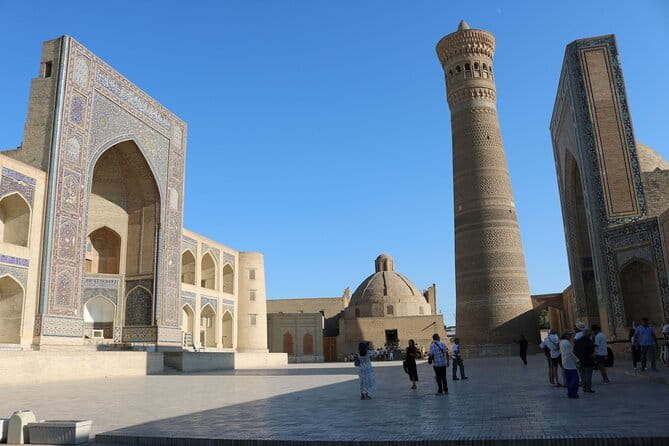
The route then reaches the Great Minaret of the Kalon. Built in 1127 under the Karakhanid ruler Arslan Khan, the minaret rises 47 meters above the city. Its height and age make it one of Bukhara’s most memorable sights, but the real pleasure is seeing how it relates to the mosque and madrasah around it.
The minaret can be viewed without an entry charge on the tour. Take a moment to look beyond the surface decoration. Its role was practical as well as symbolic, helping call worshippers to prayer and marking the center of the city from a distance.
Poi Kalyan: the grandest stop on the walk
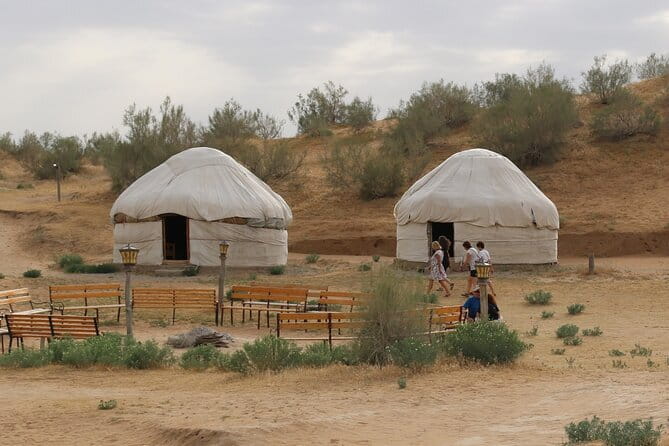
The Poi Kalyan complex brings together three famous buildings: the Kalon Minaret, the Kalon Mosque, and the Mir-i-Arab Madrasah. This is the point where the route feels most monumental.
The Kalon Mosque dates to the 16th century and was built during the Shaybanid period. Its broad courtyard and repeated arches give you a sense of scale that is hard to get from photographs. Admission is not included, so confirm with the guide whether the group is entering and how much time is available.
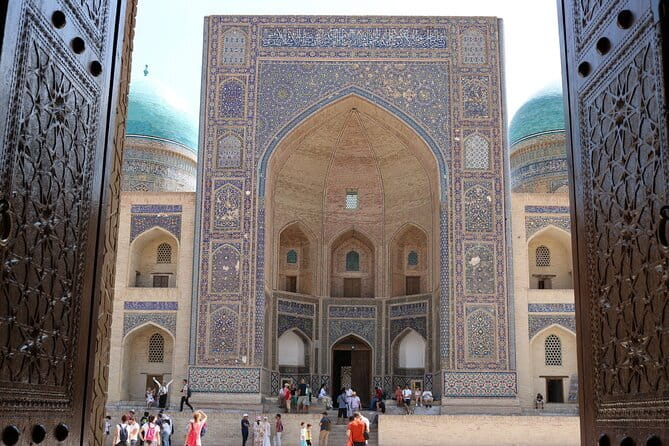
Across from it, Mir-i-Arab Madrasah was built in the early 16th century under Ubaydullah Khan. It was named for Sheikh Abdullah, the ruler’s spiritual mentor, and remains one of Bukhara’s best-known Islamic educational institutions.
The timing here is fairly brisk: roughly 20 minutes for Mir-i-Arab and 15 minutes for the mosque. That works well for a first orientation, but it is not enough for a slow architectural study. I would mark Poi Kalyan as a place to revisit later if you have more than one day in Bukhara.
The Ark and Bolo-Hauz: royal power and public worship

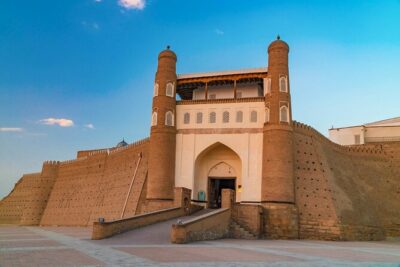
The Ark Fortress is shown from the outside only. The fortress dates back to the 5th century and served as a royal residence and military stronghold for Bukhara’s emirs. The museums inside require an additional 1.5 hours, so they are not part of this walking tour.
That limitation is worth understanding before you book. If the Ark is your main reason for visiting Bukhara, this tour will not provide the complete experience. If you mainly want to see its massive outer walls and understand its place in the city, the exterior stop works well.
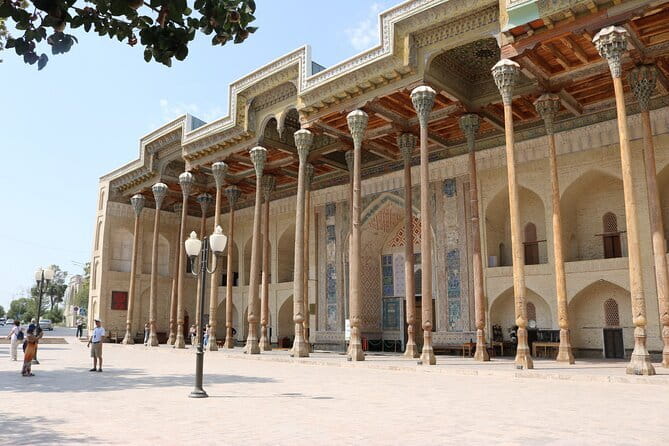
The tour then passes to Bolo-Hauz Mosque, with about 15 minutes for the visit. The mosque dates from the 18th to 20th centuries and offers a different mood from the larger monuments around Poi Kalyan. Its name is linked to a pool, and the stop gives the route a useful change of scale after the fortress and major complex.
During late autumn and winter, the tour ends here rather than continuing to the Samanid Mausoleum. Check the season when booking, because the shorter ending changes the value of the final section.
Ismail Samani Mausoleum and the oldest architecture
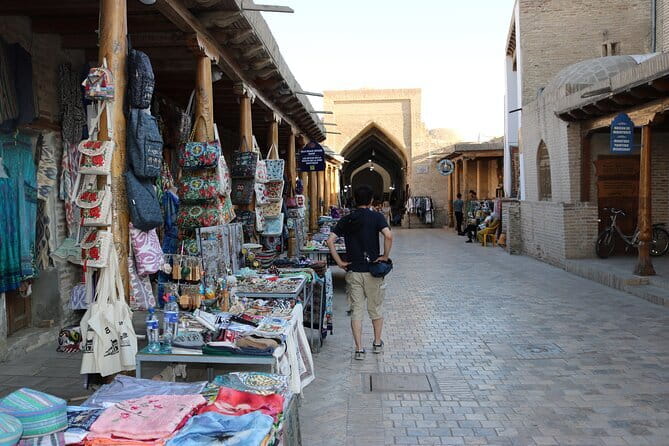
When conditions and timing allow, the final stop is the Ismail Samani Mausoleum. It is regarded as one of the key examples of early Islamic architecture in Central Asia and is known as the oldest funerary building in the region’s architectural tradition.
The mausoleum was built for the Samanid dynasty, which established practical independence in the area. Its brickwork is the main event. Instead of relying on the bright tilework seen elsewhere in Bukhara, the building uses patterned brick to create changing light and shadow.
About 30 minutes is scheduled here, and admission is not included. The location also makes sense as the end of a long walk, since it gives you a quieter final monument after the crowded visual sequence of domes, madrasahs, and major mosques.
Guides, group size, and the human side of the tour
The strongest reason to choose this experience is the guide. Sunny is praised for making the walk interactive and explaining Bukhara in a way that invites questions. Nuriddin is praised for fluent English, engaging stories, and the ability to discuss Uzbek traditions and daily habits as well as architecture.
That matters because the route covers many buildings in a short period. A guide who can explain how people used these places gives the walk more meaning than a string of dates and names. Nuriddin also adapted the route, added sites beyond the planned stops, and made time for coffee, showing the kind of flexibility you want on a long walking day.
The group limit is 10 people. That is small enough for a guide to hear questions and keep the group together, though the actual size on your date may be smaller. A small group also makes it easier to pause at a workshop without turning the visit into a formal shopping stop.
What is not included, and how to plan your budget
The $28 price covers the professional guide, online support, small group, and walking tour. Meals and drinks are not included. Neither are entry fees.
The number of paid interiors can affect your final cost. The listed stops identify admissions as extra for Magoki-Attori Mosque, Abdulaziz-Khan Madrasah, Ulugbek Madrasah, Poi Kalyan Mosque, the Ark, and the Ismail Samani Mausoleum. The itinerary also makes clear that the Ark museums are not visited as part of the tour.
The practical approach is to treat the $28 as the price for a guided city walk, not an all-inclusive sightseeing pass. That is still good value if you want a well-organized introduction and plan to return to selected monuments. If you want every interior included, compare the total cost before booking.
Wear shoes suited to several hours on foot and bring water, especially in hot weather. The tour requires good weather, and it can be canceled if the minimum group size is not met. If that happens, you are offered another date, another experience, or a full refund.
Who should book this Bukhara walk?
I would recommend it to first-time visitors who want the main old-city sights explained in one morning or afternoon. It also suits you if you prefer a small group, want to ask questions in English, and care about Uzbek customs as much as grand buildings.
It is a good fit for travelers with limited time in Bukhara. The route covers enough ground to help you understand the city’s layout, then gives you a clear list of places worth exploring more slowly.
You may want a different plan if you dislike long walks, need a slow pace, or mainly want extended museum visits. The Ark is outside-only, several admissions cost extra, and the scheduled stops are short. In very hot weather, the four-and-a-half-hour route can be tiring, although the guide may be able to adjust the pace.
Should you book it?
Book this tour if you want strong guiding and broad coverage at a reasonable starting price. Sunny and Nuriddin are especially good names to look for when your confirmation arrives, based on the qualities associated with their tours: fluent English, local stories, flexibility, and easy conversation.
Skip it if your priority is shopping, a full visit inside the Ark, or a tour with all entrance fees included. For most first visits, though, this is a practical way to put Bukhara’s major monuments in order, understand the city beyond its postcard views, and decide where to spend your own time afterward.
FAQ
How long does the Bukhara walking tour last?
The tour lasts about 4 to 4.5 hours.
What language is the tour conducted in?
The walking tour is conducted in English.
How many people can join the tour?
The maximum group size is 10 travelers.
Where does the tour begin?
The meeting point is Nodir Devonbegi Madrasah on Bakhawuddin Nakshbandi Street in Bukhara.
Where does the tour end?
In the main season, the tour ends at the Ismail Samani Mausoleum. During late autumn and winter, it ends at Bolo-Hauz Mosque.
Are entrance fees included?
No. Entry fees, meals, and drinks are not included in the tour price.
Is the Ark Fortress visited from inside?
No. The Ark Fortress is shown from the outside only. Visiting its museums would add about 1.5 hours to the tour.
Just added in Bukhara
- Yurt Camp & Aydarkul Adventure from Bukhara★ 5.0 · 1 review
- Private Tour in 3 top Places Outside of Bukhara City★ 5.0 · 2 reviews
- Full-Day Private Guided Tour to Islamic 7 Saints of Bukhara★ 4.5 · 3 reviews
- Nurata Mountain & Kyzyl-kum Desert 3 Day Tour From Samarkand or Bukhara★ 5.0 · 1 review
- Bukhara Hammam Bathhouse with Massage★ 5.0 · 2 reviews
- Bukhara: Tour Outside of Old Town. Guide with Transportation★ 5.0 · 2 reviews
- Discover Bukhara One Day Group Experience★ 4.5 · 2 reviews
- Bukhara Old City Walking Tour★ 5.0 · 1 review
Walking Tours in Bukhara, compared.
All You Need To Know About Bukhara. A Walk In The Town
Read our review →
Bukhara Historical City Highlights Guided Walking Tour
Read our review →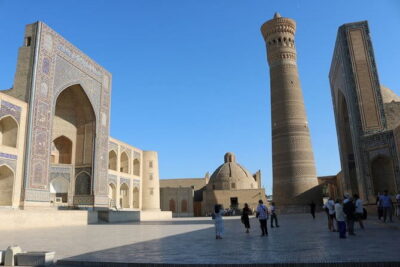
Browse the lists this tour appears in