
Review · WALKING TOURS IN BUKHARA
Bukhara: Private Guided Walking Tour with Hotel Pickup
Bukhara reveals itself one courtyard at a time. This private walking tour gives you a well-planned route through the old city, from Lyabi-Hauz and its shaded pool to the grand Poi Kalyan complex, with a guide who can explain the people, faith, trade, and rulers behind the monuments. I especially like the hotel pickup on foot and the fact that the tour is private, so you can ask questions and adjust the pace.
I also like the broad coverage. In five to six hours, you visit the city’s main architectural sights, including the Ark Fortress, Bolo-Hauz Mosque, and the Samanid Mausoleum. The main drawback is that entrance fees and lunch are not included, and a long walk through the old town can be tiring in poor weather or for anyone with limited mobility.
In This Review
- Key points to know before booking
- Why this is a useful first day in Bukhara
- Lyabi-Hauz begins the story
- A mosque beneath the trading streets
- Trading domes and the old commercial quarter
- Two madrasahs, two different moods
- The grand center of Bukhara at Poi Kalyan
- The Ark Fortress, a short but important stop
- Bolo-Hauz Mosque and the city’s quieter side
- Chashma-Ayyub and the sacred spring
- Ending at the Samanid Mausoleum
- What the private format changes
- Walking, weather, and practical comfort
- Who gets the best value for $50?
- Should you book this Bukhara walking tour?
- FAQ
- How long does the Bukhara walking tour last?
- Does the guide pick me up at my hotel?
- Is this a private tour?
- Where does the tour start?
- Where does the tour end?
- Are entrance fees included?
- Is lunch included?
- What happens if the weather is poor?
- Can I cancel for a full refund?
Key points to know before booking
- Private route with hotel pickup: Your guide meets you at your hotel and walks with only your group.
- Five to six hours on foot: The route covers Bukhara’s central old town and several monuments beyond the main trading domes.
- Guides can adapt the day: Nuriddin and Sunny received especially warm praise for their clear explanations and willingness to adjust plans.
- Major sights are covered: The route includes Lyabi-Hauz, the trading domes, Poi Kalyan, the Ark, Bolo-Hauz, Chashma-Ayyub, and the Samanid Mausoleum.
- Budget separately for admissions: Monument entry charges, meals, and drinks cost extra.
- Weather matters: If rain or other poor conditions cancel the tour, you can choose another date or receive a full refund.
Why this is a useful first day in Bukhara
Bukhara is compact enough to explore on foot, but its monuments make more sense when placed in order. A pool, a mosque, a caravanserai, a trading dome, and a religious school can look like separate sights until someone explains how they worked together.
That is where a private guide earns the fee. You are not tied to a large group or a fixed lecture. If you want more time at tilework, religious architecture, or local history, you can ask. If your child, parent, or travel companion needs a pause, the route can slow down.
The tour costs $50 per person. That is a fair price if you value a personal guide for half a day and want the principal sights arranged without having to plan the route yourself. It is less attractive if you prefer to wander alone and read about each monument independently. Remember to add admission fees, lunch, and drinks to the total.
The tour starts at Nodir Devonbegi Madrasah on Bakhowuddin Nakshbandi Street and ends at the Ismail Samani Mausoleum. The guide meets you at your hotel, then takes you through the historic center on foot. The exact walking distance is not provided, but the number of stops and the five to six hour duration make comfortable shoes essential.
More Walking Tours in Bukhara
- All You Need To Know About Bukhara. A Walk In The Town
★ 4.9 · 31 reviews - Bukhara Historical City Highlights Guided Walking Tour
★ 4.5 · 16 reviews - Bukhara: Walking Tour with a Small Group
★ 5.0 · 10 reviews
Lyabi-Hauz begins the story
The tour opens at Lyabi-Hauz, one of the most atmospheric parts of old Bukhara. The name refers to the pool at the center of a group of buildings, including Kukeldash Madrasah, Nodir Divan Begi Madrasah, and the Nadir Divan Begi Hanaka.
Allow about 40 minutes here. This is a good place to begin because the complex introduces several themes you will meet all day: Islamic education, religious life, public gathering spaces, and the movement of people through Bukhara.
Admission is not included. Ask your guide which buildings are open during your visit. Restoration work can affect access, and the guide may suggest another nearby stop if a monument is closed.
The starting point is also convenient for orientation. You can get a sense of the old city’s scale before moving into the narrower lanes and covered markets.
A mosque beneath the trading streets
Next comes the Magoki-Attori Mosque, a 12th-century religious building that forms part of the Lyabi-Hauz area. The stop lasts about 20 minutes and may include the carpet museum associated with the site.
This is one of the places where a guide adds useful context. The building is not simply another decorated monument. Its age and position help show how Bukhara changed over time, with religious buildings and commercial spaces occupying the same urban core.
Entry is extra. If you have a strong interest in textiles, ask how much time is planned for the carpet collection. If your priority is architecture, you may prefer to keep this stop focused and save energy for Poi Kalyan and the Ark.
Trading domes and the old commercial quarter
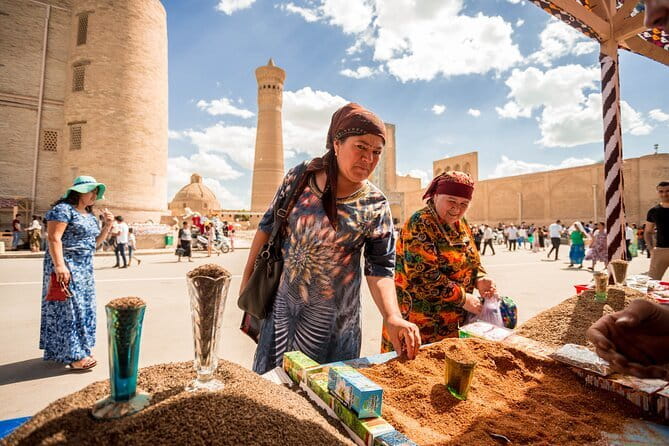
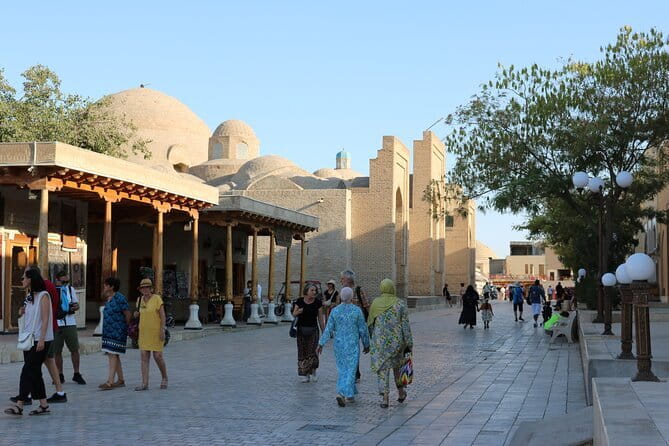
The Toki Telpakfurushon Trading Dome is scheduled for about 20 minutes, with free admission. This covered market is part of Bukhara’s historic system of trade, where merchants and craftspeople worked under permanent domed structures rather than temporary outdoor stalls.
The route also names Toki Sarrafon and Toki Zargaron, along with the Sayfuddin Caravanserai and the Abdullakhan Tim. These commercial sites help connect the monuments to daily economic life. Bukhara was not only a city of schools and mosques. It was also a place where goods, money, lodging, and long-distance trade met.
The domes are practical stops as well as historic ones. They provide shade and a change of pace after the first religious sites. You might find shops or displays inside, but the tour information does not promise particular merchandise or shopping time, so treat purchases as optional rather than part of the program.
A completely different kind of day:
- Best of Bukhara: All Day Private Old Town Tour
★ 5.0 · 66 reviews - Best of Bukhara: All Day Private Old Town Tour
★ 4.9 · 62 reviews - City Tour Around Bukhara
★ 5.0 · 55 reviews - Bukhara Full Day Old City Private Tour
★ 5.0 · 46 reviews
Two madrasahs, two different moods
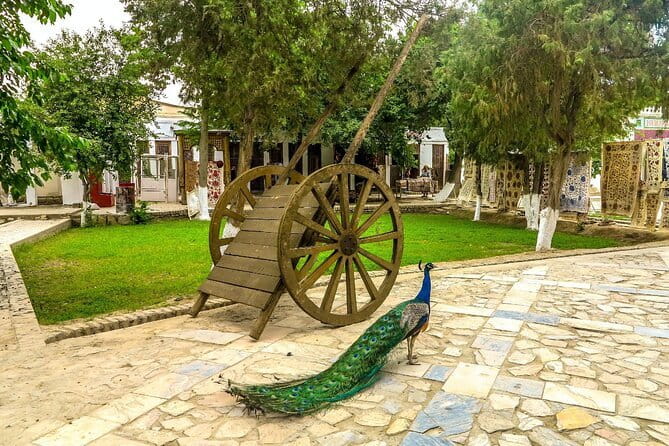
The route continues to the Ulugbek Madrasah, built by Ulugbek, the grandson of Amir Timur. About 20 minutes are planned here, and admission is not included.
Ulugbek is remembered as a ruler with a strong interest in science and learning, so this stop gives the tour a wider angle than a procession of facades. Your guide can help you see the madrasah as a place of study and scholarship, not just a photogenic entrance.
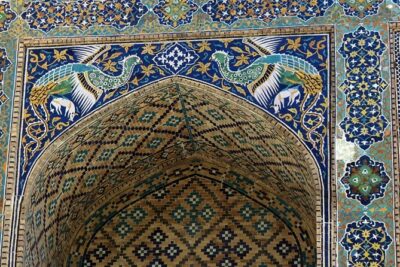
The Abdulaziz-Khan Madrasah follows, also for about 20 minutes. Built in 1652 during the reign of Abdulaziz Khan, it is noted for detailed tilework and decorative frescoes. The two madrasahs make a useful pairing. You can compare their design, age, and decoration instead of seeing each one in isolation.
Both visits require an additional admission fee. Restoration may affect what you can see. If a particular interior is closed, the guide is expected to offer another worthwhile stop.
The grand center of Bukhara at Poi Kalyan
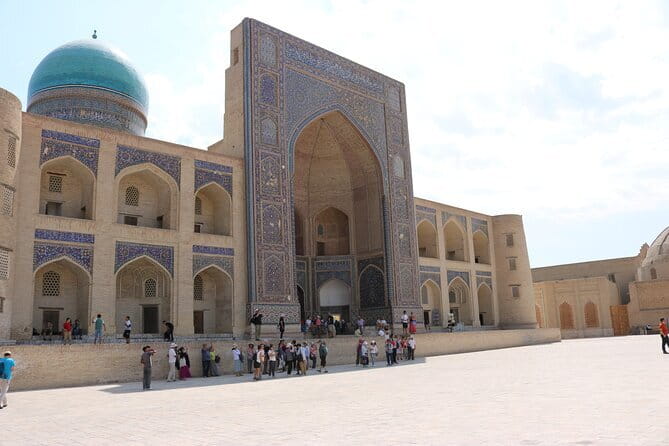
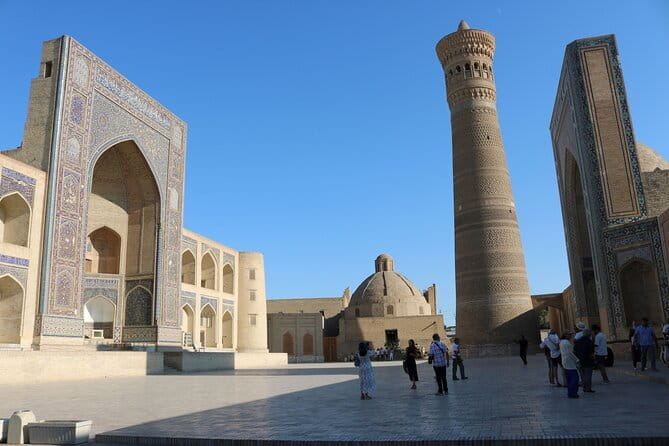
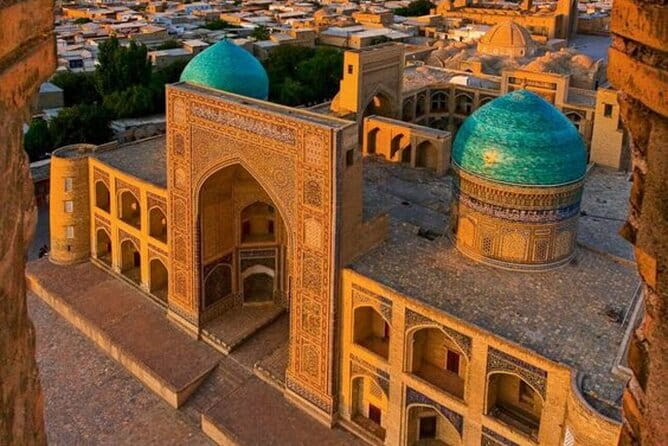
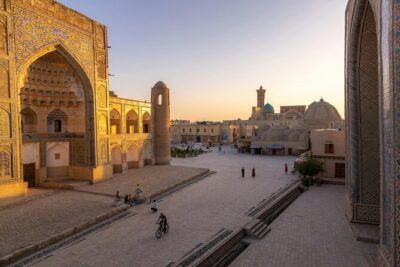
Poi Kalyan is the visual high point of the central route. Its complex includes the Kalyan Mosque, the Kalyan Minaret, and the Mir-Arab Madrasah. The planned visit lasts about 40 minutes, though this is one place where you may want to ask for extra time if the schedule allows.
The Kalyan Minaret is the landmark you will likely notice first. The mosque and madrasah give the setting scale, framing the open space with a powerful combination of brick, tile, and monumental form.
A guide can make this stop more than a photo break by explaining how the three buildings relate to one another and how religious teaching, worship, and city identity met here. I would save some questions for this section. It is likely to be one of the most memorable parts of the walk.
Admission is not included. Dress respectfully for mosque areas, and follow any local instructions about where you may enter or take photographs. The tour provider notes that some monuments may be under restoration, so access can change.
The Ark Fortress, a short but important stop
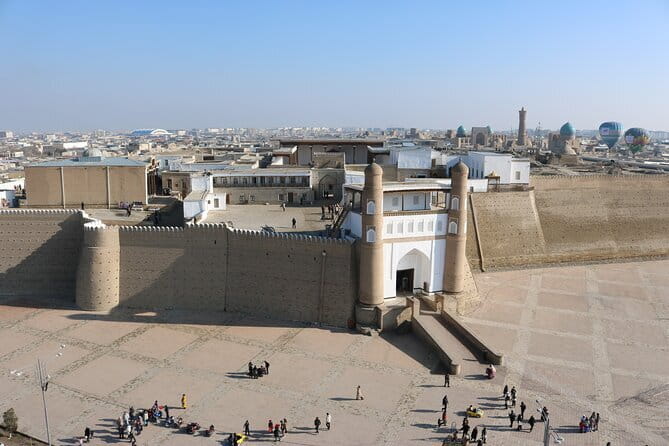
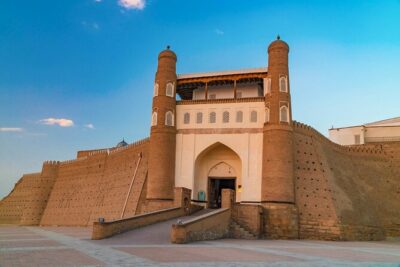
The Ark of Bukhara was the citadel of the emir and occupies a large earthen fortification in the northwestern part of the modern city. It is a key stop because it shifts the story from religious and commercial life to political power.
The listed duration is only one minute, which strongly suggests a brief look rather than a full interior visit. Do not assume that the $50 tour includes entry to the fortress. Admission fees are separate, and the itinerary does not promise an extended exploration inside.
Even a short stop can help you understand the fortress’s position and size. If the Ark is a major priority for you, ask before booking whether more time or an added entrance visit can be arranged. The tour is customizable, but no extra Ark visit is guaranteed.
Bolo-Hauz Mosque and the city’s quieter side
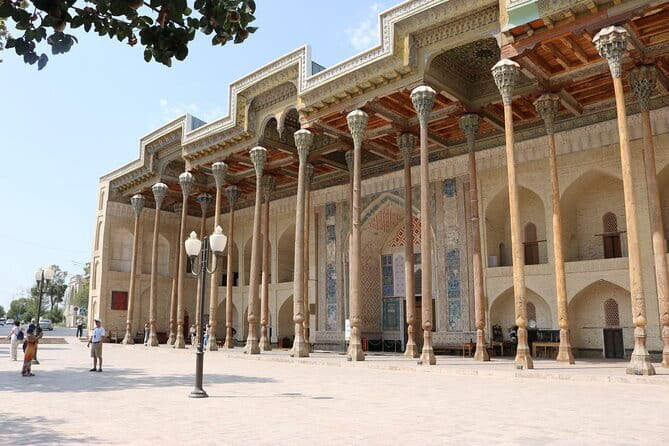
The Bolo-Hauz Mosque receives about 20 minutes, with free admission. It dates from the 18th to the 20th centuries and offers a different experience from the vast Poi Kalyan complex.
This is a useful contrast. Instead of only seeing grand royal or scholarly buildings, you get a mosque connected with a more intimate sense of place. Your guide can help you compare its scale and function with the larger religious complexes visited earlier.
The stop is also a chance to take a breath. The route has already covered several dense clusters of monuments, and the Bolo-Hauz visit slows the rhythm before the final mausoleums.
Chashma-Ayyub and the sacred spring
Chashma-Ayyub Mausoleum is scheduled for about 10 minutes. The 12th-century structure is linked with the story of Prophet Ayyub, known in the Bible as Job, and a sacred spring.
Ten minutes is enough for a concise explanation and an exterior look, but it may feel short if you want to study the building closely. Ask your guide whether the interior is open and whether the spring can be seen during your visit. Admission is not included.
This stop shows how belief, legend, and architecture overlap in Bukhara. It is not simply another tomb. The connection to a spring gives the site a special place in the city’s religious memory.
Ending at the Samanid Mausoleum
The tour ends at the Ismail Samani Mausoleum, also called the Samanid Mausoleum. The planned stop lasts about 10 minutes, and admission is extra.
The building is a 10th-century family tomb for the Samanid dynasty. Its cubic form and carefully arranged brickwork make it one of the most important early Islamic monuments in Bukhara. The design relies heavily on brick pattern and shadow rather than the bright glazed tile seen elsewhere on the route.
Ending here gives the tour a clear architectural finish. You begin among later madrasahs, markets, and major mosque complexes, then finish with an early monument whose decoration is restrained but highly detailed.
The short time allocation is the main limitation. If you care about architecture, ask for a few extra minutes at the end. The official endpoint is the mausoleum, so plan your onward arrangements from there rather than from your hotel.
What the private format changes
The private setup is the strongest reason to choose this experience over a standard group walk. Only your party takes part, so the guide can respond to your interests rather than delivering one fixed speech to strangers.
Sunny was praised for explaining Bukhara’s culture and past clearly. Nuriddin also made a strong impression by contacting his group before the meeting to understand what they wanted from the day. That advance conversation matters. You can tell the guide if you want more architecture, more local context, fewer interiors, or a gentler pace.
The flexibility is not only theoretical. One family traveling with an elderly mother and a young child faced bad weather, and Nuriddin arranged a taxi even though the experience was designed as a walking tour. That does not mean taxi use is included or guaranteed, but it shows why communicating your needs early is sensible.
Breaks at local cafes can be taken if needed. Lunch itself is not included, but the tour allows free waiting time, which may let you stop for food if the timing works.
Walking, weather, and practical comfort
This is a serious walking day, not a quick loop around a single square. You move between madrasahs, mosques, trading domes, the Ark, and the mausoleums, with a considerable amount of time on foot.
Most people can take part, but the route may be demanding if you tire easily. Tell the provider about mobility concerns, older family members, or young children before the day begins. The experience is customizable, and the guide can build in rests, but the information does not promise step-free access at every monument.
Good weather is required. If poor weather cancels the tour, you can select a different date or receive a full refund. You can also cancel for a full refund up to 24 hours before the start time. Inside that 24-hour window, refunds are not available and changes are not accepted.
Wear shoes suited to uneven old-town walking. Carry water, since drinks are not provided. Since lunch is excluded, decide whether you want to use the available free waiting time for a meal or finish the route without a long break.
Who gets the best value for $50?
I see the best value for couples, families, and small groups who want a personal introduction to Bukhara without arranging several separate visits. The rate becomes more attractive when two or more people share the private guide, especially with any available group discount.
It also suits you if Bukhara is part of a larger Uzbekistan trip and you want the main old-town sights explained in one day. The route covers enough ground to provide a strong first picture of the city, while the private format lets you mark places for a later return.
Independent explorers may not need it. If you enjoy navigating on your own, are happy to pay admissions separately, and prefer choosing one monument at a time, a self-guided day could cost less. The tour also may feel rushed for someone who wants a long interior visit at every stop, since several sites receive only 10 or 20 minutes.
Should you book this Bukhara walking tour?
Book it if you want broad coverage, a private guide, and hotel pickup in one half-day experience. The route reaches the essential monuments, and the strongest praise goes to the guides’ clear explanations and personal adjustments, especially from Sunny and Nuriddin.
Before confirming, ask about current restoration, the monuments you most want to enter, and the amount of time available at the Ark or Samanid Mausoleum. If your group includes an older adult or child, explain that in advance.
I would choose this tour early in a Bukhara stay, then revisit the places that deserve more time. It gives you the framework. You decide later where to linger.
FAQ
How long does the Bukhara walking tour last?
The experience lasts about five to six hours. The duration can be customized.
Does the guide pick me up at my hotel?
Yes. The guide meets you at your hotel and begins the walking tour from there.
Is this a private tour?
Yes. Only your group participates in the activity.
Where does the tour start?
The stated meeting point is Nodir Devonbegi Madrasah on Bakhowuddin Nakshbandi Street in Bukhara.
Where does the tour end?
The tour ends at the Ismail Samani Mausoleum, also called the Samanids Mausoleum.
Are entrance fees included?
No. Monument entry fees are not included in the tour price.
Is lunch included?
No. Lunch and drinks are not included. The tour offers free waiting time, and breaks at local cafes can be taken when needed.
What happens if the weather is poor?
The experience requires good weather. If it is canceled because of poor conditions, you can choose another date or receive a full refund.
Can I cancel for a full refund?
Yes. You must cancel at least 24 hours before the experience start time for a full refund. Cancellations or changes made within 24 hours are not accepted for a refund.
Just added in Bukhara
- Yurt Camp & Aydarkul Adventure from Bukhara★ 5.0 · 1 review
- Private Tour in 3 top Places Outside of Bukhara City★ 5.0 · 2 reviews
- Full-Day Private Guided Tour to Islamic 7 Saints of Bukhara★ 4.5 · 3 reviews
- Nurata Mountain & Kyzyl-kum Desert 3 Day Tour From Samarkand or Bukhara★ 5.0 · 1 review
- Bukhara Hammam Bathhouse with Massage★ 5.0 · 2 reviews
- Bukhara: Tour Outside of Old Town. Guide with Transportation★ 5.0 · 2 reviews
- Discover Bukhara One Day Group Experience★ 4.5 · 2 reviews
- Bukhara Old City Walking Tour★ 5.0 · 1 review
Walking Tours in Bukhara, compared.
All You Need To Know About Bukhara. A Walk In The Town
Read our review →
Bukhara Historical City Highlights Guided Walking Tour
Read our review →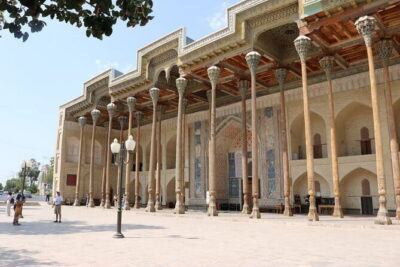
Browse the lists this tour appears in