
Review · ANCIENT FORTRESSES OF KHOREZM
Daytrip From Khiva To Ancient Fortresses
Ancient walls meet empty desert. This private day trip from Khiva takes you to three Silk Road fortresses in Karakalpakstan: Ayaz-Kala, Toprak-Kala, and Kyzyl-Kala. You ride in an air-conditioned vehicle, have a private group of up to three people, and get time to explore each site at your own pace.
I like the efficient private transportation and the chance to see a striking part of Uzbekistan beyond Khiva’s old city. I also like the sensible route, which gives you three very different fortresses rather than repeating the same kind of ruin. The main consideration is that the price does not include a guide, lunch, or entrance tickets, so this is best for independent visitors who are comfortable bringing their own historical context.
In This Review
- Key points to know before booking
- Why these three desert fortresses are worth your time
- Ayaz-Kala: one hour among massive defensive walls
- Toprak-Kala: a royal center, not just a military ruin
- Kyzyl-Kala: a compact Red Fortress with clear purpose
- Six hours in a private air-conditioned vehicle
- Is $90 good value for this outing?
- Practical preparation for the desert ruins
- Who will enjoy this Khiva excursion most?
- Should you book the three-fortress trip?
- FAQ
- How long does the day trip last?
- What sites are included?
- How much does the tour cost?
- Are entrance fees included?
- Is lunch included?
- Where can pickup and drop-off take place?
- Is the tour private?
- What transportation is provided?
Key points to know before booking
- Three very different fortresses in one six-hour outing: Ayaz-Kala is the grand defensive site, Toprak-Kala was a royal center, and Kyzyl-Kala is the compact military outpost.
- Private transport for up to three people: The $90 group price becomes particularly good value when shared by two or three passengers.
- Pickup and drop-off in Khiva or Urgench: You do not need to arrange separate transport to reach the remote ruins.
- Ayaz-Kala gets the longest visit: Plan on about one hour there, compared with roughly 30 minutes at each of the other two sites.
- Budget an extra $6 per person for entry: Each fortress charges $2, and lunch is not included.
- The strongest feature is practical simplicity: A courteous driver, air conditioning, and enough time to see all three sites are the core of the experience.
Why these three desert fortresses are worth your time
Khiva is famous for its tiled mosques, narrow lanes, and enclosed old town. That is reason enough to visit, but the ancient fortresses outside the city show a different side of the region. Here, you trade grand urban monuments for mud-brick walls, open desert, and long views toward the Sultan Uvays Mountains.
The sites belong to the Elliq-Qala, or Fifty Fortresses, area in the Karakalpakstan region. You will not see fifty fortresses on this excursion, but the three chosen sites offer a useful spread of Khorezmian history. They cover several centuries, from Ayaz-Kala’s earliest period in the 4th century BCE to Kyzyl-Kala’s use between the 1st and 4th centuries CE and Toprak-Kala’s royal period from the 1st to 6th centuries CE.
I find the contrast important. Ayaz-Kala helps you understand defense and geography. Toprak-Kala gives you a sense of royal power and religious life. Kyzyl-Kala is smaller and easier to read as a fortified outpost. Together, they make a stronger visit than any one site alone.
The experience is transportation-focused rather than a formal guided archaeology tour. That can be a benefit if you want privacy and freedom, but you should not expect a guide-led lecture at every wall. A little preparation will help you get more from the ruins.
More desert fortresses of Khorezm:
- Transfer: Bukhara – Khiva via Ancient Fortresses
★ 4.5 · 101 reviews - Daytrip From Khiva To Ancient Fortresses
★ 4.6 · 60 reviews - Guided Tour To Old Fortresses
★ 5.0 · 25 reviews
Ayaz-Kala: one hour among massive defensive walls
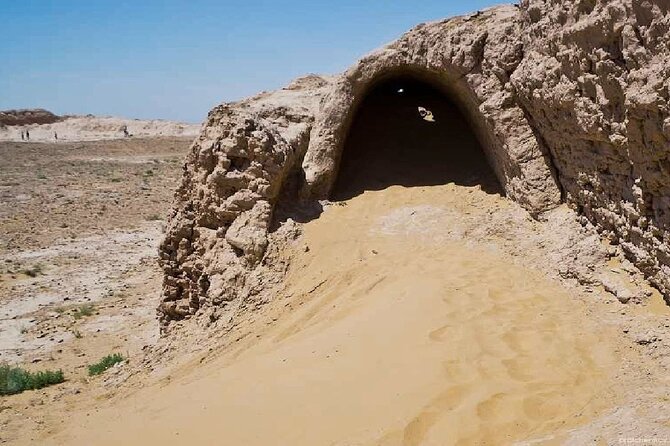
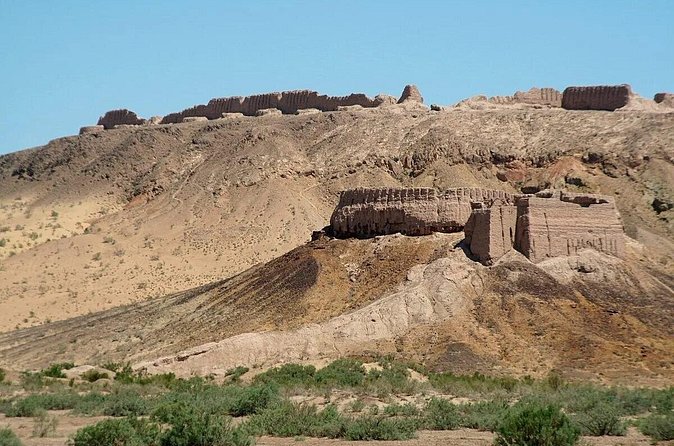
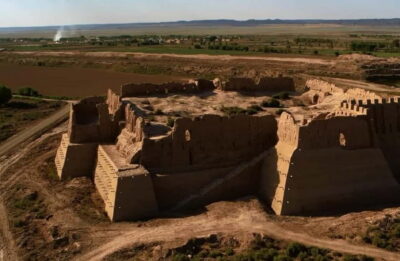
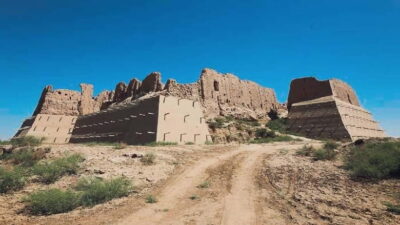
Ayaz-Kala is the centerpiece of the day. The site includes three sections, known as Ayaz-Kala I, II, and III, with construction and use linked to Kushan and Khorezmian periods. The long history is visible in the scale of the ruins, though the site is not presented like a polished museum.
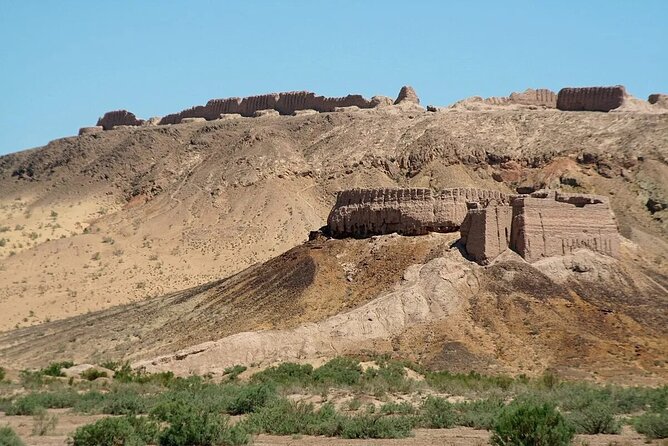
Give yourself time to look before rushing to photograph the walls. The fortress is known for its defensive purpose, and its position gives you a clear sense of why this place mattered. From the higher sections, you can look across the Kyzylkum Desert toward the Sultan Uvays Mountains.
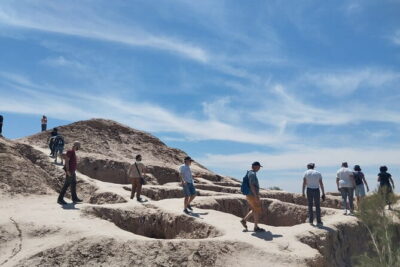
The climb to the top is one of the memorable parts of the stop. The information does not specify the exact walking conditions, so treat the site as an archaeological ruin rather than a paved attraction. Wear sensible shoes, take water, and allow time for careful footing.
The one-hour visit is a good compromise. It is long enough to explore the main sections and take in the views, but not so long that the day becomes tiring before the next two fortresses. If Ayaz-Kala is the site you most want to study, you may wish the schedule were longer. Still, the time allocation is practical for a half-day outing.
The setting does much of the work here. There are no busy city streets or ornate interiors to distract you. You see the walls against open desert, and that emptiness helps explain the fortress as a defensive position rather than just an old pile of bricks.
Toprak-Kala: a royal center, not just a military ruin
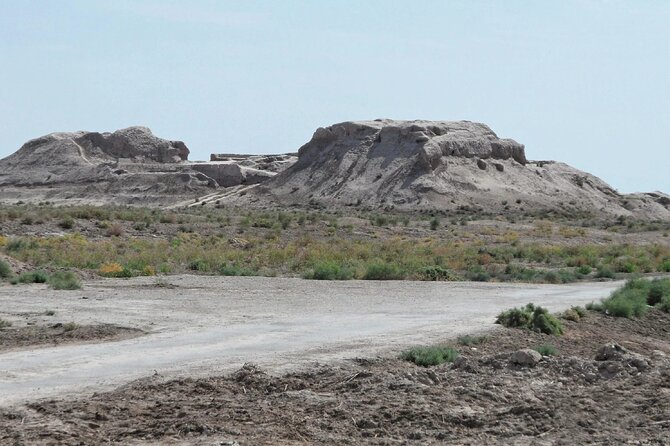
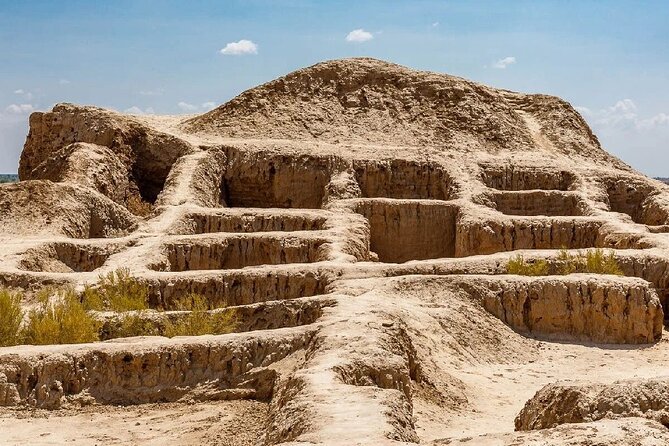
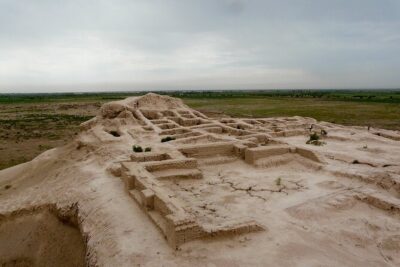
Toprak-Kala changes the mood. Instead of focusing mainly on defense, this fortress was a royal palace and center for the Khorezmian kings. Its remains offer a glimpse of court life, administration, and religious practice.
You have about 30 minutes here. That is a short visit, but it can work if you arrive with a clear idea of what to look for. The site is associated with ancient art remnants, inscriptions, and Zoroastrian influences. Look for references to fire altars and the traces of palace spaces.
Toprak-Kala is especially useful for visitors who want to picture how a desert kingdom functioned. Ayaz-Kala may first catch your eye because of its broad defensive walls and views. Toprak-Kala asks you to think about the people who governed from these structures, not only the soldiers who guarded them.
The drawback is that half an hour does not allow a slow archaeological study. If you are deeply interested in ancient art or Zoroastrian practice, you will want to read about the site before arriving. Without a guide included, you may spend some of the visit trying to identify what you are seeing.
Even so, the stop earns its place in the route. It adds political and religious context to the military story told by the other fortresses.
Kyzyl-Kala: a compact Red Fortress with clear purpose
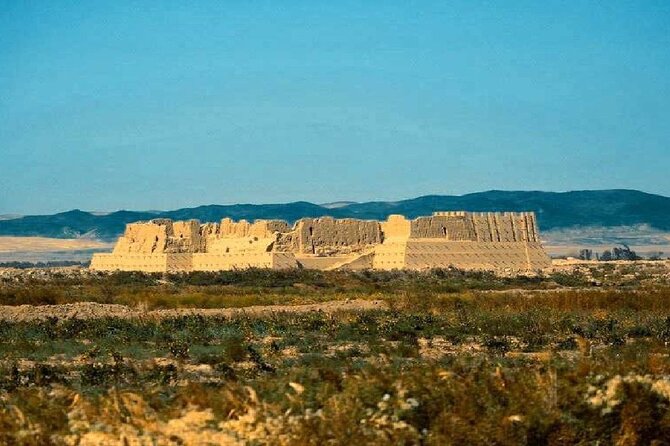
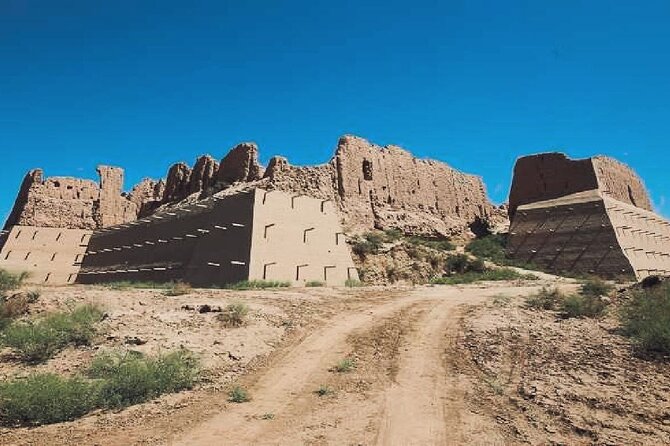
Kyzyl-Kala means Red Fortress in Turkic. It is smaller than Ayaz-Kala and Toprak-Kala, with reddish-brown mud-brick walls that give the site its name and character.
This fortress dates from the 1st to 4th centuries CE and served as a military outpost guarding Silk Road caravans. The compact size makes it easier to understand quickly. In about 30 minutes, you can take in the shape of the walls, compare the construction with the larger sites, and see how a smaller post fit into the wider defensive system.
Kyzyl-Kala is a good final stop because it does not demand the same amount of walking or study as Ayaz-Kala. By this point, you will have already seen a large defensive fortress and a royal palace complex. The Red Fortress provides a concise final chapter.
Do not expect the same scale here. If you want the biggest ruins and broadest views, Ayaz-Kala will probably be your favorite. Kyzyl-Kala’s value comes from comparison. It shows that the area’s fortifications were not all built for the same role or on the same scale.
A few more options to weigh up in Khiva and Urgench
- Khiva: Historical City Highlights Guided Walking Tour
★ 4.8 · 156 reviews - Aral Sea Adventures (2 day)
★ 5.0 · 30 reviews - Khiva Historical City Highlights Guided Walking Tour
★ 5.0 · 30 reviews - Private Daytrip to 7 Ancient Fortresses of Khorezm
★ 5.0 · 25 reviews
Six hours in a private air-conditioned vehicle
The tour lasts about six hours, including the route from Khiva or Urgench and the visits to the three sites. The exact balance of driving and sightseeing is not broken down, so keep your expectations practical. This is a focused excursion, not a leisurely full-day expedition with long meals and extended time at every ruin.
Private transportation is the heart of the arrangement. Only your group participates, and the vehicle has air conditioning. That matters in a desert setting, particularly when you are moving between exposed archaeological sites. A courteous driver and effective transport make the day easier, even without a formal guide.
Pickup is offered from Khiva and Urgench City, with drop-off at any location in either city. That flexibility is useful if you are staying in Khiva but arriving through Urgench, or if you want to finish somewhere different from your starting point.
The group limit is three people. This is not a large coach excursion, so you avoid waiting for a crowd to board or follow a fixed group leader. You can keep the day quiet and focused on the ruins.
At the same time, private transport does not automatically mean personalized historical interpretation. No guide is included in the stated package. If you want detailed explanations of the Khorezmian civilization, Kushan architecture, inscriptions, or Zoroastrian features, prepare in advance or arrange separately for a guide.
Is $90 good value for this outing?
The advertised price is $90 per group of up to three people. For one person, that is a fairly large transport expense. For two or three people, the calculation becomes much more attractive: three passengers would pay about $30 each for private round-trip transport and drop-off flexibility.
You also need to add the entrance charges. Ayaz-Kala costs $2 per person, Toprak-Kala costs $2, and Kyzyl-Kala costs $2. That makes the total admission cost $6 per person, or $18 for a group of three.
Lunch is not included. An optional lunch may be available, but the supplied details do not specify its price or location. Plan accordingly rather than assuming food is part of the package.
The value depends on what you want. If you need a full guide, included meals, and a carefully narrated archaeological tour, the arrangement may feel basic. If your priority is reliable private transport to three remote sites, the price is reasonable, especially when shared.
The strongest value comes from combining convenience with independence. You do not have to negotiate separate transport for each fortress, and you are not limited to one ruin. The driver handles the road while you concentrate on the sites.
Practical preparation for the desert ruins
The details provided do not list specific clothing or equipment requirements, so keep your preparation simple and sensible. Bring water, sun protection, and shoes suitable for uneven archaeological ground. Ayaz-Kala includes a climb for the best views, and the other sites are also ancient ruins rather than fully developed urban attractions.
You should also bring a phone with the mobile ticket available. Confirmation is received at booking, and the tour supports a mobile ticket, which reduces the need for printed paperwork.
A little reading before departure will improve the experience. Learn the basic difference between a palace-fortress, a defensive fortress, and a caravan-route outpost. Then you can use your time on site to test those ideas against the walls and layouts you see.
The schedule gives Ayaz-Kala one hour and the other fortresses 30 minutes each. If you tend to photograph every detail or read every sign, the timing may feel brisk. If you prefer a clear overview, it should be enough to see the main features without turning the day into an endurance test.
Service animals are allowed, and most people can participate. The tour is also near public transportation, though pickup is already included from Khiva and Urgench. These points make the arrangement fairly accessible in practical terms, but the ruins themselves are historic sites, so the stated information does not promise fully accessible paths.
Who will enjoy this Khiva excursion most?
I would recommend this trip to anyone who has at least a little interest in Central Asian history and wants to leave Khiva’s old city for a few hours. It suits couples, friends, and small families who value a private vehicle and a simple route.
It is especially good for:
- Visitors with only one free day outside Khiva
- Small groups who can share the $90 vehicle cost
- Independent sightseers who do not need constant commentary
- Photographers interested in desert ruins and long views
- History fans who want to compare royal, defensive, and military sites
I would be more cautious if you dislike exposed ruins, short visits, or self-guided sightseeing. The trip is not designed as a slow academic study of one fortress. It gives you a broad look at three locations in one half-day.
The highly praised qualities are practical ones: effective transportation, a courteous driver, and enough time to explore all three sites. That is useful information. The experience succeeds because it gets you to the right places without making the day complicated.
Should you book the three-fortress trip?
Book it if you want to see the desert fortresses without arranging private transport yourself. The combination of Ayaz-Kala’s scale, Toprak-Kala’s royal role, and Kyzyl-Kala’s compact military design gives you a solid view of the region beyond Khiva.
I would book for two or three people, when the group price offers the best value. I would also prepare with a little background reading, since the package includes transportation rather than a named guide.
Skip it if you want a fully guided, meal-inclusive day or if you prefer spending several hours at one archaeological site. For independent visitors who want three dramatic ruins, open desert views, and a courteous driver, this is a well-focused half-day choice.
FAQ
How long does the day trip last?
The experience lasts approximately six hours.
What sites are included?
The route includes Ayaz-Kala, Toprak-Kala, and Kyzyl-Kala in the Karakalpakstan region of Uzbekistan.
How much does the tour cost?
The price is $90 per group of up to three people.
Are entrance fees included?
No. Entrance costs $2 per person at each fortress, for a total of $6 per person if you visit all three.
Is lunch included?
No. Lunch is not included, though an optional lunch may be available.
Where can pickup and drop-off take place?
Pickup is offered from Khiva and Urgench City. Drop-off can be at any location in Khiva or Urgench City.
Is the tour private?
Yes. It is a private activity, and only your group participates.
What transportation is provided?
The tour includes private round-trip transportation in an air-conditioned vehicle.
Just added in Khiva and Urgench
- Urgench Airport / Railway Station – Khiva Transfer★ 3.0 · 2 reviews
- Traditional Khiva Cooking Class with Market Visit & Lunch★ 5.0 · 4 reviews
- Uzbekistan 6 Days Private Tour Khiva-Bukhara-Samarkand by Train★ 5.0 · 4 reviews
- Transfer From Khiva To Bukhara★ 5.0 · 2 reviews
- Old Khiva Stories with Your Local Guide★ 5.0 · 5 reviews
- Day Trip Top 3 Fortresses departure from Khiva Self-Guided Tour★ 5.0 · 2 reviews
- Plov Tour : Taste, Tradition & History of Plov with a local guide★ 5.0 · 1 review
- Master Class – Uzbek Bread (Khiva)★ 3.5 · 4 reviews
Ancient Fortresses of Khorezm, compared.
Transfer: Bukhara – Khiva via Ancient Fortresses
Read our review →
Private Daytrip to 7 Ancient Fortresses of Khorezm
Read our review →
Browse the lists this tour appears in