
Review · ANCIENT FORTRESSES OF KHOREZM
Daytrip from Khiva to six ancient fortresses
Six desert fortresses make one long, memorable day. This private trip from Khiva or Urgench takes you from the huge ruins of Guldursun Kala to the dramatic walls of Ayaz Kala, with air-conditioned transport and flexible departure time. I like the variety of the six stops, and I like that the $125 price covers a private vehicle for up to three people. The main drawback is the length: nine hours in hot, exposed country, with entry tickets, a guide, and lunch costing extra.
I also appreciate the easy hotel or airport pickup and drop-off in Khiva or Urgench. Driver Muratbek received a warm mention for making an effort to communicate in English, even though his English was not perfect. You should still come prepared for a mostly self-guided day, since a guide service is not included.
In This Review
- Key points before you book
- Why these six Khorezm fortresses matter
- Starting from Khiva or Urgench
- Guldursun Kala: a huge first stop
- Kavat Kala: the quietest fortress
- Ayaz Kala: the day’s dramatic centerpiece
- Big Qırq Qız Qala and its unusual walls
- Topraq-Kala: palace ruins instead of a simple fort
- Kyzyl-Kala: a compact red fortress
- What the $125 price really buys
- Heat, walking, and the self-guided format
- Who should book this fortress day
- Should you book the six-fortress trip?
- FAQ
- Where does the trip start?
- Where does the trip finish?
- How long does the experience last?
- How much does the trip cost?
- Is transportation included?
- Are entrance tickets included?
- Is a guide included?
- Is lunch included?
- Can I choose the departure time?
- What should I bring?
Key points before you book
- Six fortresses in one day: See Guldursun Kala, Kavat Kala, Ayaz Kala, Big Qırq Qız Qala, Topraq-Kala, and Kyzyl-Kala.
- Private transport for up to three: The $125 rate covers the group, not each person, making it better value when shared.
- A long desert outing: Plan on roughly nine hours, much of it between open, sun-exposed archaeological sites.
- Ayaz Kala gets the most time: You have about 90 minutes for its walls, views, and nearby area.
- No guide or lunch included: You will need to arrange your own food and handle much of the sightseeing independently.
- Bring serious sun protection: Comfortable shoes, a hat, sunscreen, and weather-appropriate clothing are essential.
Why these six Khorezm fortresses matter
This is not a polished collection of restored monuments. The fortresses are ancient mud-brick ruins spread across the dry country of Karakalpakstan, and their appeal comes from scale, age, silence, and setting. You see defensive walls, towers, corridors, palace remains, and unusual fortress designs rather than complete buildings.
The sites represent different periods. Kavat Kala reaches back to the Kushan Empire, dated here to the first through fourth centuries AD. Topraq-Kala served as a royal palace complex from the first to sixth centuries AD. Ayaz Kala began as a fourth-century BC defensive site, while Guldursun Kala belongs mainly to the twelfth and thirteenth centuries.
That range gives the day real depth. You are not simply visiting six similar piles of mud brick. One site feels like a royal center, another like a lonely outpost, and another like a military citadel. I find that contrast more rewarding than seeing one large archaeological site and rushing through several smaller exhibits.
At the same time, you should set your expectations correctly. These are open ruins, not fully reconstructed castles. Some walls are eroded, some paths are rough, and interpretation may be limited without a guide. The experience depends on your willingness to look closely and use your imagination.
More desert fortresses of Khorezm:
- Transfer: Bukhara – Khiva via Ancient Fortresses
★ 4.5 · 101 reviews - Daytrip From Khiva To Ancient Fortresses
★ 4.6 · 60 reviews - Private Daytrip to 7 Ancient Fortresses of Khorezm
★ 5.0 · 25 reviews
Starting from Khiva or Urgench
Pickup is available from a hotel or airport in either Khiva or Urgench. You are asked to wait in the hotel lobby from 10 minutes before the scheduled pickup, so keep your morning simple and be ready early.
The ride is private, with an air-conditioned vehicle and parking fees included. That matters in this part of Uzbekistan. You can keep your own pace, leave a little earlier if the heat becomes oppressive, and avoid sharing a vehicle with a large group.
The flexible departure time is useful if you want to aim for softer light at one of the later stops. Still, six fortresses in nine hours leaves little room for long delays. If photography matters to you, discuss the timing with the driver before setting off, especially since Kyzyl-Kala is associated with a sunrise visit in the schedule.
The transport is practical rather than luxurious. It gets you from site to site and gives you a cool place to recover between walks. Muratbek was praised for being attentive and for trying to communicate despite imperfect English. That is encouraging, but you should not treat the driver as a substitute for a licensed historical guide.
Guldursun Kala: a huge first stop
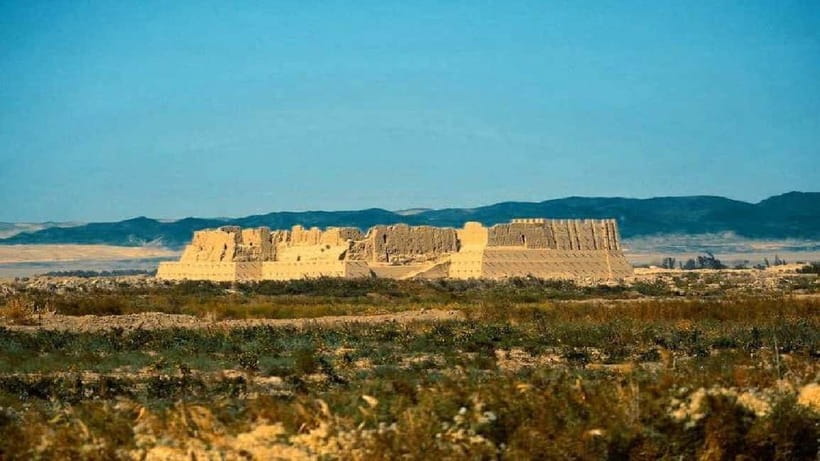
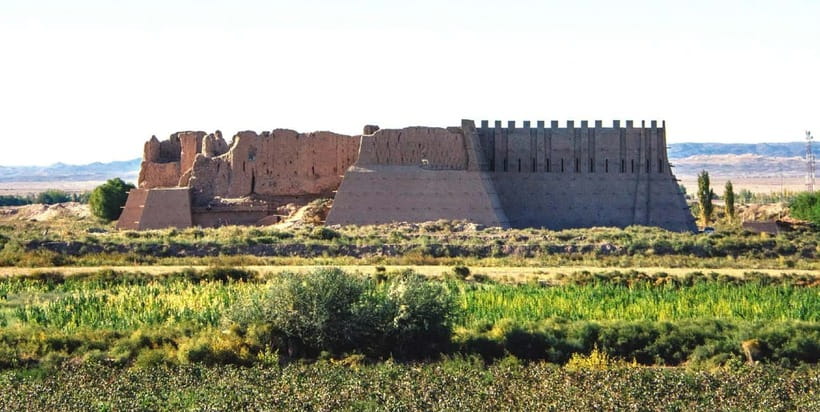
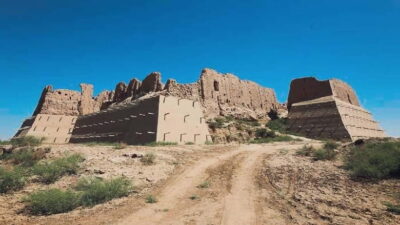
The day begins with Guldursun Kala, a large fortress linked to the final resistance of Khorezm against Mongol invasions. Its main construction is dated to the twelfth and thirteenth centuries, and local legend presents it as the last refuge of Khorezmian resistance before the fall to Genghis Khan.
You have about 30 minutes here. That is enough for a photo stop and a walk around part of the ruins, but not enough for a slow, detailed exploration of every wall and corridor. The fortress is sprawling, with tall mud-brick walls and a maze-like feel.
I like this as the opening site because it gives you an immediate sense of the size of ancient Khorezmian defenses. You can look across the sun-baked ruins and picture a functioning stronghold rather than a small isolated tower.
The drawback is the limited time. If Guldursun Kala captures your imagination, you may want to linger longer than the schedule allows. Wear shoes with a firm sole, since the attraction is the physical act of walking among the remains rather than reading extensive displays.
Kavat Kala: the quietest fortress
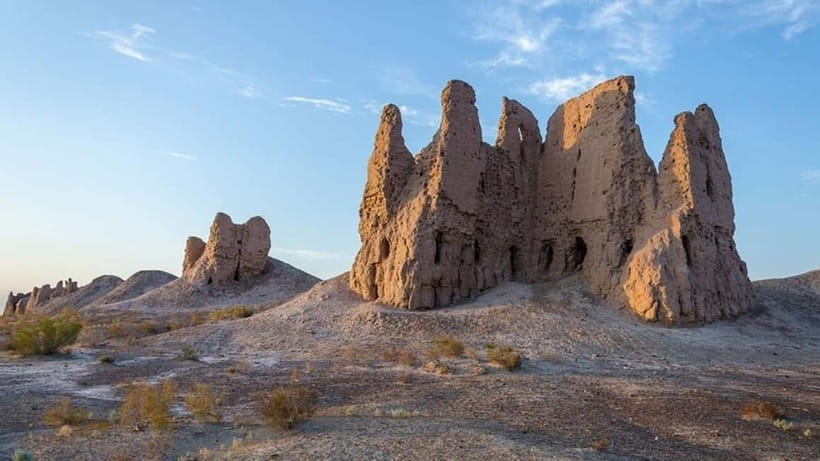
Kavat Kala receives another 30-minute stop. It is less famous than Ayaz Kala and Topraq-Kala, which is part of its appeal. The remains include crumbling mud-brick walls and watchtowers, with origins reaching back to the Kushan Empire between the first and fourth centuries AD.
This is a good place to slow down mentally. There is no grand palace story to carry you along. Instead, you are looking at a remote defensive monument and considering how many centuries of activity have passed through this dry region.
The itinerary allows free time and a short break here. That makes Kavat Kala useful as a reset between the larger sites. You can take photographs, walk around, and get your bearings without trying to cover an enormous complex.
Do not expect a fully explained visit. The trip does not include guide service, and the stop is brief. If ancient military sites interest you, bring a little background reading or save notes on your phone before leaving Khiva.
A few more options to weigh up in Khiva and Urgench
- Khiva: Historical City Highlights Guided Walking Tour
★ 4.8 · 156 reviews - Khiva Historical City Highlights Guided Walking Tour
★ 5.0 · 30 reviews - Aral Sea Adventures (2 day)
★ 5.0 · 30 reviews - Guided Tour To Old Fortresses
★ 5.0 · 25 reviews
Ayaz Kala: the day’s dramatic centerpiece
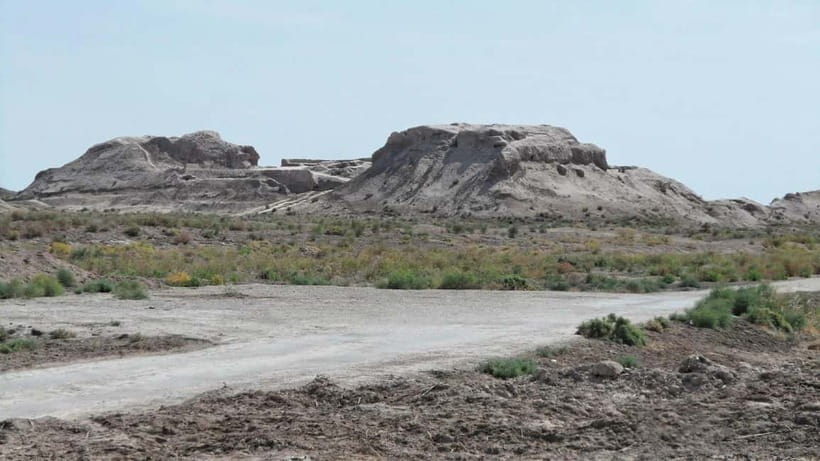
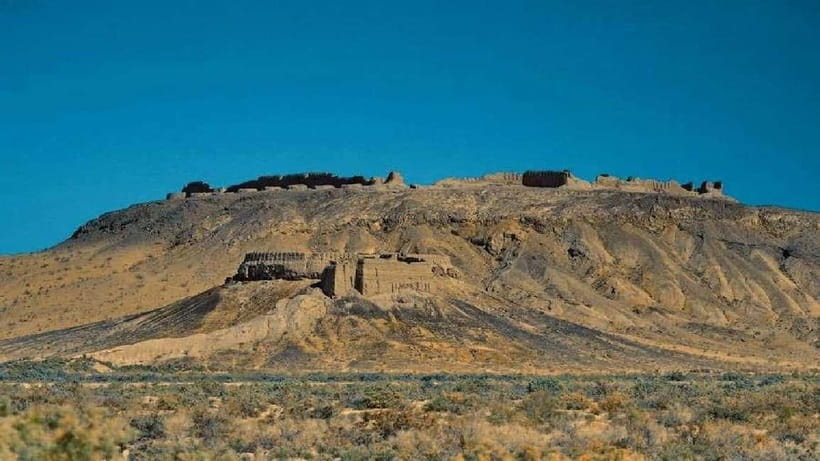
Ayaz Kala is the most visually impressive stop, and the schedule gives you about 90 minutes. The fortress sits on a windswept hill with broad views toward the Kyzylkum Desert. Its elevated position and rugged walls make it easy to understand why this is often the image people remember from the day.
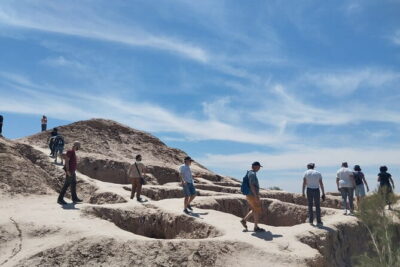
The site began in the fourth century BC and formed part of a defensive chain protecting the Khorezm Oasis. You can walk along sections of the walls, explore the ruins, and take in the open views. The climb and uneven ground require more effort than a simple roadside photo stop.
This is where comfortable walking shoes make a real difference. Add a hat and sunscreen, since shade is limited and the sun can be intense. The practical reward is excellent: you get enough time to walk, photograph, and pause without feeling rushed every five minutes.
A nearby yurt camp offers a taste of nomadic hospitality, according to the tour details, but lunch is optional and not included. Confirm the plan with your driver if you want to stop there. Do not assume a meal is part of the $125 price.
Ayaz Kala can be especially striking in late light, but the flexible departure time does not guarantee a sunset visit. Ask about the day’s route and daylight before leaving. The site is the strongest reason to choose this trip if you want one memorable fortress rather than only a checklist of ruins.
Big Qırq Qız Qala and its unusual walls
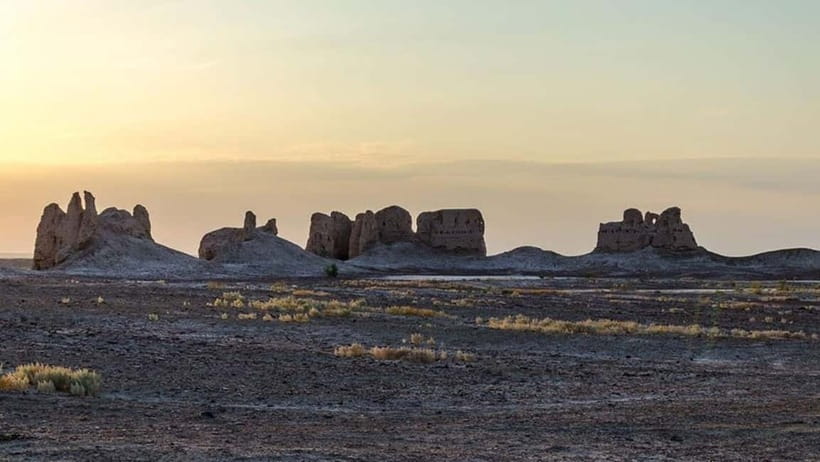
Big Qırq Qız Qala, also called Kyrk Kyz Kala, gets about 30 minutes. Its main visual feature is the corrugated or zigzagging wall design, an unusual defense that gives the remains a rippled appearance.
The fortress dates from the sixth to eighth centuries. Its original role is uncertain. It may have been a military stronghold, a caravanserai, or a residence for a powerful family. That uncertainty gives the stop a different character from the sites with better-known royal or military functions.
You can walk around the ruins, take photographs, and study the wall pattern. The short visit works well for a compact site, but it may feel too quick if you want to understand the construction in detail.
I would treat Big Qırq Qız Qala as a visual stop. The shape of the walls does the work. If you are taking pictures, look for angles that show the repeated curves and the scale of the fortress against the open surroundings.
Topraq-Kala: palace ruins instead of a simple fort
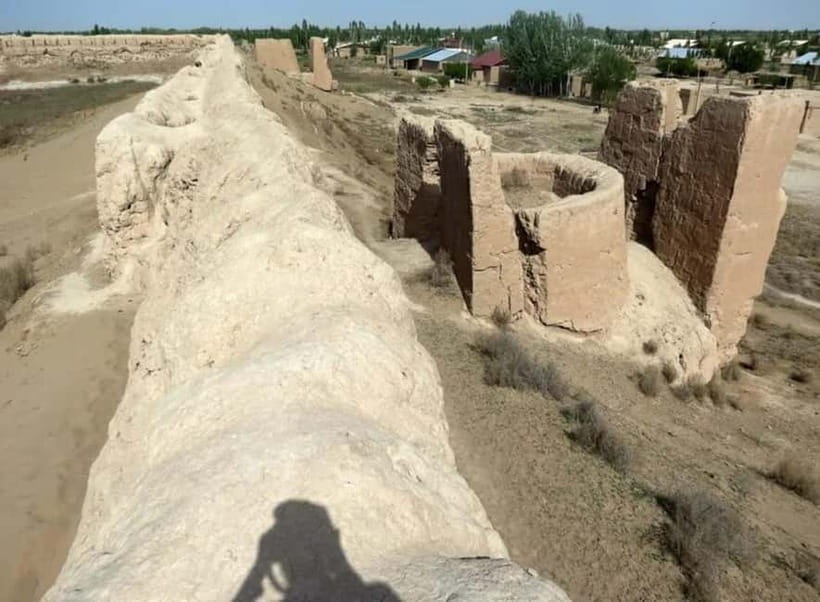
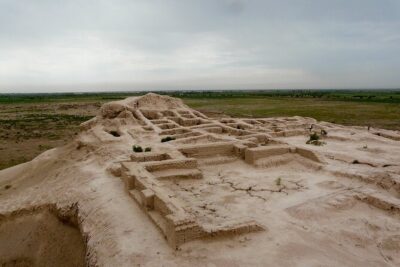
Topraq-Kala is one of the most important stops for understanding how powerful ancient Khorezm could be. Dating from the first to sixth centuries AD, it was a royal palace complex and capital rather than only a defensive enclosure.
The ruins once included throne rooms, fire temples, and decorated interiors. Excavations found wall paintings and Zoroastrian objects, giving the site a stronger sense of court life and ceremony than the more purely defensive fortresses.
You have around 30 minutes here. That is enough to walk through the remains and appreciate the broad plan, but it is a short visit for a former royal center. If you want detailed archaeological explanation, the lack of an included guide will be noticeable.
Topraq-Kala rewards careful observation. Look beyond the height of the walls and think about what the rooms were used for. The remains suggest administration, religion, and royal display, not only soldiers watching the horizon.
This stop also helps explain why the fortresses were built. Ancient Khorezm was not just a chain of isolated desert forts. It had rulers, trade, religious life, and organized centers of power.
Kyzyl-Kala: a compact red fortress
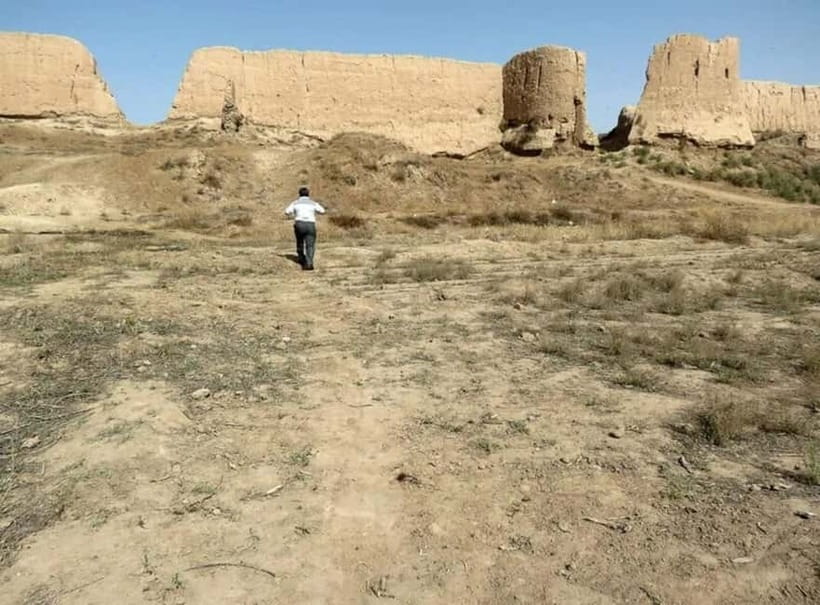
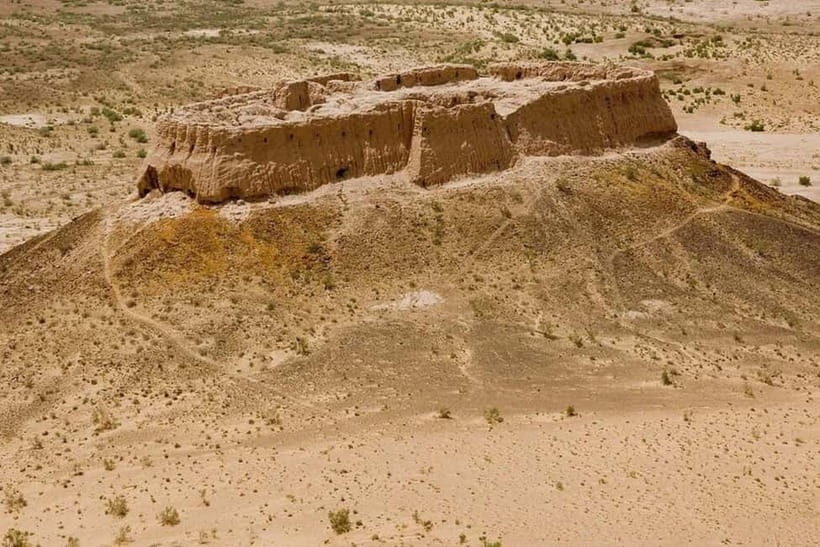
The final listed stop is Kyzyl-Kala, or the Red Fortress. Its reddish mud-brick walls, circular towers, and compact plan make it visually different from the larger sites.
It dates from the first to fourth centuries AD. Its exact function is uncertain. It may have guarded a trade route or served as a desert outpost, but the small size and defensive design are easy to read as you walk around it.
The schedule allows about 90 minutes, including free time, photographs, sightseeing, and a self-guided visit. That is generous for a smaller fortress, so the stop can provide a calmer end to the day. It is also listed in connection with sunrise, although the actual timing depends on your departure arrangement and the route you agree on.
Kyzyl-Kala is a strong choice for photography. The color of the mud brick can change with the light, and the towers give you clear details to frame. If you prefer a quiet final stop after the larger Ayaz Kala and Topraq-Kala, this site fits well.
What the $125 price really buys
The price is $125 per private group of up to three people. At the full three-person capacity, that works out to roughly $42 per person before entry tickets, food, or any guide fee.
That is fair value if you want private transport from Khiva or Urgench and do not want to arrange six remote sites yourself. The air conditioning matters, the parking fees are included, and hotel or airport pickup and drop-off remove much of the transport work.
For one person, the calculation is less attractive. You pay the same group price but use only one seat. Two people get a middle-ground value, while three people make the strongest financial case.
Budget separately for entry tickets, since they are excluded. Guide service is also not included, and lunch is optional rather than built into the rate. The trip may still cost less than a fully guided private tour, but you should compare the total price, not only the advertised transport fee.
The free cancellation period, up to 24 hours before departure, and the reserve-now, pay-later option add useful flexibility. Those terms matter when your Uzbekistan route may change because of trains, flights, or hotel plans.
Heat, walking, and the self-guided format
This is an outdoor history day. You will walk at each fortress, often over uneven ground, and spend much of the day in direct sun. Comfortable shoes, sunscreen, and a hat are not optional extras here.
Check the forecast and dress for the conditions. The instructions specifically advise weather-appropriate clothing, which is sensible because the sites are open and exposed. Bring water, although the supplied information does not state that drinks are provided.
The trip is private, but private does not mean guided. You will have a driver and transport, while the actual site visits include free time and self-guided sightseeing. That setup suits independent visitors who enjoy exploring ruins at their own pace.
If you want every date, dynasty, and architectural term explained on the spot, arrange a guide separately and confirm the additional cost. If you prefer freedom and photography, the simple format may be exactly right.
Who should book this fortress day
I would recommend this trip to anyone based in Khiva or Urgench who has a full day available and a serious interest in ancient ruins. It is particularly well suited to a private group of two or three, since the fixed group price becomes much better value.
You should also like open-air archaeology. These are not museum visits with climate control and polished displays. The reward comes from scale, distance, worn brick, and the feeling of standing among structures that have survived for centuries.
This is less suitable if you dislike long road days, hot weather, rough walking, or loosely guided sightseeing. It may also frustrate visitors who want a leisurely examination of each site, since several stops last only 30 minutes.
The best approach is to choose your priorities before departure. Give your full attention to Ayaz Kala and Topraq-Kala if you want dramatic views and royal history. Use the shorter visits for photographs and a sense of the wider Khorezm fortress network.
Should you book the six-fortress trip?
Book it if you want to see far more than Khiva’s famous old city and you value private transport. The combination of six ancient sites, flexible pickup, and a vehicle for up to three people gives the day strong practical value, especially when shared.
Skip it if you need a fully guided archaeological tour, an included lunch, or a relaxed schedule. For most independent visitors, though, this is a worthwhile way to reach Karakalpakstan’s remote fortresses without arranging the transport yourself.
FAQ
Where does the trip start?
Pickup is available from a hotel or airport in Khiva or Urgench.
Where does the trip finish?
Drop-off is available in either Khiva or Urgench.
How long does the experience last?
The day trip lasts about nine hours.
How much does the trip cost?
The price is $125 per private group of up to three people.
Is transportation included?
Yes. The price includes round-trip transportation in an air-conditioned vehicle, private transport, parking fees, and pickup and drop-off.
Are entrance tickets included?
No. Entry tickets are not included in the price.
Is a guide included?
No. Guide service is not included. Several stops are described as free-time or self-guided visits.
Is lunch included?
No. Lunch is optional and costs extra.
Can I choose the departure time?
The experience offers a flexible departure time, but you should check availability for the exact starting time.
What should I bring?
Bring comfortable walking shoes, sunscreen, and a hat. Check the weather forecast and dress appropriately for the conditions.
Just added in Khiva and Urgench
- Urgench Airport / Railway Station – Khiva Transfer★ 3.0 · 2 reviews
- Traditional Khiva Cooking Class with Market Visit & Lunch★ 5.0 · 4 reviews
- Uzbekistan 6 Days Private Tour Khiva-Bukhara-Samarkand by Train★ 5.0 · 4 reviews
- Transfer From Khiva To Bukhara★ 5.0 · 2 reviews
- Old Khiva Stories with Your Local Guide★ 5.0 · 5 reviews
- Day Trip Top 3 Fortresses departure from Khiva Self-Guided Tour★ 5.0 · 2 reviews
- Plov Tour : Taste, Tradition & History of Plov with a local guide★ 5.0 · 1 review
- Master Class – Uzbek Bread (Khiva)★ 3.5 · 4 reviews
Ancient Fortresses of Khorezm, compared.
Transfer: Bukhara – Khiva via Ancient Fortresses
Read our review →
Private Daytrip to 7 Ancient Fortresses of Khorezm
Read our review →
Browse the lists this tour appears in