
Review · ANCIENT FORTRESSES OF KHOREZM
Fortress Day Trip Tour Departure from Khiva
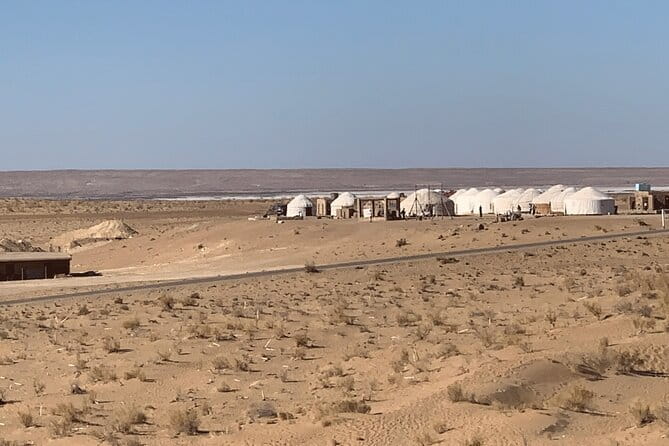
The desert keeps its secrets well. This day trip from Khiva takes you beyond the city walls to three striking fortresses in Karakalpakstan, where ancient ruins rise from the sand and empty horizons replace busy streets. I like the private vehicle and English-speaking guide, which make a long desert outing easier to manage. I also like that entrance tickets are included, so the $80 price is clear from the start.
The main drawback is the amount of time spent on the road. The tour covers about 210 kilometers and lasts roughly seven hours, with lunch not included. You need to be comfortable with heat, cold, dust, uneven ground, and wide open sites that offer little shade.
In This Review
- Key points to know before you book
- Why leave Khiva for the desert forts?
- The morning departure from Ichan Kala
- Kyzyl Qala, the red fortress of ancient Khorezm
- Toprak Qala and the remains of a desert city
- Ayaz Qala, the day’s essential fortress
- What the $80 price really covers
- The private format and the guide’s role
- What to pack and how to handle the day
- Who should book this fortress trip?
- Final verdict: book it for the setting, not speed
- FAQ
- Where does the fortress tour start?
- Where does the tour finish?
- How long does the tour last?
- Which fortresses are included?
- How much driving is involved?
- Is lunch included?
- Is transportation provided?
- Is an English-speaking guide included?
- Are entrance fees included?
- Is this a private tour?
- Can I cancel for a full refund?
Key points to know before you book
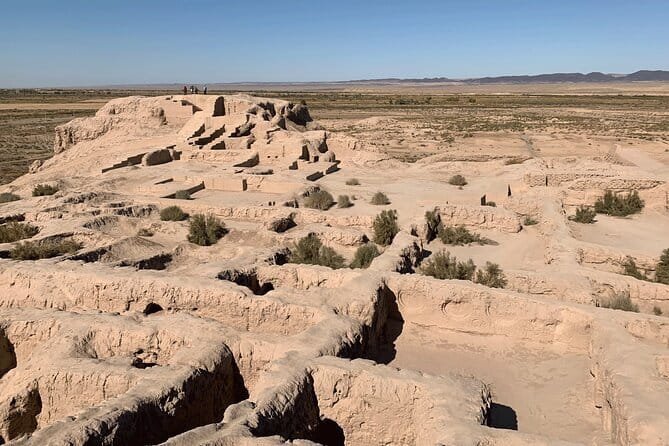
- Three major fortresses in one day: Visit Kyzyl Qala, Toprak Qala, and Ayaz Qala, each with a different scale and character.
- A private outing: Only your group takes part, rather than joining a large coach party.
- Ancient ruins far beyond Khiva: The forts belong to the Ellik Qala region, traditionally known as the land of 50 fortresses.
- A long but manageable road day: Driving, sightseeing, and a possible lunch break fit into about seven hours.
- Entrance tickets are included: The price covers the monuments, air-conditioned transport, and an English-speaking guide.
- Winter can be very cold: A January visit can mean crisp air, few other people, and a much quieter experience.
Why leave Khiva for the desert forts?
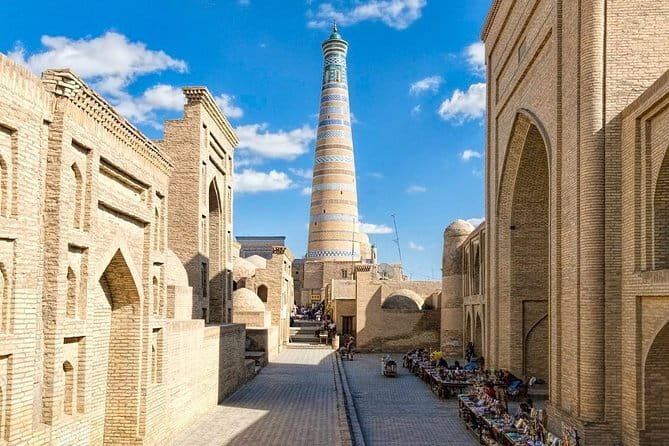
Khiva’s Ichan Kala is a concentrated historic city, filled with mosques, madrasas, lanes, and restored brick buildings. The fortress day trip gives you the other half of the story: the fortified towns that once supported life across the desert and river-fed plains of ancient Khorezm.
The Ellik Qala area contains the remains of more than a dozen walled towns, palaces, and defensive forts. Some are more than 2,000 years old. What you see today is not a polished archaeological park. It is a series of weathered walls, exposed foundations, and towers scattered across a huge, quiet setting.
That contrast is the real reason to go. In Khiva, history is close enough to touch at every turn. Outside the city, the ruins seem to fade into the desert. You can better understand how large these settlements were, how much work their walls required, and how dependent they were on canals and water.
The excursion is described as visiting three of the most impressive forts. One previous booking account also describes seeing eight or more fortresses in a single day. That suggests the guide may point out or include additional ruins depending on the route and timing, but you should treat the three named sites as the guaranteed core of the visit.
More desert fortresses of Khorezm:
- Transfer: Bukhara – Khiva via Ancient Fortresses
★ 4.5 · 101 reviews - Daytrip From Khiva To Ancient Fortresses
★ 4.6 · 60 reviews - Private Daytrip to 7 Ancient Fortresses of Khorezm
★ 5.0 · 25 reviews
The morning departure from Ichan Kala
The meeting point is at the west gate of Ichan Kala in Khiva. After breakfast, you meet the English-speaking guide and leave in an air-conditioned vehicle. The tour is private, so only your own group participates, a useful advantage when you want to stop for photographs or move at a pace that suits you.
The route covers about 210 kilometers in total. The stated driving times vary slightly, but the first section to Kyzyl Qala is described as less than an hour. Later, the drive from Toprak Qala to Ayaz Qala takes around 45 minutes, and the return to Khiva takes about one hour and 40 minutes.
That adds up to a proper road day, even though the actual sightseeing is focused. I would not book this as a relaxed morning outing. You are paying for access to places that are difficult to reach independently, and the road time is part of the bargain.
An air-conditioned vehicle matters here. The region can be cold in January and intensely exposed at other times of year. You should still bring water, sun protection, sturdy shoes, and an extra layer. The supplied information does not specify a lunch stop or restaurant, and lunch is not included, so ask the operator about food arrangements before departure.
Kyzyl Qala, the red fortress of ancient Khorezm
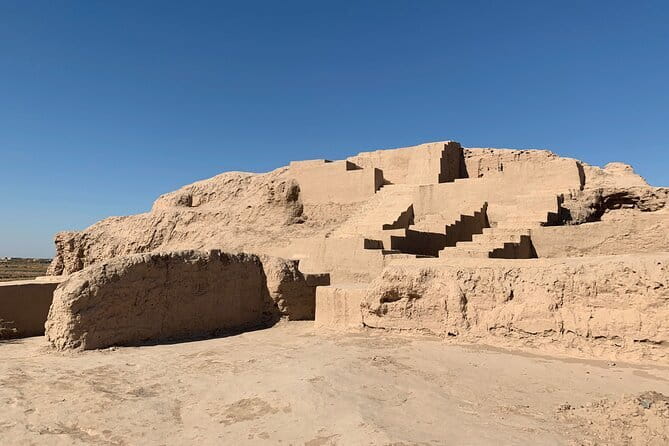
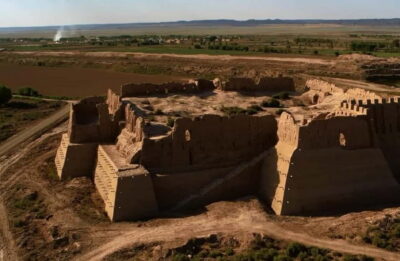
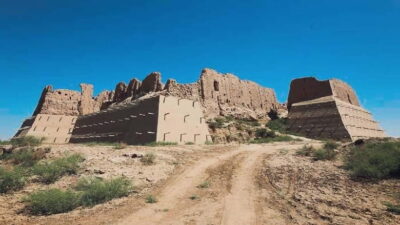
The first stop is Kyzyl Qala, which means Red Fortress in Uzbek. The ruins date from the first to fourth centuries AD and were part of ancient Khorazm.
The site had been buried in the desert for centuries before Professor Tolstov discovered it in 1938. That detail gives Kyzyl Qala a particular appeal. You are not looking at a fully reconstructed monument. You are seeing a fortress that spent generations hidden beneath the sand before archaeologists brought it back into view.
The visit lasts about 40 minutes, and the admission ticket is included. That is enough time to get a feel for the shape of the fort, examine the surviving walls, and take in the empty setting. Do not expect a large museum collection or a long sequence of intact rooms. The power of the stop comes from the outline of the structure and its isolation.
Kyzyl Qala works well as an introduction to the day. It is compact compared with Toprak Qala, and the guide can explain how these forts fit into the wider network of settlements. If you want close-up architectural detail, this may feel brief. If you enjoy seeing ruins in their original setting, the short stop gives you a useful first taste.
Toprak Qala and the remains of a desert city
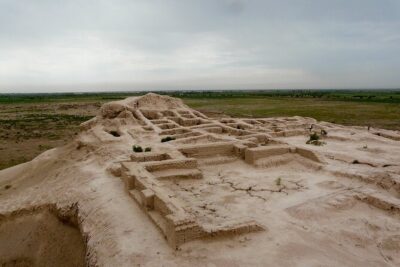
Toprak Qala means Sand Fortress. It was once the largest city in the region, measuring about 350 meters by 500 meters. That size is difficult to grasp from a few photographs, but it becomes clearer when you walk among the remains and look across the broad footprint of the settlement.
The city was eventually left stranded in the desert after the destruction of its canals. This is one of the most valuable parts of the visit. The ruins are not only about walls and rulers. They also show how water shaped settlement in ancient Khorezm. When the canals failed, a major city could no longer function, even if its defensive walls remained.
Russian archaeologist Tolstov excavated palace friezes here in 1938. The palace material dates from the second and third centuries AD, giving the site a connection to the political and artistic life of ancient Khorazm.
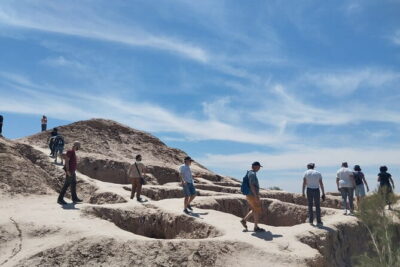
You have about one hour at Toprak Qala. That is the longest stop before Ayaz Qala, and rightly so. The site is larger, and you need time to look beyond the main walls and understand the former city plan.
The tradeoff is that the ruins are exposed and uneven. There is little information in the tour details about paths, shade, or facilities, so you should plan for a basic archaeological site rather than a carefully landscaped attraction. Wear shoes with a firm sole and be ready to walk over rough ground.
A few more options to weigh up in Khiva and Urgench
- Khiva: Historical City Highlights Guided Walking Tour
★ 4.8 · 156 reviews - Khiva Historical City Highlights Guided Walking Tour
★ 5.0 · 30 reviews - Aral Sea Adventures (2 day)
★ 5.0 · 30 reviews - Guided Tour To Old Fortresses
★ 5.0 · 25 reviews
Ayaz Qala, the day’s essential fortress
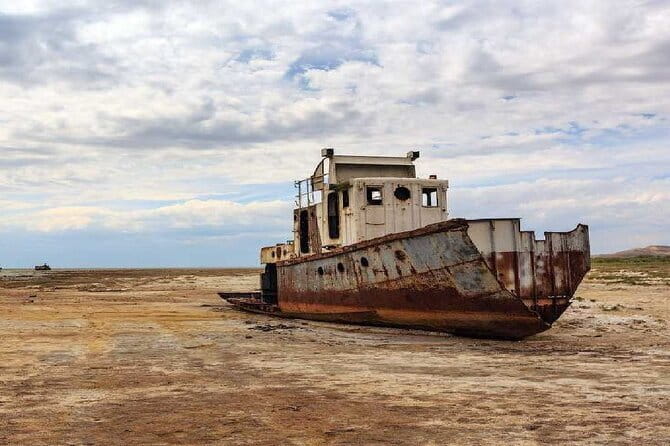
Ayaz Qala is the main event for many people. It is described as a must-see desert fort, and the surviving walls make it easy to understand why.
The outer defenses were built on a flat hilltop and have survived since at least the fourth century BC. Sections of wall still reach about 10 meters high. From the site, you can see the scale of the fortress and the way its elevated position helped protect the settlement.
The visit lasts about an hour. That gives you time to study the walls, take photographs, and listen to the guide explain the fort’s role. Ayaz Qala is less about entering a perfectly preserved building and more about reading the remains across the hilltop.
The setting adds much of the drama. The fort rises from a broad, dry area with very little around it. You get a strong sense of distance from modern life, though that also means limited shade and exposed conditions. Wind, dust, or cold can change the feel of the visit quickly.
The previous January visit is worth keeping in mind. The weather was cold, but the sites were nearly empty. That is a good trade for people who prefer quiet ruins and do not mind bundling up. In warmer months, the weather may be easier for some people, but you should expect more sun and less relief from the open terrain.
What the $80 price really covers
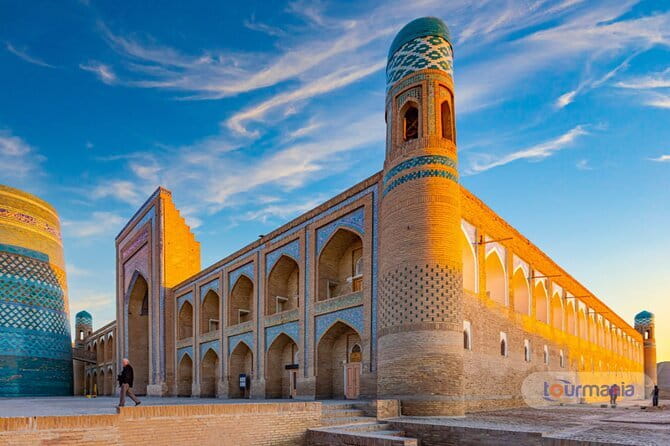
At $80 per person, this is not simply a transfer to the desert. The price includes an English-speaking guide for the day, an air-conditioned vehicle, and admission tickets to the monuments.
The private format improves the value for couples, families, and small groups. You do not have to fit into the rhythm of a large bus, and you can ask questions as you go. It also removes much of the planning burden. Reaching three remote fortresses by public transport would be awkward, and arranging separate rides could easily eat up the savings.
The value is less convincing if you only want a quick look at one ruin. Much of the seven-hour schedule is tied to driving, and lunch costs extra. Still, the tour makes sense if your time in Uzbekistan is limited and you want to see more than Khiva’s city walls.
Group discounts are offered, though no discount amounts are specified. Since the activity is private, ask how the per-person price changes with your group size before booking. A larger party may get better value from the vehicle and guide arrangement.
The private format and the guide’s role
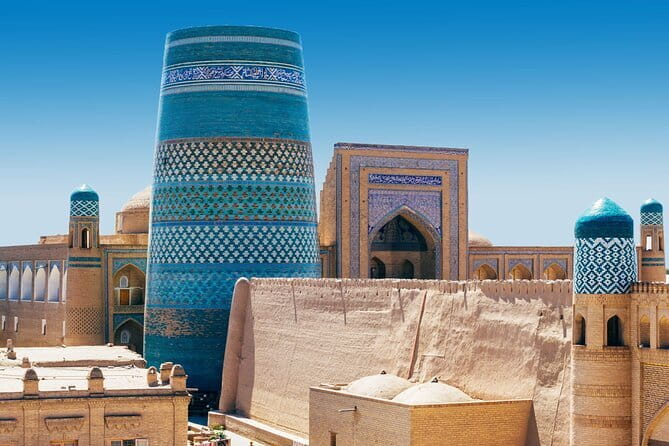
A private tour gives you more control than a standard group excursion. You can ask for extra explanation at Toprak Qala, spend longer photographing Ayaz Qala, or keep the short Kyzyl Qala stop moving if the site has made its point.
The English-speaking guide is important because these ruins can otherwise look like scattered walls without context. Names, dates, canal systems, excavation work, and the connection between the three sites help turn the visit into a story rather than a sequence of photo stops.
No individual guide name is provided, so you cannot request a specific person from the available information. The provider is Samaria Travel, and confirmation is sent at booking.
The tour is suitable for most people, but the phrase most people should not be confused with everyone. You need to manage several hours of driving and walk around ancient ruins. Service animals are allowed, and the meeting point is near public transportation, but the details do not promise paved routes or easy access at every fortress.
What to pack and how to handle the day
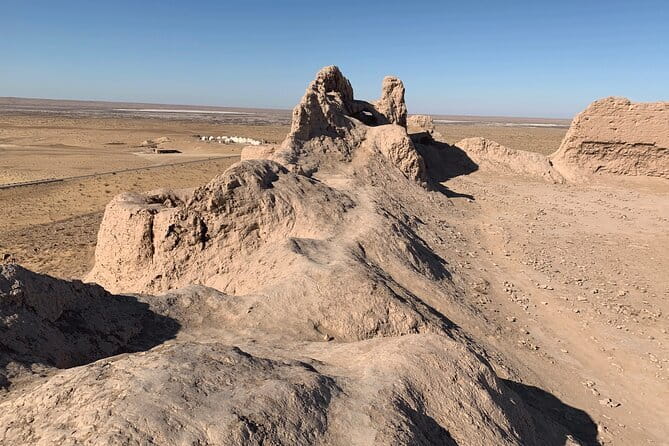
The basics matter more here than on a city tour.
- Bring water and food or confirm how the lunch break will work.
- Wear shoes suited to uneven archaeological ground.
- Carry sun protection for exposed fort walls.
- Bring warm clothing in winter, especially for an early departure.
- Keep your phone or camera charged, since the sites offer wide views and strong photographic shapes.
- Allow time for dust, wind, and changing road conditions.
The tour includes a lunch break if needed, but lunch itself is not included. That distinction is easy to miss. If you need a full meal at a particular time, arrange it in advance with Samaria Travel rather than assuming it will be provided.
The route ends back at the west gate meeting point in Khiva. That is convenient if you are staying inside or near Ichan Kala and want to continue exploring the old city afterward.
Who should book this fortress trip?
I would recommend this excursion to anyone with at least one spare day in Khiva who wants to see ancient sites outside the city. It suits people who enjoy archaeology, old defensive structures, wide desert views, and places that have not been rebuilt for modern comfort.
It is also a good fit for a private family group or a small party that values a guide and direct transport. The included tickets simplify the day, while the air-conditioned vehicle takes care of the hardest logistical problem.
I would think twice if you dislike long drives, have difficulty walking over uneven ground, or want a polished attraction with cafés and facilities at every stop. The forts are remote ruins, not comfortable theme-park monuments. Their appeal depends on emptiness, age, and scale.
The weather matters. The tour requires good conditions, and a cancellation caused by poor weather brings an offer of another date or a full refund. You can cancel free of charge up to 24 hours before the start time for a full refund. Changes or cancellations made less than 24 hours ahead are not accepted for a refund.
Final verdict: book it for the setting, not speed
Book this day trip if you want the ancient world beyond Khiva’s famous walls. Kyzyl Qala gives you a compact buried fortress, Toprak Qala shows the remains of a once-large city, and Ayaz Qala delivers the strongest walls and the clearest sense of desert scale.
The $80 price is fair for a private vehicle, guide, and three included entrance tickets. The main cost is your time and energy. You will spend several hours on the road, carry your own lunch budget, and walk through exposed ruins.
For me, the quiet setting is the reason to make the effort. A January visit can be cold, but the near-empty forts show exactly why this outing appeals. If you can accept the rough edges, this is a worthwhile extension to a Khiva stay.
FAQ
Where does the fortress tour start?
The tour starts at the west gate of Ichan Kala, at 99H4+CRQ in Khiva, Xorazm Region, Uzbekistan.
Where does the tour finish?
The activity ends back at the meeting point at the west gate of Ichan Kala.
How long does the tour last?
The total duration is about seven hours, including driving, sightseeing, a possible lunch break, and the return journey to Khiva.
Which fortresses are included?
The scheduled stops are Kyzyl Qala, Toprak Qala, and Ayaz Qala.
How much driving is involved?
The full trip covers about 210 kilometers. The return drive from Ayaz Qala to Khiva takes around one hour and 40 minutes.
Is lunch included?
No. Lunch is not included in the price, although the schedule can include a lunch break if needed.
Is transportation provided?
Yes. An air-conditioned vehicle is included.
Is an English-speaking guide included?
Yes. An English-speaking tour guide accompanies you for the day.
Are entrance fees included?
Yes. Entrance tickets to the monuments are included.
Is this a private tour?
Yes. Only your group participates in the activity.
Can I cancel for a full refund?
Yes. You can cancel at least 24 hours before the experience start time for a full refund. Poor weather may also result in another date or a full refund.
Just added in Khiva and Urgench
- Urgench Airport / Railway Station – Khiva Transfer★ 3.0 · 2 reviews
- Traditional Khiva Cooking Class with Market Visit & Lunch★ 5.0 · 4 reviews
- Uzbekistan 6 Days Private Tour Khiva-Bukhara-Samarkand by Train★ 5.0 · 4 reviews
- Transfer From Khiva To Bukhara★ 5.0 · 2 reviews
- Old Khiva Stories with Your Local Guide★ 5.0 · 5 reviews
- Day Trip Top 3 Fortresses departure from Khiva Self-Guided Tour★ 5.0 · 2 reviews
- Plov Tour : Taste, Tradition & History of Plov with a local guide★ 5.0 · 1 review
- Master Class – Uzbek Bread (Khiva)★ 3.5 · 4 reviews
Ancient Fortresses of Khorezm, compared.
Transfer: Bukhara – Khiva via Ancient Fortresses
Read our review →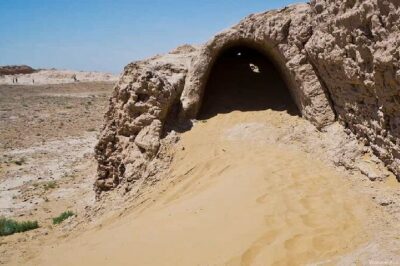
Private Daytrip to 7 Ancient Fortresses of Khorezm
Read our review →
Browse the lists this tour appears in