
Review · ARAL SEA EXPEDITIONS
From Khiva To Aral Sea 2-Days One Night In Yurt Stay
The Aral Sea leaves a long shadow. This private journey from Khiva reaches Muynak, the Ustyurt Plateau, ancient fortresses, and a yurt camp beside the former sea. I like the mix of environmental history and desert scenery, and I also like that the route includes both the famous ship cemetery and lesser-known sacred sites. The main drawback is the distance: Khiva to Muynak takes about six hours, and the return journey makes this a demanding 1.5-day trip.
I especially value the overnight stop because a quick day trip to Muynak would miss the quiet desert night and sunrise by the Aral Sea. The camp also provides a real pause after a long day in the car. Still, you should know that the $688 price for up to three people does not include the yurt charge of $45 per person or the museum ticket of $3.
In This Review
- Key points before you book
- Why this two-day Aral Sea trip is worth the long road
- Leaving Khiva for Muynak
- Muynak’s Cemetery of Ships
- The Aral Sea Museum in Muynak
- The 150-kilometer 4×4 run to the sea
- Ustyurt Plateau and its canyons
- Kurgancha-Kala and the Silk Road past
- Sleeping beside the Aral Sea in a yurt
- Mizdakhan Necropolis and its sacred buildings
- Giaur-Kala and the Zoroastrian era
- How the timing and transport affect your trip
- Who should book this experience?
- Should you book the Khiva to Aral Sea yurt tour?
- FAQ
- How long does the tour from Khiva to the Aral Sea take?
- How far is Muynak from Khiva?
- How far is the Aral Sea from Muynak?
- Is the yurt stay included in the tour price?
- Is the museum ticket included?
- What type of vehicle is used for the desert section?
- Where can pickup and drop-off take place?
- Is a professional guide included?
- What should I bring for the tour?
Key points before you book
- 380 kilometers from Khiva to Muynak: The first transfer takes about six hours, with some rough road and a one-hour lunch break.
- A true desert section after Muynak: A 4×4 Toyota Prado or Land Cruiser covers the 150-kilometer route to the Aral Sea.
- Eleven rusting ships at Muynak: The ship cemetery gives the clearest visual reminder of how far the shoreline moved.
- One night in a Karakalpak yurt: Dinner and breakfast cost extra, but the camp offers a comfortable base for stars and sunrise.
- Ancient sites beyond the sea: Kurgancha-Kala, Mizdakhan, and Giaur-Kala add Silk Road and religious history to the trip.
- Private and flexible transport: Pickup is available from hotels or train stations in Khiva and Urgench, with drop-off in Khiva, Urgench, Nukus, or at Nukus Airport.
Why this two-day Aral Sea trip is worth the long road
This is not a gentle sightseeing outing. It is a long journey across a remote part of Uzbekistan, with plenty of time in a vehicle and sections of bumpy road. But the distance has a purpose. You move from Khiva’s settled oasis into the dry expanse of Karakalpakstan, where abandoned ships, empty seabed, old fortresses, and sacred ruins tell several connected stories.
I like that this route does not treat the Aral Sea as a single photo stop. You see Muynak, learn about the disaster at the local museum, cross rough desert tracks, pause at canyons, visit a medieval fortress, and spend the night near the water’s former edge. On the second day, the focus shifts to ancient cemeteries and fortified settlements.
The private format matters here. You are not tied to a large group, and pickup can be arranged from Khiva or Urgench. The driver can also help with timing, which is useful when you need to reach a train, airport, or hotel after the tour. Islam has received especially strong praise for clear English, good communication, and careful timing.
The price requires a close look. At $688 per group of up to three, the base cost is reasonable for private transport over such a large distance, including the desert 4×4 section. Yet the yurt is not included in that amount, and the extra $45 per person covers dinner and breakfast. Add the $3 museum ticket and personal costs. For one person, it is expensive. For three people sharing the vehicle, the value improves considerably.
More Aral Sea expeditions:
- Aral Sea Adventures (2 day)
★ 5.0 · 30 reviews - Daytrip From Khiva to Aral Sea Cemetery Of Ships . All In One
★ 4.5 · 18 reviews - Private Daytrip to Muynak and Nukus
★ 5.0 · 10 reviews
Leaving Khiva for Muynak
Pickup begins early in the morning at your hotel or train station in Khiva or Urgench. The road from Khiva to Muynak covers about 380 kilometers and takes roughly six hours. A one-hour lunch break breaks up the transfer, but you should still prepare for a full morning and early afternoon on the road.
The route is partly bumpy, so comfortable clothing and patience help. The vehicle is used for city travel before the off-road section, and the private arrangement means you do not need to coordinate with strangers. That can make the long transfer easier, particularly if you are traveling with two companions.
If you can arrange it, starting from Nukus saves time and comfort. This is one of the most practical points to consider. Khiva is a rewarding base for historic Uzbekistan, but it is far from Muynak. Beginning in Nukus cuts down the first stretch and gives you more energy for the desert portion.
The driver speaks English, Russian, or Uzbek, depending on who is assigned. One part of the route uses a local desert driver who may not speak English, so communication can become quieter between Muynak and the Aral Sea. The listed stops are still covered, but you should not expect the same level of explanation during every mile of the off-road section.
Muynak’s Cemetery of Ships
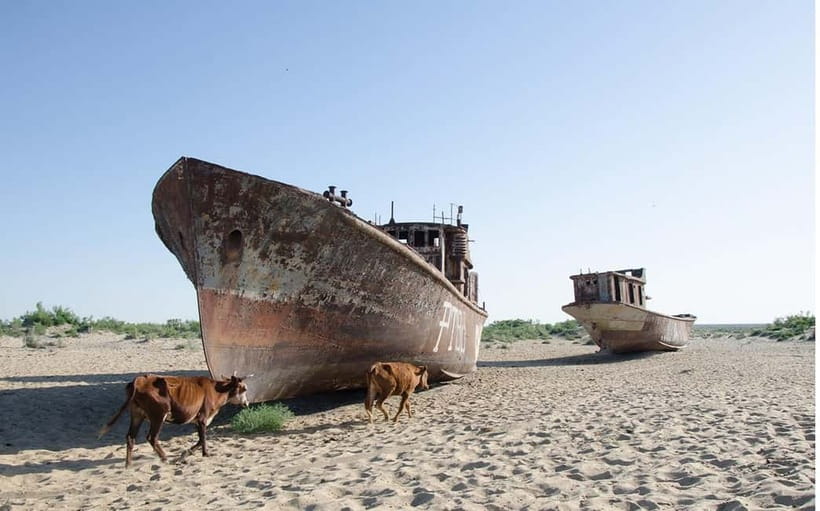
Muynak is the emotional center of the trip. Once a port on the Aral Sea, it now sits far from the water. At the Cemetery of Ships, eleven abandoned boats and vessels from the 1980s rest on the dry seabed.
The scene is stark rather than pretty. Rusting hulls sit against open desert, making the scale of the Aral Sea disaster easier to grasp than statistics can. I would allow time to walk around the boats, photograph their worn metal, and think about the people and industries that once depended on this water.
This stop is also a reminder that the site is not an old ship graveyard from some distant age. The vessels are relatively recent, which makes the change feel especially sharp. You are looking at the remains of a modern environmental crisis, not an archaeological ruin.
Bring a hat, sunscreen, and water for the outdoor visit. The open setting offers little shelter. Comfortable shoes are useful because the ground around the vessels may be uneven.
The Aral Sea Museum in Muynak
The Regional History and Aral Sea Museum gives the ship cemetery more context. You can learn about Muynak, the local past, and the environmental damage that changed the region. A short documentary about Muynak and the Aral Sea crisis is also shown.
I like the order of these two stops. Seeing the ships first gives you a strong visual impression. The museum then helps explain what happened and why Muynak looks the way it does today. The museum ticket costs $3 and is not part of the main tour price.
A professional licensed guide is also not included. Your driver provides assistance, and some drivers offer extensive explanations. Islam is praised for fluent English and detailed communication, but the amount of interpretation may depend on the person driving your trip. If historical explanation is a top priority, ask about adding a licensed guide before departure.
More yurt camp stays:
- Yurt stay and Hiking in the Nurata Mountains tour – 2 days
★ 5.0 · 35 reviews - Yurt Camp Tour with Night from Bukhara
★ 3.8 · 35 reviews - Desert Adventure from Samarkand: Yurt Camp & Aydarkul Escape
★ 4.6 · 16 reviews - Desert yurt camp and Mountain tour – 3 days
★ 4.5 · 15 reviews
The 150-kilometer 4×4 run to the sea
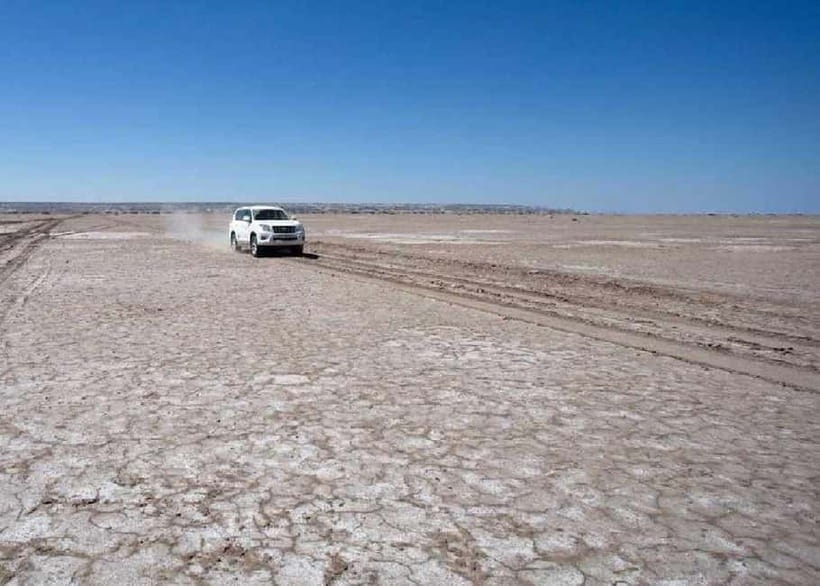
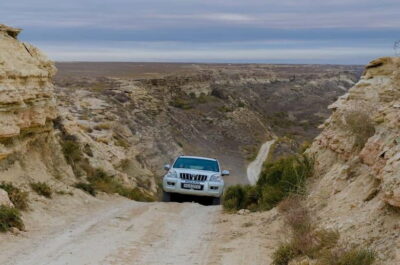
After Muynak, the journey changes character. You transfer into a 4×4 Toyota Prado or Land Cruiser for roughly 150 kilometers of desert driving. The route takes about three hours, and this is where the trip feels most remote.
The vehicle matters. A standard city car would not be suitable for this section, while a proper 4×4 provides more comfort and capability on rough tracks. Even so, this is not a smooth highway ride. Expect jolts, dust, and a slower pace.
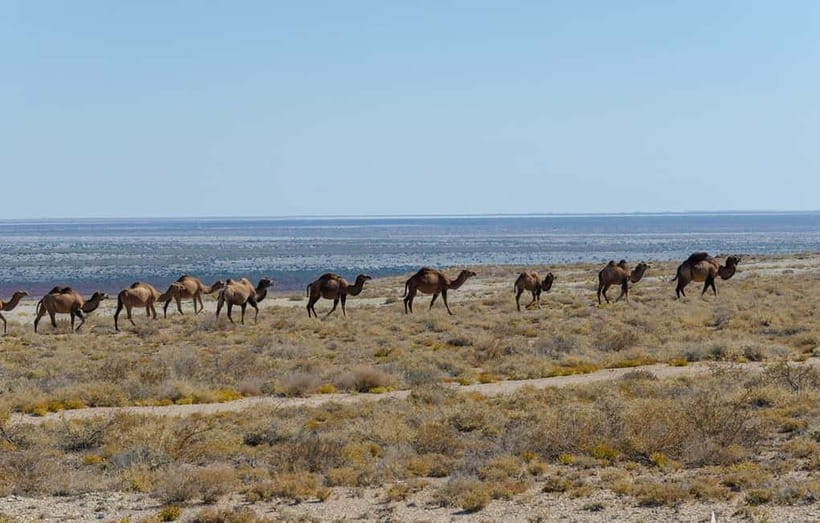
The open desert gives the trip its sense of scale. You may spend long stretches seeing very little beyond sand, rock, and sky. That emptiness is part of the experience, but it is also why you should pack carefully. Warm clothing, a hat, sunscreen, and a camera all belong in your day bag. Cash is useful because ATMs may be scarce.
Ustyurt Plateau and its canyons
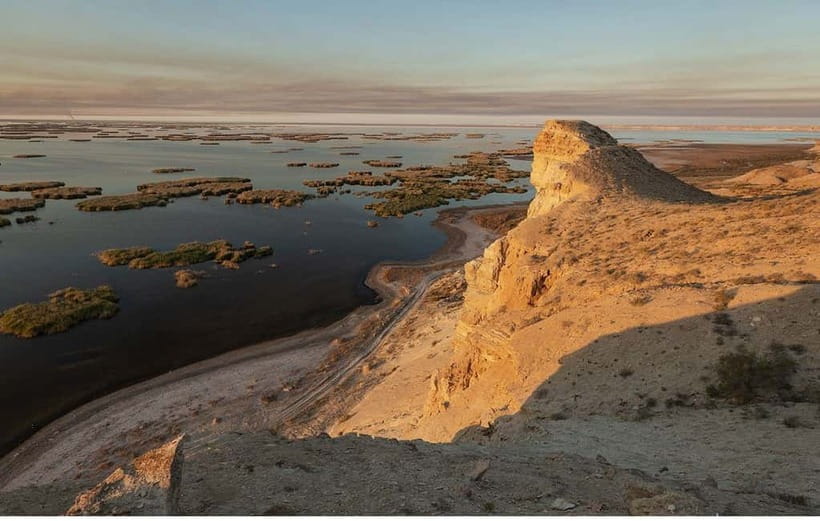
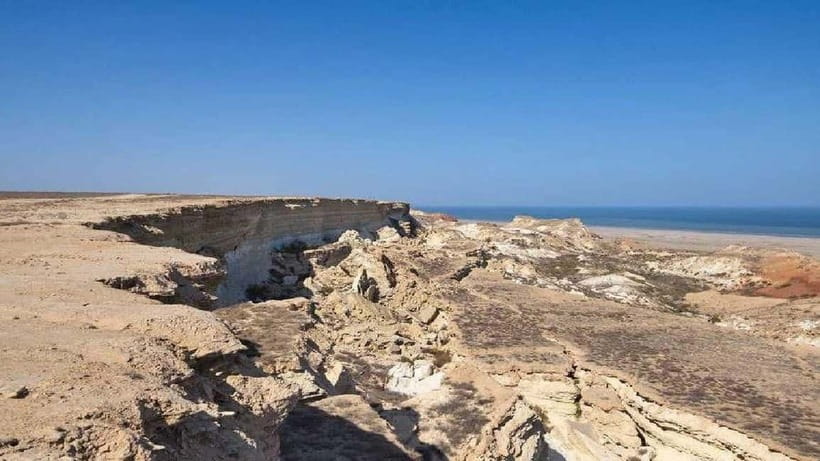
The Ustyurt Plateau adds shape and color to a route often pictured as flat desert. The tour stops at dramatic canyons and viewpoints, giving you a chance to get out of the vehicle and see the geology up close.
These stops are valuable because they break up the long off-road transfer. They also show that the Aral Sea area is not only about abandoned boats. The plateau and canyons bring a different kind of drama, with broad views and sharp rock formations.
Exact stop lengths are flexible, which is one benefit of a private group. Timing depends on the road, daylight, weather, and the pace of the day. In late November, sunset can arrive around 5:30 p.m. That means you may reach the yurt camp after dark, although this can work well if your main goal is stargazing.
Kurgancha-Kala and the Silk Road past
Kurgancha-Kala was built in the 13th century as a refuge and outpost for Silk Road caravans. Located about 100 kilometers northwest of Muynak, the old fortress now sits near the yurt camp.
The ruins add depth to the journey. After the modern story of a vanished sea, you encounter a much older story of movement, trade, and protection. Caravans crossing this region needed fortified places to shelter, and Kurgancha-Kala helps you picture that difficult overland world.
Do not expect a restored castle with rooms full of displays. The appeal is the setting and the surviving traces of the fortress. You are visiting a remote ruin, so the experience depends on your interest in old walls, desert silence, and the feeling of a place far from modern roads.
Sleeping beside the Aral Sea in a yurt
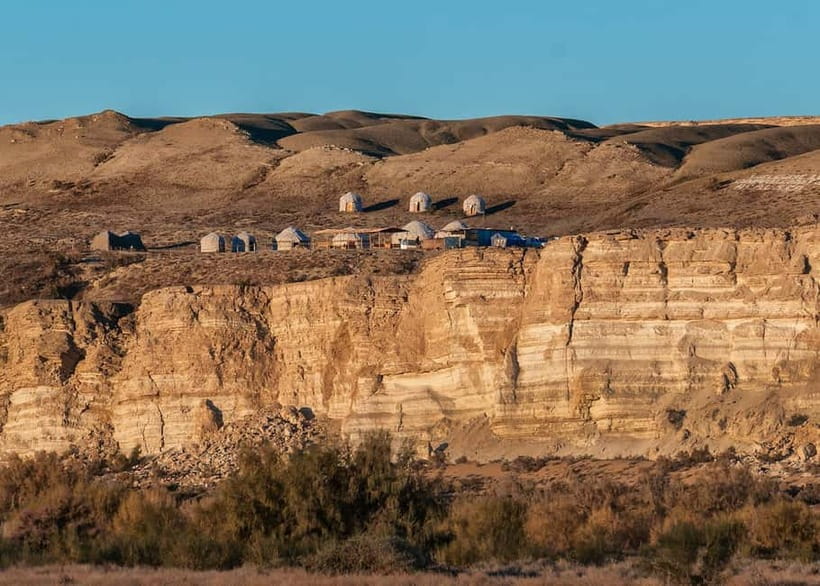
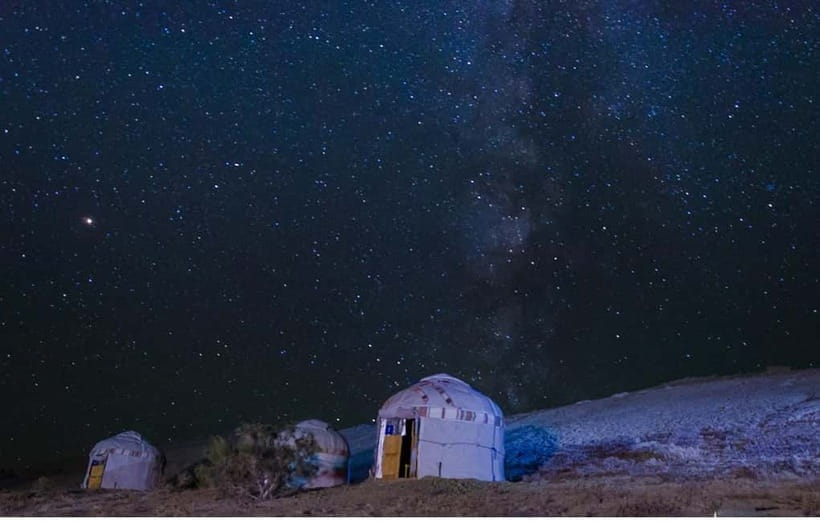
The overnight stay is the part that turns this from a long excursion into a fuller regional experience. You spend the night at a yurt camp near the Aral Sea, eat dinner in a traditional Karakalpak yurt, and wake up for breakfast before returning toward Muynak.
The yurt charge is $45 per person, including dinner and breakfast. It is separate from the $688 group price, so include it when calculating your budget. The Aral Plaza Complex has received particular praise for spacious, clean yurts, comfortable beds, climate control, towels, toothbrushes, and bathroom products.
Conditions can vary by camp, but this information suggests more comfort than a bare camping setup. You should still dress warmly at night. The desert can feel cold after sunset, and warm clothing is specifically recommended.
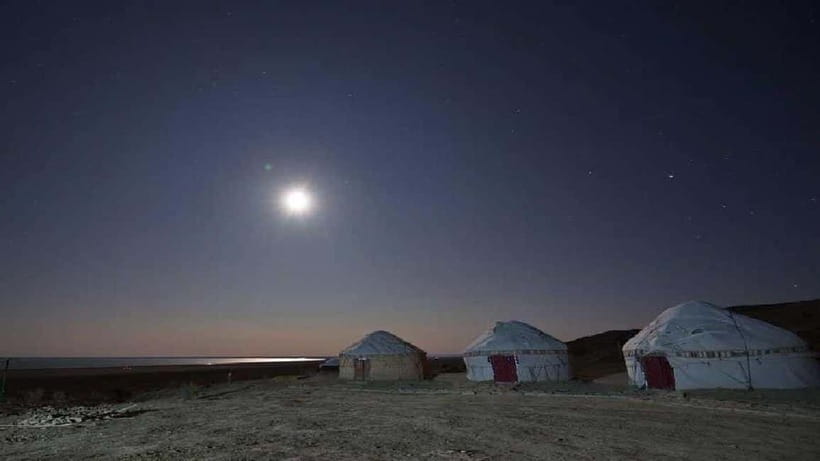
The stars are a major reason to stay overnight. With little light around the camp, you can listen to the sounds of nature and look up at a wide night sky. If you arrive after sunset, you lose the daytime view of the shoreline, but you gain the chance to see the stars without waiting late into the night.
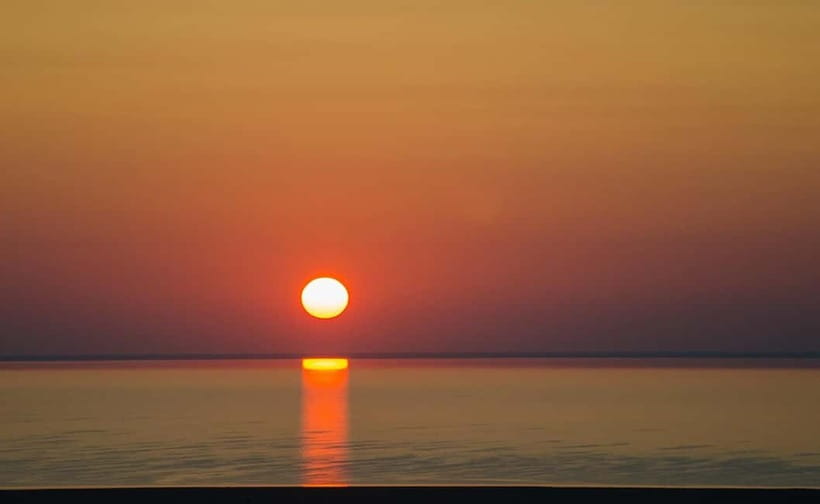
Sunrise is another reward. One of the strongest details from the trip is the chance to watch the sun come up near the former sea. Set an alarm if you want the best chance of seeing it, since the morning transfer begins after breakfast.
Mizdakhan Necropolis and its sacred buildings
Day two begins with breakfast and a transfer back to Muynak before continuing to the Mizdakhan necropolis. The site includes ancient burial grounds dating from the fourth to second centuries BC, along with later remains from the 13th to 16th centuries.
Mizdakhan is a sacred complex, not simply a collection of ruins. The visit includes several notable mausoleums, including Nazlumkhan Sulu, Khalifa Yerejep, and Shamun Nabi. These names and structures give the site a strong local and religious character.
I would approach this stop with respect. It is a place connected to burial and devotion, so modest clothing and calm behavior are sensible. The site also rewards a slower pace than the ship cemetery. Look at the forms of the mausoleums, the setting, and the way later buildings share space with much older remains.
The contrast with Muynak is one of the route’s strengths. The ship cemetery speaks of recent industrial change. Mizdakhan reaches back across centuries and connects the area to belief, memory, and pilgrimage.
Giaur-Kala and the Zoroastrian era
The final major site is Giaur-Kala, a fortified city from the Zoroastrian era, dated to the fourth or third century BC. It was once an important settlement along the Silk Road.
Giaur-Kala gives you another view of Karakalpakstan’s past. The area was not an empty desert waiting for modern development. People built settlements, protected trade routes, and practiced religious traditions here long before the Aral Sea crisis.
The site also completes the historical arc of the journey. Kurgancha-Kala represents the medieval caravan world. Mizdakhan shows a long tradition of sacred use. Giaur-Kala reaches into the pre-Islamic past. Together, these places make the route far more varied than a simple drive to see stranded ships.
How the timing and transport affect your trip
The trip lasts about 1.5 days, but the amount of driving is substantial. From Khiva, you spend around six hours reaching Muynak, then about three hours in the 4×4 to the sea. Day two includes the return toward Muynak and onward transfers to your final destination.
The private group format is helpful for this schedule. Pickup and drop-off can be arranged from Khiva, Urgench, or Nukus, and the final transfer can end at your hotel, Nukus Airport, Khiva, or Urgench. If you have a train or flight, tell the operator in advance. Islam and his driver have been praised for adjusting arrangements around a fixed departure time.
A private trip also lets you travel at your own pace during pauses, within the limits of daylight and the road. The tradeoff is that you do not have a full-time licensed guide included. Driver assistance is included, but guiding quality may vary.
Free cancellation is available up to 24 hours before departure, and you can reserve now and pay later. Pickup instructions ask you to be ready 10 minutes before the scheduled time.
Who should book this experience?
I would choose this tour if you want to understand the Aral Sea crisis in person rather than only read about it. It suits people who enjoy remote places, long road journeys, old fortresses, desert photography, and unusual overnight stays.
It is also a good fit for couples, friends, or a small private group of up to three people. Sharing the $688 transport cost makes the price easier to justify. Solo travelers should think carefully about the total cost, especially after adding the yurt and museum fees.
I would not choose it for a relaxed holiday or a short add-on from Khiva. The roads can be rough, the days are packed, and the return transfer takes work. Pregnant women should not book this activity, and anyone sensitive to long drives or off-road travel should consider starting from Nukus instead.
Should you book the Khiva to Aral Sea yurt tour?
Book it if you can spare the time and want more than Muynak’s ship cemetery. The overnight yurt, Ustyurt canyons, Kurgancha-Kala, Mizdakhan, and Giaur-Kala create a much fuller picture of Karakalpakstan.
Before booking, confirm the total price, the yurt charge, the assigned driver, and your preferred drop-off point. Pack warm clothes even in mild seasons, carry cash, and accept that part of the route may be quiet if the local 4×4 driver does not speak English.
For three people sharing the vehicle, this is a strong-value private journey. From Khiva, it is long but rewarding. From Nukus, it becomes more comfortable and easier to recommend.
FAQ
How long does the tour from Khiva to the Aral Sea take?
The activity lasts about 1.5 days and includes one night at a yurt camp.
How far is Muynak from Khiva?
Muynak is about 380 kilometers from Khiva, and the transfer takes approximately six hours.
How far is the Aral Sea from Muynak?
The route from Muynak to the Aral Sea is about 150 kilometers by 4×4 and takes around three hours.
Is the yurt stay included in the tour price?
No. The yurt costs $45 per person and includes dinner and breakfast.
Is the museum ticket included?
No. The Regional History and Aral Sea Museum ticket costs $3.
What type of vehicle is used for the desert section?
A 4×4 Toyota Prado or Land Cruiser is used for the off-road journey to the Aral Sea.
Where can pickup and drop-off take place?
Pickup is available from hotels or train stations in Khiva and Urgench. Drop-off can be arranged at a hotel, Nukus Airport, Khiva, or Urgench.
Is a professional guide included?
No. Driver assistance is included, but a professional licensed guide is an additional service.
What should I bring for the tour?
Bring comfortable shoes, warm clothing, a hat, sunscreen, a camera, and cash for personal expenses. ATMs may be scarce.
Just added in Khiva and Urgench
- Urgench Airport / Railway Station – Khiva Transfer★ 3.0 · 2 reviews
- Traditional Khiva Cooking Class with Market Visit & Lunch★ 5.0 · 4 reviews
- Uzbekistan 6 Days Private Tour Khiva-Bukhara-Samarkand by Train★ 5.0 · 4 reviews
- Transfer From Khiva To Bukhara★ 5.0 · 2 reviews
- Old Khiva Stories with Your Local Guide★ 5.0 · 5 reviews
- Day Trip Top 3 Fortresses departure from Khiva Self-Guided Tour★ 5.0 · 2 reviews
- Plov Tour : Taste, Tradition & History of Plov with a local guide★ 5.0 · 1 review
- Master Class – Uzbek Bread (Khiva)★ 3.5 · 4 reviews
Aral Sea Expeditions, compared.
Daytrip from Khiva to Aral Sea Cemetery of Ships. All in one
Read our review →
Daytrip From Khiva to Aral Sea Cemetery Of Ships . All In One
Read our review →
Browse the lists this tour appears in