
Review · ARAL SEA EXPEDITIONS
Private Daytrip to Muynak and Nukus
The Aral Sea makes a long day worth taking. This private trip from Khiva combines Karakalpak culture with the stark remains of the Aral Sea disaster, including the ship cemetery at Muynak and the Savitsky Museum in Nukus. I like the private air-conditioned transport and the chance to see several very different sides of the region in one outing. I also like that the price is $299 for up to three people, rather than $299 per person.
The main drawback is the distance. This is an approximately 14-hour day, and much of that time is spent on the road. You should book it for the subject matter and the rare chance to reach Muynak, not because it is an easy day from Khiva.
In This Review
- Key points at a glance
- Why this Khiva day trip is different
- Chilpiq qala: an ancient tower above the desert
- Nukus and the Savitsky Museum’s Soviet-era story
- Muynak Regional Studies Museum: a small place with a large subject
- The Muynak ship cemetery and the vanished sea
- The road from Khiva matters more than the brochure suggests
- What is included, and what you still pay for
- Who should book this experience
- Practical advice before you go
- Should you book the Khiva to Muynak day trip?
- FAQ
- Where does the tour start?
- Where does the tour end?
- How long does the tour last?
- How many people can join the private tour?
- What is the price of the tour?
- Is transportation included?
- Are museum entrance fees included?
- Is lunch included?
- What is the minimum age?
- What happens if bad weather cancels the tour?
Key points at a glance
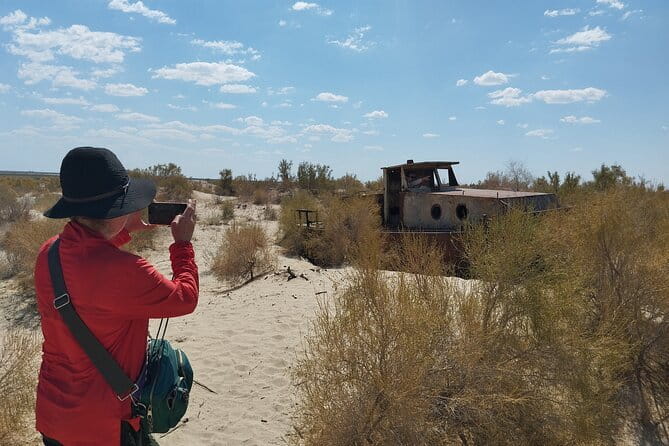
- The Muynak ship cemetery is the emotional center: Rusting boats sit far from the water that once supported the port town.
- Savitsky Museum adds an unexpected cultural layer: Its Soviet-era art collection gives the Nukus portion real depth.
- Chilpiq qala provides an ancient stop: The 2,200-year-old Zoroastrian dakhma rises above the surrounding desert setting.
- The tour is private for up to three people: Your group gets its own vehicle, rather than sharing a bus with strangers.
- The day is road-heavy: The 14-hour duration includes transportation, so plan for an early start and a late return.
- Extra costs are modest but separate: Museum admission is listed as $7 per person at Savitsky and $3 per person at the Muynak museum.
Why this Khiva day trip is different
Khiva is famous for its preserved old city, tiled monuments, and compact walking routes. Muynak and Nukus offer a very different view of Uzbekistan. Here, you move through Karakalpakstan, a semiautonomous region with its own cultural identity, and see places shaped by Soviet policy, desert conditions, and the retreat of the Aral Sea.
That contrast is the reason I find this experience worthwhile. It takes you beyond the polished monuments of Khiva and into a part of the country where the human and environmental story is harder to ignore.
The schedule is ambitious. You visit four main stops, but the long road journey takes up much of the day. The tour includes hotel pickup and drop-off, private transportation, an air-conditioned vehicle, and audio-guide materials. Those details matter here. A private car gives you a quieter ride and avoids the delays that can come with collecting a large group.
The trip is priced at $299 per group of up to three people. For one person, that is expensive. For three people sharing the cost, it works out to about $100 per person before museum fees and meals. The value depends on your priorities. If you want to reach Muynak without arranging separate transport, the price is reasonable for a private full-day excursion. If you are mainly interested in Nukus, a shorter visit may make more sense.
More Aral Sea expeditions:
- Aral Sea Adventures (2 day)
★ 5.0 · 30 reviews - From Khiva To Aral Sea 2-Days One Night In Yurt Stay
★ 4.6 · 20 reviews - Daytrip From Khiva to Aral Sea Cemetery Of Ships . All In One
★ 4.5 · 18 reviews
Chilpiq qala: an ancient tower above the desert
The first stop is Chilpiq qala, also written as Shilpiq or Chilpak Kala. This ancient Zoroastrian dakhma is more than 2,200 years old. The structure is a round, roofless tower about 15 meters high and 65 meters across.
Its location is part of the appeal. It sits at the top of a rise, giving you a wide view across the dry surroundings. The monument itself is simple compared with Khiva’s decorated buildings, but that simplicity helps you understand the setting. This is a place shaped by open space, heat, and distance.
You get about one hour here. Admission is not included in the tour price, though no fee is specified in the supplied details. The stop requires some walking, and the tour recommends a moderate level of physical fitness. Wear practical shoes and be ready for exposure to the weather.
I would treat Chilpiq qala as an important opening chapter rather than the main event. It introduces ancient beliefs and the Karakalpak region before the day turns toward the Soviet period and the Aral Sea crisis.
Nukus and the Savitsky Museum’s Soviet-era story
Nukus is the capital of Karakalpakstan and the home of the State Museum of Art named after I.V. Savitsky. The museum is one of the strongest reasons to choose this particular trip rather than making a simple drive to Muynak.
The collection is closely tied to the Soviet period. Its story is connected with I.V. Savitsky, whose work helped preserve art that did not always fit the official style favored by Soviet authorities. The museum therefore offers more than a gallery visit. It gives you a way to think about daily life, artistic limits, and cultural choices during the Soviet Union.
You have about one hour inside. That is enough for an introduction, but not enough for a slow examination of a large collection. If art is a major interest for you, the schedule may feel tight. Still, the museum gives the day a useful change of pace after the drive and the open desert setting at Chilpiq.
Admission is not included. The listed fee is $7 per person. That is a small extra cost compared with the overall price, but you should keep cash or payment arrangements in mind because the tour price does not cover it.
The audio-guide materials provided for the trip may help you make sense of the region as you travel. The details do not specify whether a live museum guide is included, so you should not expect a specialist-led gallery tour unless that is arranged separately.
Muynak Regional Studies Museum: a small place with a large subject
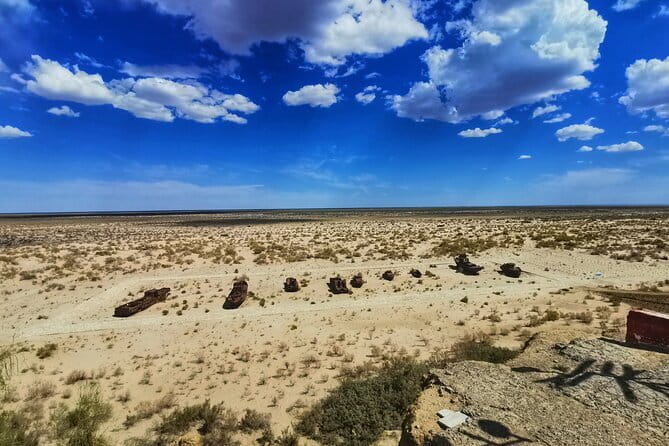
In Muynak, the Regional Studies Museum is also called the Ecological Museum of Muynak. You spend about 40 minutes here, with admission listed separately at $3 per person.
This is not presented as a grand museum. Its value comes from its subject. The museum helps explain Muynak’s connection to the Aral Sea and the environmental changes that transformed the town. It gives you context before you step outside to see the abandoned ships.
That order is helpful. Without some background, the ship cemetery can look like a collection of rusty metal in a dry basin. The museum explains why those boats are there and why the town’s identity changed so sharply.
Allow yourself time to absorb the small details. A modest regional museum can sometimes feel less polished than the Savitsky Museum, but it may offer a more direct connection to Muynak itself. This is not a stop to rush through simply because it lasts less than an hour.
A few more options to weigh up in Khiva and Urgench
- Khiva: Historical City Highlights Guided Walking Tour
★ 4.8 · 156 reviews - Transfer: Bukhara – Khiva via Ancient Fortresses
★ 4.5 · 101 reviews - Daytrip From Khiva To Ancient Fortresses
★ 4.6 · 60 reviews - Khiva Historical City Highlights Guided Walking Tour
★ 5.0 · 30 reviews
The Muynak ship cemetery and the vanished sea
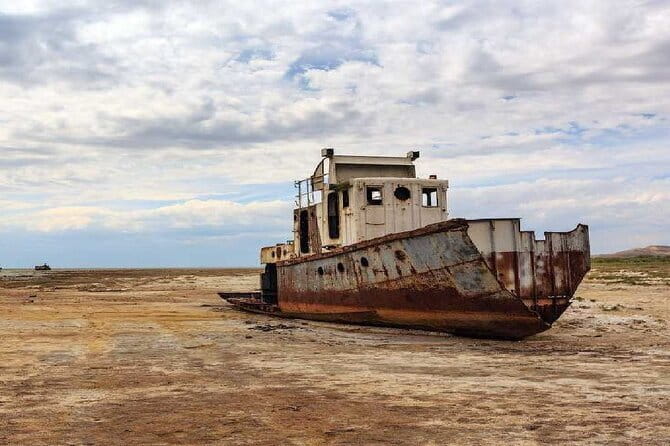
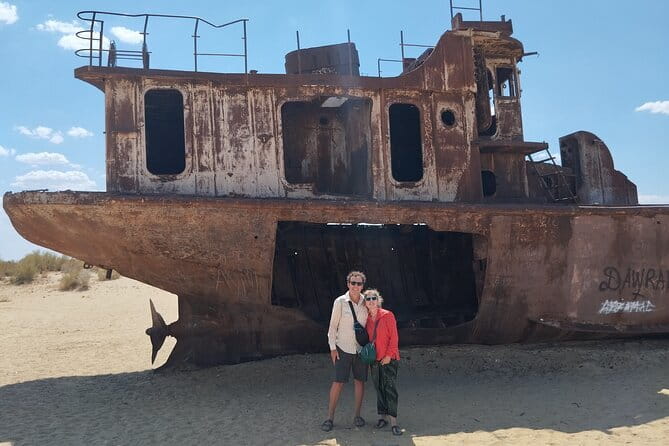
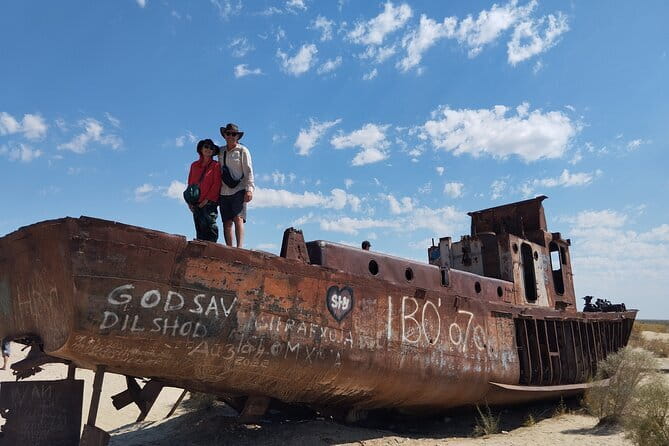
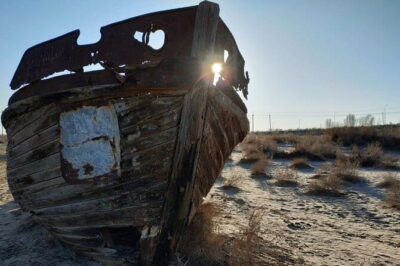
The ship cemetery is the most powerful stop of the day. Muynak was once one of the largest port cities in the 1960s, when the Aral Sea reached the town. Today, the boats sit on dry ground, separated from the water they were built to serve.
The scene is visually striking, but the real force comes from the scale of the change. The tour describes the cemetery as evidence of ecological and climatic changes in Muynak. You are not just looking at old ships. You are looking at the remains of a working port and the disruption of an entire local economy.
You have about one hour at the cemetery, and admission is free. That makes it the only main stop with no stated entrance fee. The open setting also means there is little shelter, so weather can affect how comfortable the visit feels.
One Japanese-language review described the drive from Khiva as long but praised the driver’s safe driving. It also noted strong satisfaction with reaching the Aral Sea area, seeing the ship cemetery and museums, and passing through Nukus. That matches my view of the experience: the road is the burden, but the destination is unusual enough to justify it for the right person.
Do not expect a seaside outing. The tour takes you to the former sea area and the ship cemetery, not to a beach or active harbor. The point is to see what remains after the water withdrew.
The road from Khiva matters more than the brochure suggests
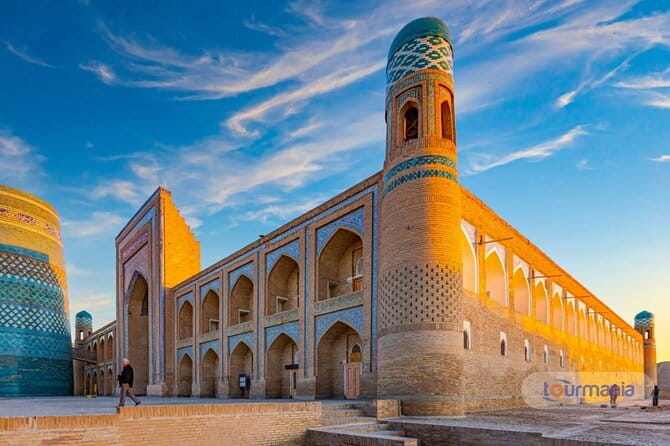
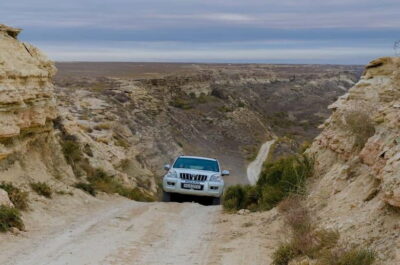
The 14-hour duration includes transportation. That simple detail should guide your decision. You are not getting 14 hours of sightseeing. You are getting a full day built around a long transfer from Khiva to the Nukus and Muynak area, followed by several short visits and the return journey.
The private vehicle is a real advantage. You can travel with only your own group, up to three people, and the air conditioning should make the long ride easier. Hotel pickup and drop-off also remove the need to find a meeting point before dawn or arrange your own return after a tiring day.
The supplied details do not give exact departure times, road conditions, rest stops, or the precise time spent in Nukus. Ask the operator for those details before booking. The tour requires moderate physical fitness, but the main challenge may be endurance rather than strenuous activity.
The minimum age is five. That means families can consider the trip, but the very long day may still be difficult for younger children. A child who handles long car rides well may manage it. A child who needs frequent activity may not enjoy the balance of driving, museum visits, and outdoor stops.
What is included, and what you still pay for
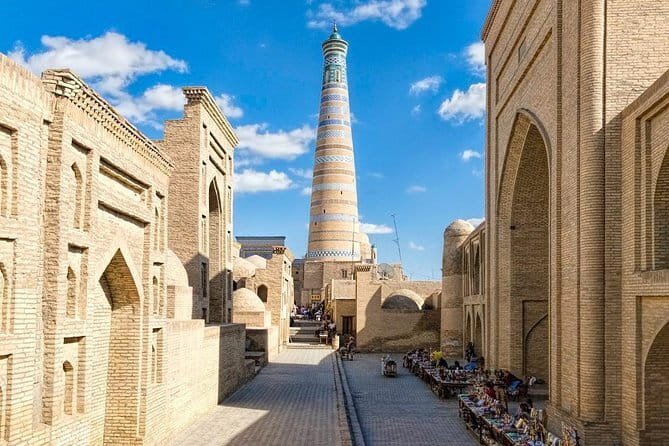
The price covers:
- Private transportation
- An air-conditioned vehicle
- Audio-guide materials for the trip
- Hotel pickup and drop-off
Lunch and dinner are not included. With such a long schedule, meals deserve advance planning. The supplied information does not specify where or when you stop to eat, so ask before departure and carry food or snacks if appropriate.
Museum fees are also separate. Savitsky Museum is listed at $7 per person, and the Muynak Museum at $3 per person. For three people, those two fees total $30. The ship cemetery has free admission, while the fee for Chilpiq qala is not stated.
For a group of three, the total cost remains attractive for a private vehicle and a difficult-to-arrange route. For a solo visitor, the calculation is less favorable. If you can share with two companions, the tour becomes much better value.
Who should book this experience
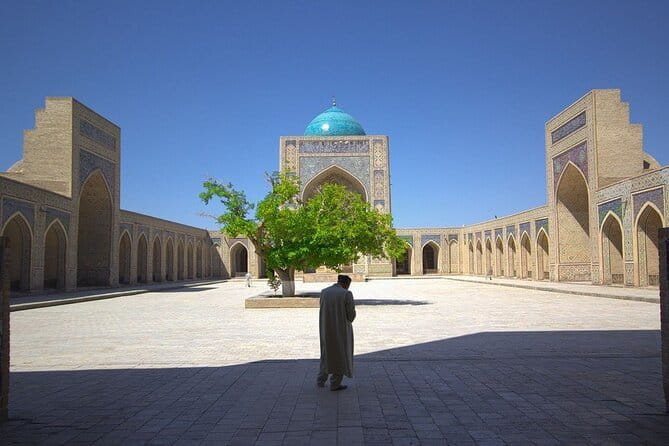
I would recommend this trip to you if you want to understand more than Khiva’s monuments. It suits people interested in environmental change, Soviet history, Karakalpak culture, regional museums, and unusual places that take effort to reach.
It also works well if you have limited time in Uzbekistan but strongly want to see Muynak. The private format removes much of the planning work. You receive transport from Khiva and return to the same meeting point, rather than trying to coordinate several connections across a remote part of the country.
I would hesitate to recommend it if you dislike long drives, have only a short stay in Khiva, or want a relaxed holiday day. The itinerary is packed, and the road journey is not a minor part of the experience. You should also consider skipping it if your main interest is fine art and you want several hours at the Savitsky Museum. One hour there is an introduction, not a full museum visit.
The tour has a 4.8 rating from 10 reviews, with 100 percent recommending it. That is encouraging, though the sample is small. The most praised elements are the safe driving, the chance to reach the Aral Sea area, the ship cemetery, the museums, and the views around Nukus.
Practical advice before you go
Book ahead if your dates are fixed. The experience is booked an average of 34 days in advance, which suggests that last-minute availability may be limited.
Keep your expectations realistic about the route. The word private refers to your group and transport, not to a leisurely custom-built schedule. The day has a set structure, with roughly one hour at Chilpiq qala, one hour at Savitsky Museum, 40 minutes at the Muynak museum, and one hour at the ship cemetery.
Bring comfortable shoes for Chilpiq qala and the ship cemetery. The itinerary calls for moderate physical fitness, and both outdoor stops may involve walking over uneven ground. Weather can cancel the activity, in which case you are offered another date or a full refund.
Cancellation is free up to 24 hours before the start time. Within 24 hours, refunds and changes are not accepted. That gives you useful flexibility, but the weather condition is worth remembering when planning a tightly scheduled Uzbekistan trip.
Should you book the Khiva to Muynak day trip?
Book it if reaching the Aral Sea is one of your main goals in Uzbekistan. The ship cemetery is the reason to make the long journey, while Chilpiq qala and the Savitsky Museum prevent the day from becoming a single-purpose drive.
The best value comes with three people sharing the $299 group price. I would also book ahead, confirm meal arrangements and departure time, and accept that the road will occupy much of your day.
Skip it if you want a light excursion from Khiva. This is a demanding outing, but it reaches a place few visitors can see easily. For anyone willing to trade comfort and spare time for a direct look at Muynak’s lost port and Karakalpakstan’s cultural story, it is a strong choice.
FAQ
Where does the tour start?
The tour starts in Khiva, in Uzbekistan’s Xorazm Region, with hotel pickup offered.
Where does the tour end?
The activity ends back at the meeting point in Khiva.
How long does the tour last?
The tour lasts approximately 14 hours, including transportation time.
How many people can join the private tour?
The price covers one private group of up to three people.
What is the price of the tour?
The price is $299 per group of up to three people.
Is transportation included?
Yes. Private transportation in an air-conditioned vehicle is included, along with hotel pickup and drop-off.
Are museum entrance fees included?
No. Savitsky Museum is listed at $7 per person, and the Muynak Museum is listed at $3 per person.
Is lunch included?
No. Lunch and dinner are not included.
What is the minimum age?
The minimum age for the tour is five.
What happens if bad weather cancels the tour?
If poor weather causes cancellation, you are offered a different date or a full refund.
Just added in Khiva and Urgench
- Urgench Airport / Railway Station – Khiva Transfer★ 3.0 · 2 reviews
- Traditional Khiva Cooking Class with Market Visit & Lunch★ 5.0 · 4 reviews
- Uzbekistan 6 Days Private Tour Khiva-Bukhara-Samarkand by Train★ 5.0 · 4 reviews
- Transfer From Khiva To Bukhara★ 5.0 · 2 reviews
- Old Khiva Stories with Your Local Guide★ 5.0 · 5 reviews
- Day Trip Top 3 Fortresses departure from Khiva Self-Guided Tour★ 5.0 · 2 reviews
- Plov Tour : Taste, Tradition & History of Plov with a local guide★ 5.0 · 1 review
- Master Class – Uzbek Bread (Khiva)★ 3.5 · 4 reviews
Aral Sea Expeditions, compared.
Daytrip from Khiva to Aral Sea Cemetery of Ships. All in one
Read our review →
From Khiva To Aral Sea 2-Days One Night In Yurt Stay
Read our review →Daytrip From Khiva to Aral Sea Cemetery Of Ships . All In One
Read our review →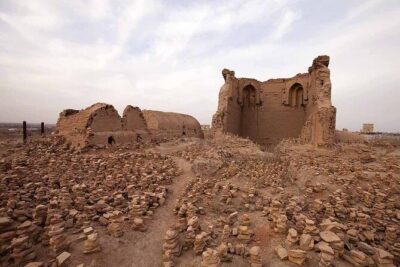
Browse the lists this tour appears in